
Today, in a thoroughly nerdy ceremony in Miami, the last five blocks of IPv4 addresses were handed out. That's sparked a lot of concern: The internet as we know it is out of space! The next evolution of Internet Protocol, IPv6, is largely unusable! Panic in the virtual streets! But that's all a bit misleading, at least for now. Here's what's really going on.
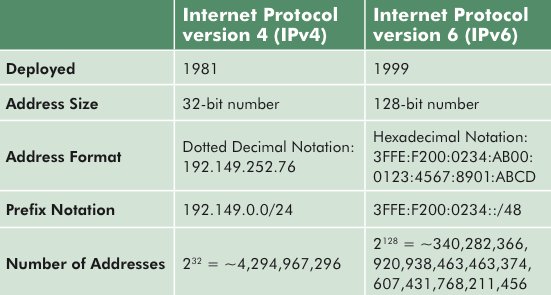
Back in 1981, when the internet was little more than an experiment, Internet Protocol Version 4, or IPv4, was created, in which every computer's identifying address is 32 bits long, allowing for a grand total of about 4.3 billion different addresses. These are typically shown as the IP address we're all used to: Four numbers, each ranging from 0 to 255, separated by dots. PopSci.com is 209.208.1.65. The 32-bit length was basically arbitrary--Vint Cerf, who chose that length all those decades ago, said in an interview, "Who the hell knew how much address space we needed?" More than 4.3 billion, it turns out. ICANN, a group set up by the U.S. Department of Commerce, hands out IP addresses in large clumps to regional internet registries, or RIRs, which represent different parts of the world. Those RIRs then lease their addresses to ISPs, both home (like Comcast) and mobile (like Verizon Wireless).
Today, the last 84 million IP addresses were handed out to RIRs. So first of all, we're not out of IP addresses: Those RIRs haven't even begun handing the last addresses to ISPs, and the head of the North American RIR says he doesn't expect to run out for six or nine months. Then the ISPs have to run out. And then there's the curious fact that, according to estimates, only around 14% of all IPv4 addresses are actually being used, though the remainder are unlikely (due to cost, selfishness of owner, or inherent weird engineering) to free up. (You can read more about that process in CNET's excellent explainer.) All in all, we're certainly not "out" of addresses, not for another year or two--but we are certainly getting close. So what's the solution?
The new version, IPv6, has 128-bit addresses, which gives 2128 IPv6 addresses in total--(hopefully) more than we'll ever need. But you can't just start using IPv6, because it and IPv4 are not inter-compatible. If your computer or smartphone only has an IPv6 address, you won't be able to access websites using IPv4, and vice versa. On the server and network side, it generally requires new hardware or new software to make the transition from IPv4 to IPv6, and that cost combined with the fact that nobody uses IPv6 right now has meant that only about 0.25% of the internet is accessible with an IPv6 address.
The solutions to this problem aren't thrilling. Eventually, we'll probably end up with a "dual-stack" configuration, in which the computer can basically use either an IPv4 or IPv6 address as needed. But you don't have to worry about any of that, really. Modern computers (Windows since XP SP1, Mac since OS 10.2) and smartphones support both iterations, and people generally lease modems from their ISP, so the only gadget consumers own that could conceivably be affected is the router--which is not a huge expense, all things considered. (You can check your compatibility here.) For companies, this is going to be a pain in the ass, at best a tricky one and at worst a tricky and expensive one, but for Johnny Websitevisitor, the worst result is some hiccups in the transition and maybe the purchase of a new router--unless the ISPs decide to pass some of their costs onto him.
That's a possibility, but not a likely one. Consumers hate seeing raises in internet costs, and generally the only way an ISP can make that work is by offering some kind of tangibly better experience by way of explanation. That could be speed (as in Verizon FiOS or 4G wireless) or some kind of feature upgrade, but the switch to IPv6 won't offer anything of that sort to consumers. Compared to other projects, like network expansion, it will be relatively affordable. It's also not something that's easy to explain (take it from me), and it's bad business to raise fees for a behind-the-scenes problem that, if successful, will leave a consumer's experience completely unchanged.
[CNET]
138 years of Popular Science at your fingertips.
Each issue has been completely reimagined for your iPad. See our amazing new vision for magazines that goes far beyond the printed page
Stay up to date on the latest news of the future of science and technology from your iPhone or Android phone with full articles, images and offline viewing
Featuring every article from the magazine and website, plus links from around the Web. Also see our PopSci DIY feed
A 10,000-rpm, no-pulse heart is completely revolutionizing how we think about transplants. Plus: rapid-response virus hunters, a shocking cure for migraines, the world's youngest person to have achieved nuclear fusion (in his parents' garage!), and much more.
I may be ignorant here, but since when does "it won't change your experience" translate to "the companies won't tell you it'll change your experience"? IIRC, before real 4G was implemented, mobile providers were advertising 4G anyway to get customers. Why wouldn't ISP's say "The transition to IPv6 will give you a more reliable connection!" and rake in cash from non-techies who don't know any better?
-IMP ;) :)
woe are the techs who can no longer have the luxury of remembering 32 bit addresses - we'll be using a lot of post-it notes every time we need to remember an ipv6 address
(Completely forgets to read the point of the entire article or even the second part of the title)
AAAAAAAAHHHHHHHHH! It's the IPcalypse!
Why not make things simpler, but more expensive, by creating a new internet that has all of the simplification, energy savings, and virus protection that our more modern technology has brought these few years. It would be similar to the television switch to digital.
xalar - because we love our VD. Techno-syphallis of the internet is what makes it great. If you do a brand new web, clean and sterile (let's call it the iWeb), you will get rid of (many of) the viruses, the scammers, the oceans of porn - but at the cost of freedom.
The glory of the current internet is that it naturally resists control like a living organism (China filters, but Chinese consistantly get around those filters - Egypt unpluged, but people just dialed up in France from Egypt).
True, a new, clean, user friendly internet would not stop the tawdy hack-infested gutter-girl that is our current internet from continuing on with luddites and techies who care about freedom (that means you, linixinites).
No, expanding the current system is far better - because biology has tought us that while life is dirty, virus ridden, and dripping with mucus on its best day - complexity breeds stability. The germs saved us from the Martian invasion in the days of Orsen Wells, and the filthy, half broke, marvelous internet might just be what saves us from the Robot Overlords in the future.
After all, how can Skynet see me if it has to constantly minimize pop up windows of college girls shaming their family names?
Oakspar, no offense intended, but you're kind of making things up to sound like you know what you're talking about.
"True, a new, clean, user friendly internet would not stop the tawdy hack-infested gutter-girl that is our current internet from continuing on with luddites and techies who care about freedom (that means you, linixinites)."
1. That's Linux, with a u, and a fair bit of the internet runs *from* Linux servers (like Redhat) to say nothing of, increasingly, *to* Linux mobile devices (Android.)
2. There's no such thing as building a new internet, because whether you're talking about backbone or client machines, you can't mandate massive changes on private property. You can't change all the protocols without changing every OS on the planet in some small way. If you're talking about a single OS, then you're talking about, well, let me ask that as a question....
3. Are you talking about a socialist takeover of the internet by Microsoft, or by Apple, by the way? Going the MS route would make virus protection worse. (Not the case with Apple, but it wouldn't make a difference, either .)
4. No really, it wouldn't make a difference, either. Virus protection has to happen client-side; there's not a hell of a lot servers can do about it. Simultaneously, the folks writing malware are going to continue to find ways to do it, regardless of the system you choose to put in place.
5. And yes, freedom is important, because freedom for consumers = competition between corporations = functional capitalism.
....
Look, I just have to append this. It's well understood that diversity in biology is what saves a species from being vulnerable to destruction by a single virus. That same principle applies to internet infrastructure, too - a diverse mix of systems is the only way to protect the internet from the same kind of mass vulnerability. A diverse set of systems with moderate "immunity" is still less susceptible to catastrophe than any single system, no matter how "immune"....
Well, as a Linux user, I like the capability to choose what when and where my I/O's use v4 or v6. I serve v4 on one box, but as I run my own cell network, that gets both on my user system. There are still a couple of particulars, but my stuff works well, and as always, just can't beat the price. Dammit! Now I feel guilty. Haven't ponied up any donation money for a couple months. I suck. Oh well, I planned on putting money on a couple of my green dot cards tomorrow anyway. By the way, does anyone else use those green dot cards for all web purchases, only putting on cash money as needed, and getting new ones every few months? Or has my internet paranoia reached medication level? I'll tell you one thing, no links to my bank account is a priceless form of financial security.
