

Hurricane Sandy has caused untold billions of dollars in damage and insane casualties. And we saw the “Frankenstorm” coming, for days in advance. We can send people into space and put vehicles on Mars — why can’t we stop a hurricane in its tracks, before it comes to our major population centers and starts rolling for damage?
Here are some methods that people have suggested for preventing, or stopping, a hurricane — and why they might not work.
Method #1: Fly Supersonic Jets Into It
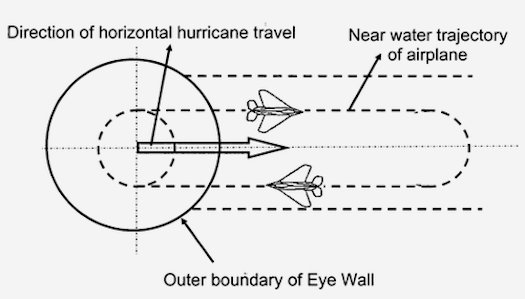
This method has the benefit of being totally awesome: in a nutshell, you would fly supersonic jet aircraft in concentric circles around the eye of the hurricane. The jets would generate a sonic boom that would disrupt the upward flow of warm air that creates the hurricane. University of Akron at Ohio professor Arkadii Leonov and his colleagues applied for a patent for this method back in December 2008, as New Scientist reported.
In their application, Leonov’s team claimed that because sonic booms spread out as they travel away from an aircraft, you might only need a small number of jets to stop a hurricane. They wrote: “Two F-4 jet fighters flying at approximately Mach 1.5 are sufficient to suppress, mitigate and/or destroy a typical sized hurricane/typhoon.”
I spoke to Leonov on the phone. An excitable man with a thick accent that sounds a bit like Bane from The Dark Knight Rises, he told me that he’s published “220 different papers, in absolutely different fields of studies.” And stopping hurricanes is just one of the many topics that he’s got opinions about.
“I cannot guarantee that it would work,” Leonov said about his plan, which he began working on after HurricaneKatrina. The representatives of an Air Force general asked him for computations that backed up his claims, but he was unable to produce them because “the University is very weak computationally.” But he thinks it could do the trick, because even though hurricanes are huge and insanely powerful, “there is a specific, very sensitive area in the hurricane structure” that is susceptible to cooling force.
Leonov says “the professionals” in this area have “simply ignored me. I tried several times to talk to MIT or Florida Hurricane Center. The answer was silence.” He adds that he visited the National Oceanic and Atmospheric Administration a few months ago and presented his ideas. And they encouraged him to write a paper for the journal Atmospheric Research, which he submitted recently.
So what does NOAA think of Leonov’s idea? I asked Hugh Willoughby, a professor at Florida International University and former director of NOAA’s Hurricane Research Division. Willoughby responded:
I don’t know if he met with NOAA, but this is a bad idea. Ask Arkadii to compare the power of a couple F-14s with 10^13 Watts. Flying at Mach 1.5 in eyewall convection and turbulence is a great way to destroy a couple of airplanes and end the lives of their pilots. Moreover, the shock wave is like a very intense sound wave that passes through meteorological motions without affecting them much. The metaphor of shouting in the wind is apt. Sorry to be so negative, but the people who propose these ideas generally don’t do the requisite Einsteinian perspiration before they start marketing them.
Method #2: Use a Giant Funnel to Divert Warm Water into the Ocean
Intellectual Ventures is a company best known for owning a shit ton of patents and being “the most hated company in tech,” according to CNET. But back in 2009, Intellectual Ventures co-founder Nathan Myhrvold went on ABC News and described his method of preventing hurricanes. In essence, you put a plastic “inner tube” in the water, with a cylinder that uses wave motion to divert the warm water that creates hurricanes down into the ocean floor. A few thousand of those in theGulf of Mexico, and the hurricane’s strength would be reduced:
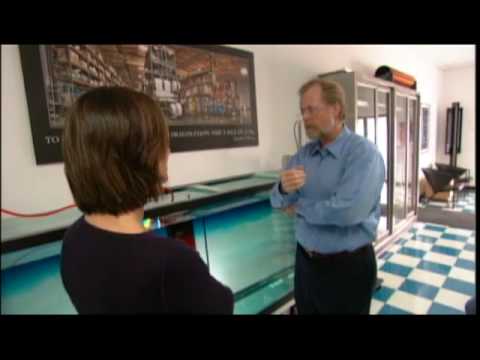
A Simple Solution to Control Hurricanes
Here’s a blog post and a white paper (PDF) on Intellectual Ventures’ website, explaining the idea in greater detail.
I contacted Intellectual Ventures to find out what’s happened with this idea since 2009. I wasn’t able to speak to Myhrvold himself, but a spokesperson told me:
We’ve proven the viability of the Salter Sink through computer modeling and research in our lab, but the project now requires more extensive testing that’s better suited for a university or government research group. As you can imagine, there would be significant regulatory hoops to jump through to legally field test or deploy the technology.
Method #3: Project STORMFURY
This was a government project to seed hurricanes with silver iodide, in the hopes of strengthening the clouds around the hurricane and creating an “outer eyewall.” According to Willoughby— who helped put the project to bed once and for all — researchers seeded clouds in hurricanes Esther (1961), Beulah (1963), Debbie (1969), and Ginger (1971) with silver iodide.
And at first, the results appeared promising — the hurricanes seemed to slow down somewhat. But further observation revealed that the hurricane changes were consistent with what you’d expect a hurricane to do, and it turned out that hurricanes develop an “outer eyewall” on their own, without any human intervention. And observations in the 1980s proved that there just wasn’t enough supercooled water inside hurricanes for the silver iodide to have much effect.
Method #4: Nuke ‘Em!!!
But why screw around with plastic funnels and silver iodide crystals? Why not just pretend hurricanes are the Gap Band and drop a bomb on them? Willoughby says that people have proposed “blowing the hurricane apart with hydrogen bombs.” Unfortunately, says Willoughby:
A key difficulty with using even nuclear explosives to modify hurricanes is the amount of energy required. A fully developed hurricane can release heat energy at a rate of 5 to 20 x 1013 watts and converts less than 10% of the heat into the mechanical energy of the wind. The heat release is equivalent to a 10-megaton nuclear bomb exploding every 20 minutes. According to the 1993 World Almanac, the entire human race used energy at a rate of 1 x 10¹³ watts in 1990, a rate less than 20% of the power of a hurricane.
A Grab Bag of Other Methods — Including Lasers!
Dozens of other methods have been suggested. A 2007 CBC documentary called How to Stop a Hurricane explores seven of them. There are three methods of cooling the surface of the ocean: nitrogen blast, a chemical film, and deep water pumps. There are also a few methods involving clouds, including cloud-seeding and “carbon smoke.” More excitingly, an inventor named Ross Hoffman received a $500,000 grant from NASA to explore the idea of beaming microwaves at hurricanes from space to make them change direction.
Most thrillingly of all, an inventor named Robert Dickerson suggested hitting a hurricane with lasers from an airplane, during the early stages when there’s still a lot of lightning. Here’s the relevant clip from the documentary, showing how that would work:

Why Not Use Lasers?
Alas, the experts at NOAA poured cold water on that idea, too.
So Why are Hurricanes So Hard to Destroy?
We’re always hearing about how amazing our scientific achievements are, and we’re used to thinking we’ve mastered our surroundings. So why can’t we just turn hurricanes off?
I spoke to Peter Gleick, a climate scientist and co-founder of the Pacific Institute in Oakland, CA, on the phone, and he stressed that we’re talking about “massive geophysical events” here, whose size and complexity are even bigger than most people realize. The biggest problem with attempting to tinker with the “massive amount of energy swirling around” in a hurricane is that you can’t even tell if you’ve had any effect.
I also talked to Greg McFarquhar, a professor Atmospheric Sciences at the University of Illinois, who pointed to one major stumbling block: “With our current state of knowledge, we are still not able to accurately predict which tropical disturbances will organize into more organized hurricanes, let alone forecast precise paths or intensity a week in advance.” So there’s no way of knowing which tropical storm will become a hurricane that threatens a major population center, early enough to act.
Adds McFarquhar: “There are simply so many interrelated factors that affect the intensity of hurricanes, changing one parameter may have effects on other factors controlling the hurricane through a series of non-linear interactions.”
I also emailed with Dale W. Jamieson, director of the Environmental Studies Program at New York University, who was just about to hunker down in the path of Hurricane Sandy. He told me that his main belief is that “people ought not to put themselves in harm’s way,” and that the real answer is “to focus on living with nature rather than trying to do gee whiz science to modify hurricanes.”
The Potential Unintended Consequences of Screwing With Hurricanes
The biggest worry about screwing with hurricanes is, you might create an effect that’s worse than the problem you’re trying to solve. Just like with other huge geo-engineering projects, “we just don’t want to mess around with complex geophysical phenomena without knowing what we’re doing,” says Gleick.
Hurricanes actually have some beneficial impacts as well as harmful ones, adds McFarquhar. They supply moisture to parts of the world that would otherwise be bone dry. They also transport heat away from the equator, towards the poles.
“Are we wise enough to know the downstream consequences of large-scale modification? I doubt that,” said Patrick Michaels, director of the Center for the Study of Science at the Cato Institute. “There are obvious downsides to fiddling with things that we don’t understand!”
Additional research and reporting by Gordon M. Jackson.

io9 is a website about the future, exploring the science and science fiction that will take us there.
