Editor's note: A big congratulations today to Theo Gray, whose Gray Matter column was nominated for a 2010 ASME award in the Columns and Commentary category. Great to see Theo's excellent work being recognized. Here, his latest column from the March issue:
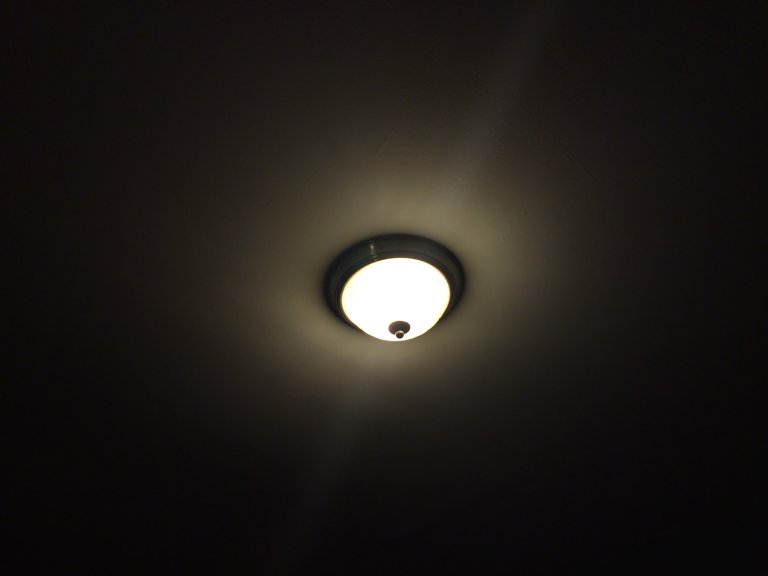
The first light-emitting diodes went on sale in 1962, and you could have any kind you wanted as long as it was dim and red. Green, yellow and orange came next, but blue LEDs didn’t debut until 1989. So it may surprise you that the first LEDs, discovered in 1907, included blue—and were made of sandpaper.
Well, not exactly sandpaper, but the same material as a lot of sandpaper uses, synthetic silicon carbide (carborundum). If you touch two needles to the surface of a crystal of silicon carbide and run electricity through them, you will sometimes see a very faint colored glow. Silicon carbide is a semiconductor, and the needles on the surface create a diode, a device that allows electricity to flow in only one direction, so it really is a light-emitting diode.When radio-development pioneer Henry Joseph Round noticed this glow in 1907, he published a short paper asking if anyone else had seen this and could explain it. No one had a clue.
The first commercially practical LEDs didn’t arrive until a quantum-mechanical model for semiconductors allowed engineer Nick Holonyak, Jr., to design one with just the right electrical properties to create usable light.
Science is full of things you can see with your own eyes yet for which, even today, there is no satisfactory explanation. For instance, a compass needle always points north. You might know this happens because the Earth’s magnetic field is oriented roughly along its axis of spin. But why does the Earth have a magnetic field, and why does it point north? No one knows. We can see it, describe it, and measure it, but we can’t explain it.

138 years of Popular Science at your fingertips.
Each issue has been completely reimagined for your iPad. See our amazing new vision for magazines that goes far beyond the printed page
Stay up to date on the latest news of the future of science and technology from your iPhone or Android phone with full articles, images and offline viewing
Featuring every article from the magazine and website, plus links from around the Web. Also see our PopSci DIY feed
Science is reinventing play, from extreme sports to gamification to ridiculous roller coasters to the playgrounds of tomorrow, and this issue is chock full of fun. Also, on a less fun note: Did global warming destroy my hometown?
Will this work on sandpaper?
I would think so, as long as you could isolate one crystal (given that it is silicon carbide). Don't try it on any 440 grit... I'd go with 60 just to make it a challenge.