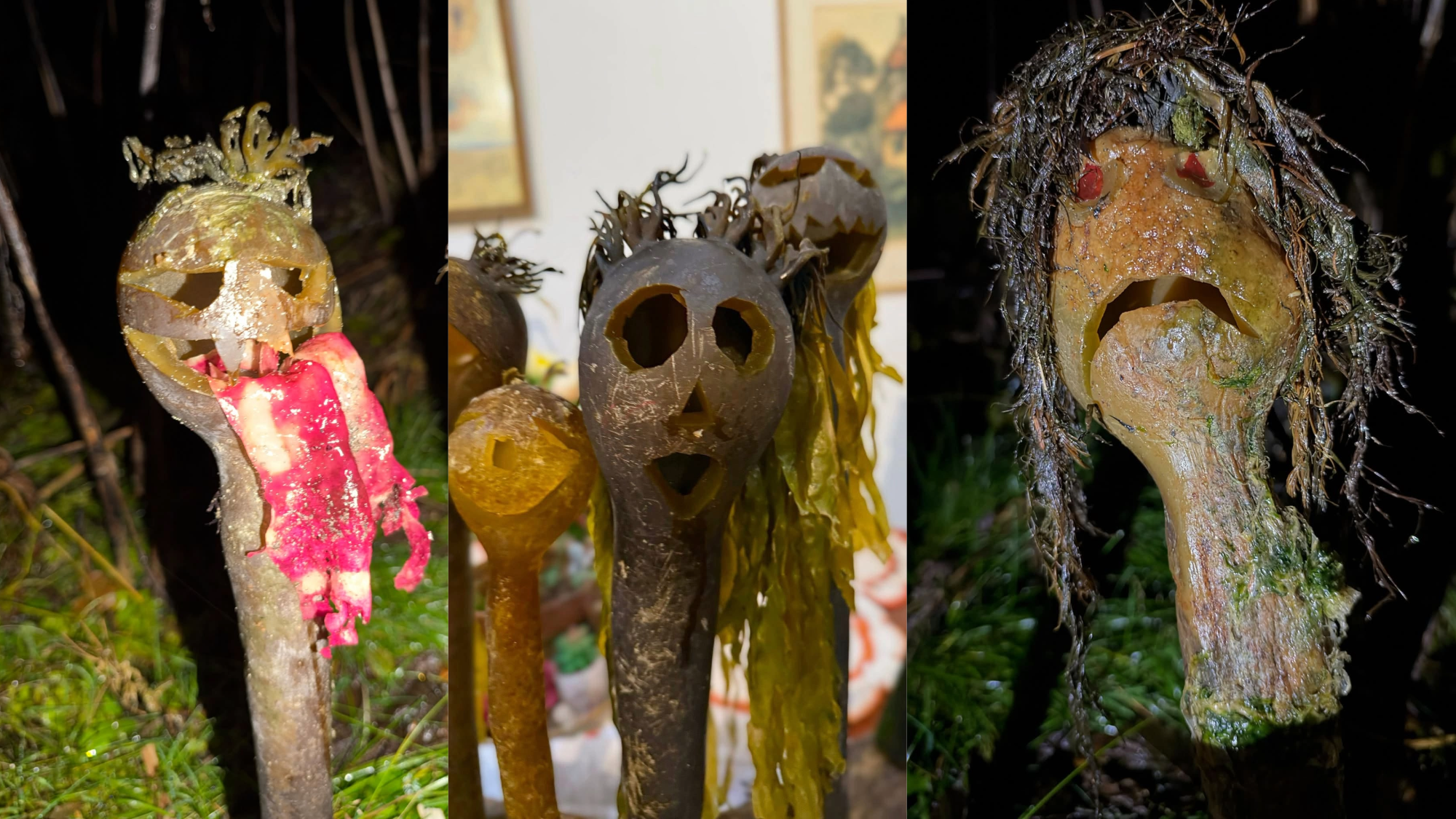
It seems like Halloween decorations are getting more elaborate every year. Instead of a viral 12-foot skeleton, a digital creator in Alaska has turned to nature to find inspiration for his spooky embellishments.
In 2025, photographer and Homer resident Tim Hatfield was walking on a beach with his girlfriend. They noticed that some strands of bull kelp (Nereocystis luetkeana) had washed ashore. Bull kelp, sometimes referred to as “mermaid’s bladder,” is a fast-growing annual seaweed that grows along much of the coast of North America.
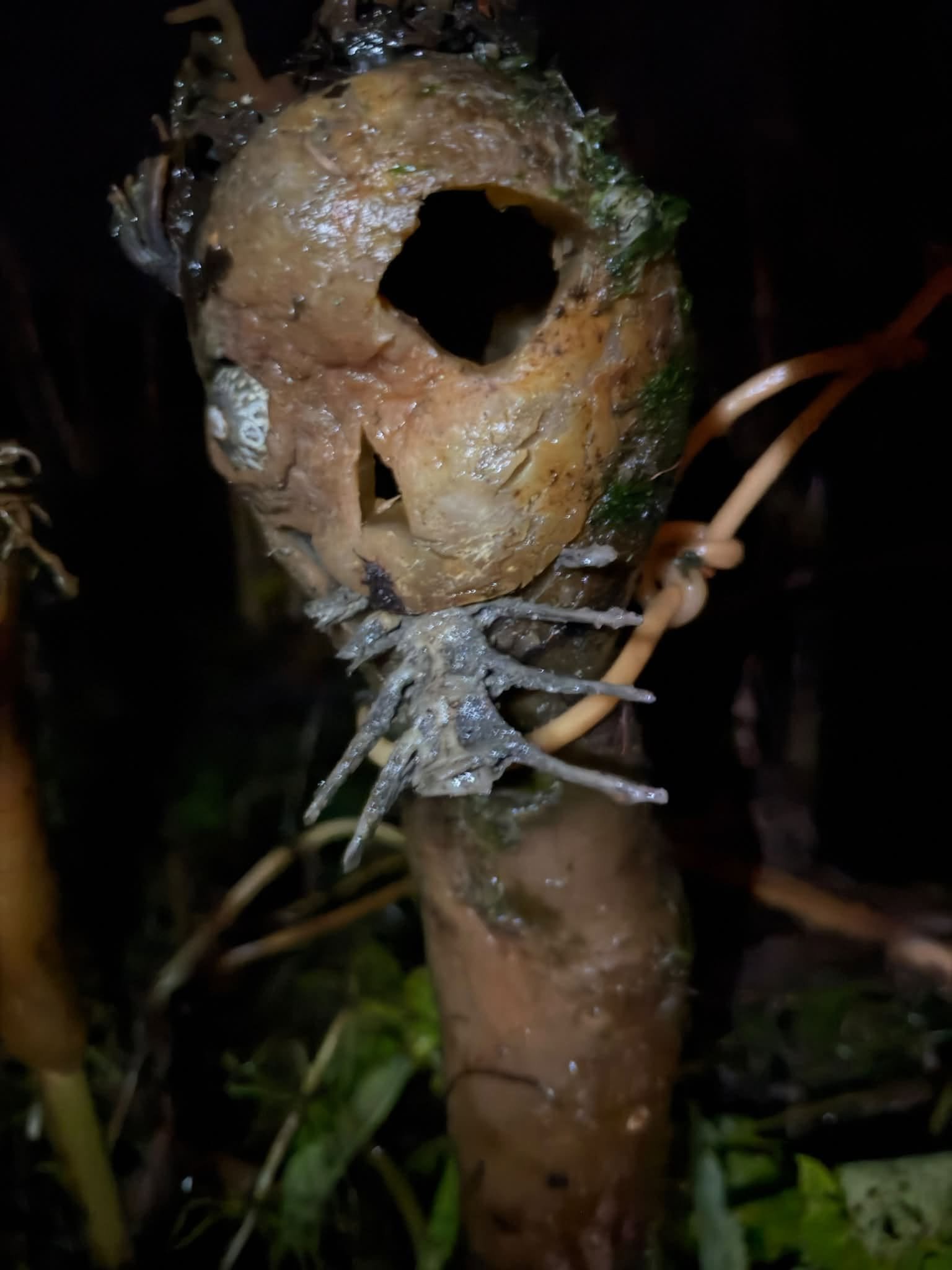
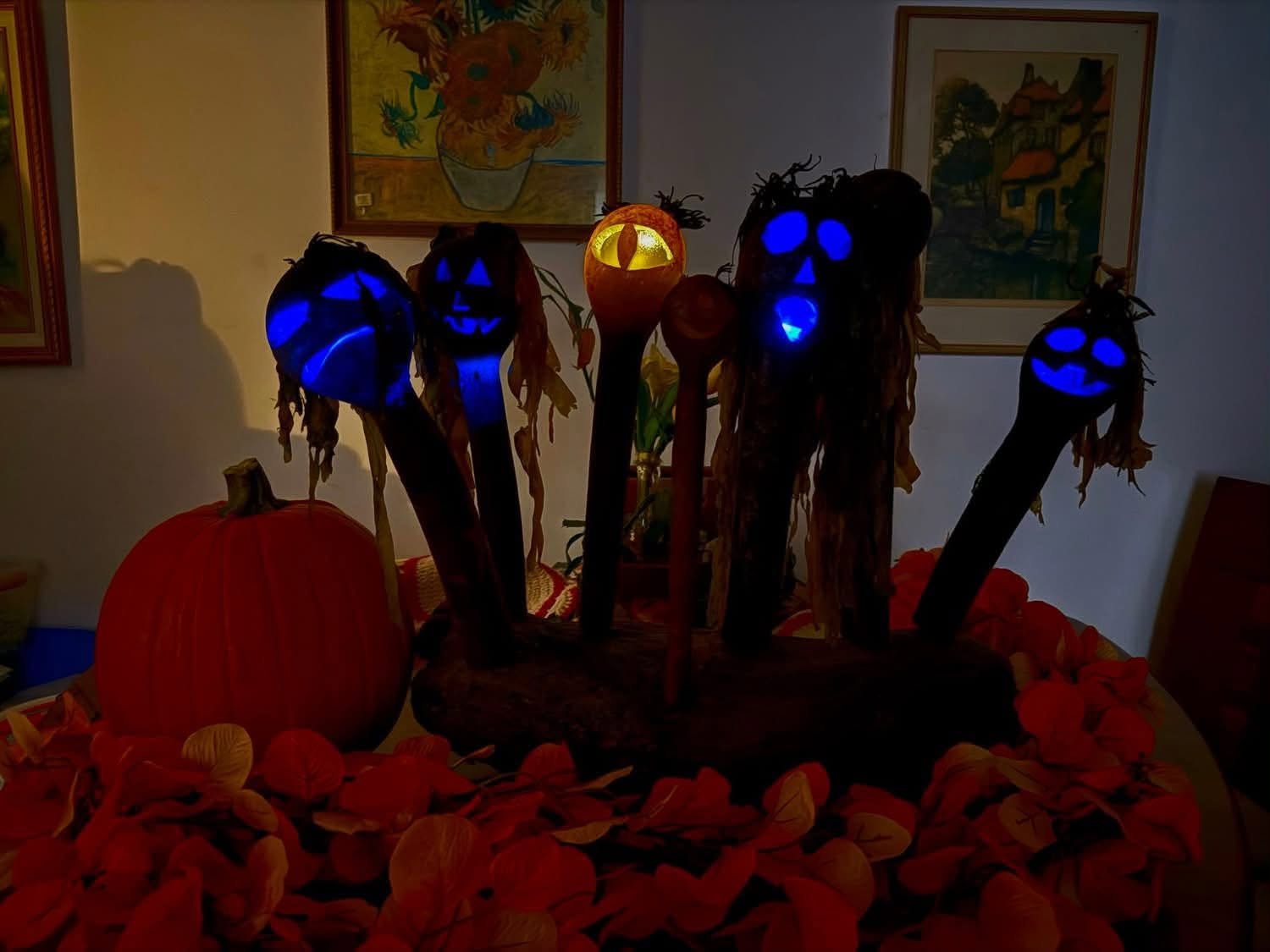
Hatfield’s girlfriend pointed out that one of the pieces of kelp looked like a face, and said that she’d seen them used as Halloween decorations before. Hatfield decided to give it a try himself, and returned to the beach after a big storm to bring some home. He then turned the bull kelp remains into eerie faces, added lights, and even fashioned one into an eyeball.
“The coolest thing about the kelp-o’-lanterns is that as they age, and it only takes a few days, they look creepier and almost look like real shrunken heads,” Hatfield tells Popular Science. “Then this year I kind of already went for the ones that looked weathered.”
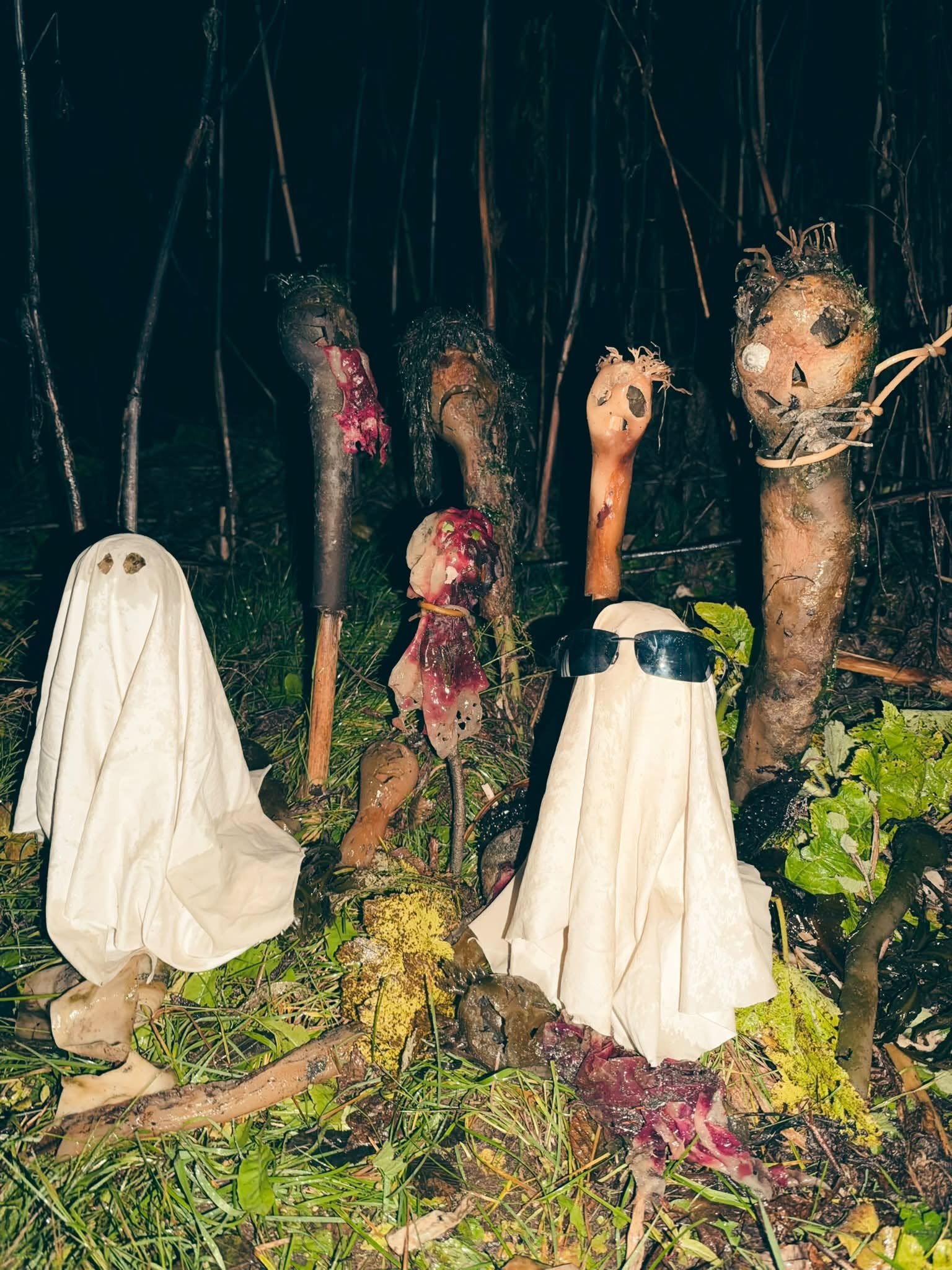
This year’s kelp-o’-lantern includes a one-eyed ghoul with a creepy spider-looking thing sticking out of its mouth and a noose around its neck, and an eerie looking head with two seemingly blood-stained tongues. Last year, Hatfield set up his kelp-o’-lanterns at his girlfriend’s house in town. For this year, the spooky decorations are staked out at his place. Hatfield’s house sits at the top of a hill, so trick-or-treaters on the hunt for candy are going to have to undertake quite the hike to witness them.
“[Last year] we had a few friends who were just like, ‘What is going on here?’ Because there’s no way your mind’s going to understand what they’re made of at first, when you first see them,” Hatfield says. “It is safe to say this is probably an annual tradition.”
As spooky season is in full swing, remember to keep your fake spiderwebs away from the typical flightpaths of birds and bats, such as on a tree.