Dan Smith

Inspired By Nature

Yeast, What is it Good For? (Absolutely Something)

Scientists find the stuff that makes bread oh-so-tasty also may cure everything from Lou Gehrig's disease to aging

You know that humans have used yeast for thousands of years for baking and brewing, but did you know that it’s also prized for its applications in medical research?

The metabolic processes of yeast cells are similar to mammal cells, and since yeast reproduces quickly, experimental results can be obtained much faster than they would using animals. Yeast’s rapid reaction time has allowed scientists to put all sorts of research in fast-forward, with the aim of efficiently developing new disease treatments.

[ Read Full Story ]
Inspired By Nature

For Treating Blindness, Scientists Look to Algae

Cloning the green goo's factories for producing light-sensitive proteins could lead to more effective treatments for certain types of blindness

What if the key to curing blindness was found in unicellular algae?

In a recent study published in the journal Nature, a group of scientists were able to restore light sensitivity to formerly blind mice using a protein extracted from algaes of the genus Chlamydomonas. The Chlamydomonas are of particular interest because they exhibit phototaxis—an ability to orient themselves toward light sources to aid in photosynthesis. Eager to understand what caused this phenomenon on a genetic level, scientists at the Max Planck institute in 2003 isolated a sequence of genes that stored the blueprints for generating light-sensitive proteins. And now, a joint team of researchers from the Friedrich Miescher Institute in Switzerland and the Harvard Medical School have recently developed a therapy that introduces these genes into the eyes of blind mice. What they observed was a dramatic behavioral change that proved the mice had regained their sensitivity to light.

[ Read Full Story ]
Inspired By Nature

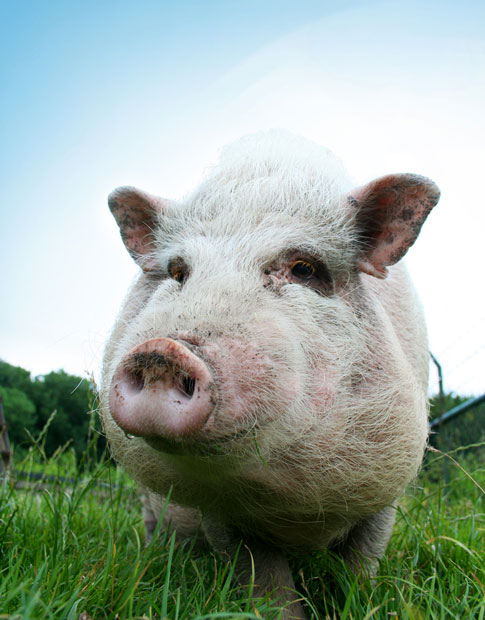
The Science of Swine

Pigs not only inspire scientists via delicious, brain-sustaining pork products. See the latest pig-influenced developments in medicine and tech, from diabetes treatments to pig-urine-flavored cigarettes

digg_url = 'http://digg.com/general_sciences/The_Science_Of_Swine';
We've got pork on the brain here this week at PopSci. Earlier today we told you about how cells from a pig's bladder helped a man regenerate part of his severed finger, and if you're a PPX player, you know we just rolled out an IPO regarding PETA's recent offering of a million dollar prize for anyone who can grow meat sans-animal in a lab, hoping to negate the necessity for livestock. However, it will probably be a while before anything created in the lab will rival the one food that we can't ever manage to stop thinking about, even for dessert—bacon.

As it turns out, pigs have been the inspiration for several other recent medical and technological innovations in the last few months.

[ Read Full Story ]
Inspired By Nature

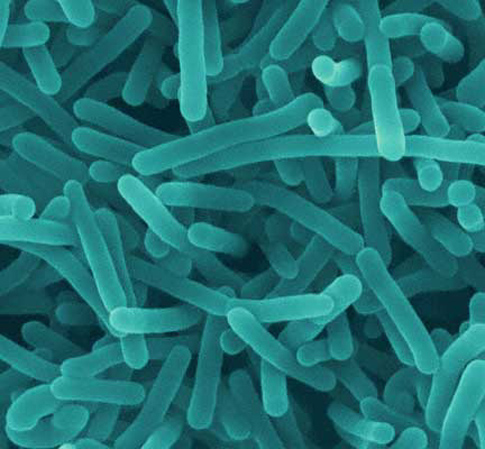
Bacteria to the Rescue

See how scientists are learning from the most common form of life on Earth to fight cancer, produce ethanol and maybe even grow crops on the moon

Germophobes and OCDers may want to stop reading now, or at least seriously consider only continuing with a bottle of Purell on hand—for today, were talking about bacteria, those squirmy no-see-‘ems that densely cover just about every surface imaginable here on Earth, including your own skin. However much hypochondriacal hatred the mention of them can bring about, as with other quasi-oxymorons like good cholesterol, wed be in a lot of trouble if it werent for bacteria.

[ Read Full Story ]
Inspired By Nature

Gecko Tech

The amazing lizard uses its hairy toes to defy gravity and its dynamic tail to always land on its feet if it falls. See how scientists are using the gecko's tricks to design better robots, spacesuits and—just maybe—Spiderman gloves

Most people's knowledge of geckos doesn't extend much beyond the Cockney-tongued lizard hawking car insurance on TV. I wont go into the implausibility of these ads, the least of which being that a gecko wouldnt have a chance to survive Britains cold climate long enough to pick up an accent. They do, however, thrive abundantly in warm, tropical climates, and in total compose nearly 15% of all reptile species on Earth. If you're fortunate enough to live in gecko country, you've probably seen them climbing and crawling over just about every surface imaginable, including the ceiling.

[ Read Full Story ]
Inspired By Nature

The Hidden Talents of the Lowly Sea Cucumber

Scientists studying the oft-maligned undersea creature are finding more than meets the eye

Though its one of the most perfectly named living things on this planet, the sea cucumber, on first glance, isn't among the most exciting aquatic species. Distantly related to starfish and sea urchins, the sea cucumber in appearance lacks the brio and allure of its cousins, and except for a few variations among subspecies, the general body plan of the cucumber basically resembles a large, leathery sausage crawling along the ocean floor. Yum.

[ Read Full Story ]


Download Our iPhone App

Stay up to date on the latest news of the future of science and technology from your iPhone with full articles, images and offline viewing


Follow Us On Twitter

Featuring every article from the magazine and website, plus links from around the Web. Also see our PopSci DIY feed


Become a Fan On Facebook

Share links with friends, comment on stories and more


December 2009: Best of What's New

In our December issue, Popular Science names the 100 best innovations of the year: bombproof wallpaper, self-parking cars, the fastest helicopter, and 97 more. Plus inventor profiles and videos.

Check out the best of what's new here.

Popular Science Photo Pool


Share your photos in the Pop Sci pool at www.flickr.com!
tags_sprite.png
POP_embeddedForm_cover_May09.jpg