
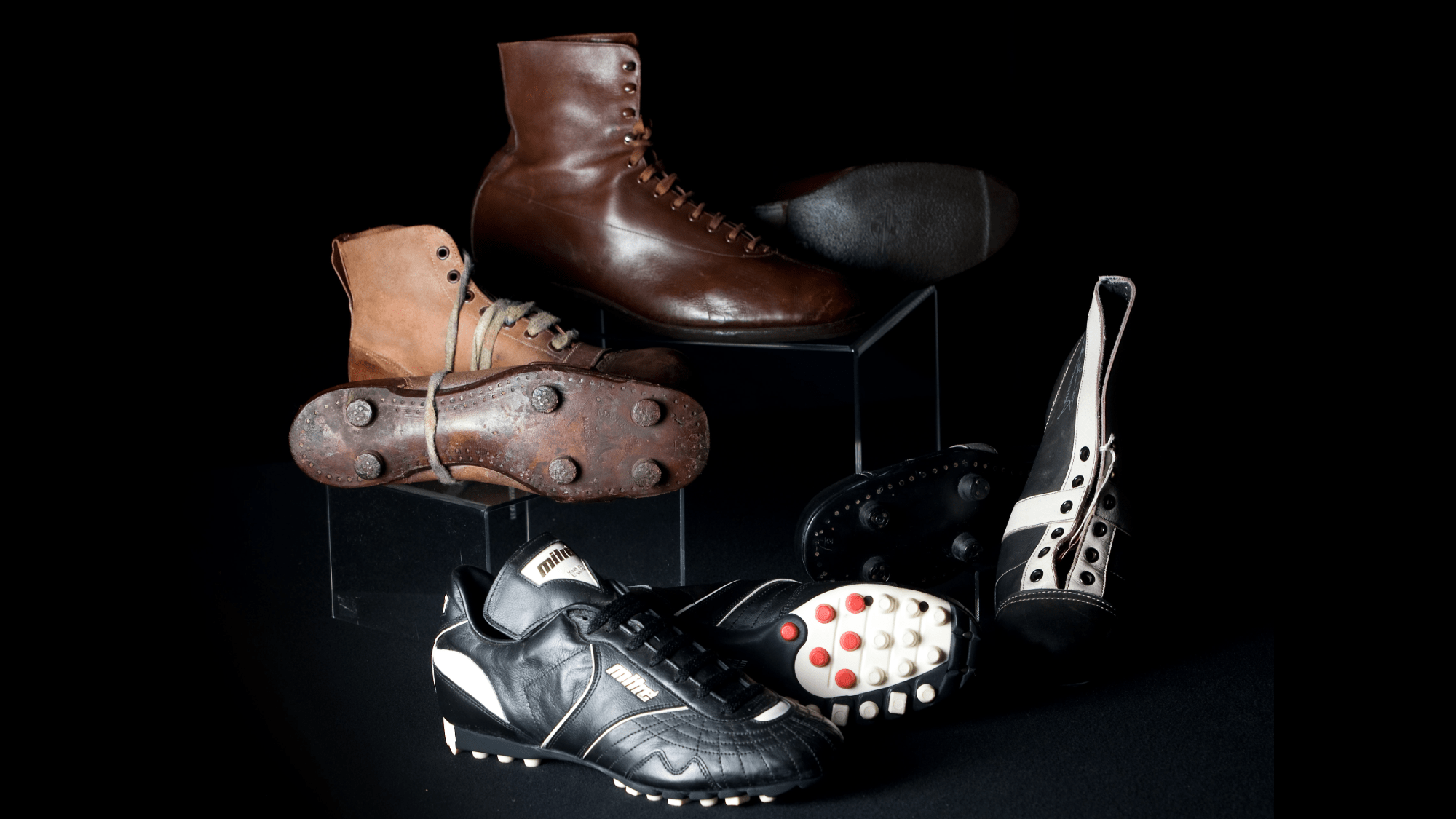
Viewers tuning into the 2026 World Cup may not realize it, but they are staring at a piece of high-tech equipment hundreds of years in the making with every single kick. The seemingly simple soccer cleat has progressed from a chunky leather work boot worn in factories to a marvel of modern engineering made with advanced synthetic materials and composites. Some of today’s cleats even weigh in at less than a pack of playing cards. The evolution of these soccer cleats, or “football boots,” as they’re often called, mirrors the evolution of the beautiful game and its players over time.
That progression essentially breaks down to a few key components: the shoe upper, the sole and toe guard, and, of course, the cleats. Each part looks radically different today than when players first started knocking balls around hundreds of years ago. The leather for the upper of the shoe once came from kangaroo hide (not cowhide). The cleats, now scrupulously modeled in 3D simulations, originated as sharp metal nails, the kind sold at a local hardware store. These changes are the result of fierce competition between a handful of major brands, each pushing the game, and the athletes’ speed, power, and physics-defying spin, forward.
The early years: leather work boots with sharp metal nails
Modern soccer as we know it began somewhere between the 18th and 19th centuries. Those first few hundred years were far less organized than the game millions around the world view on their screens today. People (most often middle- or lower-class workers) played for leisure, without formal leagues or professional teams. As a result, those hobbyists typically played with whatever equipment they had lying around. That often meant leather work boots or even their bare feet. Those early days are how soccer footwear earned the moniker it has almost everywhere outside the United States: football boots. The name certainly fits. Soccer shoes in the late 1800s and early 1900s were indistinguishable from the rugged, high leather boots seen on factory floors.
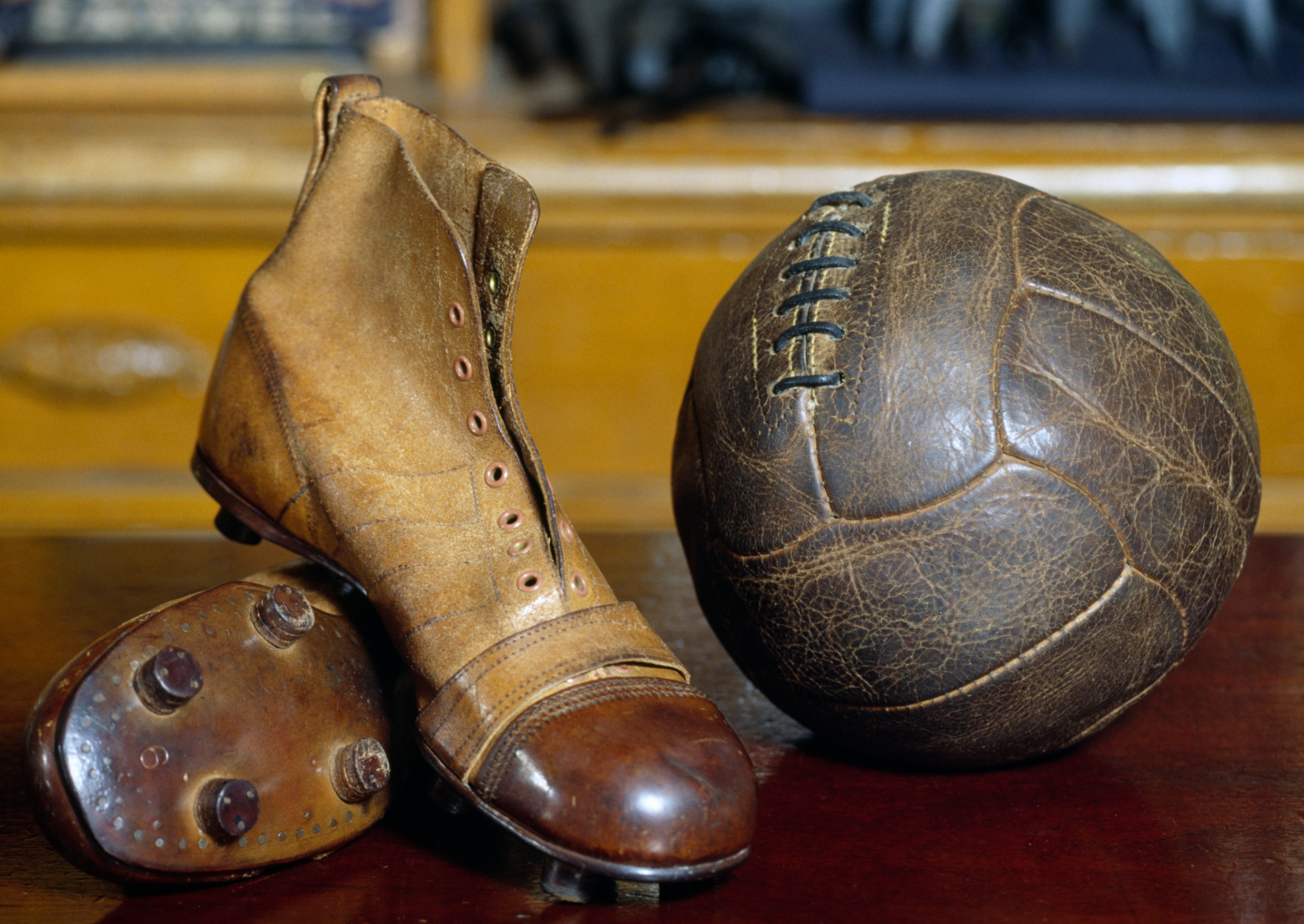
But players started making modifications pretty quickly. Work boots lacked traction, which isn’t ideal when playing on British turf often muddied by rain or slicked by winter frosts. To compensate, early soccer players would hammer nails into the soles of their shoes, which would dig down into the grass and provide at least a bit more stability. That slight improvement came at a cost. Anyone caught on the receiving end of a DIY soccer cleat loaded with sharp, likely rusting metal nails probably wasn’t getting back up to finish the game.
Designs started to change in the late 1800s, as organizers attempted to standardize more parts of the game. In 1886, the then-newly formed Football Association in England released a document laying out a handful of equipment guidelines intended to make the game marginally safer. Importantly, shoes of some kind were now mandatory. The document also banned the use of nails in shoe soles, unless their edges were covered with leather. Relatively quickly, a new basic standard was formed: an all-leather, lace-up boot with six studs spread out along the sole. That stud layout would mutate into the cleats of today.
How a pair of German brothers changed the game
Soccer cleats saw occasional iteration during the early 20th century. However, a real turning point that would define the future of both the shoe’s sole and its support is the work of two brothers from a small German town. Rudolf and Adolf Dassler from Herzogenaurach (often referred to as Herzo) created the first fully specialized soccer shoes. Their company’s name, Gebrüder Dassler Schuhfabrik, translates to Brothers Dassler Shoe Factory in English.
Theirs was the first company to specialize in optimizing design for performance, in both soccer and running. According to the Hulu documentary series Sneaker Wars, a series of odd events led the Dassler brothers to provide backup shoes for American sprinter Jesse Owens during his historic performance at the 1936 Berlin Olympics. The ensuing name recognition would make them the most sought-after athletic shoe, but it would also drive a wedge between the brothers. They eventually split and created two of the most important brands in soccer footwear: Adidas and Puma. More than a century later, both of those now-international companies still have their headquarters in the tiny German shoemaking town.
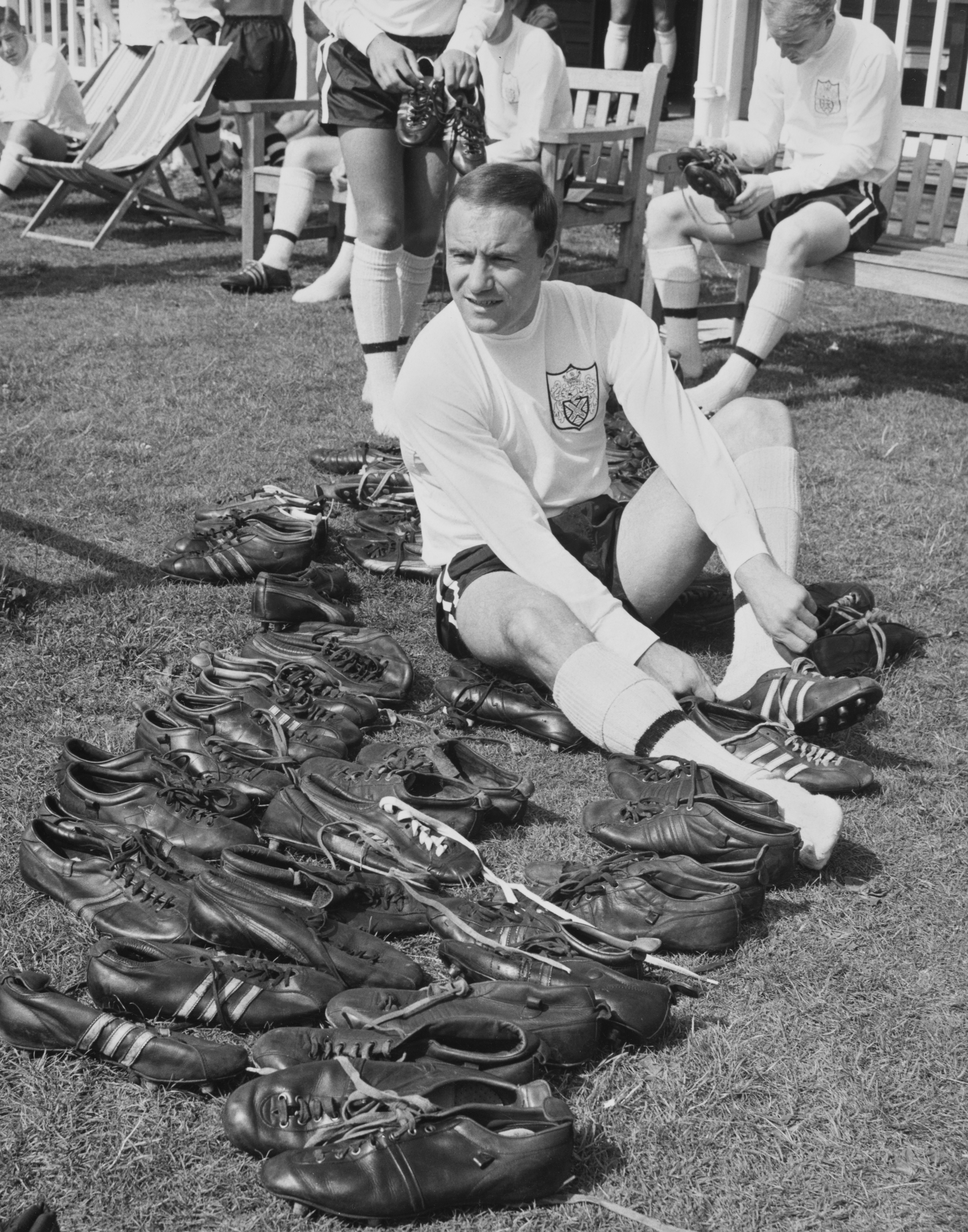
Not long after the company’s formation, Puma moved footwear forward by introducing the first boot with an interchangeable stud. That single part was important because it meant demanding players could swap out different-sized plastic and rubber studs to best suit different pitches and weather conditions. Meanwhile, shoe designs started becoming lower cut, resembling a modern sneaker more and more. Aside from aesthetics, this design change allowed for better player movement and agility. Players could run faster and change direction more quickly, which translated to better performance on the pitch.
The soccer cleat also had to adapt to changes in the way the game was played. By the 1960s, an increasing number of teams were adopting artificial grass. The longer, more traditional studs struggled to grip properly on the slicker surface, so shoe makers began using shorter, rubber cleats. Around the same time, in 1966, Puma introduced its Puma King model, which connected the upper part of the shoe to the sole. This design would go on to be copied by others for years.
About that kangaroo leather…
About a decade later, Adidas made the more controversial design decision to use kangaroo leather in its 1979 Adidas Copa Mundial. The material was prized for its lightweight, uniquely soft texture, and durability. It was a big hit.
That model would go on to become one of the best-selling shoes of all time. The kangaroo-based material came to be known as “K-leather” and became a gold standard in the industry. That’s only recently started to change. ESPN estimates the global commercial kangaroo product industry was worth $200 million in 2021, a figure propped up by K-leather shoes.
In 2023, both Puma and Nike announced they would cease production of any product made with kangaroo leather by the end of the year. That decision came on the heels of a handful of proposed state and federal bills in the U.S. aiming to make it illegal to sell kangaroo-based products. At the same time, advances in synthetic leathers were increasingly becoming more attractive for shoe makers in terms of both performance and production cost.
Cleats enter the television era
Since the 1990s and 2000s, soccer shoe design has iterated more rapidly. This breakneck pace of innovation is attributed to both rising viewership and participation among players around the world and to the rise of American shoe maker Nike as one of the biggest brands in the sport. Several models stand out during that period for advancing the shoe’s tech and science. Adidas’s 1994 Predator added strips of rubber on the shoe’s toe, which provided extra grip that the company and players say translated to bigger, curvier bends on the ball. Though the degree to which that was the shoe’s doing or the player’s skills remains up for debate.
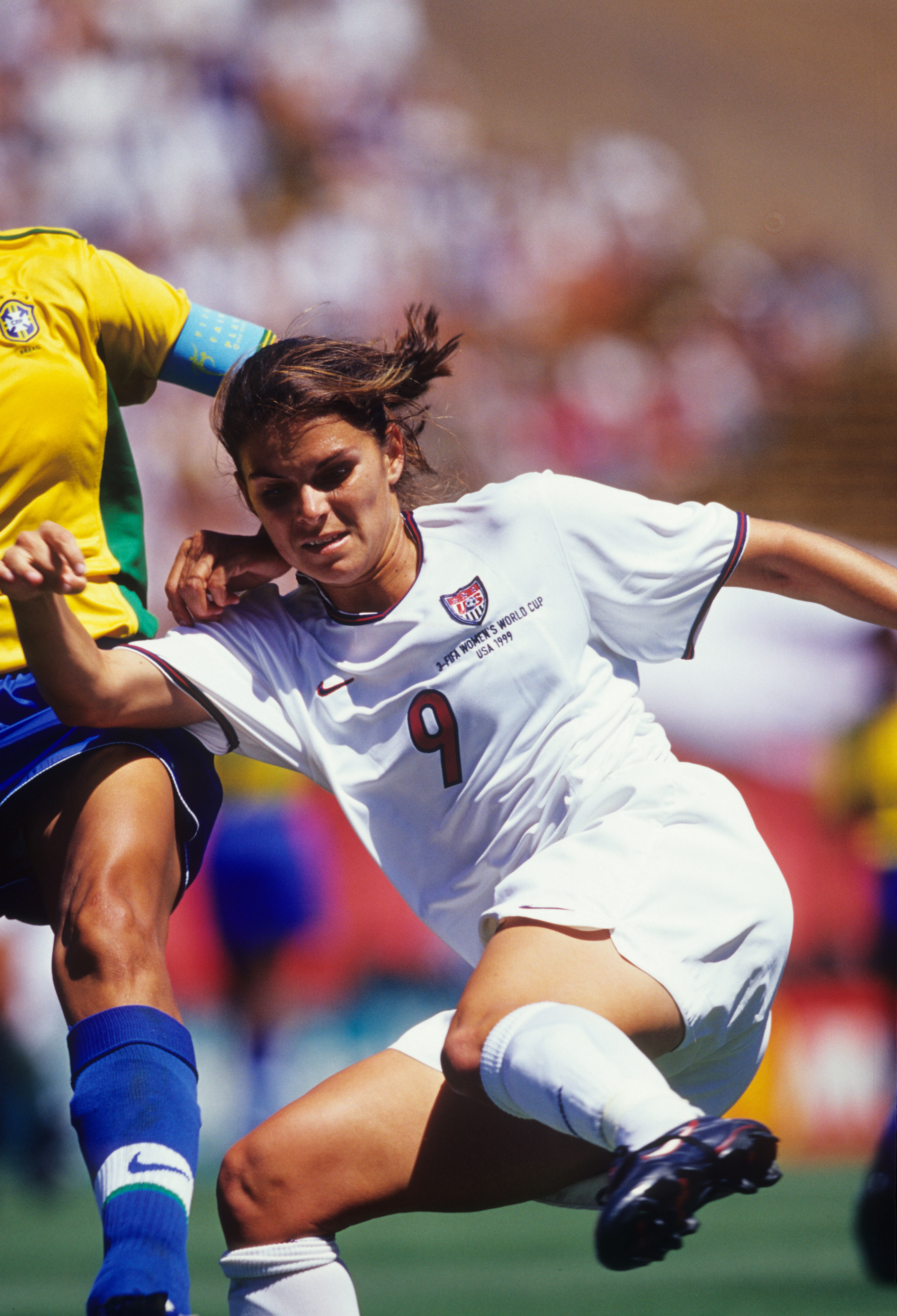
In 1998, Nike’s Mercurial became one of the more influential shoes to use synthetic leather instead of the real thing. Fast forward 16 years, and Nike would go on to release its Magista line, crafted out of a single piece of fabric, which meant it essentially fit more like a sock than a shoe. Magista would go on to influence a number of other models, some of which are still trying to emulate that sock-like look. It took less than 100 years for the soccer shoe to evolve from a heavy leather work boot to a nearly weightless piece of synthetic fabric some might mistake for loungewear.
The modern era: computer model, ultralightweight material, and bright colors
Instead of cobblers working in dark rooms, making soccer shoes now is more likely to involve a team of engineers comfortable with 3D computer models. Today’s major manufacturers turn out new ideas in computer simulations and make fine adjustments to every part of the shoe, from upper size to cleat shape and positioning, to try to give players an edge.
Nike reportedly uses a tool called Finite Element Analysis (FEA) to test out plate positioning digitally prior to real-world testing. In a 2016 interview with Popular Mechanics, a Nike executive said data gleaned from FEA revealed that new chevron-shaped studs improved propulsion and multidirectional movement over previous blade-shaped studs. 3D modeling has also helped make overall shoe designs even lighter and better at gripping than before. This reduced weight and added grip complement the modern game, which often prioritizes outright speed and power above all else. Exemplifying that, Adidas made the world’s first soccer cleat weighing less than 100 grams in 2015. To put that in perspective, that’s about the same weight as a four-pack of AA batteries.
Cleat makers are also embracing new types of polymers and synthetic materials that early shoemakers couldn’t have dreamed of. Nike introduced what it calls Anti-Clogging Tech, which uses an adaptive polymer and hydrophobic solution that keep mud from getting stuck in plates, which can reduce grip and traction. Doing this reportedly required understanding the molecular structure of mud. More recently, the company has also introduced adaptive traction technology, which lets pegs in cleats automatically adjust to varying turf conditions, extending deeper into the ground on softer grass and acting more like a stable stud on harder pitches.
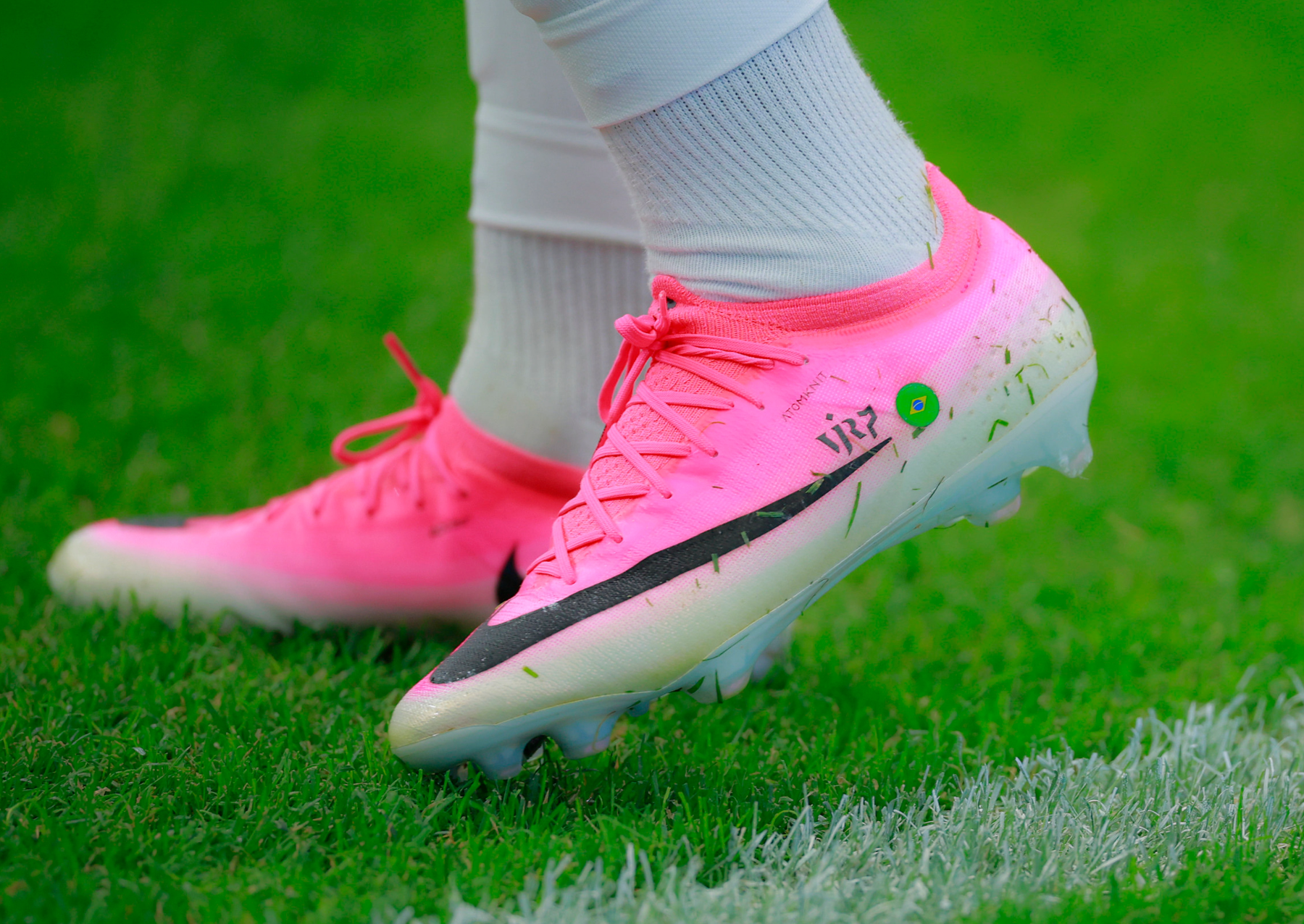
But maybe the most noticeable innovation in shoe tech that most fans will notice during matches at this year’s World Cup has little to do with tech at all. It’s the colors. For decades, soccer cleats were almost exclusively monochrome white or black. That’s certainly not the case today. The field is inundated with a full panorama of bright, bold colors, with hot pink being particularly popular. This shift to brighter colors is partly so T.V. viewers can more clearly spot the shoes at home, but it also has a more strategic, psychological component. It apparently makes elite players feel like they have an edge.
“What we’ve been hearing consistently from the athlete and the consumer, especially when it comes to big moments, is that bright colors give them confidence,” Nike Global Footwear Product Line Manager Odinga Nimako said in a recent interview with The Athletic.
While the game’s massive stadiums and even bigger player personalities may attract the bulk of attention during this year’s World Cup, it might be worth taking a moment to look down and appreciate just how far those boots have traveled.
In The History of Every Thing, Popular Science uncovers the hidden stories and surprising origins behind everyday things.
