There is a certain historical charm to wooden rollercoasters, even if many prefer to admire them from a distance these days. Although the thrill ride’s origins technically trace back to 19th century France, the first traditional “gravity switchback railway” design debuted at New York’s Coney Island in 1884. The introduction of steel rail coasters during the 1950s marked a new era, allowing for previously impossible feats of design like hairpin turns, dizzying loops, steeper drops, and cars running higher speeds.
But for many riders, metal rollercoasters offered another huge benefit: much smoother rides. Their wooden siblings may look and sound iconic, but the underlying engineering often resulted in teeth-rattling experiences liable to leave even the most experienced and diehard coaster enthusiasts with sore backs, bruised limbs, and aching heads. Despite this painful drawback, the classic thrill rides still maintain a dedicated following, and designers regularly push new iterations to their limits.
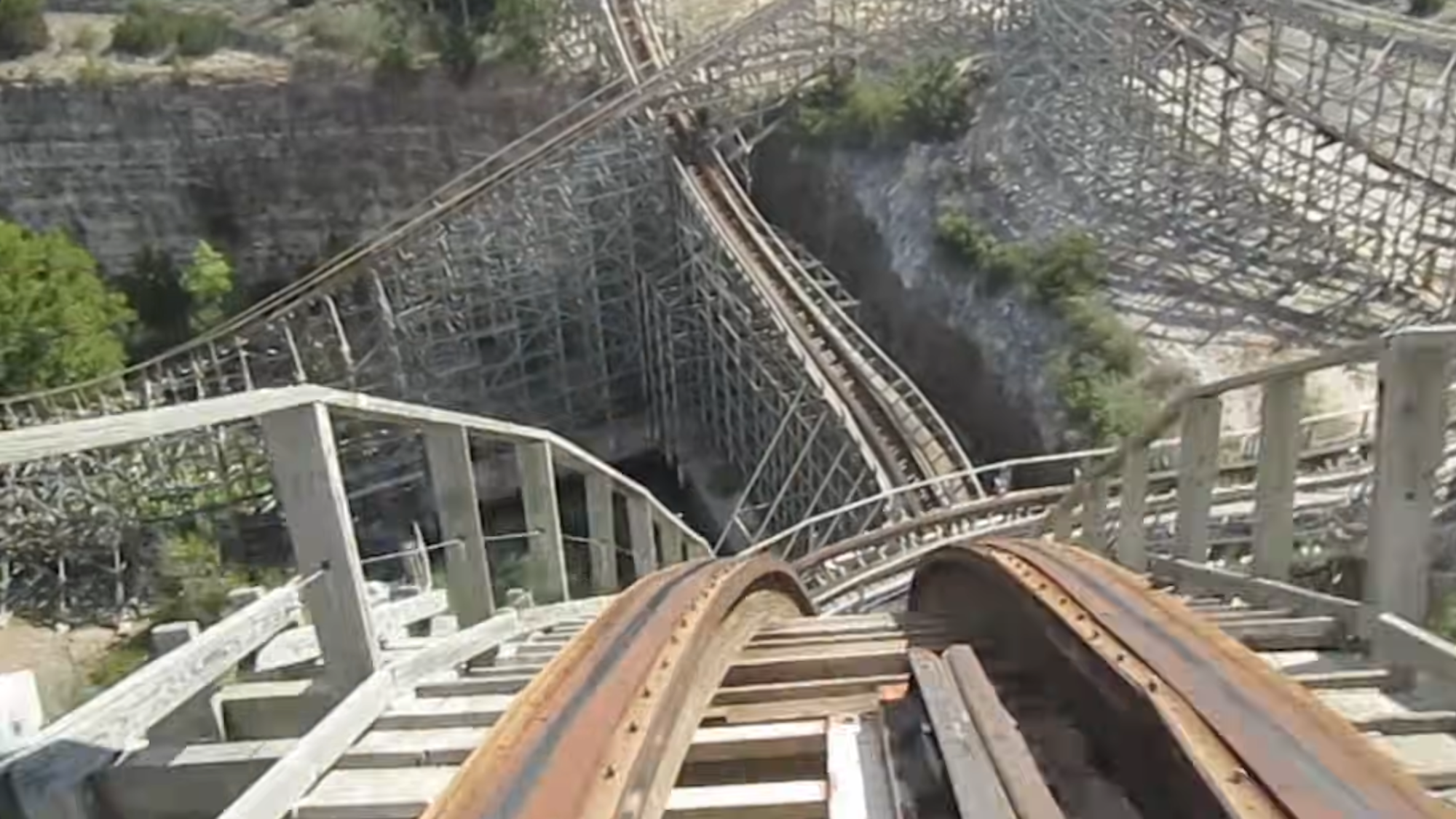
One of the best examples of the wooden rollercoaster’s highs and lows arrived nearly 35 years ago in San Antonio, Texas. In 1992, The Rattler officially became the world’s tallest and fastest wooden coaster when it opened at Six Flags Fiesta Texas, with a top height of 179 feet that then sent riders plunging down a 166-foot first drop, before continuing along its 5,080-foot-long circuit. As popular as it was for visitors, recently resurfaced footage of the ride showcases the unnerving amounts of stress that The Rattler’s wooden frame absorbed during each run. As BoingBoing highlights, it’s easy to see how the coaster slowly became famous “less for excitement and more for how rough it had gotten.”
Uploaded to social media by Theme Park Review, the clip depicts The Rattler’s frame visibly warping and bending as each car careens down the tracks. But while it may seem like the rollercoaster is moments away from disaster, the swaying was entirely expected—even intentional.
“This was normal and how the ride was designed to operate,” the account explains.

Rattler Front Row Seat on-ride HD POV Six Flags Fiesta Texas
All that physical give in the wood ensured that no matter how much The Rattler actually rattled its guests, the frame wouldn’t crack under the pressure. It was still a tough ride, with numerous injuries reported over the years requiring multiple structural updates. Despite this, the coaster ultimately continued to flex with each run for the next decade before its temporary closure in 2012. Over the next year, the rollercoaster was upgraded into a hybrid wooden-steel design and renamed The Iron Rattler before opening again on May 25, 2013. It’s been offering thrill seekers a (much smoother) experience ever since.