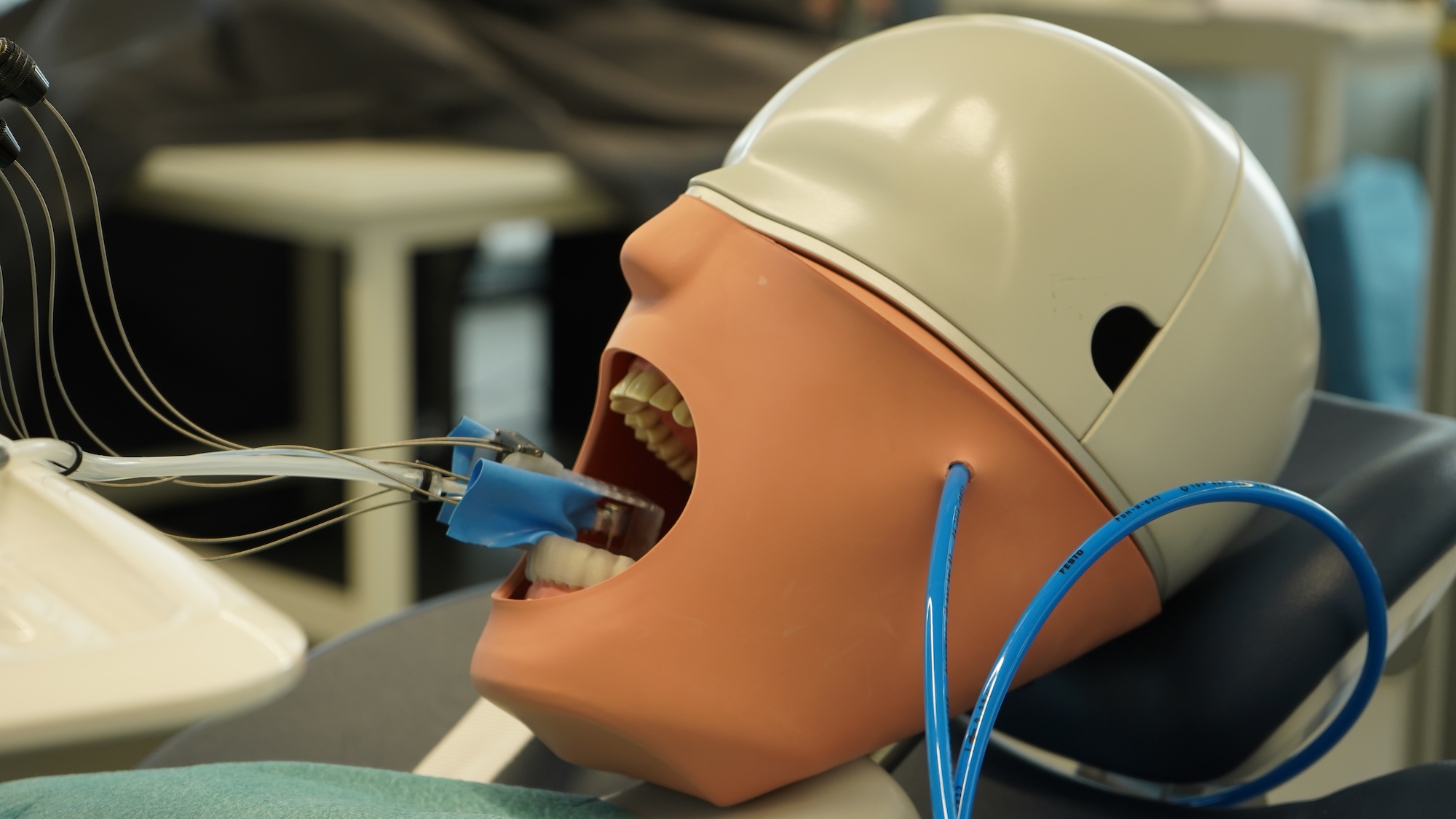
Getting a dental crown is far from enjoyable. It’s also time-consuming—preparation, molding, and fitting can require multiple lengthy visits separated by days or even weeks. But for patients who don’t mind the idea of letting a tiny robot into their mouth, there may be a new approach that shortens and simplifies the overall process.
At the University of Basel in Switzerland, engineers are developing a wine cork-sized robotic device capable of removing the necessary portions of a tooth in need after scanning it in a single visit. This Miniature Intraoral Robot (MIR) would allow dentists to order the crown at the same time, minimizing the number of return appointments.

MIR dental robot in action
MIR is about 1.7 inches long and one inch wide, with all its motors and control equipment separated by a combination of tubes, cabling, and drive shafts. When at work, the robot’s drilling generates less than five newtons of force, which feels about as heavy as a half-liter bottle of water.
“It is designed to be small enough to fit comfortably into an open mouth,” Yukiko Tomooka, a roboticist at the University of Basel, explained in a statement. “Even if the patient turns their head, the MIR moves with them.”
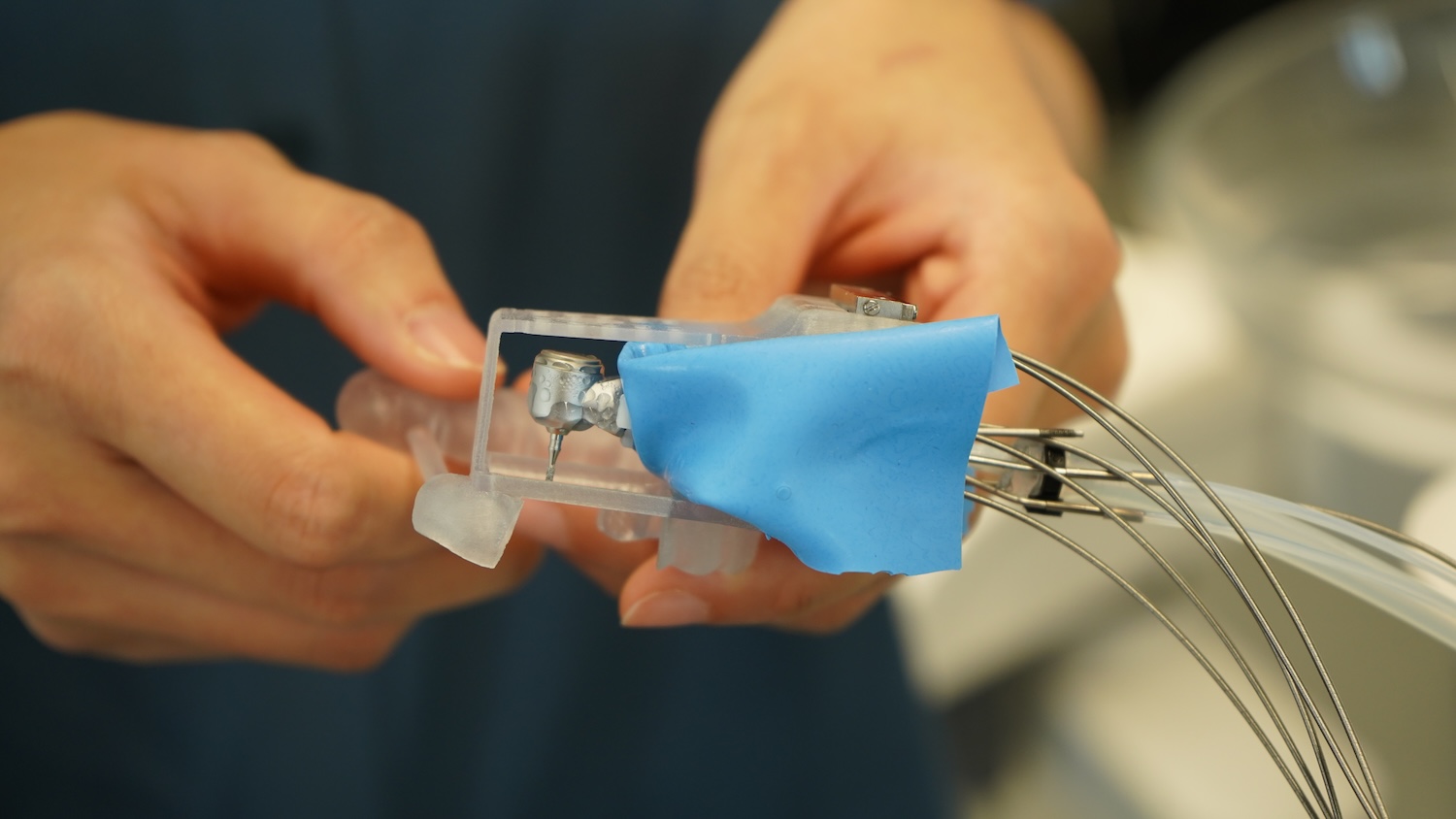
The procedure is straightforward and detailed in a study published in the journal IEEE Transactions on Medical Robotics and Bionics. MIR’s wide drill first grinds away a tooth’s surface from above before its second, thinner drill does the same from the sides. So far, Tomooka and her colleagues have tested the design on model teeth made from similarly hard synthetic resins and ceramics. Even without sensors or corrective guidance, the robot’s positional errors measured less than 0.2 millimeters. These will likely decrease even more once those additions as well as a camera are installed into the machine.
From here, the team is figuring out the best ways to integrate the necessary additional components without making MIR any larger. These additions would allow the robot to continue its work even if temporarily disrupted.
“Even after a power outage, MIR would know where it is and where it needs to continue based on the sensor data,” added biomedical engineer and co-designer Georg Rauter.