
People looking to buy or rent a new home expect to get a good look at the place before writing out a check. Online listing makes this easier with room by room photos, and, in some cases, even remote tours conducted through virtual reality headset. But it turns out these virtual real estate walk-throughs go back much further than expected. A new study published in the journal Early Popular Visual Culture, found examples of a fancy London real estate firm offering proto-virtual walk-throughs of property listings dating back as early as the 1830s.
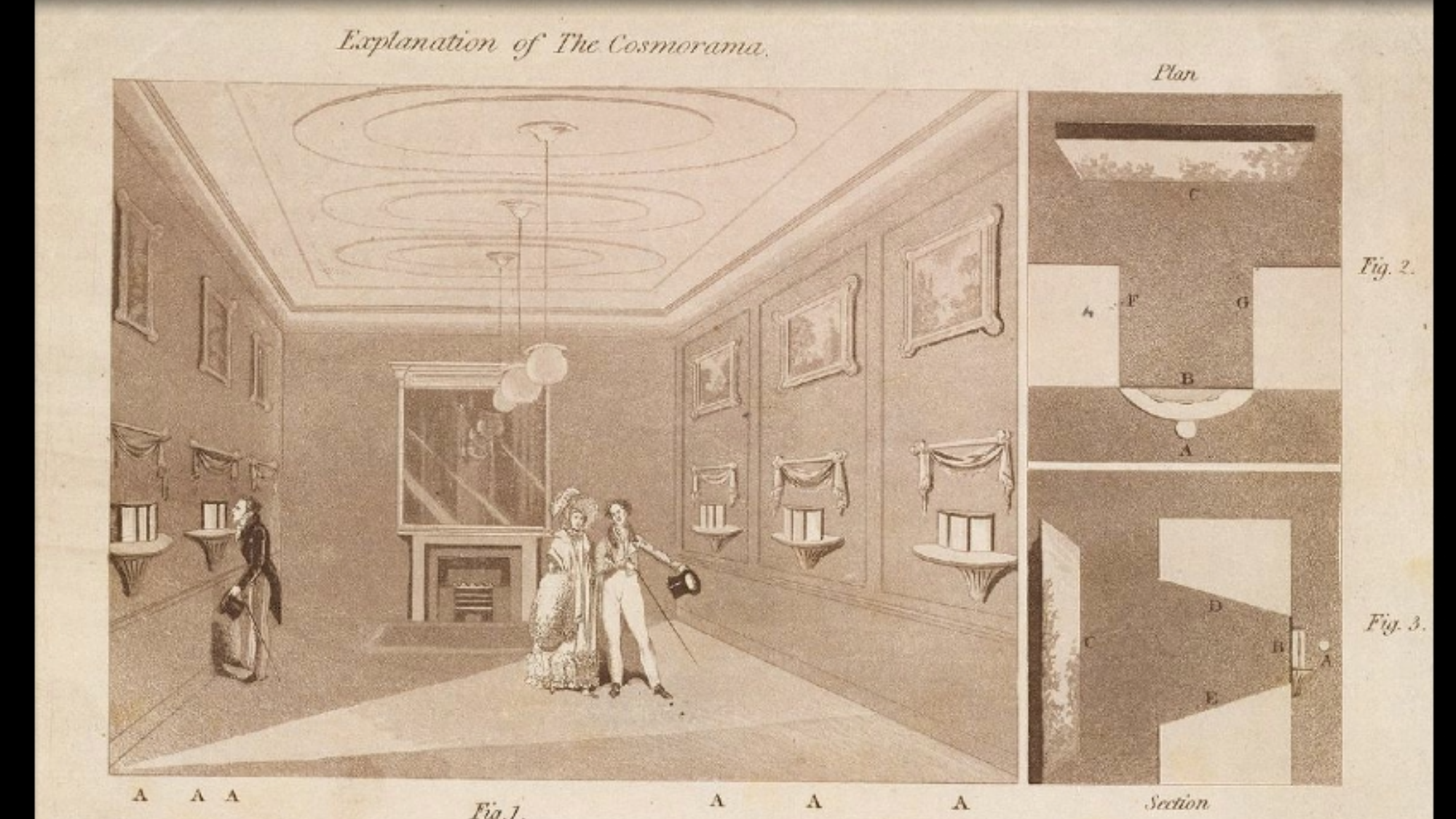
Their virtual medium of choice was the cosmorama: a gallery where a wealthy buyer could look through a lens and see a magnified, illuminated painting of a property and its surrounding grounds. Though cosmoramas, like their better-known peepshow cousins, were widely used as a form of 19th-century visual entertainment, this is one of the first known examples of the technology being used for a commercial real estate application.
“What we’ve discovered through this latest research project, however, is that its use extended beyond simple entertainment: the appeal of cosmoramas was that they sold an experience of virtual travel,” John Plunkett, a University of Exeter professor and study co-author, said in a statement. “This was utilised by estate agents seeking to sell luxury properties and country estates.”
Cosmoramas: an early, immersive visual adventure
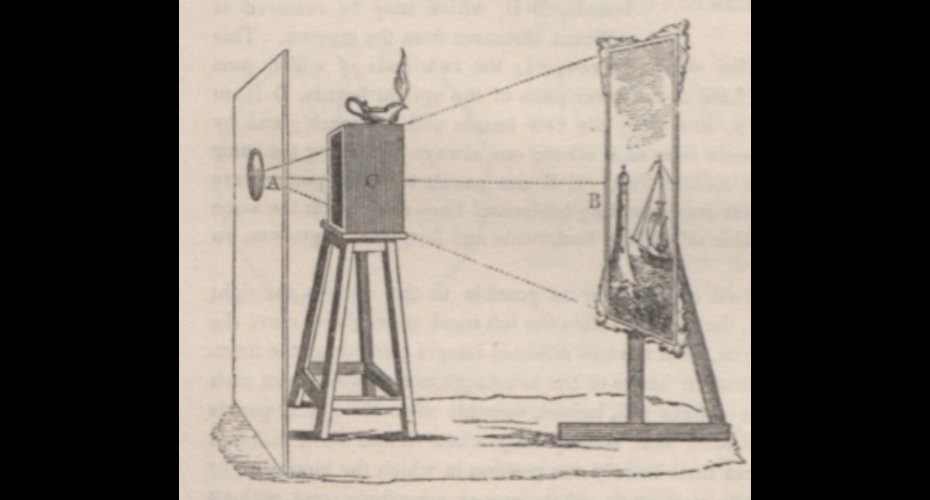
Historians trace the first cosmorama back to Paris in 1808, though they didn’t really pick up steam until the 1820s. The medium was typically presented indoors, and consisted of a series of detailed paintings viewed through a magnifying lens. Use of the lens enhanced perspective and gave the illusion of greater depth. It was an early way for people to have an “immersive” visual experience.
Cosmoramas took off in popularity as a means of visual entertainment largely across Europe and the Americas. They were a form of escape and virtual travel in an era where getting far from one’s immediate hometown wasn’t common. Viewers looking through the lenses could suddenly find themselves transported across the world to some distant country, or get a glimpse of what life might feel like in someone else’s shoes. And while it’s easy to take for granted today, in a world of abundant Netflix shows and never-ending doomscrolling, cosmoramas were a visual marvel for their time.
Plunkett was researching examples of cosmoramas in 19th-century England when he came across a newspaper clipping advertising something previously unseen. A real estate firm called Brooks and Hedger (later named Brooks and Greens) ran an ad dating to 1838, saying they were offering cosmoramic views of certain property listings for sale. The firm claimed to use the medium to offer hundreds of views of estates, showing an aerial, bird’s-eye view of the house and its adjoining grounds. To pull this off, artists would have had to go to each listing and painstakingly paint the scene by hand. Brooks and Hedger offered the cosmoramic viewings for the better part of 20 years, though most of the adverts Plunkett found date to the 1840s.
One of those newspaper advertisements notes how the cosmorama of the property listing depicts a mansion and its surrounding estate with “all the vividness and truth of nature.” Naturally, given the intense amount of labor needed to make these designs, cosmoramas were reserved for more expensive, higher-end listings.
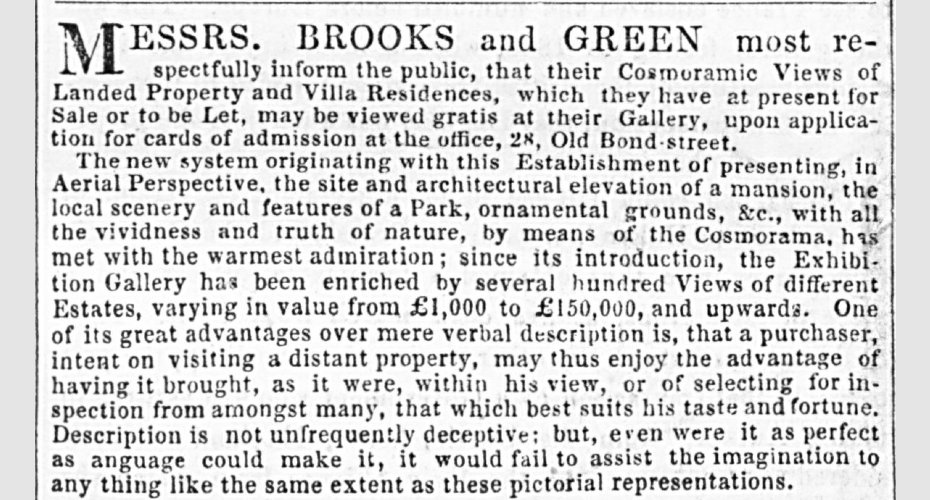
“Its great advantages over mere verbal description, is that a purchaser, intent on visiting a distant property may thus enjoy the advantage of having it brought, as it were, within his view, or of selecting for inspection from amongst many, that which best suits his taste and fortune,” the advertisement reads.
From cosmoramas to virtual reality
Plunkett says the listings are a reflection of a shifting cultural and economic environment at the time. Urban population growth in England and Europe led to an uptick in property sales throughout the 19th century. Meanwhile, more and more competition for a shrinking supply of properties, led to the creation of the first specialized real estate agents. With competition growing, these sellers had to get creative to entice the biggest spenders. They didn’t know it at the time, but those real estate agents would help create a standard for listings that endures to this day through iterations of various visual mediums.
“But the founding of the first specialised estate agents set in motion a more professional approach to marketing property, fuelled by population growth, urbanisation and improved transport links,” Plunkett added. “In that context, we can see how Brooks and Green pioneered the virtual tour, over 150 years before digital technology would fully realise this potential.”
In That Time When, Popular Science tells the weirdest, surprising, and little-known stories that shaped science, engineering, and innovation.
