
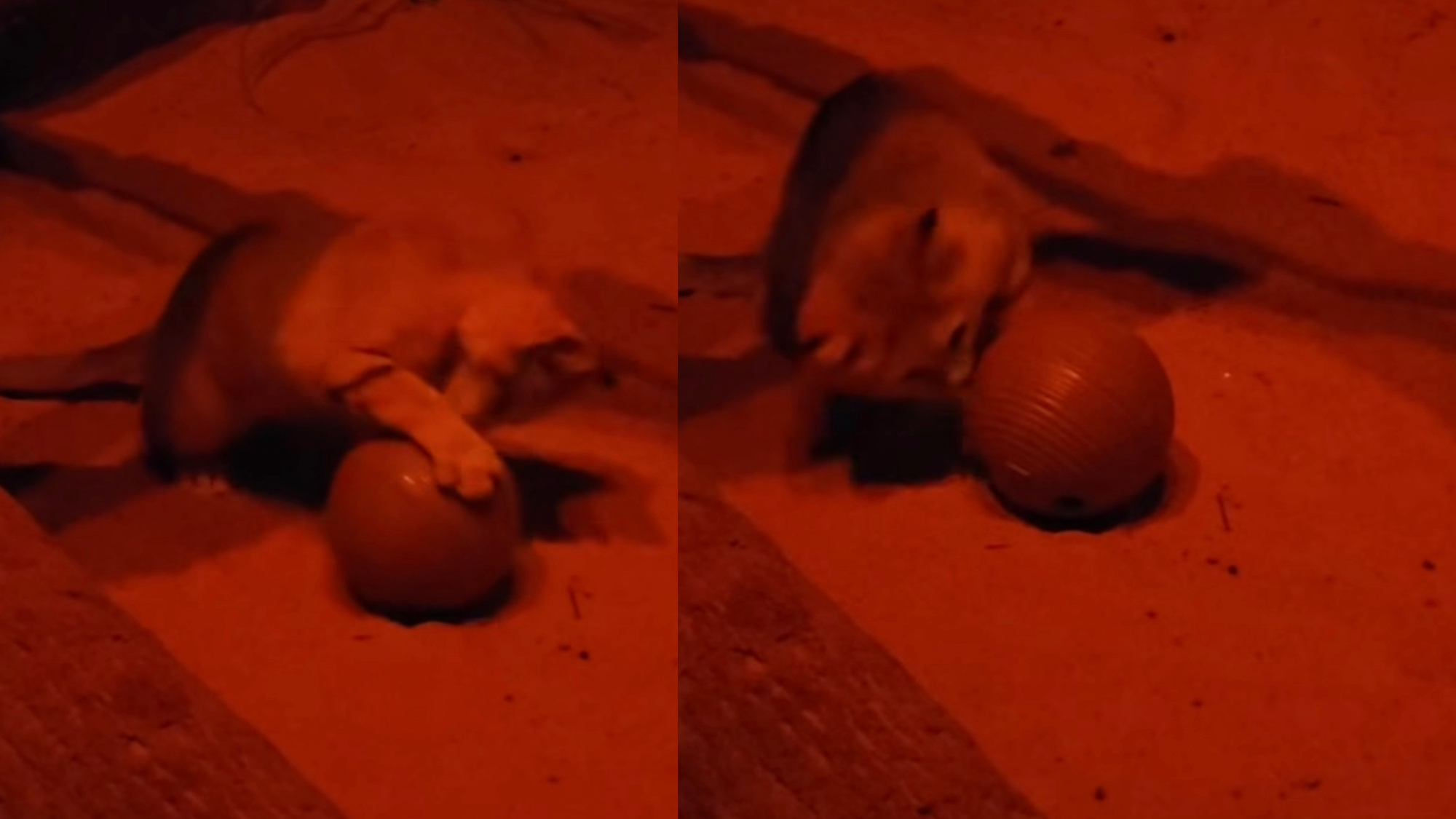
Cats are famously obsessed with catnip, but a recent social media post from the Bronx Zoo in New York City highlights that it’s not just bossy domestic felines that take an interest in the plant.
In the zoo’s video, a three-year-old female sand cat (Felis margarita) plays with a catnip-filled ball. Sand cats are the sole only species that live in the true desert. They can withstand both exceptional heat and cold, from 122 degrees Fahrenheit (50 degrees Celsius) to -13 degrees Fahrenheit (-25 degrees Celsius). They are found across northern Africa as well as southwest and central Asia.
“The keepers added catnip to this ball to give the sand cats a novel item to stimulate them physically and mentally. Cats respond to a chemical in catnip called nepetalactone,” according to the post. “Its primary function is to repel insects from the plant. Many cats, though not all, are highly attracted to it, and it is safe and non-toxic for them to enjoy.”
Catnip is part of the mint family. According to Jessica Moody, curator of primates and small mammals at the Wildlife Conservation Society (WCS), not all felid species have the same sensitivity to the plant. Moody tells Popular Science that sex and age also impact the response on an individual level. Bronx Zoo (part of the WCS) animal keepers frequently employ catnip, officially called Nepeta cataria, as well as other scents to incite natural behaviors such as investigation and play.
It’s clearly working with this particular feline, whose species the IUCN Red List categorizes as a species of least concern. However, “it is difficult given their low population density and harsh environment to track true wild populations,” Moody explains. “Primary threats to the survival of sand cats in the wild include habitat loss and a decline in prey caused by human disturbances like livestock grazing.”
