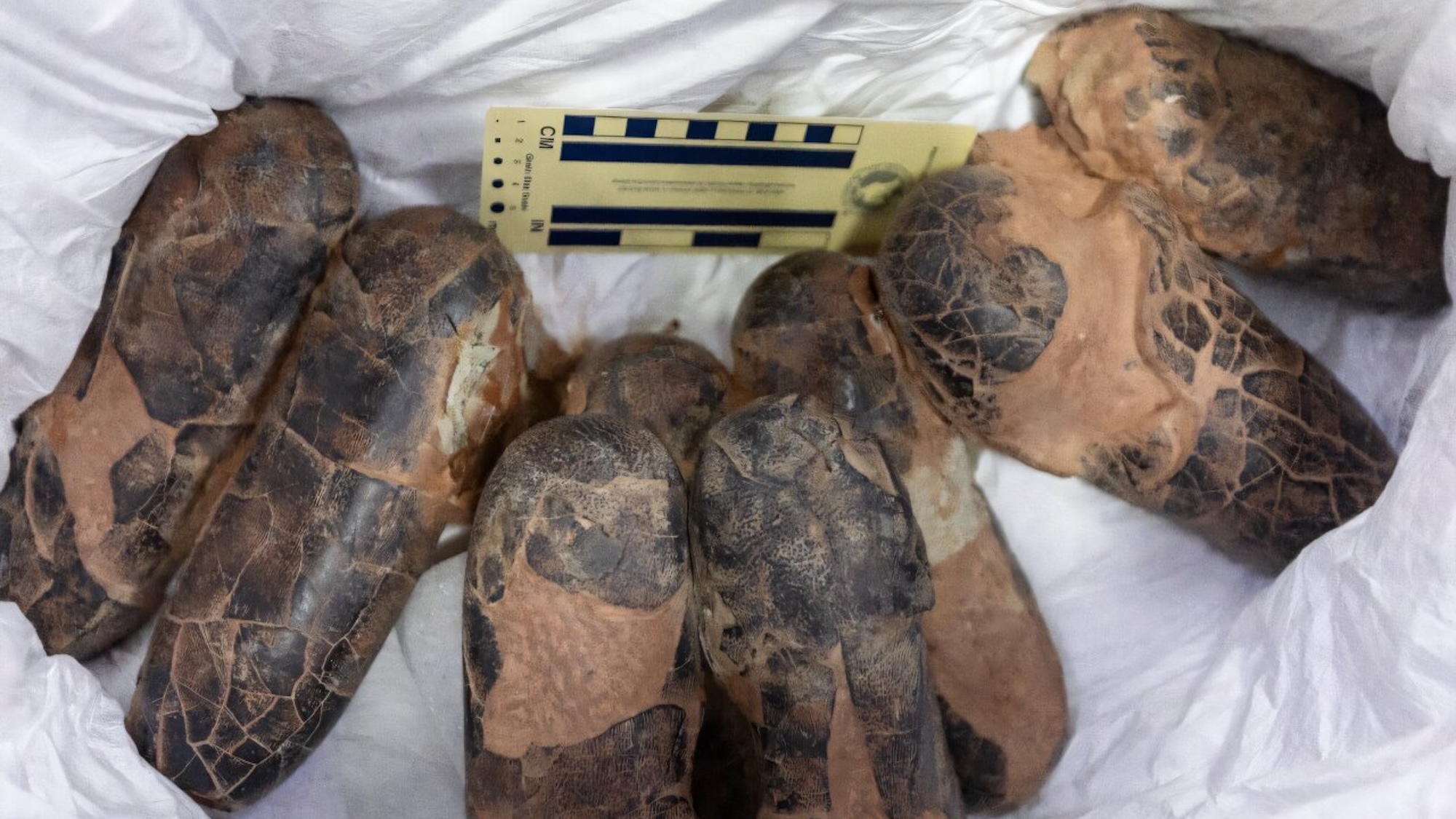
Mongolia contains some of the most well preserved and diverse fossils in the world, but they attract more than paleontologists. Black market smugglers routinely rob both the East Asian country of its prehistoric heritage and the global scientific community of invaluable knowledge. Thanks to recent international recovery efforts, some of those stolen treasures have finally returned home nearly 20 years after their initial disappearance. According to officials at Mongolia’s new National Museum of Natural History, 29 sets of dinosaur fossils are now back in the capital of Ulaanbaatar—including a half-complete, extremely rare relative of Tyrannosaurus rex.
During a recent conference, Ulaanbaatar police spokesperson D. Munkhkhuyag said that smugglers absconded with the remains in 2006, “with the aim of making a profit.” It wasn’t until 2013 that French customs officials discovered some of the first specimens. Over the next two years, France worked with Mongolia under international illicit cultural heritage trafficking laws to repatriate the fossils.
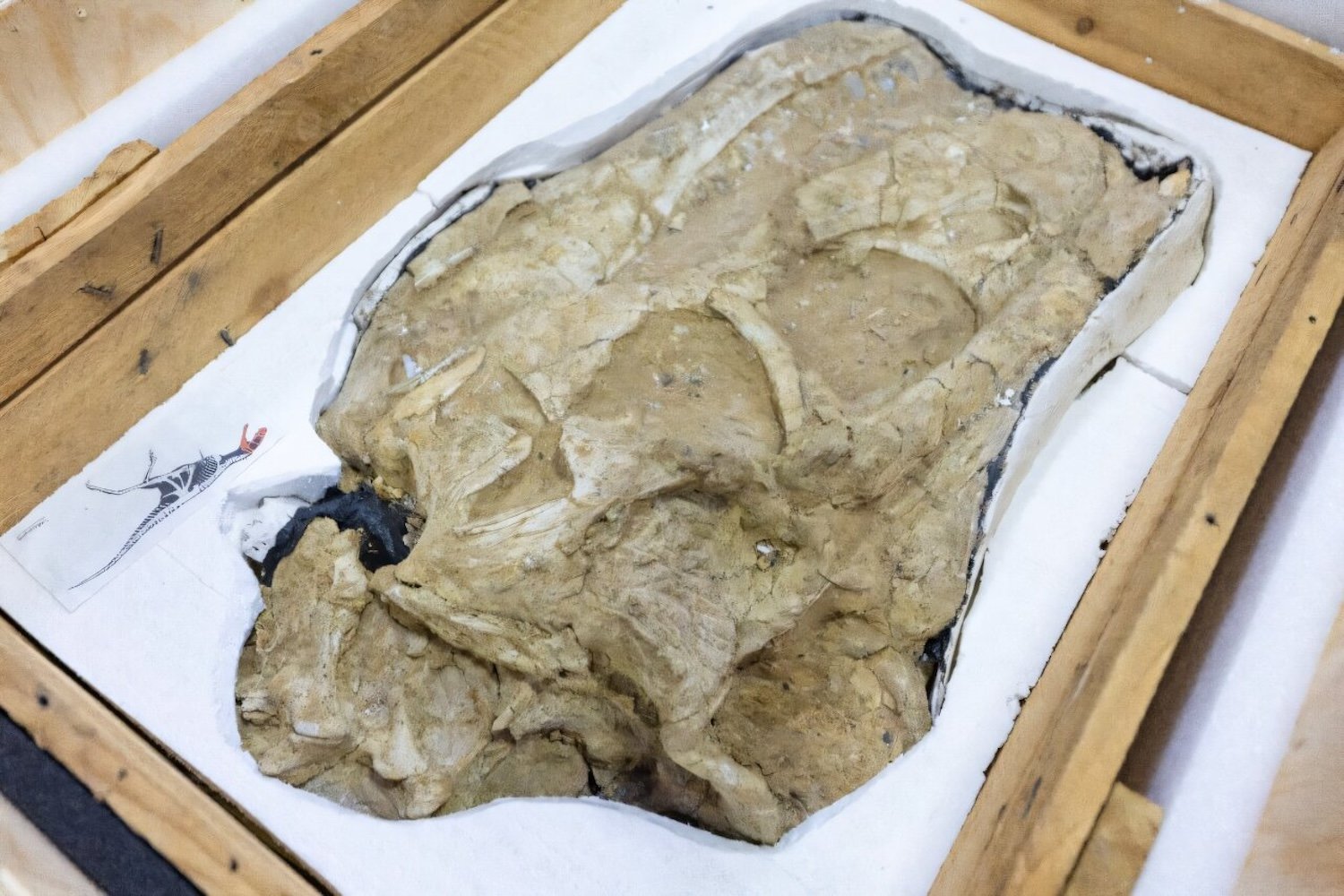
A formal handover ceremony took place in Paris in December 2025, where representatives from both countries highlighted the various dinosaurs included in the trove. The collection includes fossil fragments from theropods, ornithomimosaurs, and hadrosaurs that roamed what is now the Gobi Desert approximately 65 to 70 million years ago during the Late Cretaceous.
One of the most important specimens is an over-half-complete example of a Tarbosaurus bataar. Like many other dinosaur species, T. bataar remains are almost exclusively excavated around Mongolia and Central Asia. Although arid and cold today, the Gobi Desert was once a humid and diverse floodplain dotted by forests and intersected by river channels. T. bataar was the region’s undisputed apex predator, frequently preying on large dinosaurs like ankylosaurids. An adult could easily reach upwards of 33-feet-long, stand nearly 10-feet-tall, and weigh well over five tons. Although still officially its own species, some paleontologists argue that T. bataar so closely resembles T. rex that it actually warrants reclassification as an Asian variant of the North American Tyrannosaurus genus.
Now home, museum paleontologists will catalogue and clean the fossils before debuting them for public display.
“The dinosaur fossil is priceless and a unique piece of heritage,” museum director Manchuk Nuramkhan said during a recent news conference. “We are delighted that children and young people will have the opportunity to see Mongolia’s dinosaur heritage firsthand and learn from it.”