
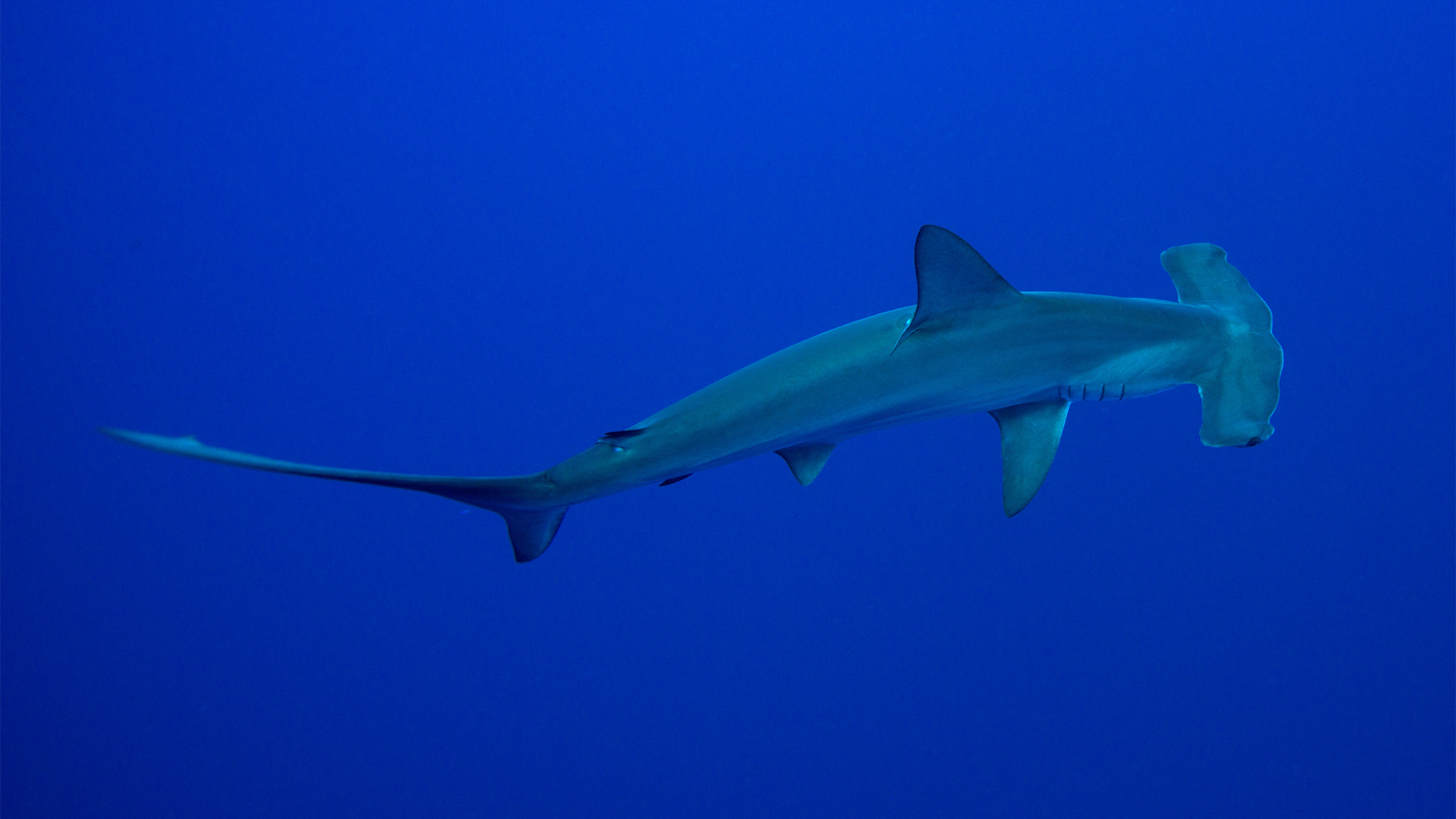
Great hammerhead sharks (Sphyrna mokarran)—the funny looking big fish with the rectangular shaped head—have an unusual feeding habit. Unlike many other sharks, who rely on small and numerous prey, great hammerheads eat other sharks.
This diet is particularly high-risk, high-reward. For example, it takes a lot of energy to hunt a blacktip shark (Carcharhinus limbatus), but if successful, the hammerhead secures a high-energy meal. Though scientists had already documented this shark-eating behavior, they weren’t sure of its energetic benefits. To investigate this uncertainty, an international team of researchers decked out a number of hammerheads with a device that registered speed, sonar and video data.
“We equipped great hammerheads with biologging sensors (speed, video, sonar) to estimate swimming metabolic rates and prey encounter rates and then model the foraging benefits of hunting large prey (sharks) versus small prey (reef-associated teleosts),” the researchers wrote in a study recently published in the journal Oecologia.
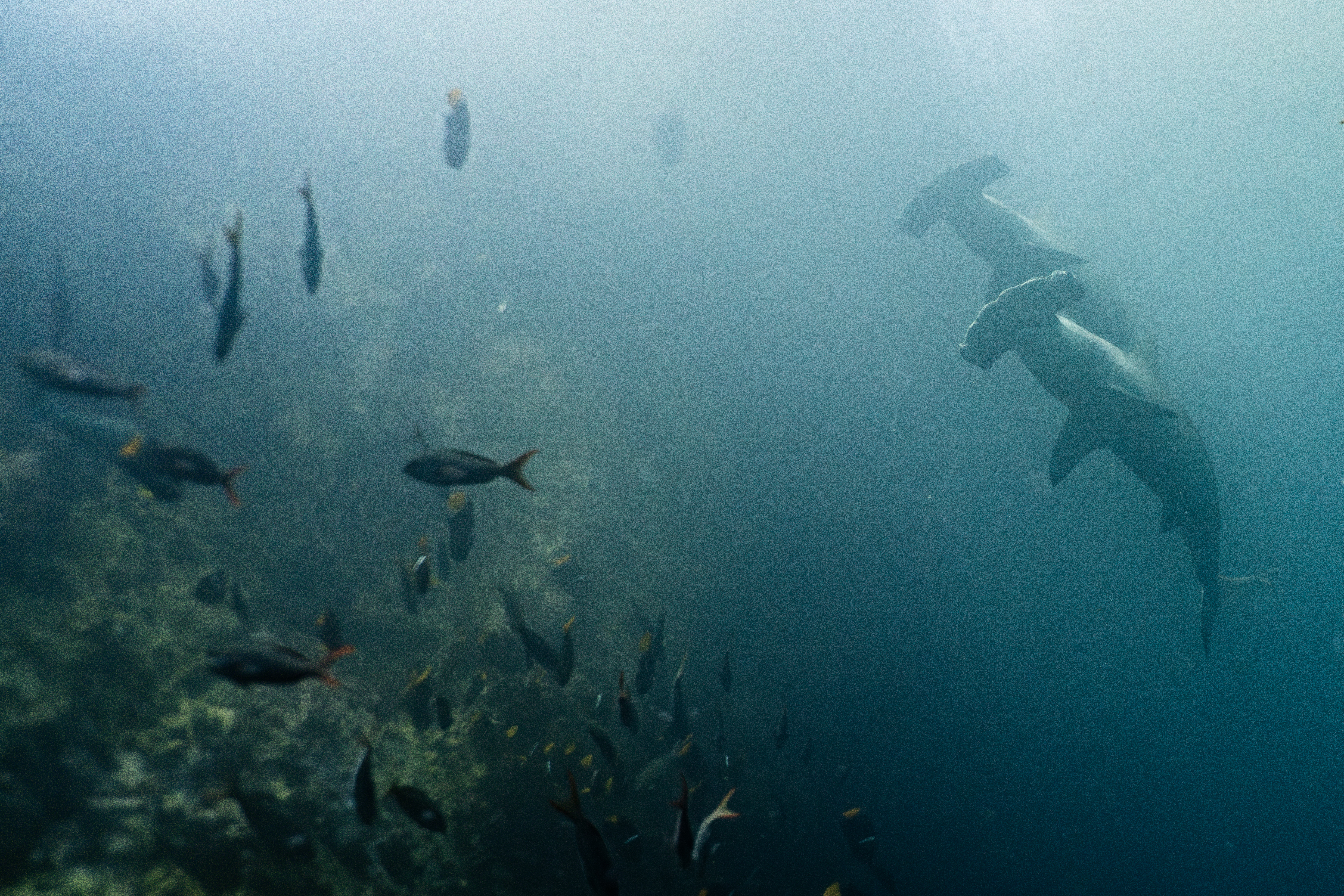
In other words, they used the data to build computer models and compare the energy cost-benefits of different hunting strategies. This approach suggested that, to fulfill its energy demands, a 250-pound great hammerhead only needs to eat a single 55-pound blacktip shark around every three weeks (they must have a lot of hobbies).
In times of scarcity, one blacktip shark could even keep a hammerhead going for up to two months. Comparatively, the same hammerhead would have to spend energy hunting one or two 2.2-pound fish every day to sustain itself. As such, the species likely does gain significant energetic benefits by hunting large prey.
[ Related: Young hammerhead sharks love Biscayne Bay. Leave them alone, humans. ]
“Animals must make careful decisions regarding how and what to hunt,” Yannis Papastamatiou, shark behavioral ecologist at Florida International University, said in a statement. “Do you go after large prey that have more energy but are harder to catch? Or should you just go after any potential prey you encounter?”
“In order to help protect critically endangered species like great hammerheads, we need to understand their underlying biology and how they interact with their environment,” explained Erin Spencer, lead author of the study, marine ecologist, and science communicator at the National Marine Sanctuary Foundation. “It’s important that we continue to study these big questions, especially in the face of a changing ocean.”
