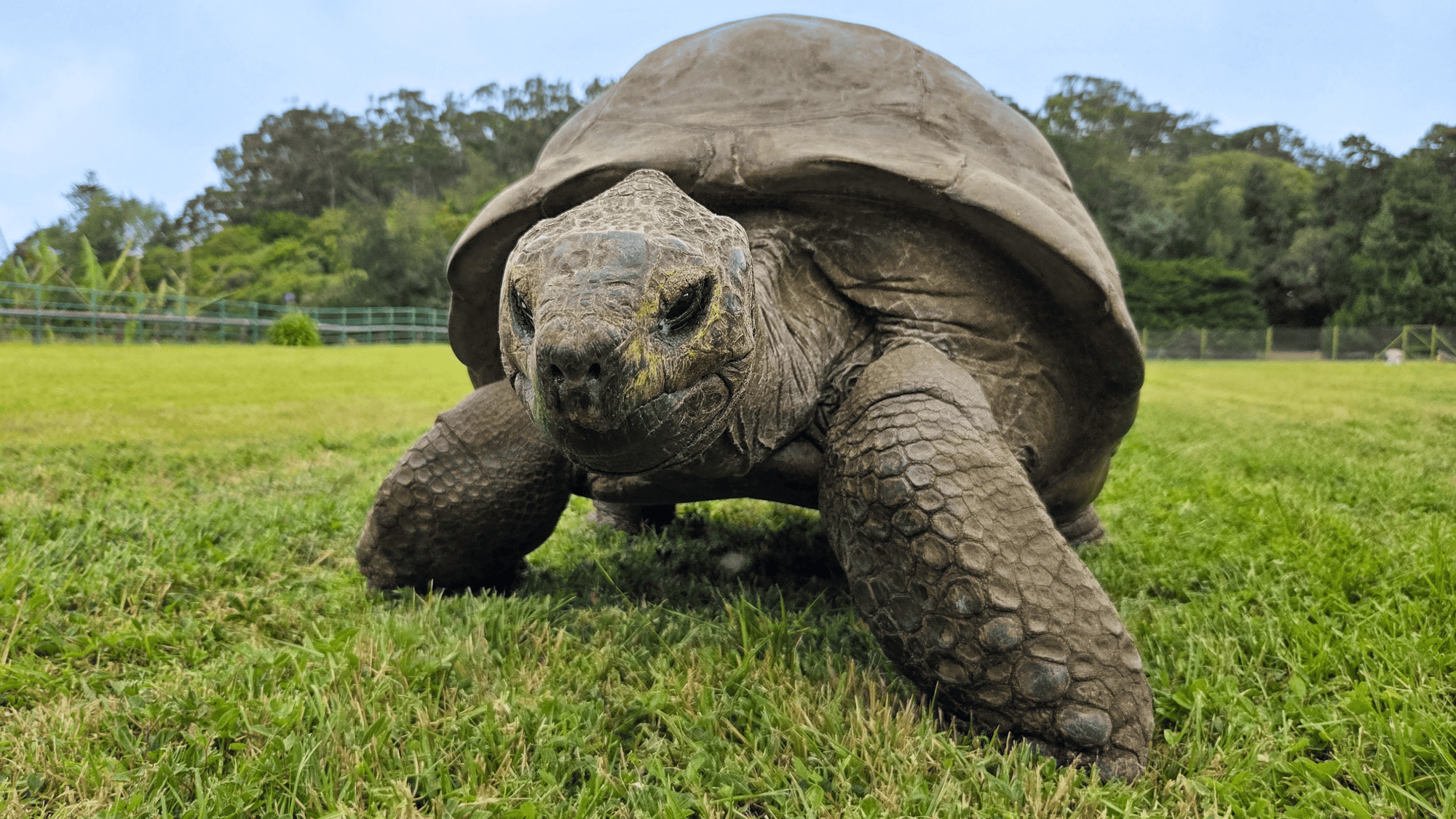
He lived at the same time as Charles Darwin, Queen Victoria, and President Andrew Jackson. He’s a gay icon, who was alive before Thomas Edison patented the lightbulb. At 194 years old, Jonathan the Aldabra giant tortoise (Aldabrachelys gigantea) is the world’s oldest known living giant tortoise and oldest land animal. But what is helping Jonathan stay alive this long?
Good genes alone are not responsible for Jonathan’s longevity but a lack of genetic wear and tear appears to be a major contributor to his epic lifespan. In a study published today in the journal Science Advances, scientists pinpoint 287 unique gene variants in Jonathan responsible for reducing the usual effects of aging. These variants control some of the body’s key processing, including repairing damaged DNA, reducing inflammation, regulating insulin, and even suppressing cancer.
Who is Jonathan?
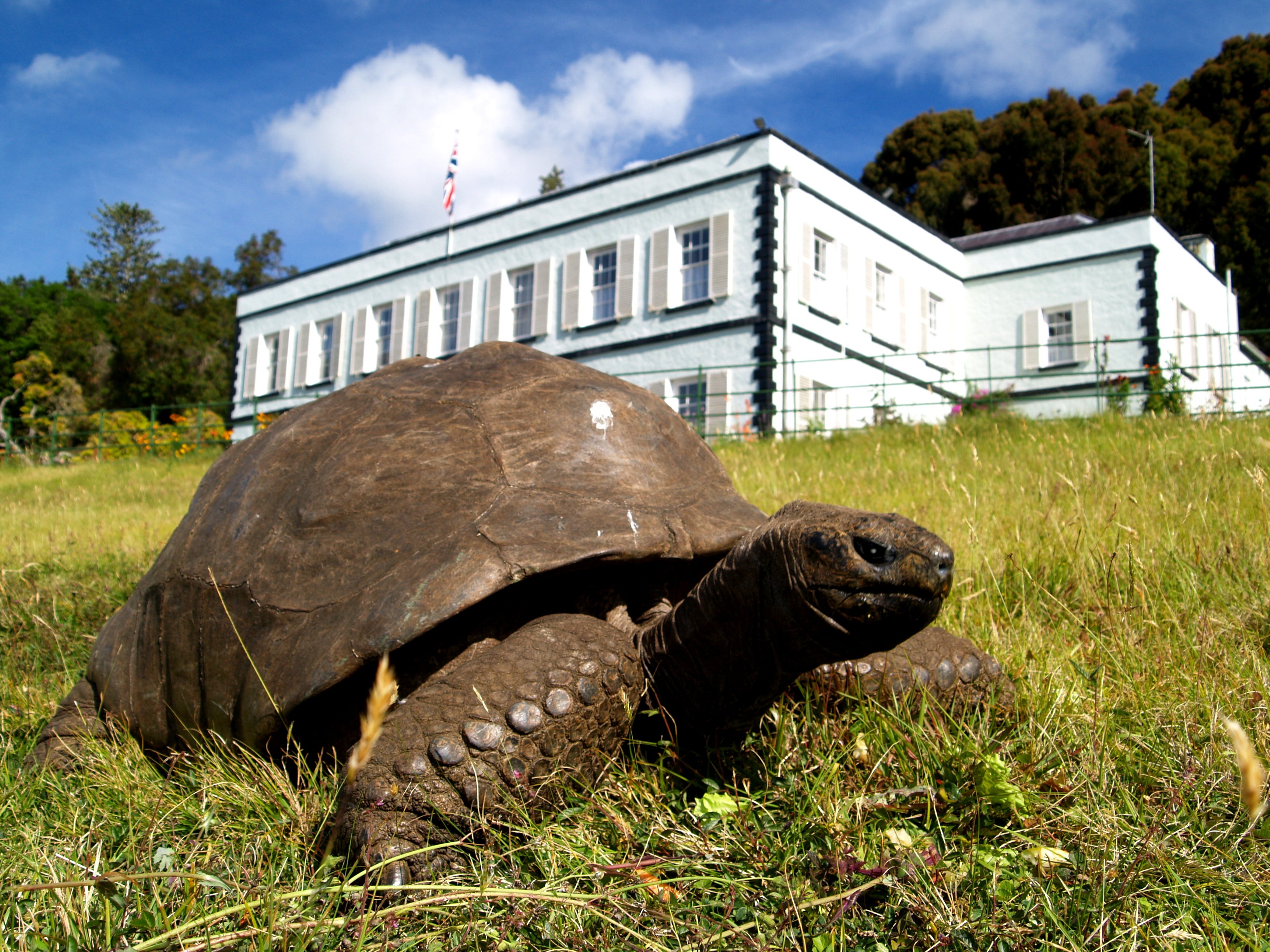
For most of his remarkable life, Jonathan the tortoise has lived on the island of St. Helena, a British Overseas Territory in the South Atlantic Ocean. He arrived from the Seychelles 144 years ago as a fully-grown adult and was given to the governor of St. Helena, and has lived at the governor’s residence ever since.
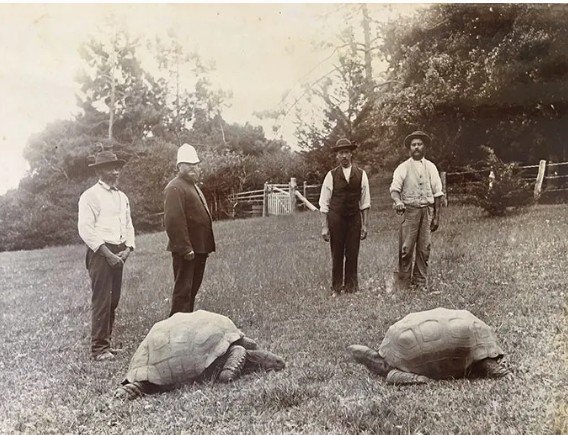
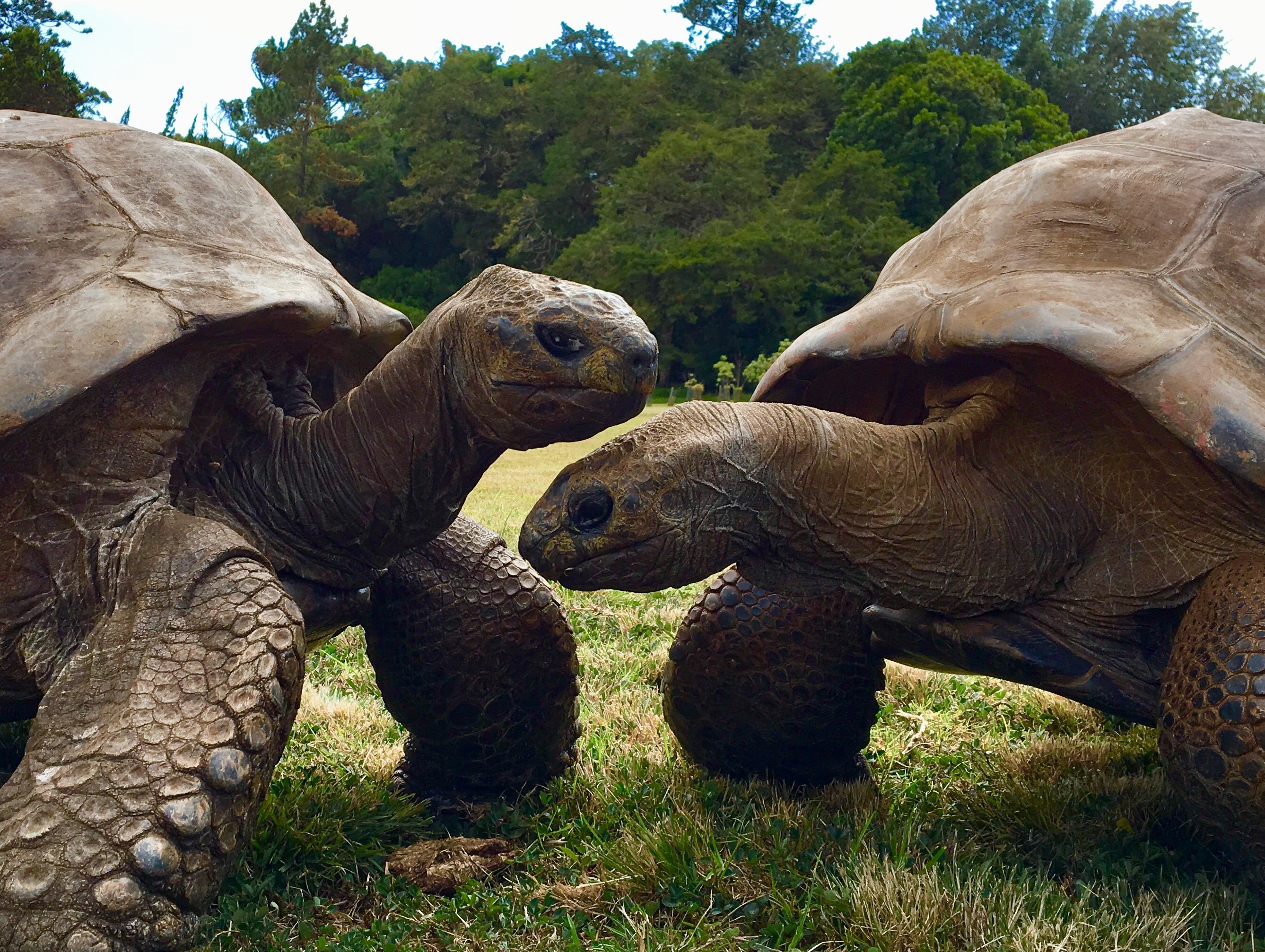
The giant tortoises of the Galápagos and Seychelles islands like Jonathan are the last survivors of animals that used to dominate the ecology of many islands around the world.
“There are few creatures that could tell us more about ageing than the giant tortoises of the Galapagos and Seychelles islands,” Justin Gerlach, a study co-author and biologist at the University of Cambridge, said in a statement. “Working with a really old giant tortoise is such a privilege: you get a sense of the tortoise being your collaborator, not your study subject.”
Jonathan has been featured on the back of St. Helena’s five-pence coin, is also on a postage stamp, and has gained internet fame. In June, an online hoax claiming that Jonathan had died spread.
Into the epigenome
In this new study, the team also compared Jonathan’s epigenome with those of younger Aldabra giant tortoises. The epigenome is what switches genes on and off. It is a group of chemical compounds that modify the genome and tell it what to do, where to do it, and when to do it. These can then be passed on as cells divide, and to the next generation.
The switches in controlling Jonathan’s DNA repair and metabolism genes were very similar to those found in younger tortoises. This surprised the team since the epigenome usually changes over time. These changes contribute to the aging process and are a major factor when things start to go wrong in older bodies.
“We found that the gene regulators involved in energy production and DNA repair have remained incredibly stable in Jonathan over almost two centuries,” explained Gerlach.
According to the team, this study marks the first time the epigenome of a giant tortoise has been investigated. Studying the genetic mechanisms during mid-life offers insights into extreme lifespans like Jonathan’s.
“Nature has already solved the puzzle of aging in remarkable ways, and Jonathan’s genome provides a blueprint for cellular resilience,” added study co-author Dr. Stephen Clark.
Clark is also the founder of the Kallel Foundation, a non-profit dedicated to understanding aging by studying genetics.
“Our goal is to take these evolutionary insights and immediately translate them into practical, affordable treatments for everyday people,” Clark added. “Aging is the greatest risk factor for nearly every chronic disease we face, and through the generosity of philanthropic partners, we can democratise access to longevity medicine.”