
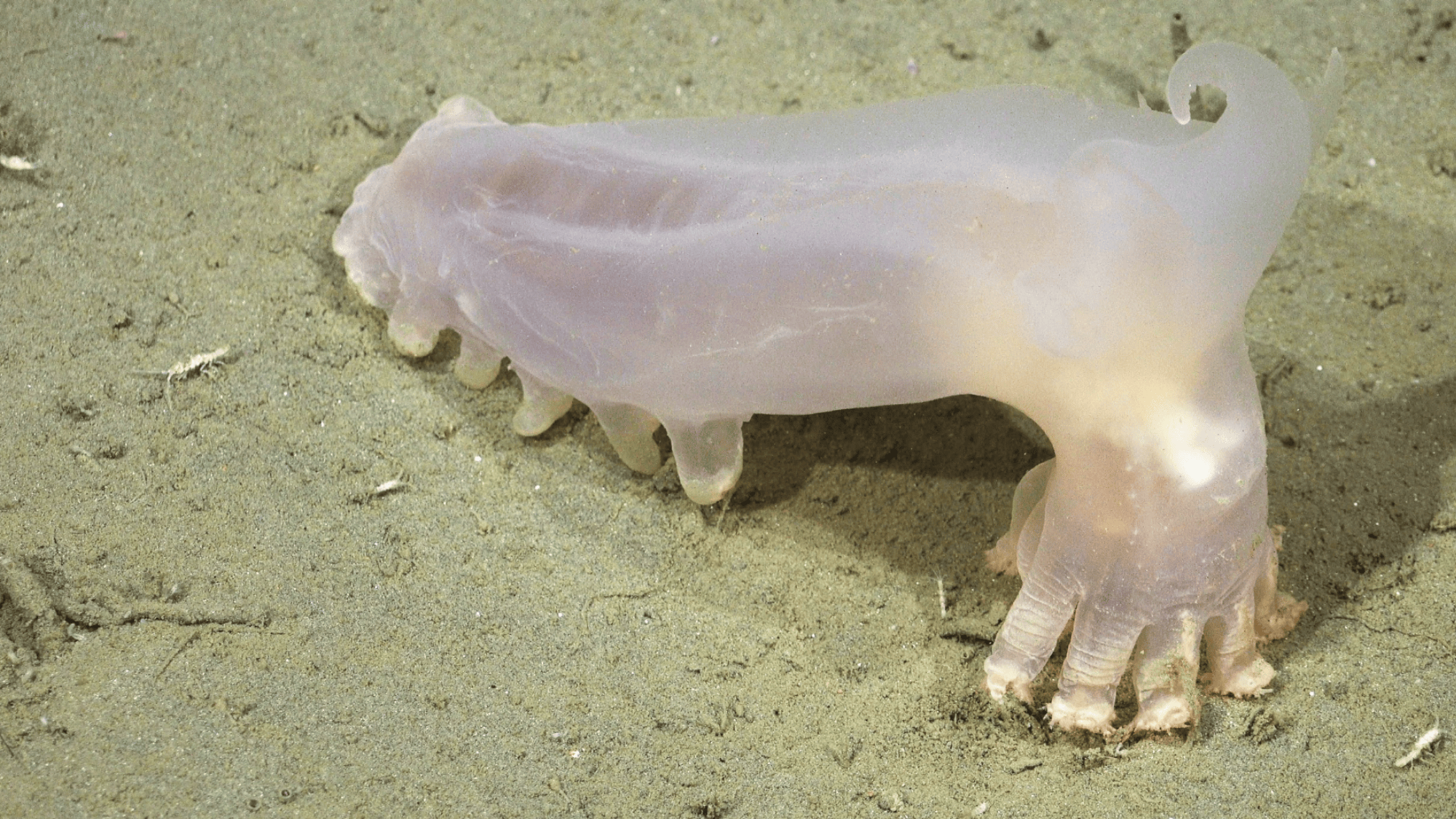
A mischievous sea cucumber and 56 other newly discovered marine species are making a splash in the South Atlantic Ocean. The new creatures were discovered during an expedition of the Mar del Plata Submarine Canyon off the coast of Argentina in August 2025. This expedition focused on the Brazil–Malvinas Confluence, a region where warm subtropical currents collide with cold, nutrient-rich sub-Antarctic waters. The result is an oceanographic crossroad bustling with biodiversity. The submarine canyon itself is nearly twice as deep as the Grand Canyon (over 11,000 feet).
Among this new crop of ocean dwellers is “Loki the Sea Cucumber” (genus Peniagone). This deep-sea echinoderm is named for its appendages, which resemble the Norse god of mischief’s horns. It was discovered at 8,454-feet-deep (2,577 meters) and is one of potentially 10 new sea cucumber species discovered in this expedition.

Meet Loki the Sea Cucumber
They also found 20 new species of copepods, small crustaceans found all over the world. While the team only examined 10 percent of the samples collected during the expedition, every specimen was a species new to science.
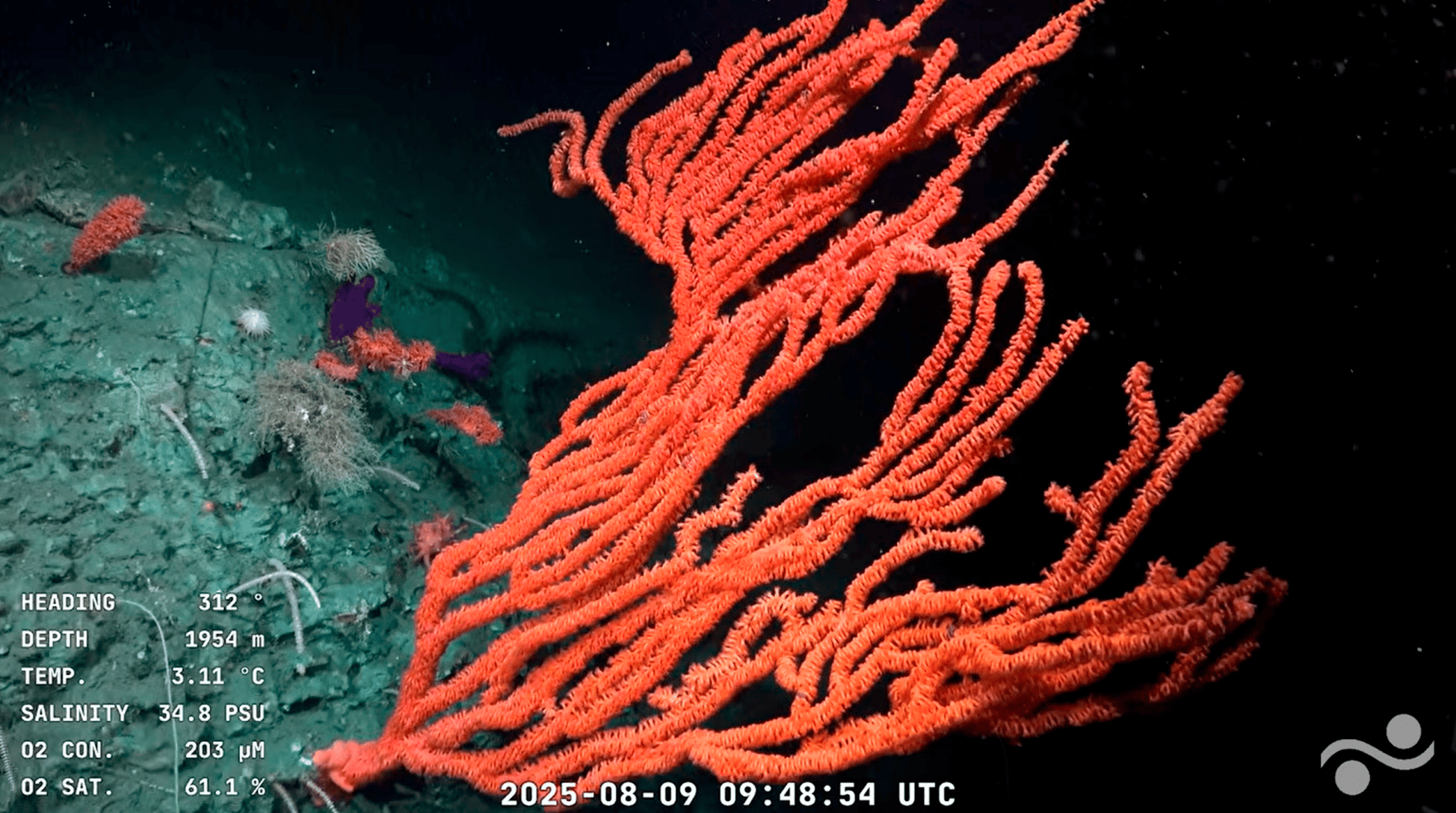
Oceans around the world depend on corals to form habitats, and this expedition also found 14 new species of deep-sea corals. The sea pen Pseudumbellula sp. and the vivid orange-red octocoral Orstomisis sp., may provide crucial data on how habitats are formed in deep-sea ecosystems.

Expedition highlights
In total, the expedition identified 20 new species of copepods, 22 echinoderms (sea cucumbers and crinoids), 14 cnidarians (octocorals, sea pens, and stony corals), and one scaphopod mollusc. They also found five entirely new scientific genera spanning corals, sea cucumbers, and crustaceans. The new species were named as part of an international Species Discovery Workshop, led by the Nippon Foundation-Nekton Ocean Census in partnership with the Schmidt Ocean Institute.
“Discovering 57 new species and five new genera in just two weeks demonstrates the speed and power of collaborative taxonomy,” Michelle Taylor, Ocean Census’ Head of Science, said in a statement. “The deep sea holds some of the least understood ecosystems on Earth. By bringing Latin America’s scientific expertise and international experts together with, as well as connecting them to the open-access Ocean Census NOVA platform, we are drastically accelerating our understanding of marine biodiversity.”
The workshop brought together 20 taxonomists and early-career researchers from across Latin America and Europe to the Universidad Maimónides in Buenos Aires to examine deep-sea biological samples.
“International cooperation in taxonomy is critical, especially in groups with few active specialists,” added Daniel Lauretta, a chief scientist with CONICET and the Museo Argentino de Ciencias Naturales. “The species discovery workshop accelerated species identification, the recognition of species new to science, and increased capacity building for local early-career taxonomists working on deep-sea fauna.”
