
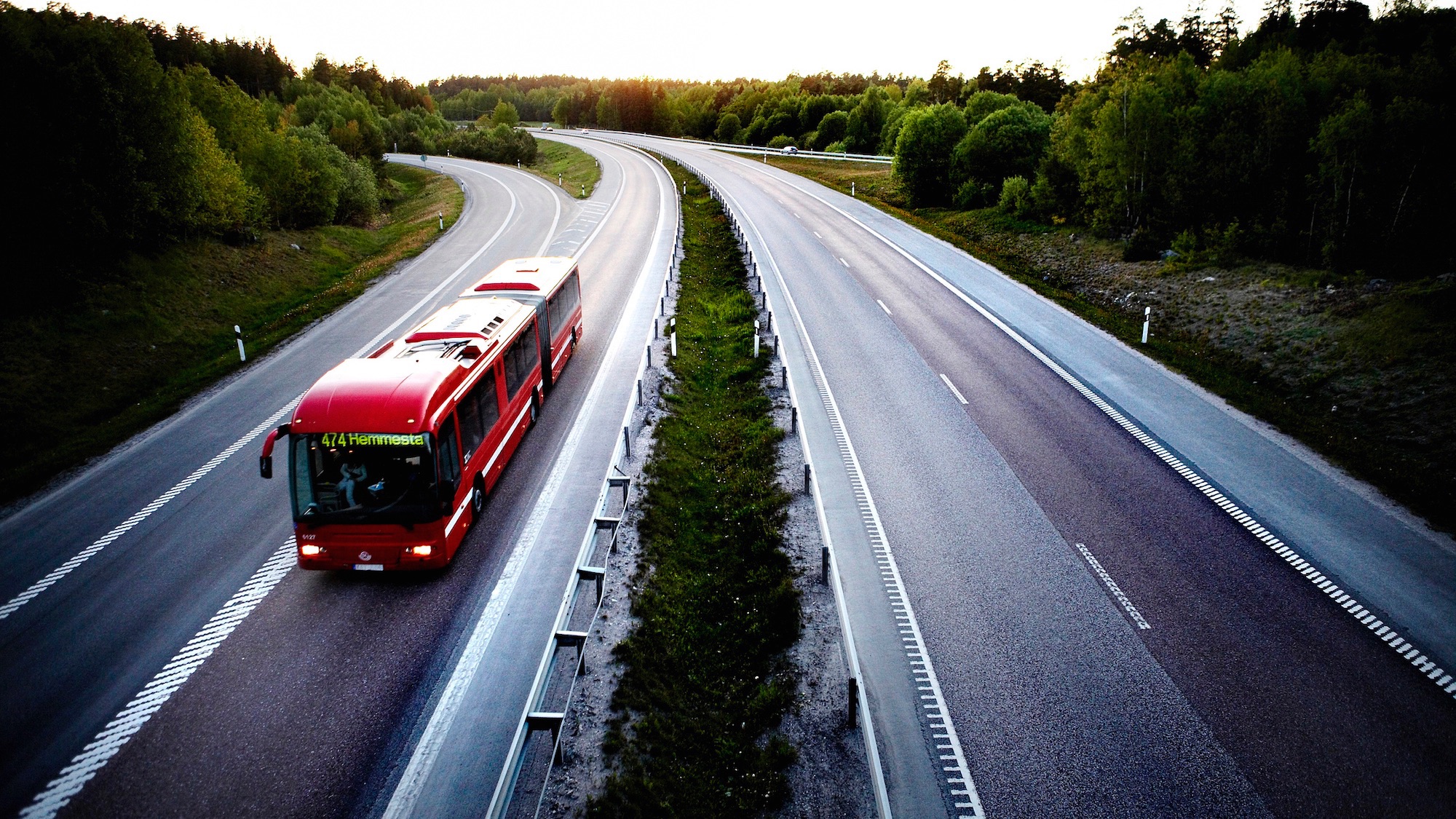
When most American travelers conjure up the image of a bus, many words come to mind but fast almost certainly isn’t one of them. An ambitious proposal in California wants to change that by exploring the idea of buses operating between 100-140 mph.
Though buses function as an integral means of affordable transit for millions of people, they certainly aren’t the mode of travel for anyone in a hurry. Long-distance operators like Greyhound, traveling from city to city, typically max out at 65 miles per hour, and frequent stops mean a bumpy trip aboard one can easily take twice as long as the same journey by car.
But what if that same bus could reach speeds rivaling a train? That’s an idea currently under consideration by California’s Department of Transportation (Caltrans), which recently held a webinar discussing the feasibility of a “freeway bus service”—a concept envisioning a new fleet of specialized buses traveling down an interstate at speeds approaching 140 miles per hour. These so-called “bullet buses” would have their own dedicated high-speed lanes and could theoretically transport dozens of passengers from San Francisco to Los Angeles in around three hours and connect smaller rural communities along the way. That same trip on a long-haul bus today takes somewhere between seven and nine hours.
In an email to Popular Science, Caltrans emphasized that its interest in the buses remains very much in the exploratory phase. And while building out such a system would require significant time and financial investment, the agency describes it as “conceptually feasible.” But are these speedy buses actually a good idea and would they even work? In a vast graveyard of failed public transit proposals, could bullet buses buck the trend? And even if they are built, would anyone want to ride in one?
Bullet buses would require sleek new vehicles and wider roads
Caltrans detailed the prospect of an interstate high-speed bus system in an 18-page report released last year. In it, they envision a dedicated high-speed bus lane connecting cities and rural areas. This multi-purpose lane could serve local routes (stopping every two to four miles), express routes (stopping only at interchanges), or long-distance routes (traveling between cities). The concept essentially applies the tiered service model already used in subway and rail systems to long-distance buses. In theory, this additional transit option would simultaneously put fewer cars on highways and reduce the burden on the state’s still-developing high-speed rail network.
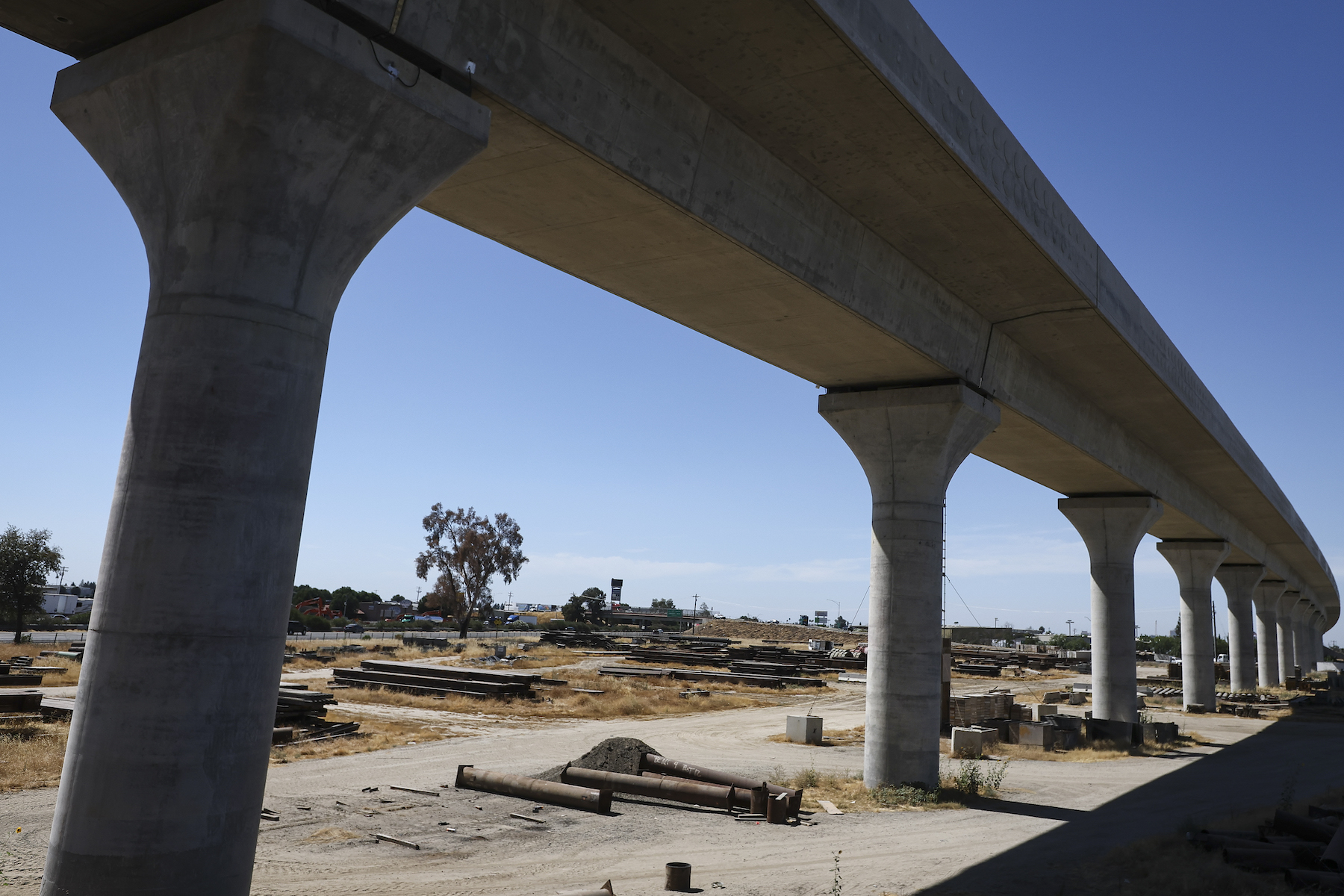
That’s the hope, at least. Getting there would require fundamental changes to both the design of buses and freeway infrastructure. Current freeways are typically only engineered to support speeds of only up to 85 miles per hour. And while plenty of speed demons exceed those limits daily, the caps aren’t just theoretical; they directly shape design considerations like a road’s curve radius and camber, the slight banking that helps vehicles stay stable through turns.
In other words, vehicles traveling at 140 mph on current roads would have far less ability to safely navigate what lies ahead and would struggle to maintain control. Those risks, the report rather drably acknowledges, would make any collision “catastrophic” at those speeds “given the low survivability.” Seatbelt use, they add, would be mandatory.
All of this means a high-speed freeway bus service would likely require roads redesigned from the ground up. The bus lanes alone, the report notes, would need to be at least 12 feet wide, with an additional 12 feet for both the inside and outside highway shoulders. Entry and exit ramps would also need to be significantly longer to accommodate the higher speeds.
Then there’s the actual buses. Simply adding a turbocharger to the currently in-service bus won’t cut it. These bullet buses would similarly require entirely new design. This updated approach would have to consider factors like drag, turbulence, and airflow, with the exterior chassis constructed in a shape far more aerodynamically efficient than the boxy brutes on the road today. Ironically, these sleeker more curved designs would likely look similar to bullet trains. Carbon fiber would also probably feature prominently to reduce overall weight.
But the bus body isn’t the only thing that would need an overhaul. The report notes that the brake systems currently used wouldn’t work. Those brakes generally perform well at speeds up to 88 miles per hour, but failure rates rise substantially above 90 mph. And bullet buses would travel considerably faster than that. They would also need new specialized tires capable of withstanding the additional heat and stress that are primary drivers of blowouts.
Bus operators would also look different. Though a human would likely still be needed to board passengers and handle local road driving, the report suggests that travel on high-speed lanes would be handled autonomously. Human drivers, the argument goes, simply don’t have fast enough reaction times to safely operate these bullet buses. And while self-driving vehicles are an increasingly common sight on US roads (and even some Texas highways) none of those systems currently operate anywhere close to the speeds bullet buses would need to reach.
“Pushing a bus to 100–140 mph requires a re-engineering of the vehicle: high-speed rated tires, extremely powerful brakes, active suspension and stability control, aerodynamic streamlining, lightweight but strong construction, and robust safety systems,” the Caltrans report notes.
Turning all that into reality, especially in an environment where new mass transit efforts notoriously face backlogs and delays, will be challenging. But some experts see real potential upside. DePaul University Professor Joseph Schwieterman, an expert in transportation and urban planning, told Popular Science these fast trains could potentially fill in certain gaps where high speed rail falls short. Buses, operating on roads with wheels, can intimately handle sharper turns easier than trains operating on a fixed track. Buses, even those operating at high speeds, can also accelerate and decelerate much easier and faster than rail. Those factors combined with the ability to operate on already existing road means the buses could potentially get far more passengers closer to to their destinations than spread apart rail stations
“The concept is intriguing because fast-running buses could complement high-speed rail service, so it is not an “either/or” proposition,” Schwieterman said. “Fast buses are likely to eventually be part of the mobility ecosystem. But the lack of real-world examples of high-speed buses in operation makes California’s high-profile discussion about the technology seem premature.”
Schwieterman also expressed some skepticism over whether or not the average traveller would necessarily embrace the idea of strapping into an ultra fast bus with open arms. Those with a possibility toward car sickness may also view these travel methods as something out of a nightmare.
“The evidence is clear that many intercity travelers are reticent to travel by bus on trips longer than three hours,” he said. “The interiors of buses could be configured to support first-class service, but there would still be much uncertainty about the traveler response.”
“The effects of swaying over curves could be particularly troublesome,” he added
International attempts at faster buses
The fast train network proposed in California draws some inspiration from a handful of international alternative bus systems, but none have come close to hitting 140 mph over prolonged periods of time.
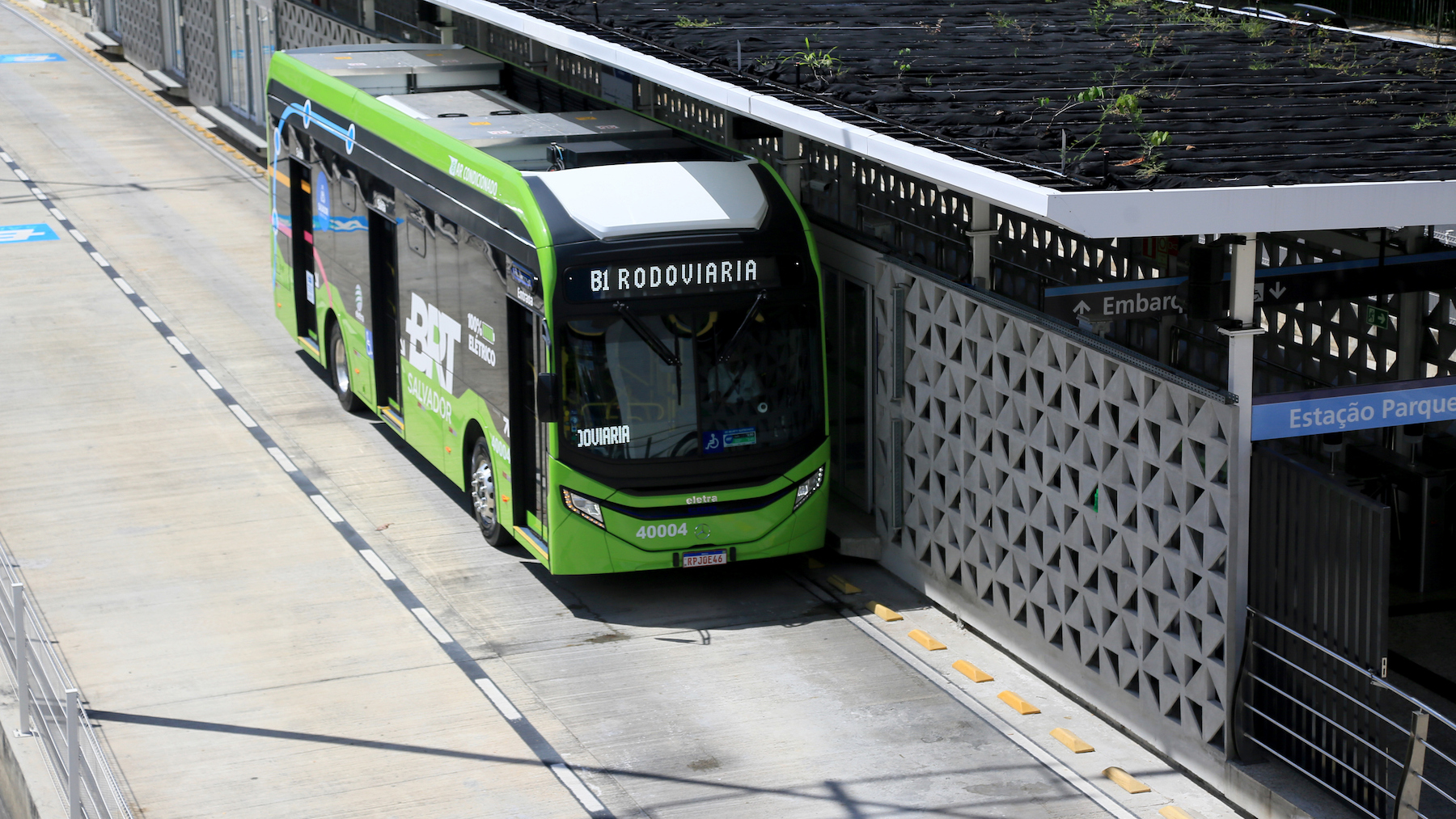
In the 1970s, the Brazilian city of Curitiba built what it calls Bus Rapid Transit (BRT), a system that uses dedicated bus lanes to transport large groups of passengers long distances. Though these buses only ever approach a maximum of around 60 miles per hour, the dedicated lane means they function similarly to an above-ground subway line. Today, more than 2.5 million passengers across 200 cities use it daily.
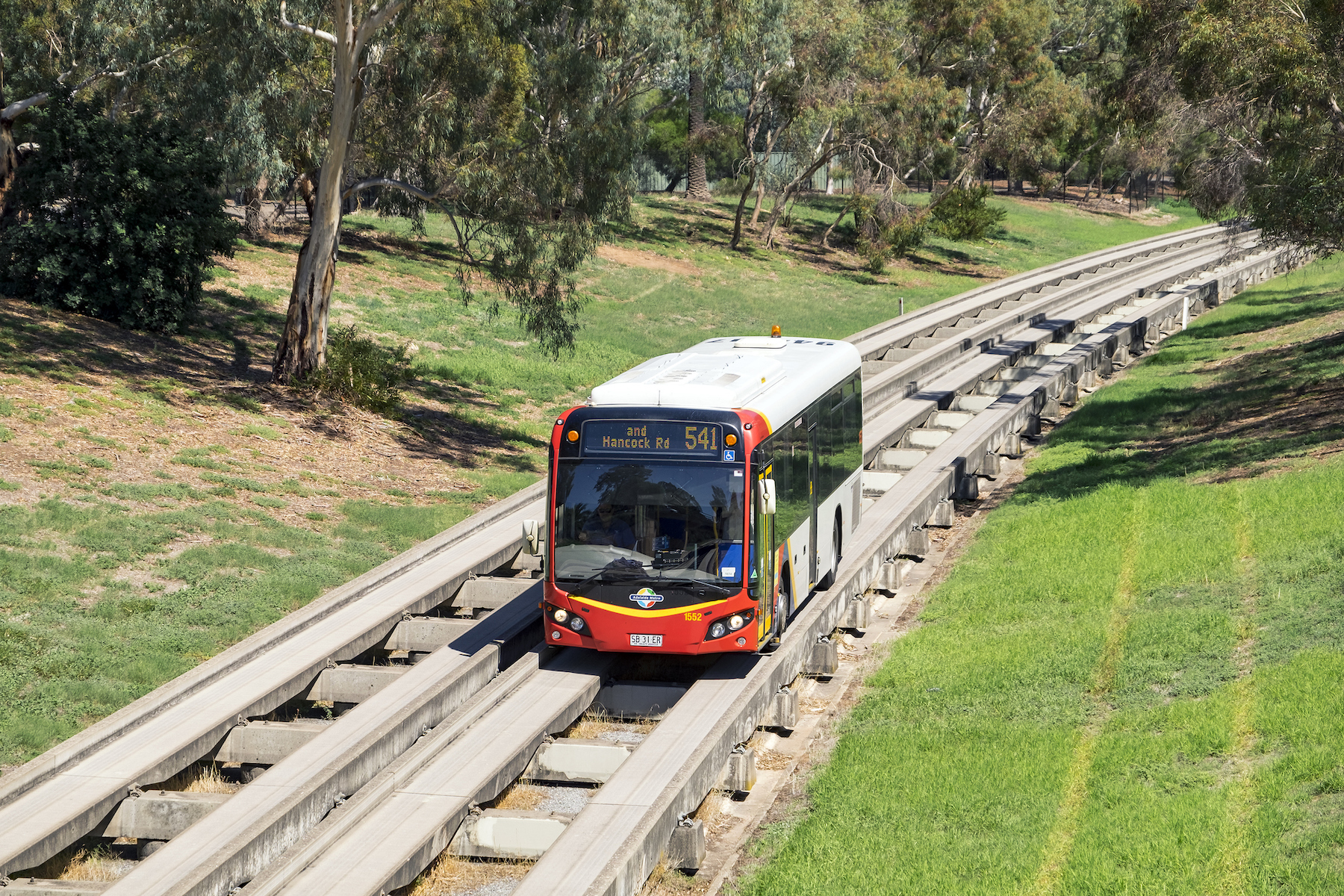
Around that same time, halfway across the planet, engineers in Adelaide, South Australia, constructed the “O-Bahn,” a series of high-speed, guided buses that run on tracks. The unusual design essentially takes a standard commuter bus and plops it atop dedicated concrete rails normally intended for trains. This hybrid approach means the buses can cover long stretches quickly without any traffic, and then leave the tracks and use standard wheels to drive on regular roads for more local routes.
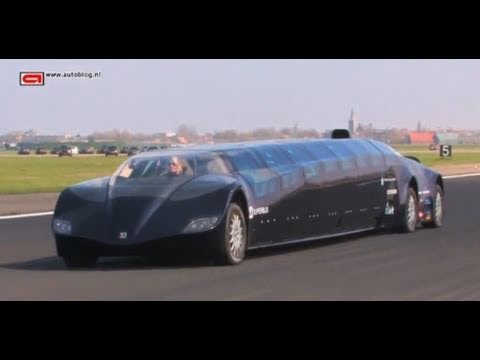
In terms of pure speed though, the closest example comes close to what Caltrans envisions in the “Superbus” from the Netherlands. This one-off prototype looks like a cross between a bus, a Formula One car, and a rocket ship. Its speed reflected that. In tests, the all-electric, 23-person black tube could reportedly reach 155 miles per hour. Its sleek, racing-inspired design had 16 gull-wing doors and a drag coefficient similar to that of a super car. But even though the Superbus proved it was at least conceptually possible to move bus quantities of people at high speeds, the project fizzled out because it would have required entirely new “super lane” roadways to be built out for it. Today, the lone superbus gathers dust in a University of Delft warehouse.
The bullet bus has a bumpy road toward reality
It’s still unclear how far California wants to pursue its high-speed bus vision. In an email, Caltrans told Popular Science it’s currently “evaluating what would be required before determining whether future testing or implementation” is appropriate. But technical feasibility is only part of the battle. Getting public support for the bus system would also likely face an uphill battle, especially since the state’s now decades-long plan to build a high-speed rail network connecting Los Angeles to San Francisco is still nowhere near completion. That route, once expected to cost $33 billion and be finished by 2020, now has a price tag exceeding $100 billion for a substantially shorter route.
Schwieterman, though optimistic about the concept of a high-speed bus network, said engineers need to slow down and iron out many more specifics before plowing forward.
“I believe the idea should be quietly dropped until California or another state tests the workability of fast buses in a controlled environment,” Schwieterman said. “Starting with, say, a 50-mile route where buses reach 100 mph and ramping up from there would be more practical than engaging the public now in a debate about ultra-fast buses on long-distance routes.”
