Feature
Defeating soul-deadening gridlock, monster potholes and dangerous road ice

Roads, Bridges & Trains Paul Wootton

Chicago road crews are scrambling to fill 67,000 potholes a month. Communities in Pennsylvania rely on 100-year-old water pipes made of wood. Squirrels still cause widespread blackouts. The country’s 600,000 bridges, four million miles of roads, and 30,000 wastewater plants desperately need attention. The solution isn’t patches, it’s an overhaul. Soon roads and power lines will fix themselves, and we’ll mine energy from sewage. America’s 21st-century tune-up won’t happen overnight, but we could start reaping the benefits (faster broadband! cleaner water!) within the next few years.

Cars that Report Potholes

Task: Fix the third of major roads that are in poor shape
Status: Three years to a prototype

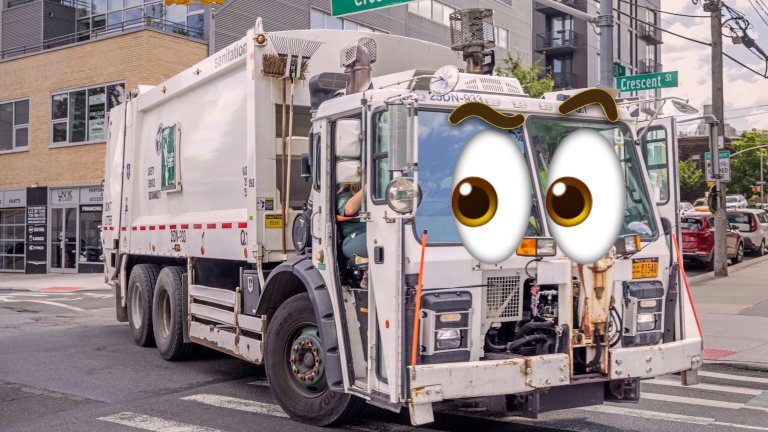
In a new system developed at Northeastern University, vehicles that cover lots of asphalt—taxis, buses, garbage trucks—will be outfitted with acoustic wave sensors to detect potholes before the human eye can see them. Sound waves probe the top three feet of the road for telltale air pockets and small cracks, while ground-penetrating radar looks inside bridge decks for corrosion and lasers scan the road surface. A cellular data connection sends data to control centers, where it can be assembled into maps of trouble spots.

Roads that De-Ice Themselves

Task: Reduce the 1,300 road deaths a year from snowy and icy winter conditions
Status: In testing by more than 20 state departments of transportation

A new road coating called SafeLane not only gives tires more traction, it actually helps prevent the accumulation of ice and snow by holding on to de-icing salts, allowing road crews to scatter salt a couple of days before a blizzard rather than waiting until the snow is already on the ground. SafeLane consists of layers of epoxy mixed with dolomitic limestone. The epoxy layer is snowplow-proof, lasts up to 15 years, and helps seal the pavement to keep corrosive salts from leaching down to steel bars in sensitive bridge decks. Anecdotal results from its first five years in the field show up to a 70 percent decrease in winter accidents.

Bridges that Flex on the Fly

Task: Upgrade the 26 percent of decrepit bridges
Status: Pedestrian versions exist; traffic bridges in 10 years

Regular bridges are fairly rigid structures that break down over time from stress. “Tensegrity” structures disperse load over a nest of tensed cables and compressed struts that allow them to be both flexible and structurally rigid. Now the University of California at San Diego is developing traffic-bearing tensegrity bridges with feedback sensors to guide subtle adjustments in cable length, which could alleviate the shifting stresses of an overladen truck, counteract the vibration frequency of an earthquake, or disperse the load of a severed cable.

Concrete that Senses Cracks and Heals on its Own

Task: Replace miles of concrete highways with smarter versions
Status: Field-testing for self-sensing concrete in progress

Carbon nanotubes are prized for both their strength and their piezoresistance—they change their electrical resistance as they’re stressed. Xun Yu, a mechanical-engineering professor at the University of Minnesota–Duluth, is cooking up a concrete mix that contains 0.1 percent carbon nanotubes, making it harder to crack than traditional concrete, and smart too. By embedding electrodes into it as it sets, Yu can measure changes in electrical resistance to detect compression from passing cars. Future versions will better calculate speed and vehicle weight on the go for a real-time view of the road’s stress. Meanwhile, a new concrete mix developed by Victor Li, a professor of civil and environmental engineering at the University of Michigan, contains unhydrated cement grains that are activated when exposed to carbon dioxide in air and water from rain—exactly what you’d find in a small crack in the road. The reaction produces a calcium carbonate seal, restoring the slab to its normal load-bearing capacity.

Trackless Elevated Trains

Task: Add urban railways for a third the cost of conventional light rail
Status: Texas A&M University’s Texas Transportation Institute has offered free land for a two-mile test track

To save the multibillion-dollar cost of clearing 24-foot-wide swaths for new track, trainmaker Tubular Rail wants to shoot trains up to 150 mph over existing infrastructure through a series of elevated rings 100 feet apart. As it passes through each ring, the 400-foot-long carbon-fiber car is pushed along by electrically powered steel rollers. To save juice, the motors gear up only as a train approaches; up to 90 percent of the kinetic energy of the train can be recaptured as the rollers wind down.

Read the rest of PopSci's plan to rebuild America here.

18 Comments

The biggest problem with our infrastructure is political; we find it easier allocate funds for new stuff than to maintain and update what we already have.

High Speed Trains
have been in use for decades in Japan, Europe, even China.

They quickly and efficiently transport people far better than air and ease up congestion on the roads, the environment, and airports.

It is truly pathetic that the US is so behind the rest of the world. Very Tucker Man And His Car.

High Speed Trains
have been in use for decades in Japan, Europe, even China.

They quickly and efficiently transport people far better than air and ease up congestion on the roads, the environment, and airports.

It is truly pathetic that the US is so behind the rest of the world. Very Tucker Man And His Car.

I agree with factitious, No one bothers to maintain current equipment. I take several trains a day in the NY/NJ area and a lot of trains are poorly maintained. There are no companies to service building equipment and central systems efficiently as well. We have to alter the political structure first, and it seems like its going to be harder with the passage of the non-limited corporate campaign funding initiative. "corporations are entities and have the same rights as human citizens of this country" they argue, where money is there free speech.

Cars tha report potholes - Why not just accoustically monitor a section of road that is being scheduled for repair. Load noises represent potholes.
Roads that De-ice themselves - misleading title but good engineering - three cheers!
Bridges that flex on the fly - I believe the first bridge over the Tacoma narrows did just that. The 2nd one purposely did not.
Concrete that senses cracks and heals on its own - Cracked concrete usually requires a flexible sealant fix because the crack is still moving/breathing. Any healing must provide for this breathing.
Trackless elevated trains - I had a good dream last night too!

i dnt see why people havent thot of the idea to GET RID OF CARS. y do we need them? to go wherever we want? imagine if we were to use all the space that was needed for cars parking lots, garages, gas stations, roads, pot holes or failing bridges etc

Life would be better and more efficient if we got rid of cars and gave everyone there own personnal 8 person or so pod that would run on tracks throughout cities. There would be NO CAR ACCIDENTS or TRAFFIC JAMS because the system would be smart and avoid clogging the track. ETAs would be correct because the pods would run the same speed everywhere so if the ETA is 10 min ur there in 10 min

even tho alot of jobs would be lost it would give rise to engeneering jobs because with all the use of the pods the tracks would be repaired often unlike unstable bridges and roads.

factitious
why make a new mode of transportation that doesn't run on a scarce resource when we can make the old ones run on less and less of that eventual extinct resource?

just an example. although i bet there are more in your favor. haaaa. flavor.

Crackdown on the DMV. They allow everybody to drive and then some.;)

Before anyone gets excited. .None of this is going to happen. Not here. This country is circling the drain. Its all down hill from here. Suburbia is going to have to relocate to the ghettos and trailer parks

All of these ideas would be very great and would help our planetets growth and competition with ET life planets out their.

Bilderberg, you say that the U.S is behind in technology, thats why we have about 8% of the worlds population but make more then 40% of the inventions.

We are some of the smartest people out their.

Le Tamer. ..Did you see any of those tea bag protests? Most Americans view of scientists is they are a bunch of satanist spreading lies against god. Being raised in the south I know this is the vast majority of that entire region of the country. The American take on nature is "god did it and thats all we need to know. ..now go to church and pray or you'll go to hell"

Why not a hovercraft system of transportation, that relies on cosmic energy battery packs? What, too far fetched? Not for POSCI!

Evidently old-scratch hasn't seen any of the tea party protests either because they are about liberty which is threatened by an ever growing government that is bankrupting all of us.

Until our country learns to manage its finances we'll never be able to afford any new, groundbreaking infrastructure.

I agree with factitious that the biggest problem we have is a political one, unfortunatly our elected representative take their sweet time to do anything if they ever do it at all. And as for Stuntman14, yes your replace cars with "pods" would work fine in cities, however not all of use live in cities.

They just put a metro rail commuter train where I live. Believe it or not cost of fuel and maintenance for my truck is lower than mass transit. With that said I can't justify using mass transit. Keep in mind I get about 17 MPG and can say that. The only cost that puts my personal vehicle over that budget is insurance. This is also based on an everage of 80+ miles per day.

My apologies. not 80 +miles per day. It is 40... I doubled the wrong number in my head or doubled it twice... two trips around 20-25 miles per day.

Perhaps it is time to resurrect an old idea who's time must eventually come anyway. The biggest energy drain on present day transportation is air resistance. Take that away and transport can be quicker, quieter, weather immune, cheaper and kinder to the environment. I'm talking of course about ETT ( evacuated tube transportation )One tenth of the steel annually scrapped from old autombiles in USA would provide enough steel for two tubes 1000Kilometers long every year.City centre to city centre systems could be built and operated for less than the high speed train systems on offer,and would out perform them in every significant department. Popular science looked at this a few years ago but concentrated on extreme versions with the ambition to cross oceans. Look up vactrain on wiki and follow the links

Until you read articles such as this, we do not consider the magnitude and cost to upgrading and maintaining our public infrastructure. This is beyond comprehension and wow, the design and management of such a programmed is outstanding.

www.geoslick.com


June 2013: American Energy Independence

Five amazing, clean technologies that will set us free, in this month's energy-focused issue. Also: how to build a better bomb detector, the robotic toys that are raising your children, a human catapult, the world's smallest arcade, and much more.


Online Content Director: Suzanne LaBarre | Email
Senior Editor: Paul Adams | Email
Associate Editor: Dan Nosowitz | Email
Assistant Editor: Colin Lecher | Email
Assistant Editor: Rose Pastore | Email

Contributing Writers:
Rebecca Boyle | Email
Kelsey D. Atherton | Email
Francie Diep | Email
Shaunacy Ferro | Email

circ-top-header.gif
circ-cover.gif
bmxmag-ps