The path to becoming a successful inventor is easier than ever–but there are also a surplus of options, and it can be difficult to know where to start. Here’s a step-by-step plan to inventing your own anything.
Step 1: Think Big
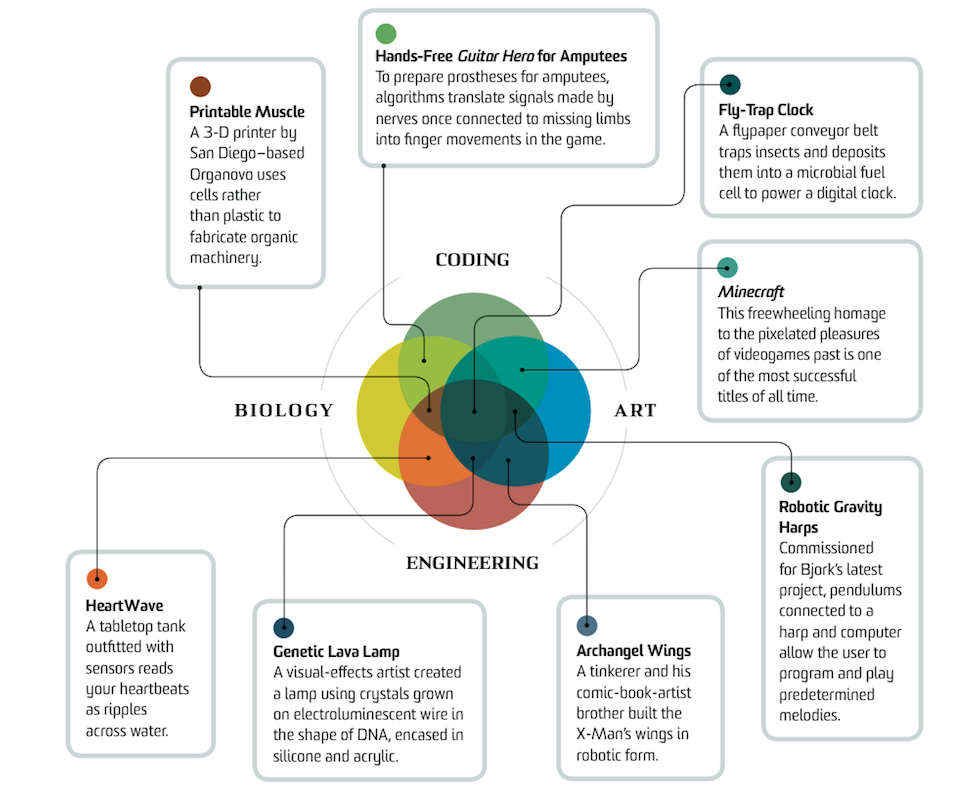
The most original projects combine two or more disciplines. Look to mash them up.
Step 2: Team Up
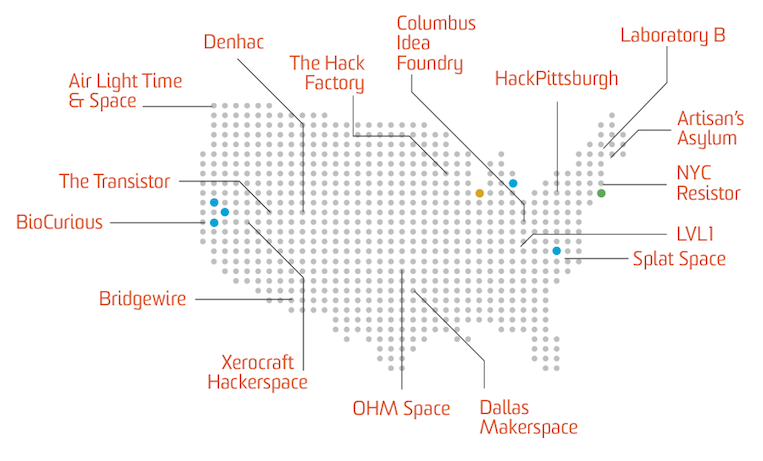
Shared workspaces let you learn new skills and wield expensive tools. These are some of the largest and most active.
TECHSHOP
Each of TechShop’s five 15,000-square-foot locations contains more than $1 million in prototyping equipment and software. Its 3,000-plus members include entrants in the Google Lunar X Prize and the makers of the fastest electric motorcycle. Starting at $75/month; techshop.ws
PUMPING STATION: ONE
Chicago’s first hackerspace, Pumping Station: One lets members use its tools, such as CNC machines and laser cutters, 24/7. Projects include pants that produce music and a biosensor array that reads patient vitals. Starting at $40/month; pumpingstationone.org
GENSPACE
Genspace in Brooklyn caters to professional biologists and amateur beaker jockeys alike. It has everything from microscopes and incubators to PCR machines and spectrometers. $100/month; genspace.org
Step 3: Gear Up
Click to launch the gallery.
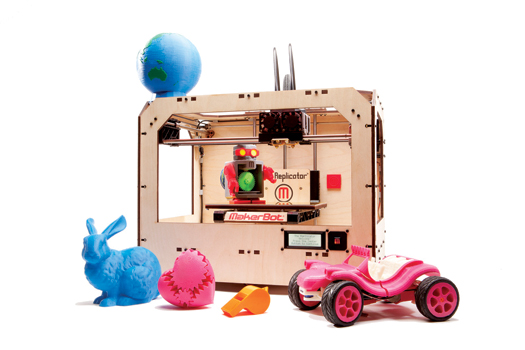
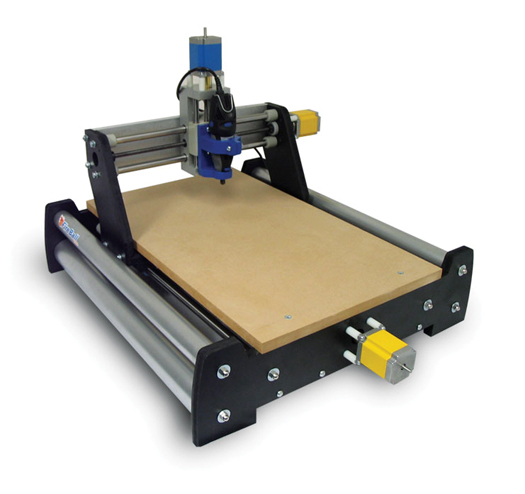
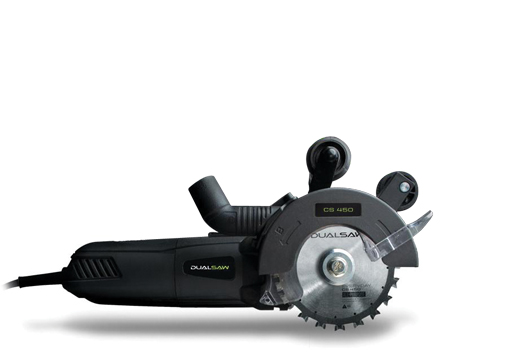
Some tools are for research, some make other tools, and some just tear stuff apart.
Step 4: Get the Right Stuff
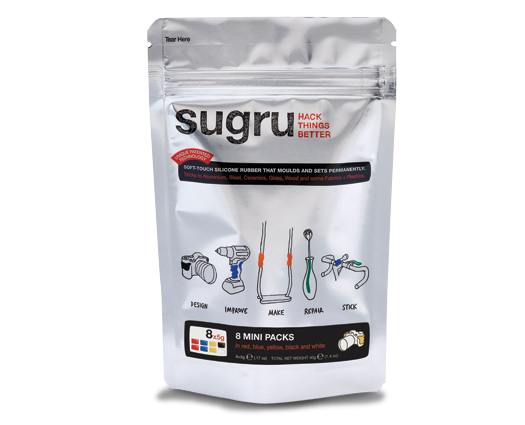
New materials can protect your project against anything–even outer space.
SUGRU
Imagine Play-Doh that waterproofs holes in your hiking boots, repairs electrical cords, and hangs pictures on the wall. Hand-mold this silicone rubber into anything, let it sit for 24 hours, and you’ve got a grippy, electrically insulating, dishwasher-safe product that maintains its shape between –76° and 356°F. Pictured above. $18/60-gram pack; sugru.com
UHMW
Ultrahigh-molecular-weight polyethylene is a plastic that can handle up to 7,740 pounds per square inch, resist moisture and chemicals, and dampen noise. Useful in heavy-use projects like snowboards and body armor, it has a low friction coefficient and is 10 times as resilient to abrasion as carbon steel. $35/square foot; polymerplastics.com
KAPTON
This polyimide film withstands temperatures between –452° and 752°, so engineers use it to insulate products such as photovoltaic panels and spacecraft. It flexes without cracking, is a thermal conductor, and can withstand copper etching, as in printed circuits. The trickiest part is smoothing it on without forming bubbles. $12/square foot; professionalplastics.com
Step 5: Build a Supply Chain

Don’t blindly DIY–outsource the tough stuff.
KNOW YOUR VENDORS…
McMaster-Carr sells more than 490,000 items for your shop. The Electronic Goldmine and SparkFun are reliably cheap sources for circuits, solar kits and transformers. Digi-Key has every electronic part you can think of. And the MakerShed offers not just mechanical and electrical parts but lab tools as well. Also, AliExpress carries inexpensive off-brand miscellany from China and can be your source for components you couldn’t find, much less afford, otherwise.
…AND TREAT THEM AS PARTNERS
Describe your process and your problems to a vendor; they want to help. DNA-synthesis companies, for instance, can speed a project along. They may offer cells with a fluorescence gene that makes it easy to spot which ones you’ve modified.
BUY FROM PARALLEL INDUSTRIES
Who else uses the same equipment? Rather than buying glassware from pricey lab suppliers, for instance, get them cheap from beer-making sites like brouwland.com.
HIRE A FREELANCER
Sites like elance.com, odesk.com and ifreelance.com help you outsource tasks—coding, graphics, product design and marketing—that you can’t (and shouldn’t) handle.
LET SOMEONE ELSE FABRICATE WEIRD PARTS
eMachineShop allows you to draft your design on free CAD software, upload it, and order finished parts that arrive by mail a few days later. Or go international: Upload to MFG.com, where manufacturers from around the world can bid on the job.
Step 6: Get It Funded
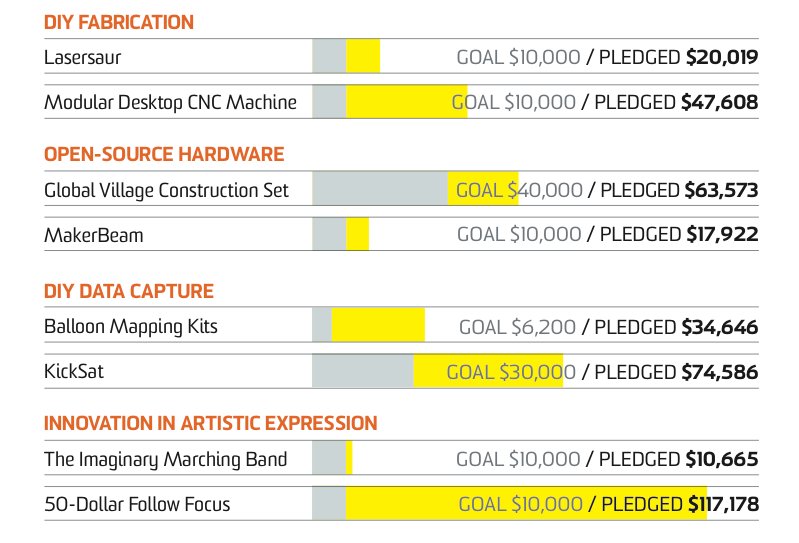
Crowdfunding can get your first prototype built, but you have to know your backers’ tastes. Take a cue from four emerging categories on Kickstarter.
Step 7: Get It Out There

Events draw the press, investors and other makers together. Share your idea at an up-and-coming venue.
RED BULL CREATION
A 72-hour hackathon for 16 teams. Last year’s challenge was to move a person without using fossil fuels. This September, finalists will show off a new round of projects in New York.
iGEM JAMBOREE
The year’s biggest synthetic-biology event, founded by MIT, is a race to genetically engineer something innovative. The world championship is held each November.
NOTACON
Presentations at this beloved nine-year-old meet-up of makers, held in Cleveland each April, range from discussions of neurohacking and data analysis to lighter topics, like swords.
CLOBAL SYNCHRONOUS HACKATHON
Hacker spaces complete an assigned challenge every month while streaming their work by webcam. Tasks have included improving the long-term energy efficiency of the team’s workspace and mailing a cupcake to another hacker group so that it arrives in pristine condition.