solar system

Oceans on Europa Have Enough Oxygen to Support Space Fish

Is Jupiter's moon populated by watery aliens?

Thanks to a surface covered in liquid water, Jupiter's moon Europa serves as the prime suspect for bodies in our solar system harboring extraterrestrial life. For the most part though, speculation has assumed the life on Europa would be microscopic, similar to the chemical and rock-eating microbes found atop undersea volcanic vents on Earth. However, a new study estimates the level of oxygen in Europa's seas may be high enough to support fish-sized life. Hello, alien sushi.

[ Read Full Story ]

Video: IBEX Spacecraft Produces First Full Map of Where We Are in the Galaxy

A new sky map shows the region where our solar system bumps up against interstellar boundaries

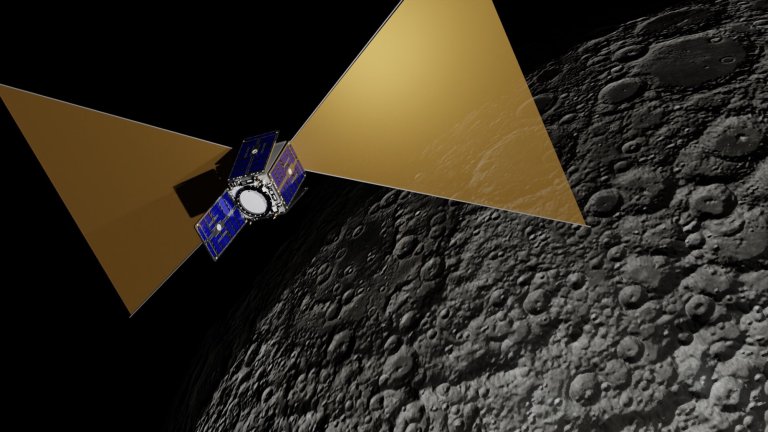
Lost galactic hitchhikers can now rejoice when they visit our corner of the Milky Way. A new sky map created by a NASA spacecraft shows the boundaries of our solar system in comparison to the rest of the interstellar neighborhood.

The boundaries are defined by our sun's heliosphere -- a protective bubble created by the solar wind that travels outward and collides with incoming interstellar radiation. That typically invisible boundary became visible through energetic neutral atoms created in the region that speed toward the sun at velocities ranging up to 2.4 million mph.

[ Read Full Story ]

Scientists Map Out Gravitational Space Highways


As planets of our solar system tug at each other with their gravitation tethers, they create a protean sea of forces and counter forces. But within that maelstrom lay gravitational channels that could serve as highways for future spacecraft, just as soon as Professor Shane Ross of from Virginia Tech University finishes mapping them out.

[ Read Full Story ]

Pluto Gets Reclassified Again

No longer a planet, Pluto is now the namesake of its own class of objects: plutoids

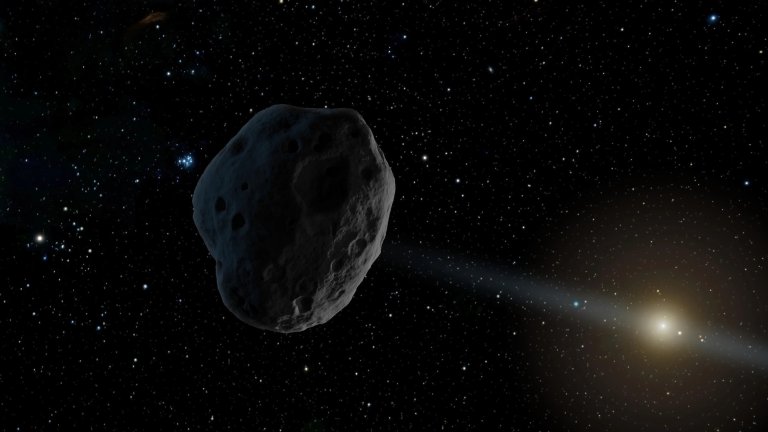
Pluto took a big hit in the eyes of schoolchildren and amateur astronomers two years ago when the International Astronomical Union (IAU) knocked it out of the rank of planets. Deemed too small and irregularly shaped, and with its orbit in the path of another planet, Pluto was relegated to a new class of "dwarf planets." The reclassification came about as the result of discoveries of bodies beyond Pluto's orbit that are the same size or larger than the icy world. And so Pluto was grouped with those far-out solar-system denizens, along with asteroids close to Pluto's size.

[ Read Full Story ]
READ MORE ABOUT > , , , ,

Solar Systems Like Ours

Scientists find two gas giants orbiting a star, and with it up the chances of our discovering another Earth

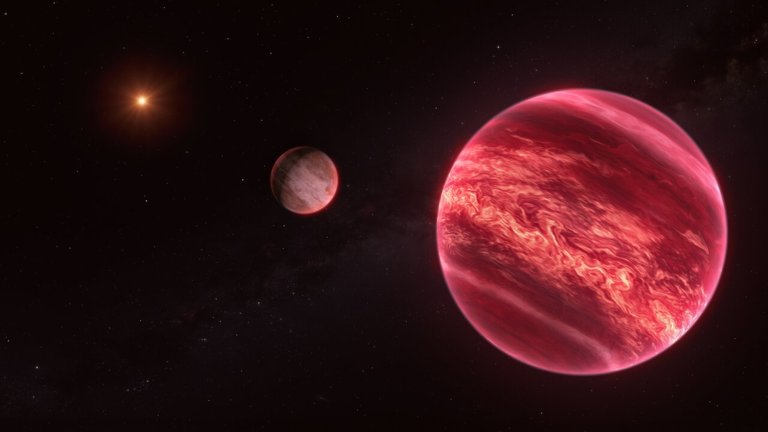
Less than fifteen years ago, the concept of an extrasolar planet orbiting a star much like our own was only a theory. Since that time, we've discovered nearly 300 extrasolar planets in all, but have consistently failed to find systems which orbit around stars resembling the sun. Today, the BBC is reporting on a find by astronomers from St. Andrews University of two gas giants on par with Saturn and Jupiter in orbit around a star half the size of our sun. While the finding is not a direct link to a system similar to ours, it does present an increased likelihood that our system is not unique.

[ Read Full Story ]

Rethinking the Planets

The most exclusive club in the solar system will be revising its membership rules this year

The most exclusive club in the solar system will be revising its membership rules this year

In all of history, only nine orbs in the sun's entourage have earned the title "planet." But that changed last summer, when an object significantly bigger than Pluto was spotted lurking in a little-explored region of the solar system known as the Kuiper Belt.

[ Read Full Story ]


Download Our iPhone App

Stay up to date on the latest news of the future of science and technology from your iPhone with full articles, images and offline viewing


Follow Us On Twitter

Featuring every article from the magazine and website, plus links from around the Web. Also see our PopSci DIY feed


Become a Fan On Facebook

Share links with friends, comment on stories and more


December 2009: Best of What's New

In our December issue, Popular Science names the 100 best innovations of the year: bombproof wallpaper, self-parking cars, the fastest helicopter, and 97 more. Plus inventor profiles and videos.

Check out the best of what's new here.

Popular Science Photo Pool


Share your photos in the Pop Sci pool at www.flickr.com!
tags_sprite.png
POP_embeddedForm_cover_May09.jpg