
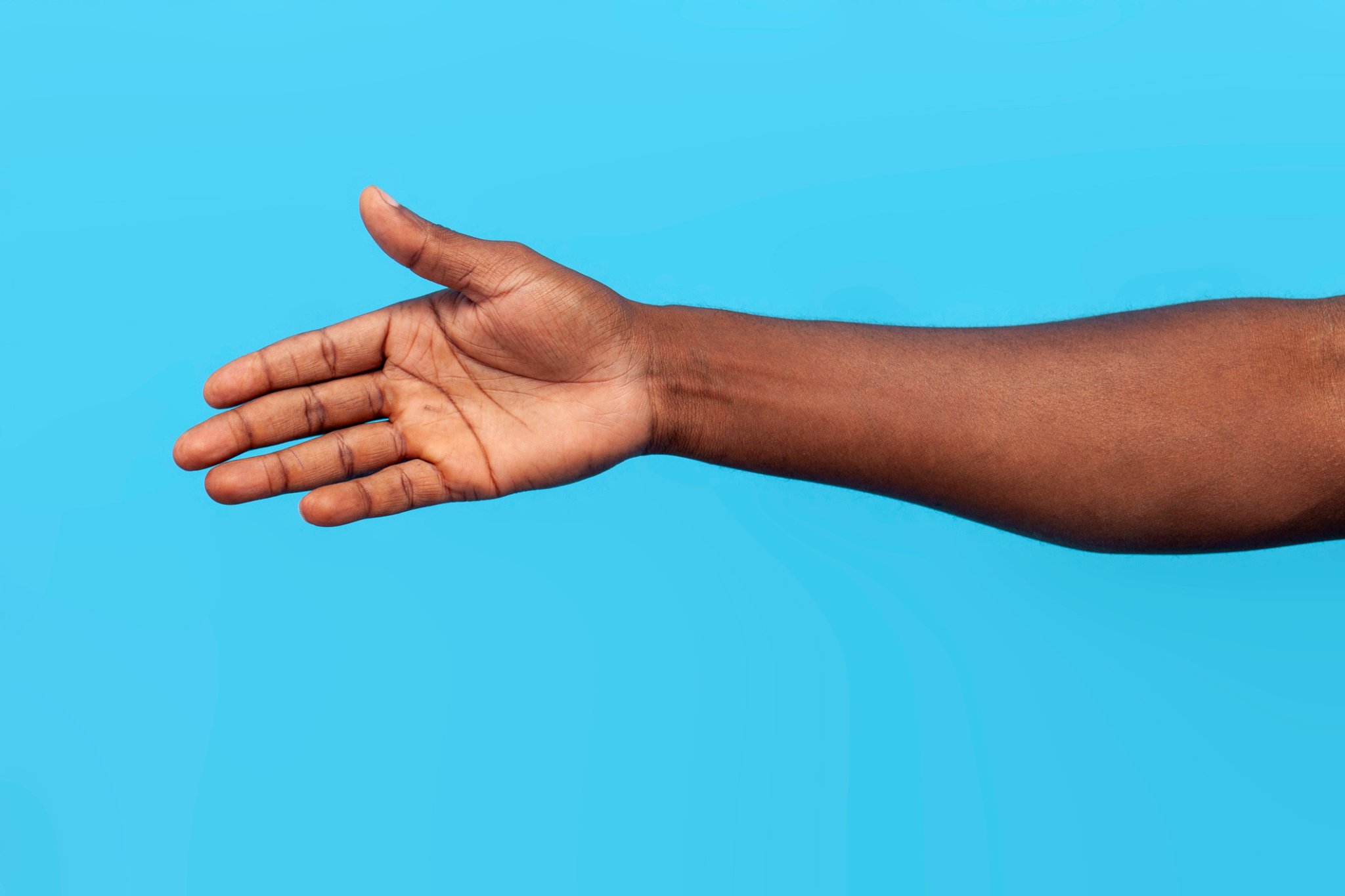
Are you right-handed or left-handed? The answer for most of us is right. That’s because nearly 90 percent of all people are right-dominant. But why is it that our world is full of people on Team Right Hand? Well in a new episode of Popular Science’s Ask Us Anything podcast, we explore just that.
Ask Us Anything answers your most outlandish, mind-burning questions—from the everyday things you’ve always wondered to the bizarre things you never thought to ask. So, yes, there’s a reason summers seem endless when we’re growing up and no, storm chasing isn’t like Twisters. If you have a question for us, send us a note. Nothing is too silly or simple.
This episode is based on the Popular Science article “Why are most people right-handed?”
Subscribe to Ask Us Anything
Listen and follow Ask Us Anything on your favorite podcast platform:
Spotify | Apple Podcasts | YouTube | Or wherever you get your podcasts.
Full Episode Transcript
Sarah Durn: Okay, so I am conducting a little science experiment here. I’m trying to write “hello” with my left hand and it’s not going amazing.
For context, I am right-handed like the vast majority of folks. I do basically everything with my right hand: writing, throwing, brushing my teeth, opening jars badly. And yet somehow asking me to write with my left hand makes it look like I never learned my ABCs. So why is it that so many of us are right-handed?
Welcome to Ask Us Anything from the editors of Popular Science, where we answer your questions about our weird world, from “Why do we need braces?” to “What’s human composting?” We’ll do a deep dive on just about anything. I’m Sarah Durn, an editor at PopSci.
Annie Colbert: And hello, I’m Annie Colbert, editor-in-chief, and this week we’re wondering why nearly everyone is right-handed.
SD: Yeah. Roughly nine out of every 10 people are right-handed.
AC: That’s a huge majority. So what’s happening here? Why are the Ned Flanders of the world so rare?
SD: Well, the short answer is nobody knows for sure.
AC: Well, you know what? Great episode, everybody. We’ll see you in a couple weeks. We’re solved.
SD: But scientists do have some pretty good theories.
AC: All right, let’s hear it.
SD: The evidence suggests that hand preference starts even before we’re born.
AC: Wait, seriously?
SD: Yeah. Researchers have found that fetuses tend to favor one side very early in development.
AC: So my preference for grabbing snacks with my right hand may have started before I actually had hands capable of grabbing snacks?
SD: Yep.
AC: Hmm. So is being right-handed genetic?
SD: Partly. Scientists think dozens of genes help create a natural tendency towards right-handedness, but it’s not as simple, of course, as a single right-handed gene.
AC: No, of course not. Biology loves making things complicated.
SD: Always. And then there’s also my favorite theory: the evolutionary angle.
Some researchers think right-handedness may have become common because it helped our ancestors use tools, learn skills from one another, and maybe even survive fights.
AC: Hold on. Are you telling me this episode is going to involve prehistoric toolmakers and medieval sword fights?
SD: I am.
AC: Yes. All right. Before we investigate humanity’s favorite throwing hand, we want to hear from you.
What questions are grabbing your attention? What are you thinking about in the shower? If there’s something you’ve always wanted to know, submit your questions by clicking the “Ask Us” link at popsci.com/ask.
SD: Send us your questions.
AC: Send them. And with that, we’ll be right back after a quick break to figure out why almost everybody ended up on Team Right Hand.
SD: Welcome back. So Annie, obviously we need to know, are you right-handed or left-handed?
AC: I, like you, am also right-handed, and very right-handed. My left hand is a bit helpless.
SD: Welcome to the team.
AC: Thank you. Happy to be here. My husband actually always wanted to be left-handed, though.
SD: Oh, really?
AC: Oh, totally. Uh, he actually tried to teach himself how to write left-handed.
SD: Ooh, how’d that go?
AC: About as well as your experiment at the top of the show.
SD: Ah, so not great.
AC: Not great, not great. But the funny thing is because so many of us are right-handed, we don’t really notice how much of the world is designed for us righties.
SD: How so?
AC: Scissors, for one.
SD: Ah, right. Yeah, the classic lefty complaint.
AC: Yes, but there’s more. Spiral notebooks are a pain to write in because you’re always hitting the divider. Desks with those little writing arms attached to the chair are annoying because then your left elbow is left floating. Can openers are almost impossible to use for lefties. Credit card machines are set to swipe your card with your right hand. Even the pens that are chained to the counter at the bank always seem to be attached to the wrong side for lefties.
And yes, before anyone comments, Ned Flanders from The Simpsons made a whole generation aware of this already.
SD: Thank you, Ned. Wow, that is a lot.
AC: It sounds exhausting for lefties.
SD: Yeah, it really does.
Righty privilege is a thing.
AC: Definitely. Our whole world is built around right-handed people.
SD: And, you know, it kind of makes sense because the vast majority of people are right-handed. Roughly 85 to 90 percent of humans are right dominant.
AC: But that raises the bigger question, and the point of this episode, which is why.
So Sarah, please explain, where does handedness start?
SD: Yeah, the answer begins long before anyone ever picks up a pair of scissors, about 10 weeks after conception.
AC: Wow, that’s really early.
SD: Yeah, really, really early. Using ultrasound scans, researchers can watch fetuses move their arms and hands. By around 10 weeks of gestation, most fetuses move their right arm more than their left, and by around 15 weeks, many are already sucking their right thumb instead of their left.
AC: So we’re already picking teams before we’re even born.
SD: Basically. Researchers think right-handedness is tied to the way the brain develops during those very early stages of life.
AC: So it is genetic.
SD: Partly. Dozens of genes seem to play a role in determining whether you’ll be right-handed or left-handed. Those genes help shape how the brain develops, and for most people, that development creates a preference for the right hand.
AC: Which sounds pretty straightforward, but what about left-handed people? Why isn’t everyone just right-handed?
SD: Yeah, researchers think that many cases of left-handedness may simply be the result of random variation during brain development.
AC: Hmm.
SD: Tiny fluctuations during critical moments of development could influence which side ends up becoming dominant.
So even though the brain may have a general tendency towards right-handedness, biology isn’t really running off of a rigid blueprint.
AC: It’s more like a recipe.
SD: Yeah, exactly. The ingredients are mostly the same, but sometimes you end up with a slightly different result.
AC: Okay, so we’ve got genes and brain development.
Where does evolution enter the story? Because I was promised prehistoric tools and sword fights.
SD: I would never deprive you of prehistoric tools and sword fights, obviously.
AC: Thank you.
SD: One theory is that right-handedness became common because it made it easier for humans to learn from one another.
AC: Mm.
SD: You know, imagine a group where most people use the same hand to make tools, throw spears, or perform other complicated tasks.
It becomes easier to watch someone and copy exactly what they’re doing.
AC: So everybody’s using the same operating system.
SD: Yeah, pretty much. So there’s a preference for righties in early tool use, and there is evidence that the preference began a very, very long time ago.
AC: How long are we talking?
SD: A 2011 study found signs of right-handedness in tools going back at least half a million years.
AC: Half a million years?
SD: Yeah.
AC: That’s wild. Okay, now let’s get to the sword fights.
SD: Gladly. Okay, so some researchers have proposed that handedness may have been influenced by combat.
AC: Hmm.
SD: The idea is that if most people are right-handed, they’re naturally aiming towards the left side of the opponent’s body, where the heart sits.
AC: So right-handed fighters have a slight advantage.
SD: Potentially. Over thousands of generations, that advantage might have helped reinforce right-handedness in human populations.
Now, it’s important to say this is still very much a hypothesis. Scientists are still debating exactly how much fighting influenced handedness, but it is one possible piece of the puzzle.
AC: Okay, but if right-handed people had all of these advantages, why didn’t left-handedness just disappear completely?
SD: Yeah, because lefties actually have some advantages of their own.
AC: Hey, you go lefties.
SD: Right? They get a win in this story, too.
One theory is that left-handed people are harder to predict. If you’re used to fighting, competing against, or even just interacting with right-handed people, a left-hander moves differently.
Their angles are different, their reactions can be different.
AC: They have an element of surprise?
SD: Exactly. It’s something my dad always talks about when he watches tennis pros like Rafael Nadal.
AC: Oh, yeah. My dad used to always say, “Oh, I wish I taught you how to bat left-handed in softball.” Not that it would’ve made a huge difference in my softball career.
And there’s tons of lefty athletes, like Babe Ruth or basketball legend Bill Russell.
SD: Right. And researchers think that advantage may help explain why left-handedness persists, not in huge numbers, but consistently. Across cultures and across history, lefties usually make up somewhere around 10 percent of the population.
AC: Hmm. So evolution may have landed on a compromise.
SD: Yeah, that’s one way to think about it. And the exact reasons are still being worked out, but the current evidence suggests handedness is probably the result of a whole mix of factors, biology, genetics, early brain development, and evolutionary pressures that have been shaping humans for hundreds of thousands of years.
AC: Which means the answer to today’s question of why are most people right-handed is basically because human beings are complicated.
SD: That’s the answer to a surprising number of science questions.
AC: And somewhere out there, a left-handed listener is feeling very seen right now.
SD: Or struggling to use a pair of scissors.
AC: Or sitting in one of those awful classroom desks.
SD: Justice for lefties.
AC: Justice for lefties.
SD: And with that, it’s time for a quick break, but we’ll be right back to talk with archeologist Dr. Anna Goldfield, who wrote a really interesting piece about how we’re not the only species throughout history with a preference for our right hands.
And we’re back, and welcome to Dr. Anna Goldfield, an archeologist, science writer, and media producer who uses archeological evidence to tell stories about people’s lives in the past, and to highlight the science behind the discoveries.
Anna, welcome to Ask Us Anything!
Anna Goldfield: Thank you so much for having me.
SD: Of course.
Happy to have you. Now, you wrote a really interesting piece for Sapiens about how Neanderthals actually were also, like Homo sapiens, right-handed. Can you tell us a little bit about that story and how you found it?
AG: Yeah, sure. So looking at different pieces of anatomy, and the way we know that Neanderthals were, for the most part, right-handed is that you can see evidence of handedness in different places in the body.
So we are generally not as symmetrical as maybe many people think. People tend to have a dominant hand. They also tend to have, well, a dominant ear. And so if you use one side more than the other, especially for really vigorous activity, you can see that in the bones. And so there are researchers who have done a broad study of all of the available Neanderthal arms, and generally, what seems to be the case is that the right arm bones are more robust. They’re beefier, and that indicates heavier use, and that’s in all kinds of activities.
So yeah, it seems like whatever the adaptation was that made it better to be right-handed, and there’s a lot of different sort of lines of evidence about what that might have been. But whatever that was, it must have happened sometime after the split between the human lineage and the ape lineage, which was, well, specifically chimpanzees and bonobos, which was about six million years ago.
SD: That is so fascinating, Anna. Thank you so much for making the time to talk to us, and if listeners want to follow your work, is there anywhere they can find you?
AG: Sure, yeah. I’ve written a couple of kids’ books, and so one is called The Mind-Blowing World of Extraordinary Competitions, and it’s all about different ways that people compete in bizarre and funky sports and games through time and all over the world.
And then the most recent one is A Compendium of Curious Contraptions, which takes you through lots of different historical and archeological artifacts. It’s a book and a game. You can find me and contact me and take a look at all of the stuff I do at: thinglearner.squarespace.com.
SD: Amazing. Thank you so much.
AC: And that’s it for this episode. But don’t worry, we’ve got more episodes of Ask Us Anything live in our feed right now. Follow or subscribe to Ask Us Anything by Popular Science wherever you enjoy your podcasts. And if you like our show, leave a rating and a review.
SD: Are you a lefty? Let us know in the comments.
Our producer is Alan Haburchak. This week’s episode was based on an article written for Popular Science by Clarissa Brincat. And a special thank you again to Dr. Anna Goldfield for chatting with us.
AC: Thank you, team. Thank you, righties. Thank you, lefties, and thank you all for listening.
SD: And one more time, if you want something you’ve always wondered about explained on a future episode, go to popsci.com/ask and click that “Ask Us” link.
Until next time, try to write something with your non-dominant hand. Maybe it’ll go better than mine. Who knows? And keep the questions coming.
Annie, do you wanna see what I tried to write? Can… can you?
AC: It looks like a desperate plea.
SD: It looks like a ransom note.
AC: Like, “Hello?”
SD: “Hello?” Yeah.
AC: Yeah.
SD: Hello? Someone please.
AC: Help. You did a good job.
SD: Help would’ve been more, harrowing if, like, there’s a small person trapped in my journal.
AC: Oh, no.
