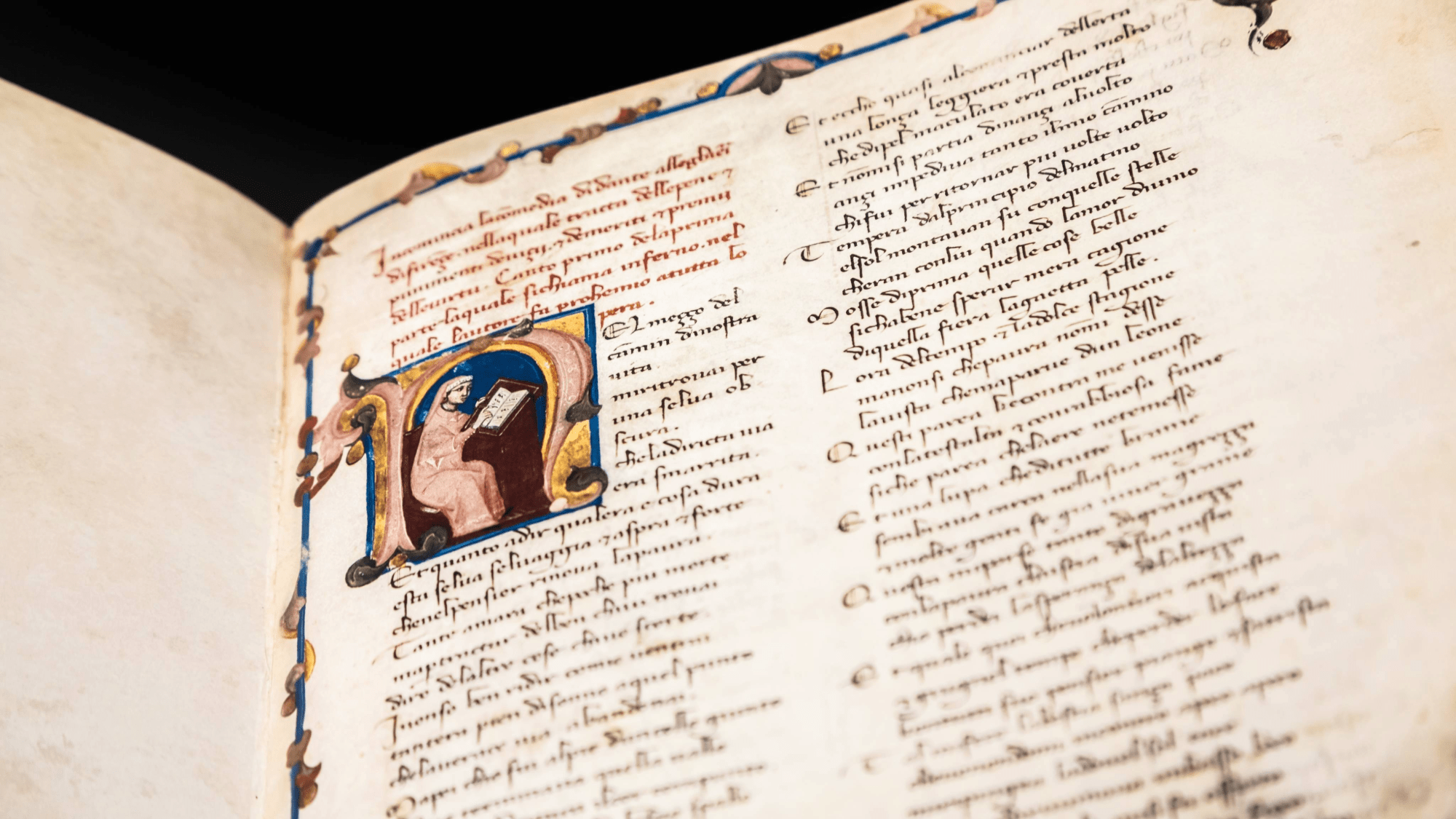
Dante Alighieri’s The Divine Comedy is one of the most famous Italian literary works, if not the most famous. The medieval narrative poem is divided into three sections—Inferno (Hell), Purgatorio (Purgatory), and Paradiso (Paradise)—and chronicles Dante’s fictional travels through the three regions. However, Marshall University English professor Timothy Burbery, says that Dante is more than just an author and character. He’s also an accidental geophysicist.
Simply put, Burbery argues that Dante’s Inferno demonstrates an intuitive understanding of certain aspects of geophysics and geology long before they were formally discovered by scientists. Burbery points to two examples that particularly emphasize this idea of anticipated science: a flight on a strange creature and Satan’s fall from grace.
The devil fell from space
In the poem, Dante is guided through Hell, which the Roman poet Virgil described as a series of nine concentric circles. At one point, the duo fly on the back of a hybrid creature called Geryon to get from one circle to another. During the flight, Dante (the character) notes that he cannot feel the motion of flight. Though Dante (the author) couldn’t have known this, that sensation of not feeling any movement while moving is called the “inertial frame of reference” in physics, according to Burbery.
Burbery’s second example refers to Dante’s description of Satan falling to Earth from Heaven. In addition to the more traditional spiritual and allegorical framing, the author describes the iconic fall as a physical one. Satan is illustrated as a large extraterrestrial object with mass and velocity that plummets to Earth from beyond the orbit of Saturn and changes the landscape. Simply put, Dante’s devil can be seen as a meteorite or asteroid, and when he smashes into Earth, he creates Hell—a sort of bottom-up crater.
“Because Satan plunges to earth from a massive height, he picks up tremendous speed, and when he slams into the earth, he tunnels to its core, and the dirt he excavates in the process forms Mount Purgatory. He also causes the continents in the Southern Hemisphere to flee to the Northern Hemisphere. And he creates the cone, or crater, of Hell, in the Northern Hemisphere,” Burbery says while summarizing Dante’s work.
Importantly, Burbery says that scholars are divided over whether Satan’s fall in Inferno created Hell or not.
“While these effects are clearly fantastic and literary, they presage scientific thinking on how asteroids and meteorites restructure the earth, and, among other things, form craters,” he explains.
Of course, there are notable differences between Satan’s fall and how real asteroids and meteorites behave. Perhaps the most notable is that while Dante’s Satan reached the center of the Earth, meteorites don’t make it that far. What’s more, meteorites have a direct impact on the landscape, whereas the scholars in the “Satan’s fall created Hell” camp believe that the effect was indirect.
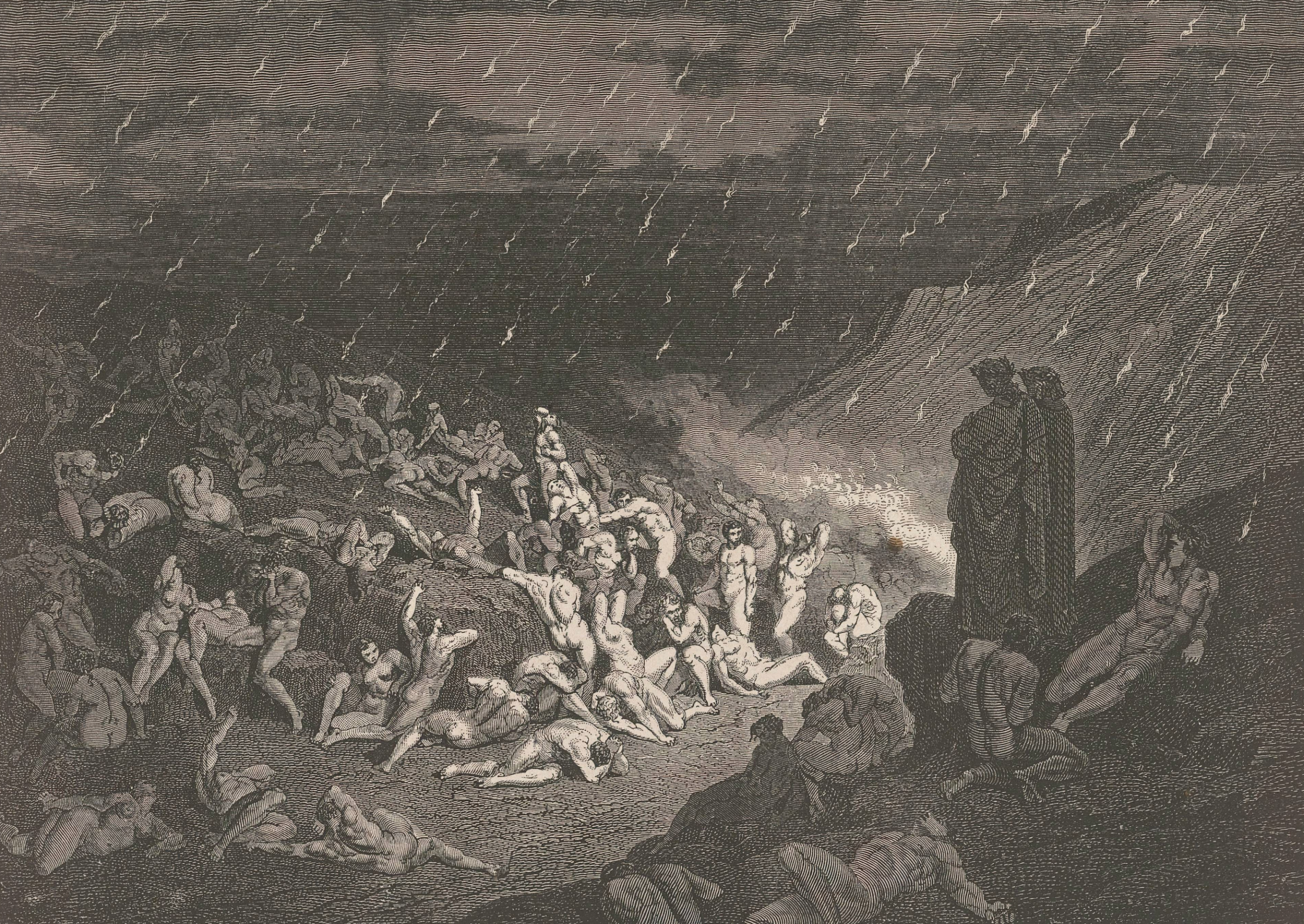
What does a Satan splat look like?
According to Burbery, Dante is the only author to contemplate the geophysics of such a far fall. For example, the Greek myth Icarus represents another famous fall, but his was from a much lower elevation. The Titans took nine days to fall from the heavens, but it seems like no writer has ever taken a shot at describing the physics of their landing in Tartarus. But by considering Satan’s fall as a physical one, Dante had to think about what such an impact would do to Earth, according to Burbery.
Before Dante, “nobody had really thought through, either with Satan or other mythological figures like Icarus, ‘what would it be like if they actually slammed into the earth?’ So he is doing proto geology and proto geophysics, just in imagining this idea that something could fall into the planet from a great height,” he tells Popular Science.
While we don’t know if Dante ever really saw any impact craters, he may have seen Mount Etna and/or Mount Vesuvius, or at least heard of these volcanoes. As such, they could have inspired his illustration of Satan’s splat, which would make that section of Inferno an accidental, but also foreshadowing thought experiment.
What’s more, by giving Satan an extraterrestrial origin, Dante is unknowingly foreshadowing the discovery of meteors’ extraterrestrial origins. This was not scientifically proven until 1803, centuries after the creation of The Divine Comedy in the 14th-century.
A nod to Aristotle
While Dante was clearly curious about geological events like earthquakes and landslides, both of which are featured in The Divine Comedy, Burbery explains that the author would have actually argued against this meteoric reading of his work. At the time, most people believed in the Aristotelian model of the cosmos, in which the skies beyond the moon were unchanging and meteors were extremely local events to earth—not alien bodies arriving from far away.
“If you would have asked him about meteors, he would have said, ‘no, I go with Aristotle here.’” Burbery says . In fact, Dante mentions the Aristotelian model directly in Paradiso. “But somehow he still had this physical understanding of these things, even though he wasn’t admitting it. He’s talking about Satan, the spiritual being, and yet he’s treating him as a physical body plunging down from space.”
Burbery presented an early version of his groundbreaking—pun intended—interpretation at the European Geosciences Union General Assembly in Vienna earlier this month. He aims to publish a research paper on this topic in the future.