
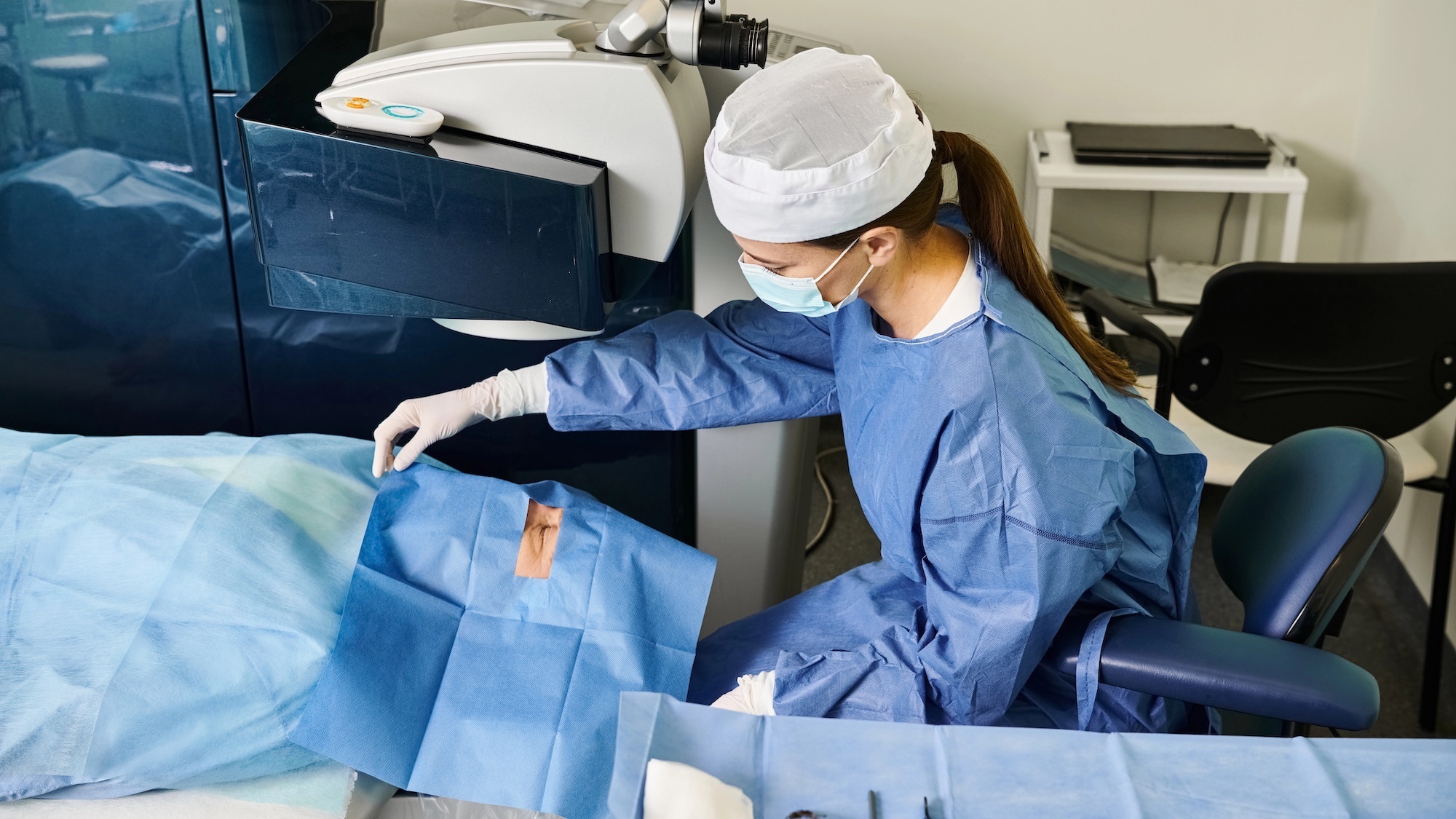
In a world first, Apple’s commercially lackluster Vision Pro virtual reality headset was successfully used to help perform a cataract surgery. New England-based surgeon Dr. Eric Rosenberg of SightMD claims he used the $3,499 device alongside a custom-built app called ScopeXR to assist with a surgery in October 2025. Dr. Rosenberg claims he’s used the device to help with hundreds of other patients ever since. The app allows for remote collaboration, so additional doctors, consultants, or even medical students in other rooms or cities can beam in and observe every cut and stitch, as if through his eyes.
“We are now able to bring the world’s best surgeon into any operating room, at any hour, from anywhere on the planet,” Dr. Rosenberg said in a press release. “From residents performing their first cases to surgeons facing unexpected complications, this technology democratizes access to expertise and that will save vision.”
Tuning into a surgery
Apple’s Vision Pro headset is officially considered to be mixed reality because it incorporates elements of both virtual and augmented reality. That makes it a particularly attractive option for medical applications, where there’s a wealth of important contextual information relevant to surgeries or observation that could benefit from a visual representation. And while medical professionals previously tried to use older headsets like Google Glass and Microsoft HoloLens in medical settings, those reportedly fell short due to their limited resolution. Apple’s headset, by contrast, has a best-in-class resolution.
But the hardware is only half of the equation. In order for this to work in real-world surgeries, Dr. Rosenberg had to co-develop specially designed software, which he refers to as a “mixed reality surgical platform.” The app takes data feeds from 3D digital microscopes and other equipment in the operating room and sends it directly to the Vision Pro. The surgeon can then view their operating area in stereoscopic 3D. The headset’s augmented reality feature lets the surgeon overlay relevant data directly on the patient or workstation.
3D imaging is useful, but the most important benefit provided by the system lies in its potential for collaboration. In theory, multiple surgeons could all tap into the same first-person video feed and provide assistance for a surgery from anywhere in the world with internet access. Apprentices or medical students could also review footage from operations and use that to provide a more first-hand visual aid for their training.
“This isn’t just about a new device, it’s about reimagining what the operating room of the future looks like,” Rosenberg added.
Vision Pro gets a new life in medicine
Apple released its first Vision Pro in February 2024 to much fanfare, but the device has largely failed to meet those expectations. Sales for the Vision Pro were meager compared to other groundbreaking Apple products, and some once excited owners reportedly expressed a feeling of “total regret” after watching their expensive toys gather dust. More recent reports suggest that Apple teams once dedicated to the headset are now moving away from it to focus on other devices.
But despite that commercial flop, the Vision Pro has seen some surprise success among a handful of professional industries. In September 2024, Dr. Santiago Horgan, a surgeon at UC San Diego Health in California, was reportedly the first person to complete an operation using the headset. He completed the initial paraesophageal hernia repair, and went on to use the device in dozens of more surgeries in the following weeks. Since then, the Vision Pro has been used in hundreds of different operations, including some intended to treat acid reflux and obesity.
Ironically, part of its growing appeal in medicine is the price. While the $3,500 price tag sounds unattainable for most consumers, it’s actually quite affordable compared to other medical equipment. The price point and its adaptability and ease of connecting to devices, has made the Vision Pro increasingly attractive for medical professionals, especially those in regional or community hospitals where budgets are tighter.
