
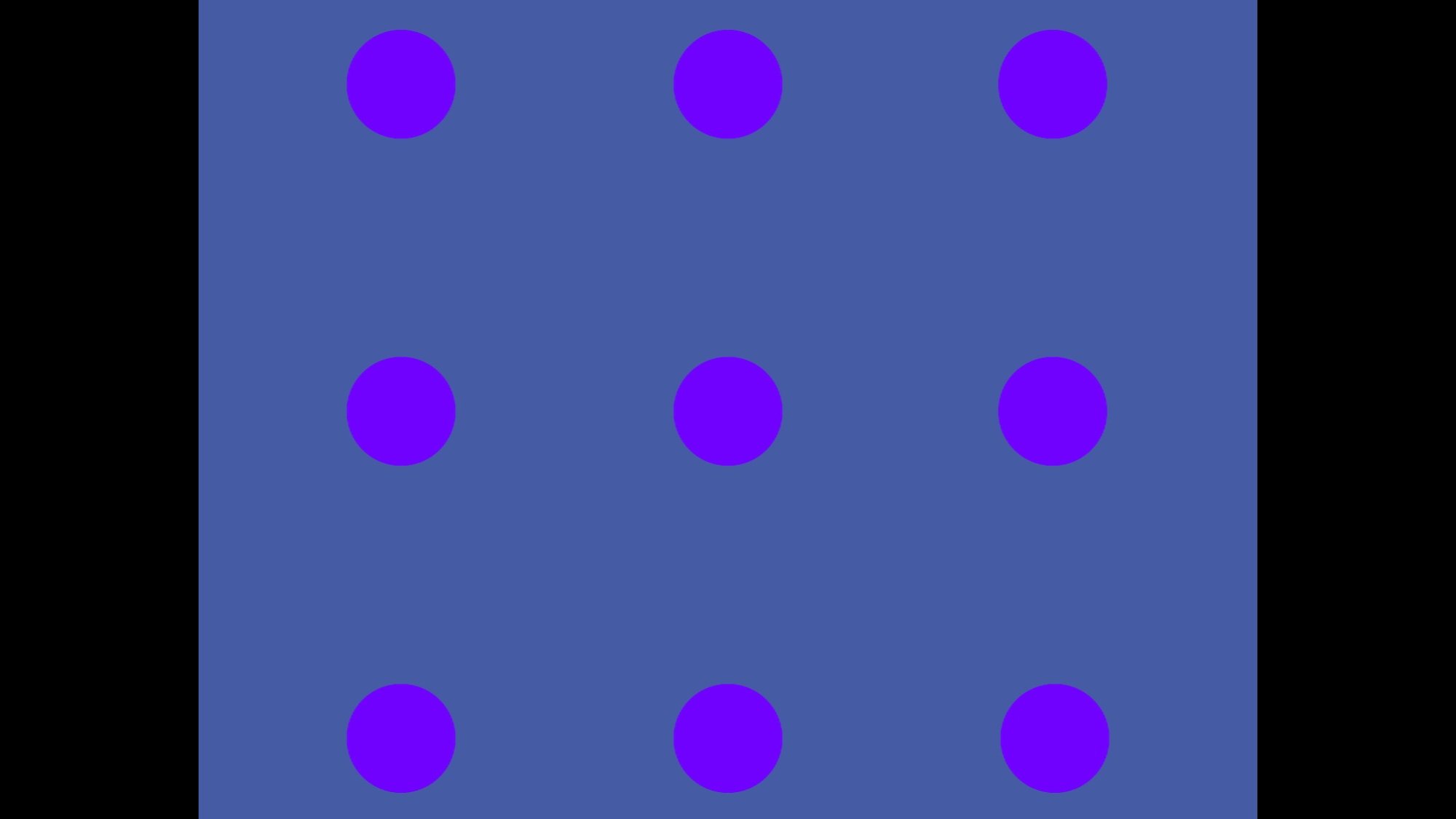
A new optical illusion excellently illustrates just how finicky our eyes are when it comes to perceiving colors. Unfortunately, staring at it too long with a friend may kick off an argument much like The Dress did in 2015. How many purple dots are in this image, really?
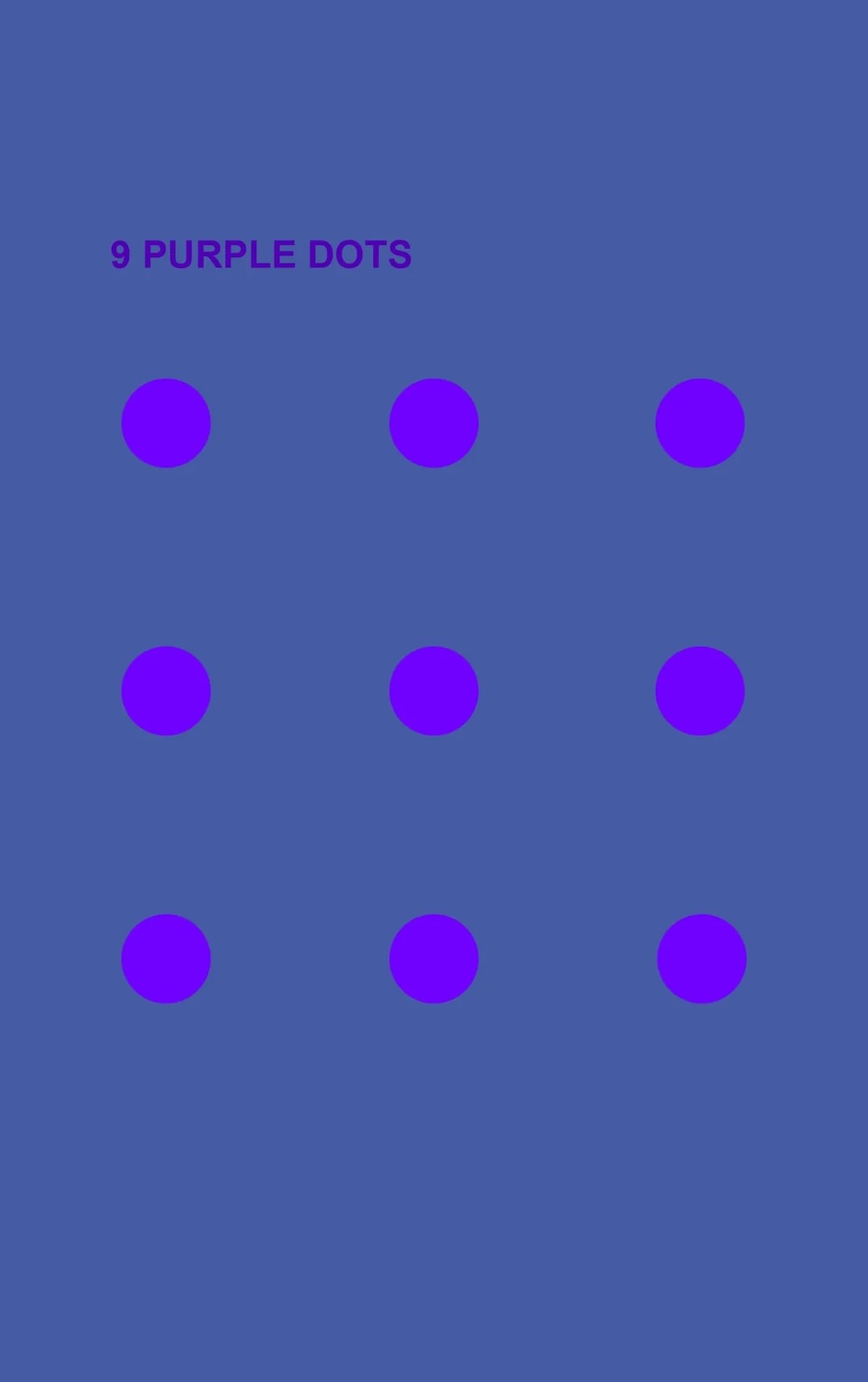
Spoiler: It’s a trick question. They look kind of purple, but they’re all technically the same blue.
An object’s actual color and our perception of its color are two very different things. The wavelengths of light absorbed or reflected by a surface may determine its hue. However, your brain only interprets it through information collected by cells in your eye’s retinas called cones. There are three types of cones, each named after the type of wavelength they are capable of detecting. L-cones detect long wavelengths of light for reds). S-cones pick up short wavelengths for blues. And lastly, M-cones sense middle wavelengths for greens and yellows.
But cones aren’t distributed equally throughout the eye and vary in number. There are also around 10 times more L- and M-cones than S-cones, while far fewer S-cones are located in the center of the retina known as the fovea.
“In the fovea, the area of sharpest vision, L- and M-cones are present in high density, enabling the finest detail and color discrimination,” Hinnerk Schulz-Hildebrandt, a biomedical optics researcher at Harvard Medical Center, explained in a study published in the journal Perception. “The S-cones make up only 8–12 percent of all cones in the retina and are almost completely absent in the absolute center of the fovea.”
Taken all together, this means some colors are easily recognizable than others—and blue is a tricky hue. It’s especially difficult to interpret the cool color when looking straight at it, too. The complications showcased in Schulz-Hildebrandt’s nine dot optical illusion is a great example of a phenomenon called simultaneous contrast.This is the brain’s tendency to alter a color perception to let it stand out more clearly.
Each dot is the same hue of blue, but the background is slightly more purple. This difference creates a sensory tug-of-war: your brain alters whatever dot you’re focused on to look more purple, while your eyes work to make it appear less blue. At the same time, your brain tries to make all the surrounding dots look bluer. This combination of interpretations makes the dots look like they vary in color, even though they are all actually the same blue.
“The perception of colors is not absolute and isolated, but depends on the context and their integration into the ambient scene,” Schulz-Hildebrandt explained.
But just because the dots are all the same color doesn’t mean your brain stops altering your perception of them. Knowing that, happy color hunting.
