
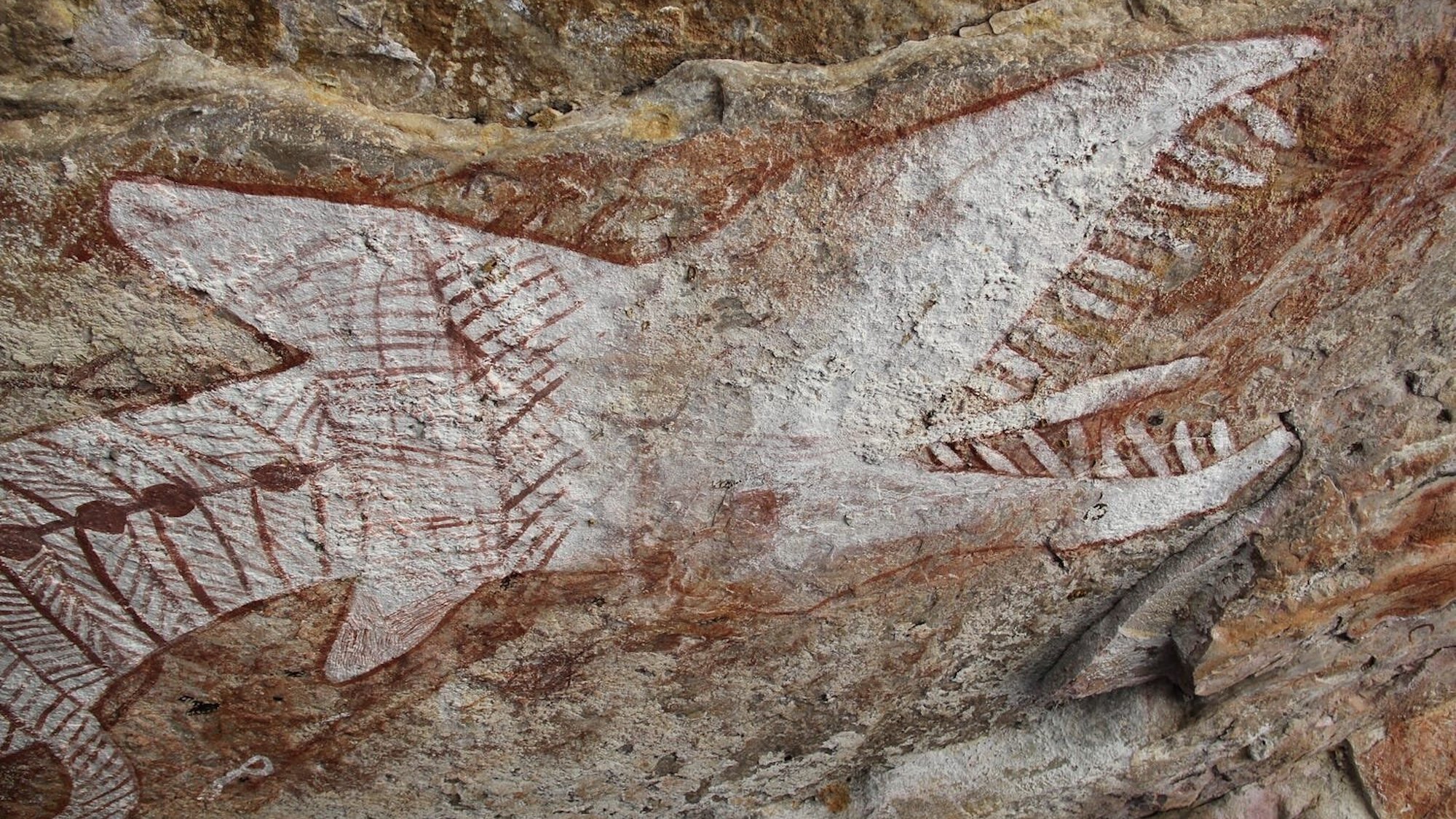
Few entities from Australia’s Aboriginal cultures are more powerful than a Rainbow Serpent. Often likened to an archetypal mother goddess, the beings are associated with concepts like creation and chaos. Rainbow Serpents even possess the ability to fold the cosmos itself (often known as Dreamtime) to blend the past and the present. While stone wall paintings and rock arrangements of Rainbow Serpents across Australia date back hundreds of years, many examples of these revered deities apparently experienced a major growth spurt beginning during the 19th century.
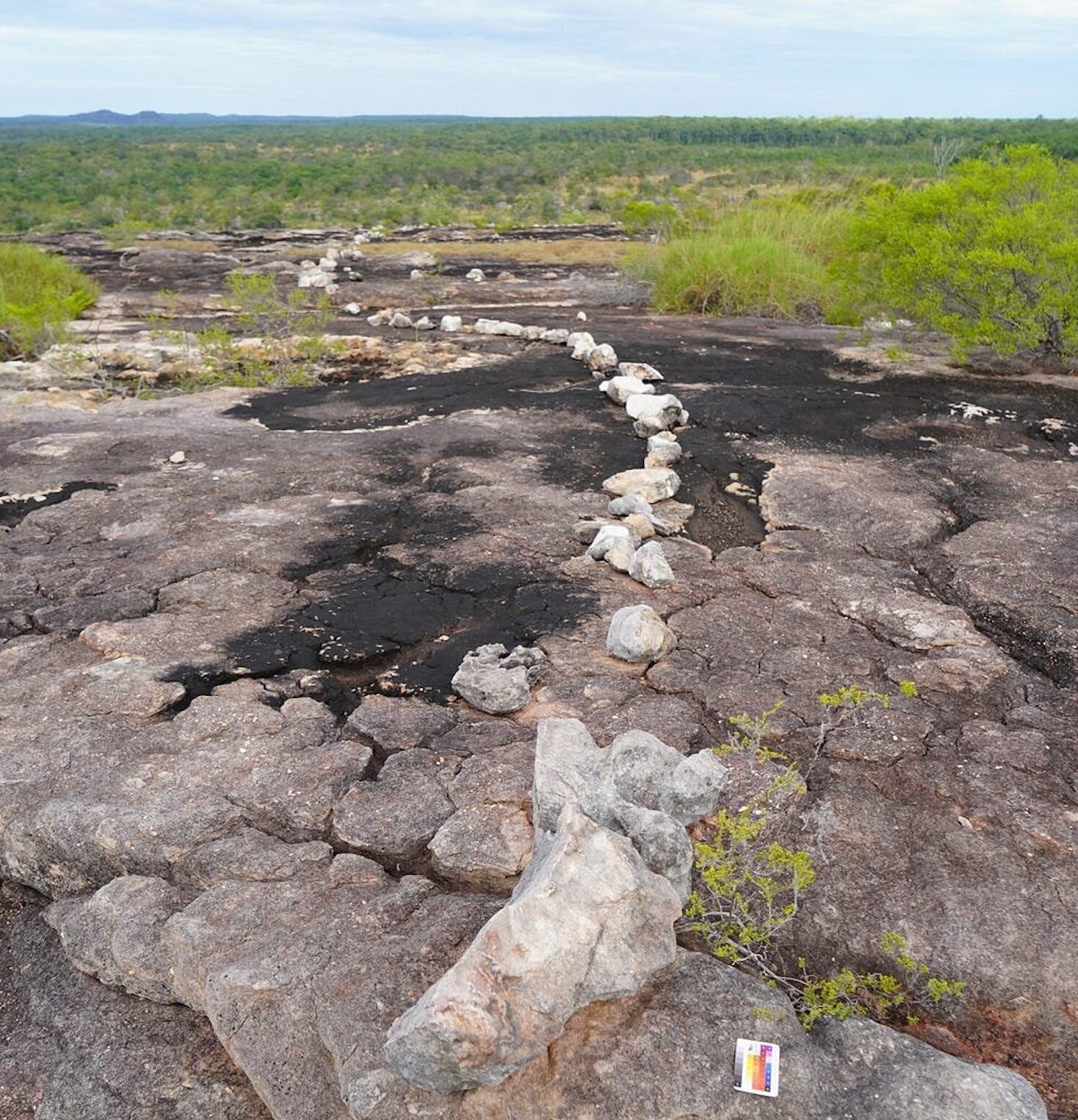
“We could see from the shape of [it] with a large head-like stone at the end of a winding neck attached to a large body outlined with stones, that it resembled some paintings of Rainbow Serpents,” Paul Taçon, an archaeologist at Queensland’s Griffith University, said about a 407-foot-long rock arrangement near Awunbarna (Mount Borradaile) in northern Australia.
Taçon and his colleagues worked in partnership with local Amurdak representatives to meticulously document 165 archaeological locales across the region. In addition to 29 Rainbow Serpents found at 21 sites, the team also examined depictions of seven-foot-long pythons, life-sized kangaroos and crocodiles, Australia’s only known baleen whale rock art, and even a giant man measuring over seven feet tall.
Although much of the art wasn’t available for radiocarbon dating, Aboriginal creators painted many of the Rainbow Serpents using white pipe clay that starts fading after only a few decades. Combined with other historical accounts and data, Taçon’s team now believes they can explain all of the elongated Rainbow Serpents. According to their recent study published in the journal Australian Archaeology, the desire to illustrate larger animals and other revered beings in art was a direct response to European colonization.
Awunbarna itself also supports this theory, since the region served as a nexus for trading, social gatherings, and religious ceremonies for multiple Aboriginal groups for generations. The area was also one of the initial places to experience colonial buffalo hunting during the latter half of the 19th century, making its inhabitants some of the first communities to endure European pressures on the environment. In some cases, Aboriginal artists even painted Rainbow Serpents and other mythically charged animals over or next to depictions of European firearms and sailing vessels. Archaeologists believe these depictions were communal attempts to reassert autonomy, authority, and tradition amid violent external threats.
Today, these cultural echoes remain vital reminders of an era marked by intense upheaval and Aboriginal erasure. But even centuries later, Rainbow Serpent artwork like a 407-foot-long stone protector Taçon spotted near Awunbarna remains as impactful as ever.
“I thought to myself, ‘Wow! This is one of the largest Rainbow Serpent paintings I have seen in 40 years of Arnhem Land rock art fieldwork,’” he recalled. “And look at those teeth and tongue!”
