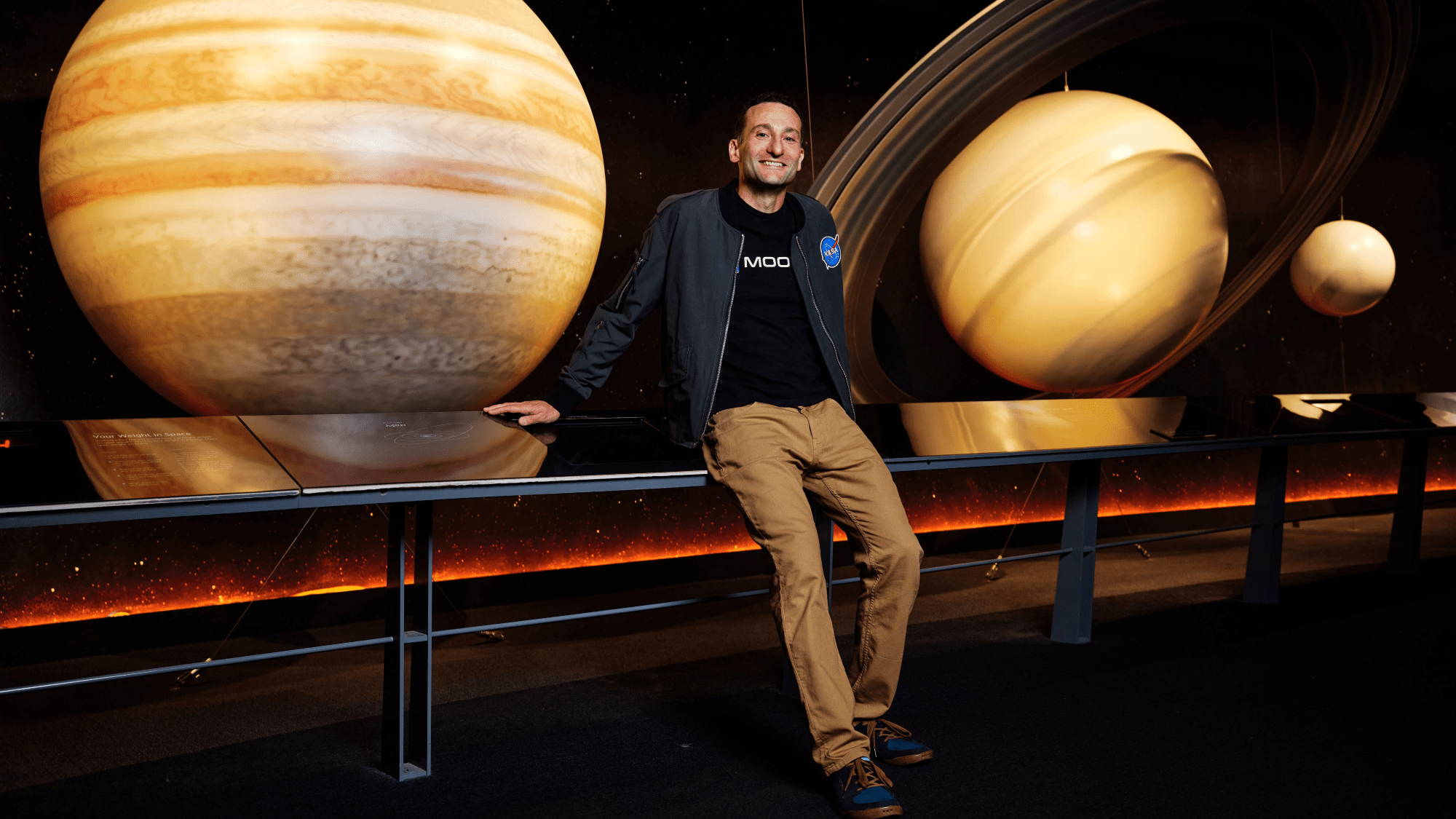
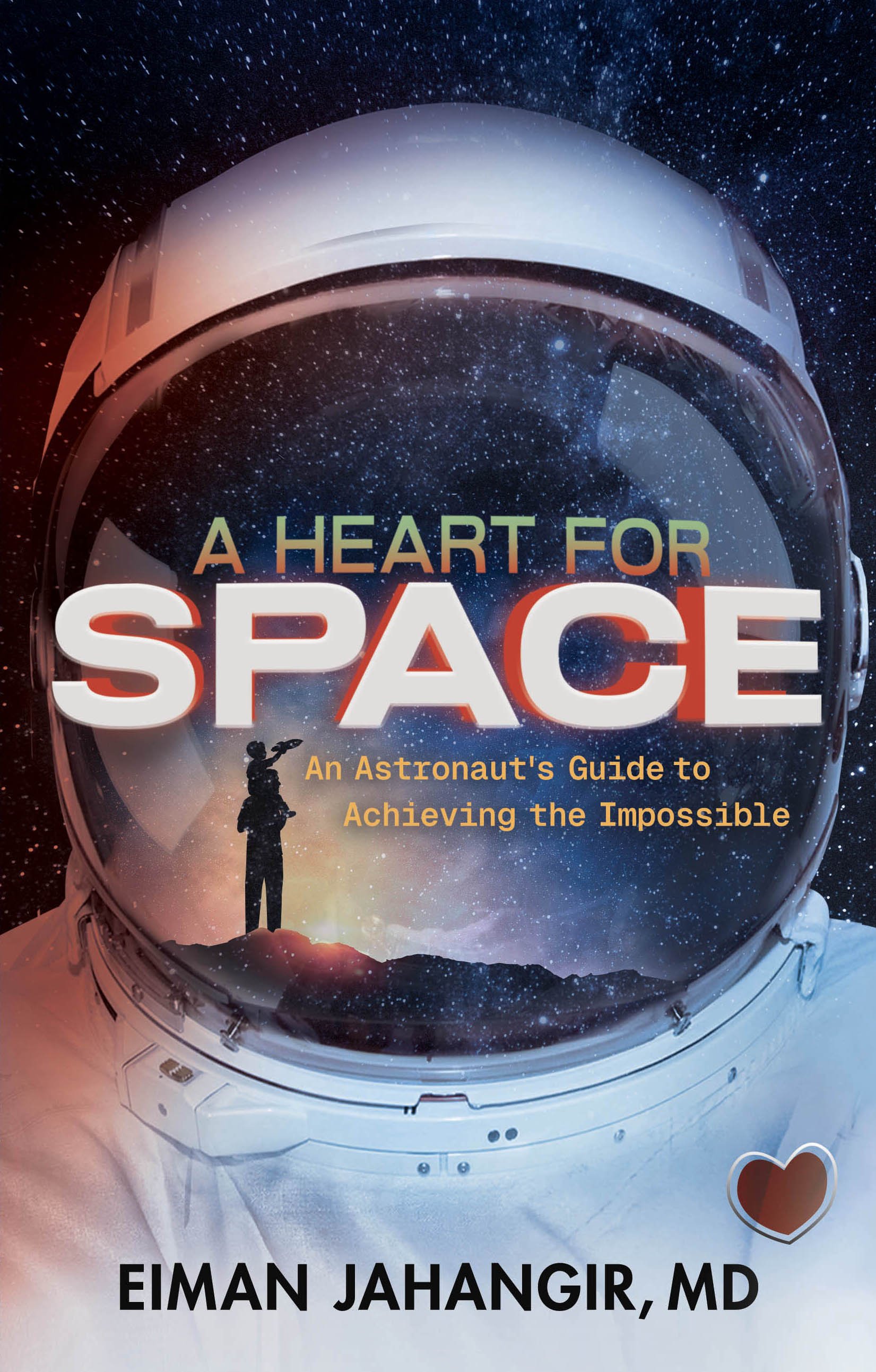
Cardiologist Dr. Eiman Jahangir was born during a war in Tehran, Iran, and immigrated to the United States at age four, settling in Nashville, Tennessee. He grew up with dreams of becoming a doctor and traveling to space, and his new book chronicles his childhood shaped by the Iran-Iraq War and journey becoming the first Iranian-American man to travel to space and the world’s first commercial physician astronaut.
Excerpted from A Heart for Space: An Astronaut’s Guide to Achieving the Impossible by Eiman Jahangir, MD. Copyright © 2026. Published by Forefront Books, distributed by Simon & Schuster. Reprinted with permission.
Ten Minutes, Forty Years
When I failed to even reach the interview stage in 2017, 2021, and 2025—at ages thirty-six, forty, and forty-four, respectively—it was clear that my door to NASA was shutting.
It was MoonDAO that finally gave me my ticket to space. A group of individuals decided to raise money through donations online to send someone to space. In one month, MoonDAO raised enough money to buy two tickets on Blue Origin’s New Shepard rocket. The first seat was reserved for a media influencer, and the community selected Coby Cotton from Dude Perfect to be their first astronaut. He flew to space on August 4, 2022. The second seat was put forward with a raffle.
The initial drawing was in 2022. We were on our babymoon, shortly before our daughter, Aylah, was born. I sat in the hotel lobby while my wife was asleep, watching the raffle drawing, waiting to see if I had won. I did not. Another blow.
A year passed, and the community and I were still waiting for MoonDAO to send their second astronaut to space. It never happened. For several reasons, the initial winner was unable to fly with Blue Origin. MoonDAO had to go back to the drawing board to select another astronaut. Over the course of that year, I had continued to enjoy the ride. I made friends with community members at MoonDAO, participated in events with them, and just was grateful to be around other space nerds. Still, I held hope I could find a way to space.
In late 2023, they repeated the raffle. Again, I entered. Again, I waited. This time I was sitting at our kitchen table with my wife and kids watching the drawing. They drew ten tickets, with the final ticket drawn being the grand-prize winner of a flight to space. I watched them pick each ticket. With each draw, my number was not picked. It was like a countdown to launch: 10, 9, 8, 7, 6, 5, 4 . . . and then mine was drawn! Fourth place . . . I had not won. I was bummed.
Amber looked up at me, smiling. “Don’t count yourself out,” she said. “You are closer to achieving this dream than you have been since you interviewed with NASA in 2013. If three people drop out or get disqualified, then you have your ticket to space.”
I waited. Months went by, and MoonDAO had not announced their second astronaut. Then, on April 8, 2024, as I was driving back from Bloomington, Indiana, with my family after watching the total solar eclipse, I got a message on my phone. It was Pablo Moncada-Larrotiz from MoonDAO. He wanted to talk. I assumed he would offer me a ticket to view the launch—a ticket I would happily take! We planned a call for the next day.
I was in clinic, between seeing patients, when he called. I rushed to my office to take it. Without much prologue, Pablo told me I had won the seat. I couldn’t believe it. I called my wife as soon as I got off with Pablo and then hurried down to my brother’s office and told him. I was going to space!
Liftoff
For the four months from my April 2024 phone call from MoonDAO to when I flew to space on August 29, 2024, I was on cloud nine. I couldn’t believe I would finally fulfill my dream. In fact, it still felt like it could be taken away at any moment. Honestly, even when I arrived at Blue Origin’s Astronaut Village outside of Van Horn, Texas—the site where astronauts spend their nights during training—I felt like my flight might not happen. I was enjoying every moment, from the sunsets and the food to the comradery and the training . . . but I wanted to be on that rocket hearing the countdown.
Finally, the day came, a culmination of approximately twenty years of work, from first looking up the qualifications to become an astronaut in March 2005 to flying on a single-stage rocket into space in August 2024.
The night before, I barely slept. I woke up at 2 a.m. and went through my day, checking emails and texts from all my friends and family wishing me a safe flight, and just being pumped my day had arrived. After a light breakfast with very little coffee (I didn’t want to pee in a diaper while strapped to the rocket), we headed to the Astronaut Training Center for an overview of our morning and operations.
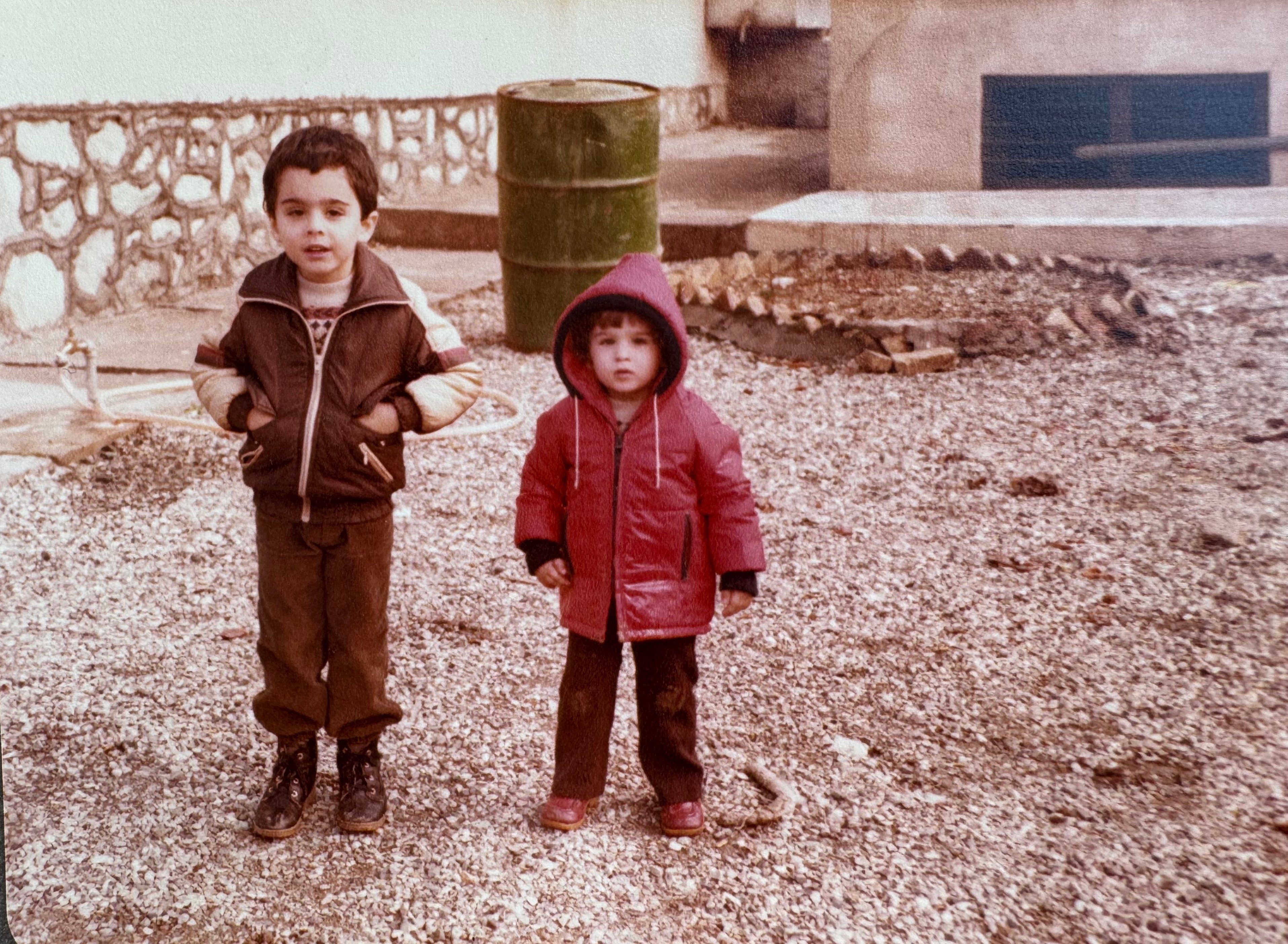
As we were driving to the launchpad, the rocket loomed over us, full of fuel, waiting to roar into space. We made our way up the elevator and boarded the crew capsule. As I strapped into Seat 6, my heart started racing, and my breath became rapid. I wasn’t nervous; I never feared being on a rocket. I was just excited—excited that I was about to fulfill twenty years of planning and forty years of dreaming, to fulfill what that four-year-old boy looking up at the Nashville sky realized: that rockets were not scary—they were our path to exploration. They were our destiny.
We waited in our seats, and the clock began ticking down. When mission control finally said, “We are go for launch,” I knew it was happening. This rocket was about to come to life. No one would pull me off this mission. I was about to become the first Iranian-American man in space and the first physician on a commercial launch, making my flight not just the end of a personal goal but a historical mission. The countdown clock kept ticking, then over the speakers I heard, “10, 9, 8, 7, 6, 5, 4, 3, 2, 1 . . . ignition.”
Grounded Again
I climbed aboard the Reusable Space Ship (RSS) First Step with my five crewmates: Ephraim Rabin, Nicolina Elrick, Eugene Grin, Rob Ferl, and Karsen Kitchen. We strapped into our seats and sat anxiously waiting for the countdown. As the engines came to life, the roar was deafening, and the orange glow from the engine fire reflecting through the capsule was like stepping into a furnace. Seven seconds: That is how long it took to gain enough force to move us up, up, and away. It was much smoother than I expected, but quite fast. We reached a top speed of 2,238 miles per hour. I looked out my window, tears rolling down my face as I finally fulfilled my dream, watching the Earth move farther away as the altimeter clocked our ascent.
I remember seeing 30,000 feet come and go (this is where most planes fly), then 100,000 feet (the height of most space balloons). We continued to climb until suddenly the blueness of the sky turned into the blackness of space. It was not a gradual change but a sudden one, as if I had just opened my eyes. We had ascended 342,314 feet (104 km), putting us above the Kármán Line, the internationally accepted border of space (100 km). That four-year-old boy who started dreaming of space after setting foot in America was now looking down at the Earth from space.
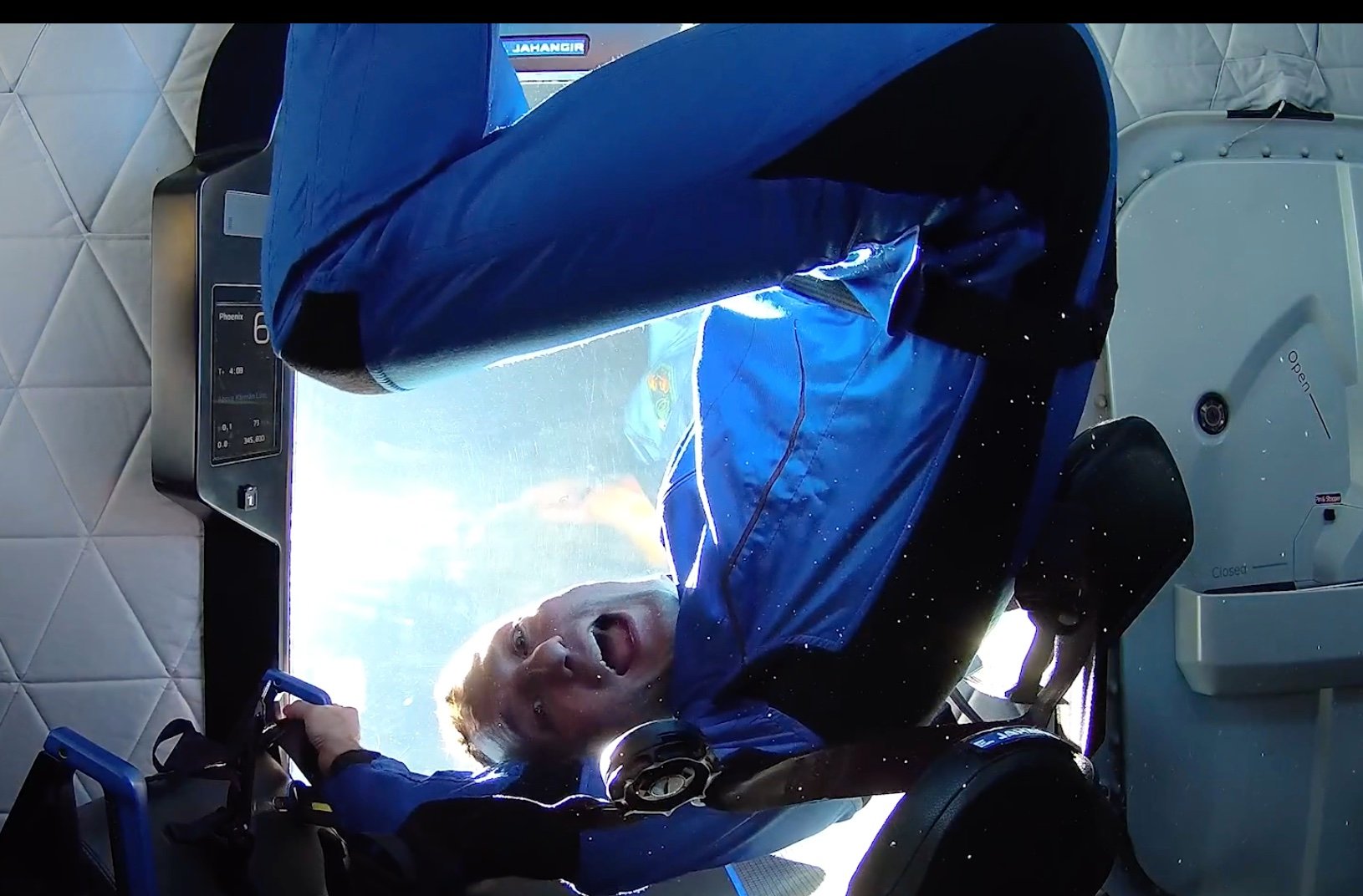
I unbuckled my belt quickly, not knowing what to expect. I floated toward the ceiling. It was as if a gentle hand were picking me up. I couldn’t believe it; I had made it. I was in space. I raced to pull out my zero-g indicator, a crocheted heart, and let it float around. I looked out the window for a view I had waited my whole life to take in. It was more than I ever expected. Being bathed in earthlight—the shine reflecting off the Earth, as Inspiration4 pilot Dr. Sian Proctor describes it—was incredible. It was brighter than anything I had imagined. The colors were so vibrant. The blue, white, and brown all so alive. I floated there in awe, amazed at what I was looking at.
Then I shifted my gaze up just slightly and saw the vastness and darkness of space. It was the blackest black I have ever seen, like staring into an inkwell. I just gazed, unable to comprehend what was before me and knowing that our atmosphere, our Earth, is home—a home we should protect at all costs.
My perspective shifted. I knew that when I returned to Earth, I would pursue a new dream, a dream to share my experience and encourage kids and adults to pursue hard things.
The total flight was ten minutes and eight seconds—not long in terms of the things we do. No chance to orbit the Earth and contemplate the depths of the universe in detail. Much like a lowercase n, you fly up very fast, detach from the rocket, and start flying as you reach apogee (the highest point of the flight), and then fall back to Earth. But to get to those ten minutes took forty years of dreaming and twenty years of hustling. It was not the future I expected, growing up with plans to be a NASA astronaut, but it was the future I was given, and one I am grateful for.
A Heart for Space: An Astronaut’s Guide to Achieving the Impossible by Eiman Jahangir, MD will be available wherever books are sold on August 25, 2026.