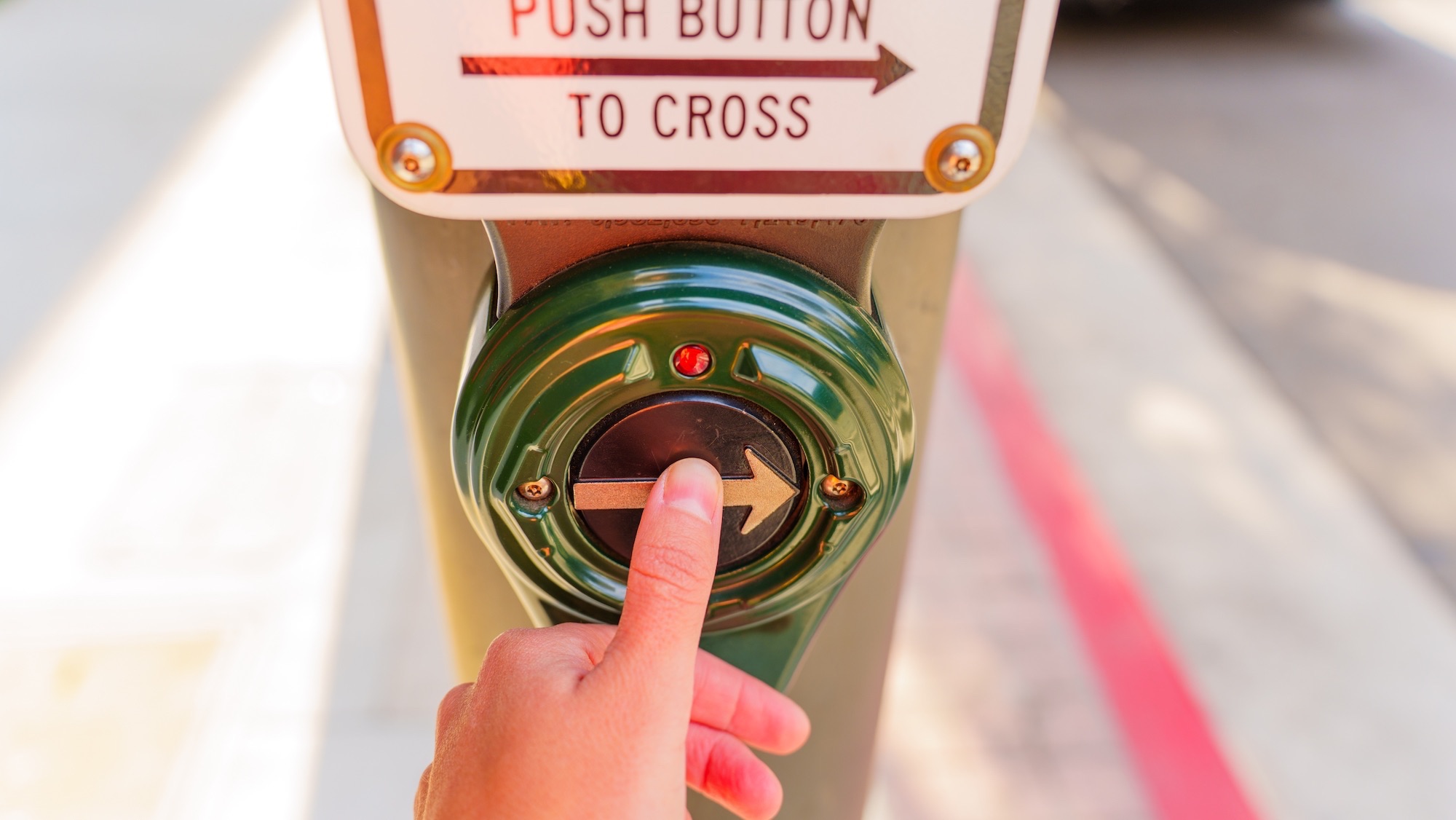
Have you ever pressed a crosswalk button and wondered if it actually does anything? You might be onto something.
Called placebo buttons, controls that don’t do anything exist everywhere. Sometimes it’s because of accidents of history; sometimes they’re installed specifically to trick people into feeling an illusion of control. Either way, they’re hard to notice. Here are a few buttons you press every day that might not actually work.
Pedestrian buttons may or may not do anything
In New York City, an official told CNN that only around 100 of the 1,000 crosswalk buttons in that city actually do anything. The Boston Globe has reported that the buttons in and around downtown areas of that city aren’t functional. And in the UK, the BBC has reported that the buttons in downtown London are completely superfluous during the day when pedestrian traffic is high—the lights trigger on the same timed routine, regardless of any button presses. The buttons do, however, work in the evening, when pedestrian traffic slows down.
Why is this? Timing. Modern traffic lights are designed to allow the flow of traffic to be consistent. The general idea is that cars driving at the speed limit should more-or-less hit green lights as they go. Regularly timed pedestrian crossings make this math a lot simpler in places with a lot of pedestrian traffic, so most cities opt for them in downtown areas.
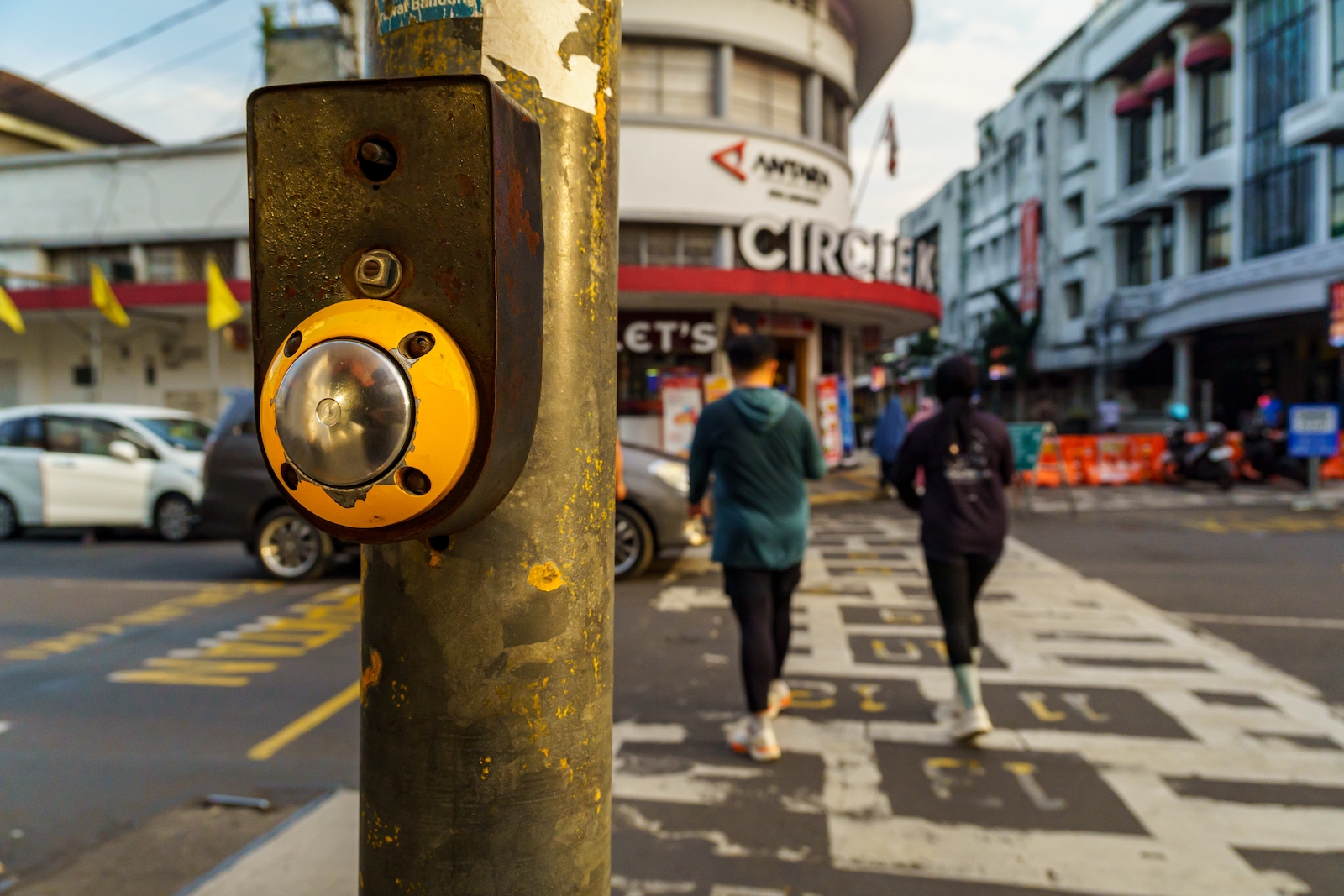
The situation is different if you live in a small town, suburb, or anywhere else with infrequent pedestrian traffic. In such areas, pressing the button may be necessary to trigger the walk light.
The problem: It’s not always clear whether the button you see triggers the walk light or not. If you press the button and the light changes, you’ll naturally assume pressing the button worked even if it’s the timer that triggers it. But if pressing the button is necessary, well, then the only way to find out involves waiting longer than necessary at a cross walk (which might be interesting, scientifically, but only if you’re not in a rush).
My personal solution: I just press the button. If it works, great, and if not I’ll never know.
Elevator “close door” buttons don’t work immediately
Have you ever pressed the “close door” button on an elevator and noticed the door didn’t immediately close? There’s a reason for that, at least in the United States: the Americans with Disabilities Act (ADA).
This law, passed in 1990, set specific rules for elevators, including how long the door needs to stay open. The regulations state that elevator doors “shall remain fully open in response to a car call for 3 seconds minimum.” There’s another rule that adds more time based on how far the call button in the hallway is from the elevator entrance, assuming a walking speed of 1.5 feet per second. For example: If the button is 10 feet from the door, that means the door needs to stay open for 6.67 seconds.
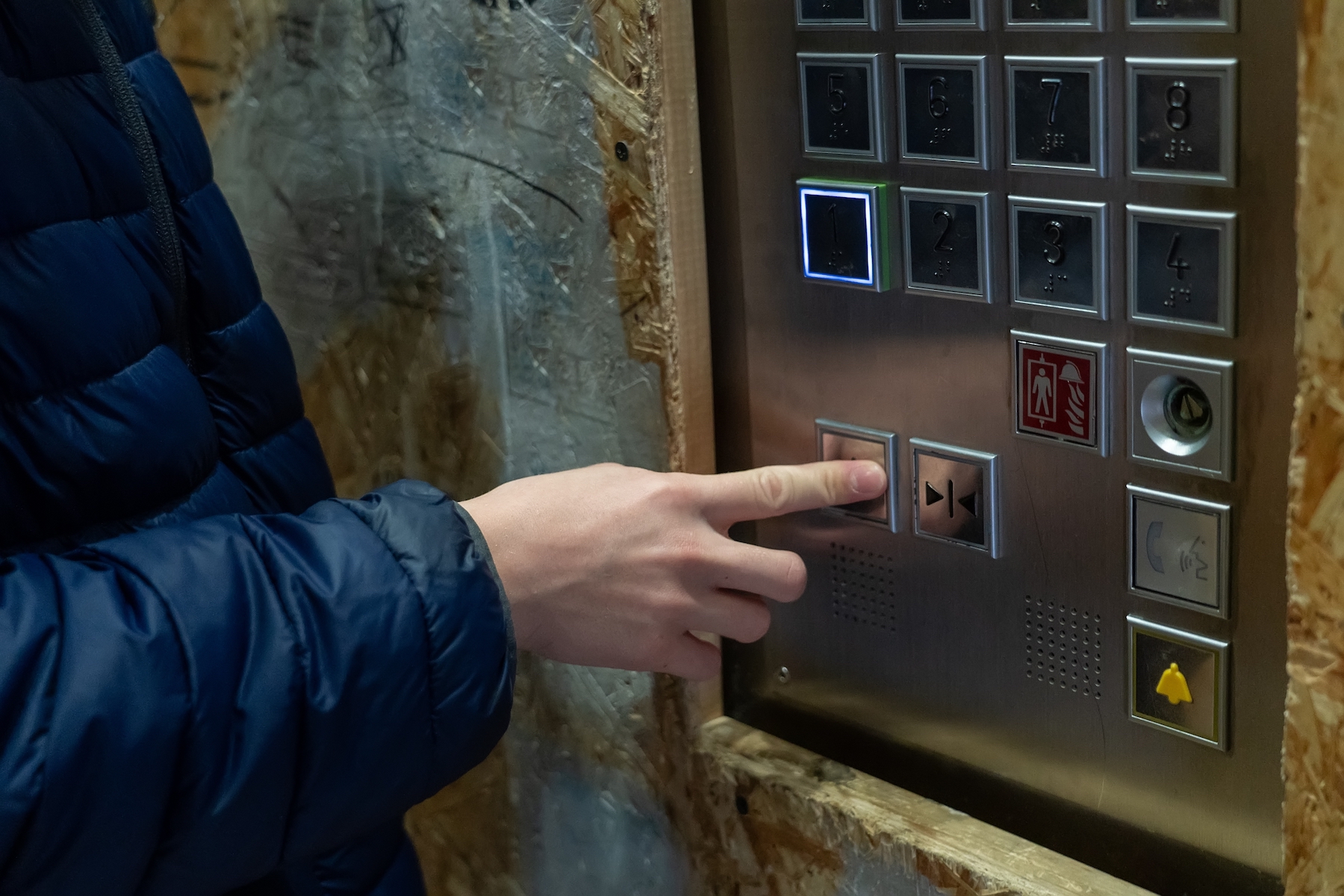
What’s this have to do with the close door button? Well, in theory someone could press the button to close the door earlier than the code dictates is legally required. Some elevators are designed so that the close door button does nothing until enough time has passed, but in some cases the button is just disabled entirely for the sake of simplicity (generally because the door automatically closes after the required wait time).
That’s why, in many situations, pressing the close door button on an elevator doesn’t do anything. That doesn’t stop a certain kind of guy from repeatedly mashing it, though.
Your office thermostat might be a lie
A 2003 article published by the Wall Street Journal revealed something many office workers already suspected: some office thermostats don’t actually do anything. The article includes a widely cited claim— from a single HVAC installer—that up to 90 percent of office thermostats are fake. That’s almost certainly not true, and the article itself notes that other experts say the number is below two percent.
But what is certain is that at least some fake thermostats exist. Why? To reduce complaints. A 2022 article published by Propmodo, a real estate trade publication, quotes an HVAC installer who claims to have installed a fake thermostat after a number of complaints from office workers. “Our service calls disappeared, and to my knowledge, the system is still set up and working as it has since 1987,” said Vaughn Langless, an electrical inspector from Rochester, New York.
It’s a good story, and points to a psychological reality: Being able to make choices about our environment is psychologically beneficial. A 1976 study by psychologists Judith Rodin and Ellen Langer gave some nursing home residents control over small things in their environment—which plants they want to care for, for example, or when to watch a movie. Another floor was told staff would make those choices. The residents able to make choices were more alert, active, and even died at a lower rate. There is decades of similar research, showing that control over your environment leads to real benefits.
Placebo buttons are what happens when designers notice this psychological reality and try to get the benefit on the cheap. A working office thermostat would require either letting employees actually change the temperature (which costs money) or running a more responsive HVAC system. But a button that looks like it works costs basically nothing. That may be brilliant, or evil, or both—it’s all a matter of perspective. Regardless, placebo buttons lurk all around us.