We may earn revenue from the products available on this page and participate in affiliate programs. Learn more ›
The dreams of every young guitarist are born from another artist’s fingers. The virtuosos that came before forged the inspiration to hunt and to chase rhythms, lead lines, and ultimately a tone to adopt as our sonic fingerprint. It’s a chase that often takes many years and thousands of dollars to complete, making it an intimidating prospect for players of all stripes.
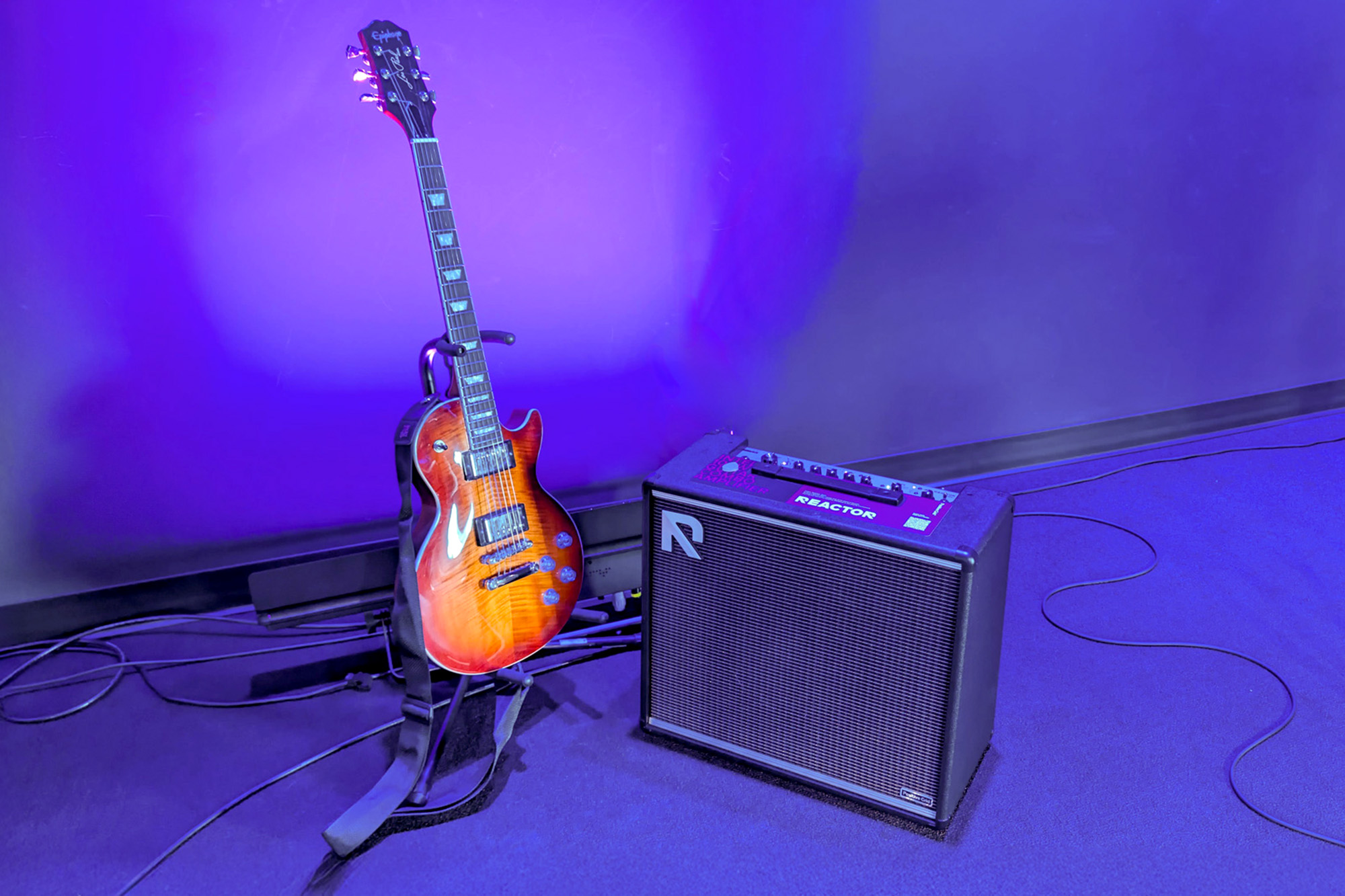
Enter the Positive Grid REACTOR. It’s a performance-ready guitar amplifier designed to close the gap between the tone you hear in your head and the sound it produces. It brings together Positive Grid’s years of experience designing amp and FX engines and combines it with a custom-trained AI model that can deliver any tone you can describe or capture in seconds. It’s no gimmick. I’ve played guitar for close to 30 years, and this is one of the most fun pieces of guitar tech I’ve used in years.
Positive Grid REACTOR
See It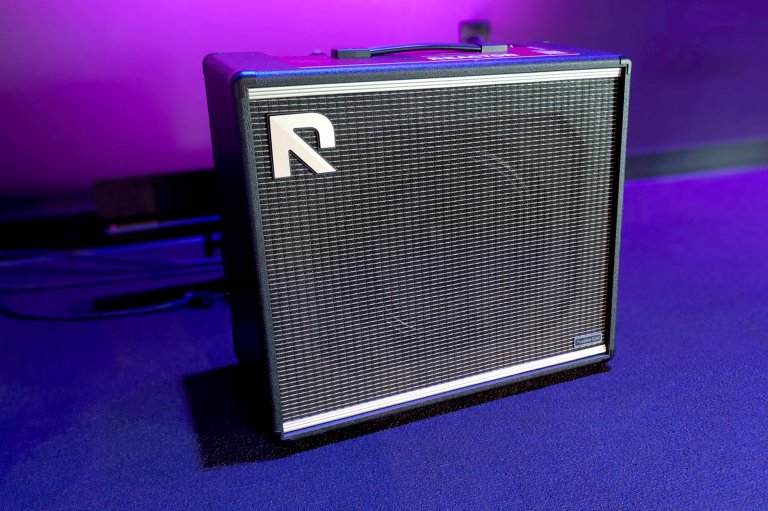
Pros
- Wonderfully versatile—just as at home on that stage as in the bedroom
- Powerful tone-shaping possibilities, impressive range
- AI tone generation isn’t a gimmick—it’s genuinely useful and a lot of fun
- Tones are generated in sets—rhythm, lead, back-up, all at once (usually)
- Approachable and intuitive controls are easy to learn; RTFM, but you’ll be alright if you wait a jam session or two
- Surprisingly well-priced
Cons
- Advanced players may not benefit as much from its features
- Bluetooth audio can be very hit or miss
- Some of the best features of the Spark are entirely absent
- Trial and error is still required
The short version
With years of software experience and generations of Spark amplifiers under its belt, Positive Grid knows a thing or two about helping guitarists craft the perfect tone. The REACTOR is the union of everything the company has learned about software and hardware. Refined, tight, and well-priced, it leverages AI for good, helping players stop fiddling and start dialing in their sound using natural language.
REACTOR, craft me a tone that captures …
The build and purpose
Positive Grid has been a major player in the guitar world for years, thanks to its excellent line of guitar software and impressively capable Spark practice amps. While the original Spark 40, the company’s first amplifier in 2019, has begun to show its age, the REACTOR doesn’t suffer the same learning curve as the Spark. Over the last seven years, the company honed its skills. The Spark may have been best suited for the bedroom, but the REACTOR is made for the stage. And also the bedroom.
The REACTOR lacks nothing in terms of robustness, at least compared to my Fender Deluxe. The speaker enclosure is made of wood, thick and sturdy, with tight, hard leather surfacing. The controls live on the top panel, easily accessible mid-performance if you keep the REACTOR nearby. Each knob, switch, and button is tight with crisp, tactile feedback. As ever, time will be the ultimate judge of its build quality, but first impressions are exceptionally positive, especially compared to the company’s first hardware release.
Positive Grid also deserves kudos for offering such a generous array of connectivity options. In addition to the guitar input, you’ll also find power amp and MIDI support, Bluetooth audio to jam along with, an FX loop, USB Type-C (the REACTOR doubles as an audio interface for home recording), and a headphone jack for when one watt is too much. It’s a full-featured, premium-feeling package and gives the Boss Katana a run for its money.
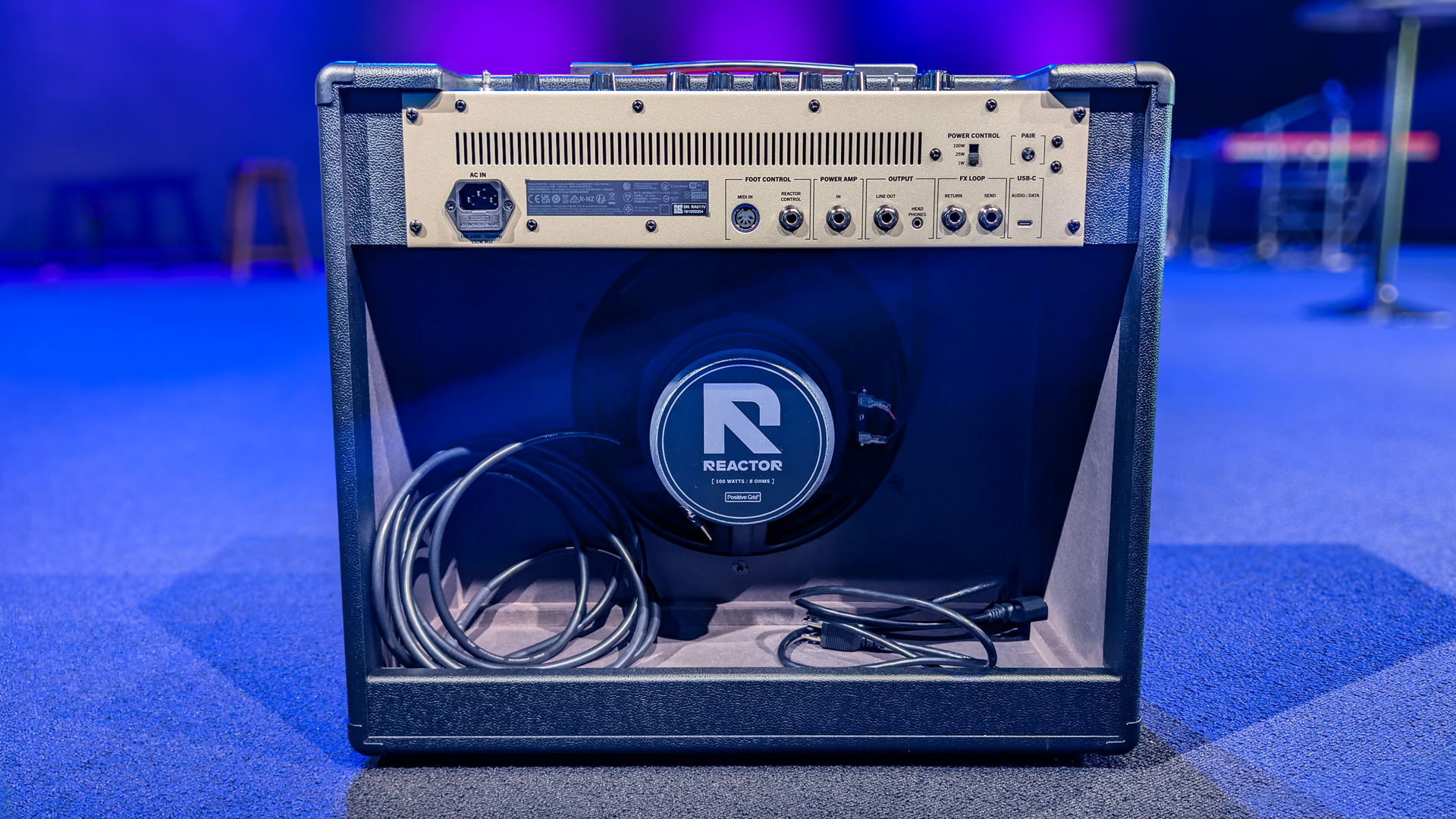
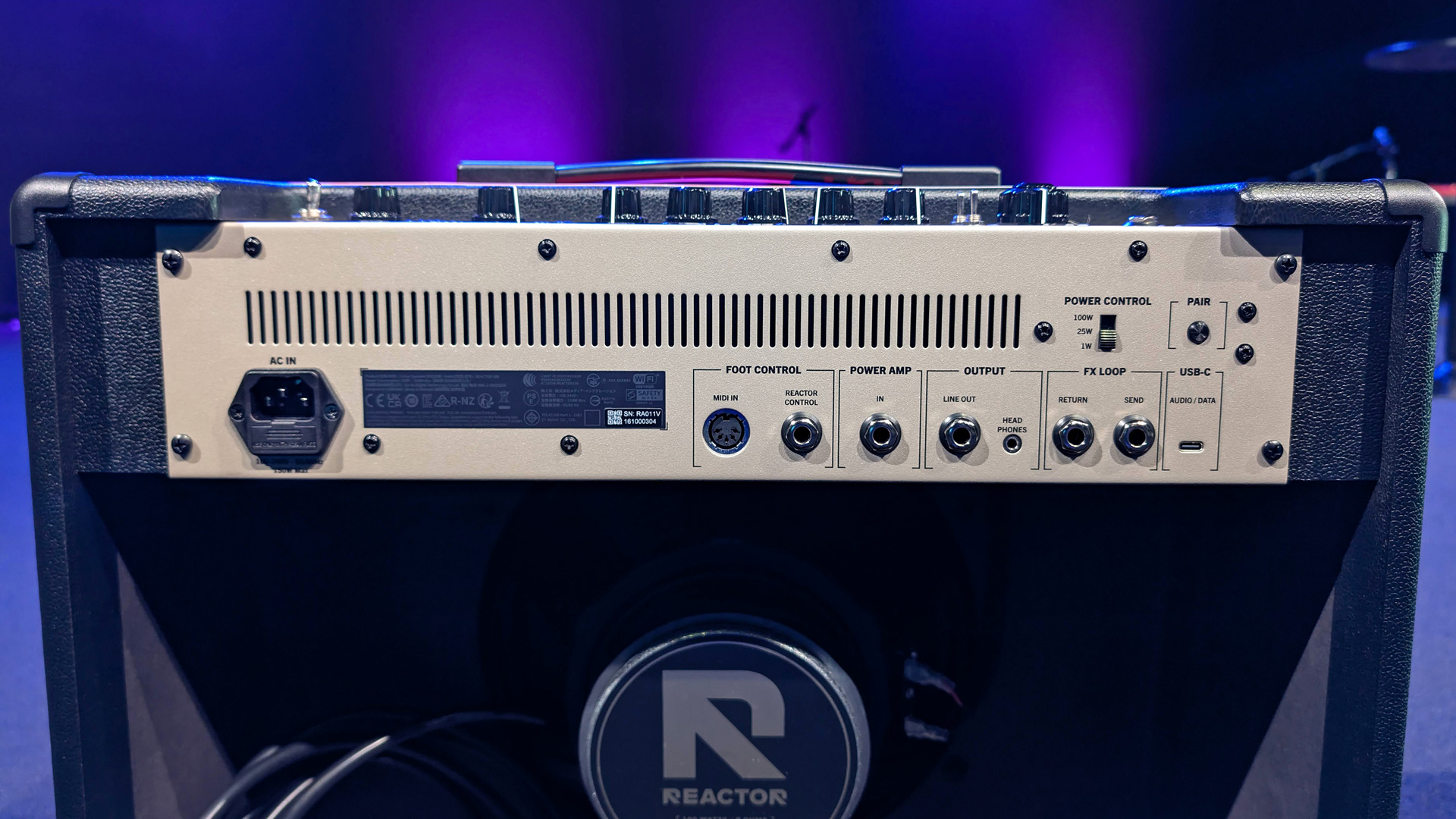
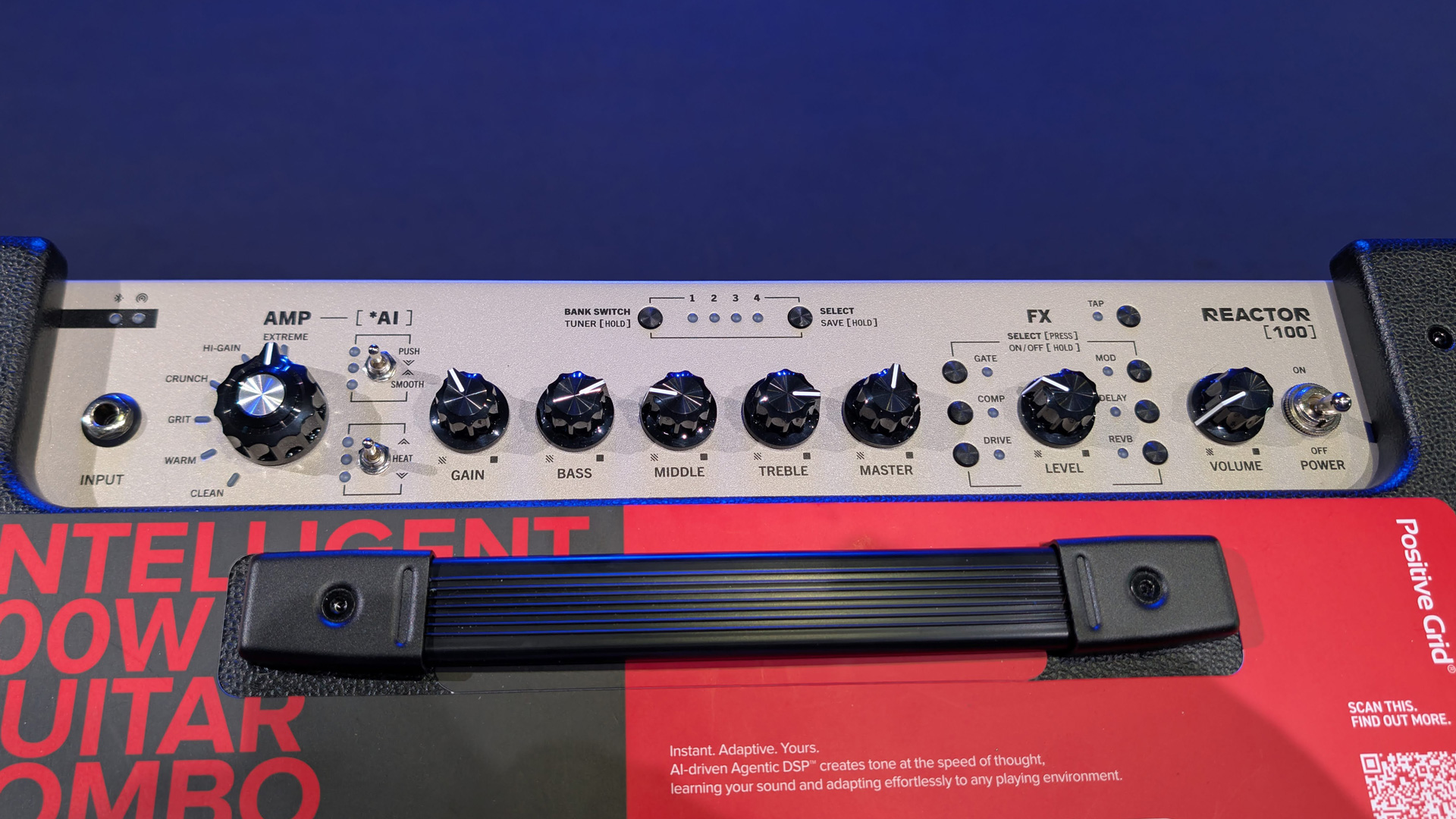
The REACTOR comes in two variants: 50-watt and 100-watt. I was sent the 100-watt version and, unlike most of the Spark series, it’s sized like a normal 100-watt amp. Inside is a custom-tuned 12-inch guitar speaker designed for each model (not a full-range, flat-response cone), and it gets loud. We’re talking 100-watt guitar-amplifier loud, not Bluetooth-speaker loud, and that means it will rattle the windows far before it reaches its peak. When Positive Grid says that REACTOR is performance-ready, it isn’t kidding.
There are far more interesting features than simple loudness, however. While you can play loudly, you don’t need to at all. Both versions feature 25W and 1W amplification modes that reduce volume without significantly altering your tone. The three power modes are well-suited to playing alone, playing with a group, and performing on a stage.
That’s the first hint that there’s some interesting engineering under the hood. For this release, Positive Grid outfitted the REACTOR with a powerful digital signal processor (DSP) and features powered by AI, which stands for “Amp Intelligence” in their parlance, making it an all-in-one solution perfect for both new and veteran players.
Between the amplifier’s eight built-in presets, endless cloud saves, two dozen amps, and eight simultaneous stomp boxes, and community sharing through PG’s ToneCloud service, there’s enough tonal possibility here that you can lose hours demoing—and that’s before getting to its “smart features.”
The REACTOR is so tightly tethered to its app that if you’re opposed to using it, this simply isn’t the amp for you. Once the REACTOR app is connected to the amplifier, you have full control over every setting and parameter, and a much easier interface for making those changes. The app also houses the Creator Hub: your digital home to create, edit, and save custom tones. It’s also where you’ll find the amp’s AI assistant, which is the prime driver of the REACTOR’s charm.
The sound and performance
It’s at this point that I should probably make a confession: Even though I’m a longtime fan of Positive Grid’s work with Bias FX and Bias Amp, a guitar amplifier had not entered my mind as something that could possibly be enhanced with AI. And yet, what Positive Grid has delivered here is an impressive showcase of how AI can support guitarists rather than steal from them.
While I was impressed with the out-of-the-box presets and their 24 included amp models, which make it entirely possible to simply plug it in and play without worrying about app or AI support, the real “a-ha” moment for me came when I experimented with the Creator Hub for the first time.
To generate a tone, all you need to do is upload a picture, sound sample, or describe your desired tone in a sentence. Admittedly, generating a tone from a picture is a little gimmicky unless you happen to be taking a picture of a guitar setup that you’d like to emulate, but text generation was nothing short of shocking.
Create a tone to match “Glass Eater” by Atreyu …
That was all I gave it, and I had four separate click-to-use tones within 10 seconds, two options each for both rhythm and lead parts. Not just one tone. Every tone, to play every guitar part, in the song. The quality of the tones was also exceptionally good. They weren’t always perfect, but they were usually close enough that a couple of manual tweaks were all it took to get them there. Once you get into the groove, dialing up a preset, even for obscure songs, becomes second nature.
The power of this simple functionality can’t be overstated. The REACTOR removes a barrier to entry so fundamental to progress and performance on the guitar that it has driven many to quit the instrument entirely. We all have a sound in mind: a searing lead or a djenty, brutal rhythm. Even if you master every note of a lead line you’ve been struggling with, the achievement feels incomplete without the tonal identity tying it all together.
With the Creator Hub and its resulting tones, you’re up and playing faster than ever, but you’re also learning how those tones are made, making you a more capable musician. Once they’re downloaded, you can navigate to another section of the app to study, tweak, and tailor every element of the signal chain. Over time, you’ll begin to notice how certain sounds or effects are achieved. That knowledge improves your craft.


As dependent on AI and machine learning as it is, things aren’t perfect. There are times that the tones it produces are off-base, and you need to try again or refine the prompt (“add more gain”, etc.). The amp features two toggleable Amp Intelligence modes, Heat and Push/Smooth. Turning up the Heat setting monitors your playing style and either pushes or draws back the amp to match your playing. The Push/Smooth toggle also changes how it responds, with Push feeling more lively and responsive to the touch and Smooth rounding out the rhythm and body tones. Both of these systems are fine, and they accomplish their job, but neither feels like a game-changing innovation in the way that the Creator Hub is.
As I’ve tested and explored the REACTOR, I’ve developed a sense that Positive Grid is putting it in a bit of a box. According to the company itself, the REACTOR occupies a different space in its lineup from the Spark. If the Spark series is about home practice, the REACTOR is all about tone and performance. It has better hardware and higher-resolution sound quality that puts the Boss Katana and other all-in-one modeling amps on notice.
Ahead of this review, Positive Grid told me that it had trained its tone engine through countless hours of studying hundreds of amps and effects it seeks to emulate, down to the gain stages, transformers, bias points, and harmonic response. Because of this, it can respond much more like its real-life inspirations. That’s impressive stuff, and after testing it for myself, I believe it.
Yet, even the AI behind the REACTOR has its limits. Ask it to recreate anything washed in multiple reverbs or delays, and you’ll see it struggle. If you’re hoping to emulate a Strymon BlueSky, you’ll be disappointed. Pretty much anything running on a proprietary algorithm for its soundscape will be outside of its scope to recreate entirely, as you would expect it to be.
The verdict
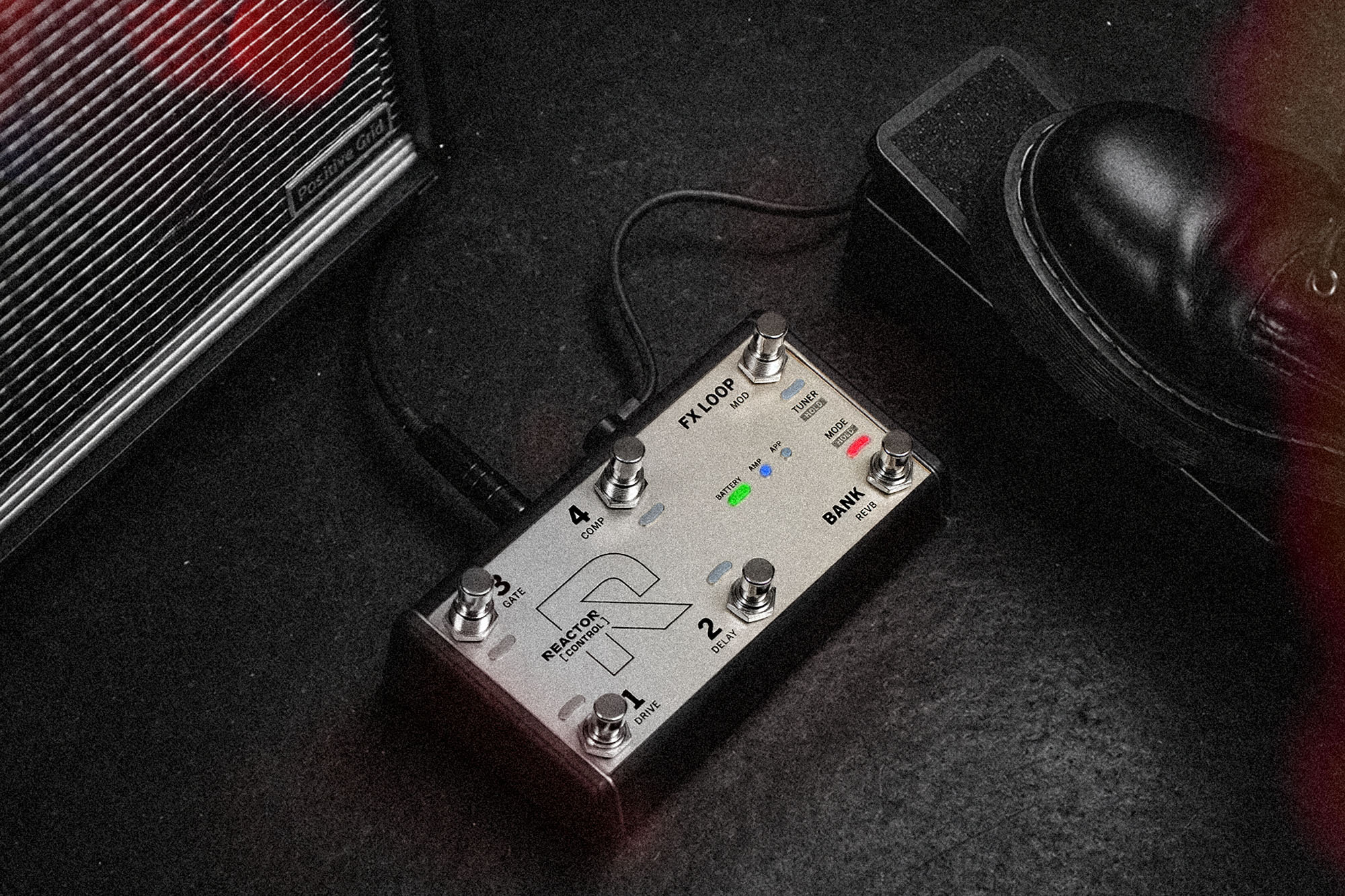
The Positive Grid REACTORamp retails for $349 for the 50-watt version or $449 for the 100-watt version. A wireless foot controller, the REACTOR Control [shown above], is also available for an additional $149 and allows you to control stompboxes and settings from afar—perfect for a silent stage setup. Together, that’s $498 to $598, but the quality and tone-shaping capabilities of the REACTOR make it a standout value even at that price and an easy recommendation.
The specs
| Product | Positive Grid REACTOR |
| Price | $349 (50W) | $449 (100W, tested) |
| Power rating | 50W/25W/1W | 100W/25W/1W (tested) |
| Hardware configuration | 1 x 12-inch, wooden cabinet, top-mounted controls, rear I/O |
| Inputs | ¼-inch guitar input, Bluetooth, USB-C, MIDI, power amp, FX loop |
| Hardware memory and presets | Eight onboard presets, user-replaceable with custom settings |
| Amplifier and effect models | 24 included amp models, eight simultaneous effects categorized by type |
| App and cloud features | Intelligent tone creation (text, audio, or image-based user inputs), cloud storage of user presets, signal chain editing and customization, tone refinement |
| Form factor | 50W and 100W versions available |
| Best for | Practice, small to medium-sized gigs, intermediate-level practice, and guitarists looking for an all-in-one, budget-conscious solution |