
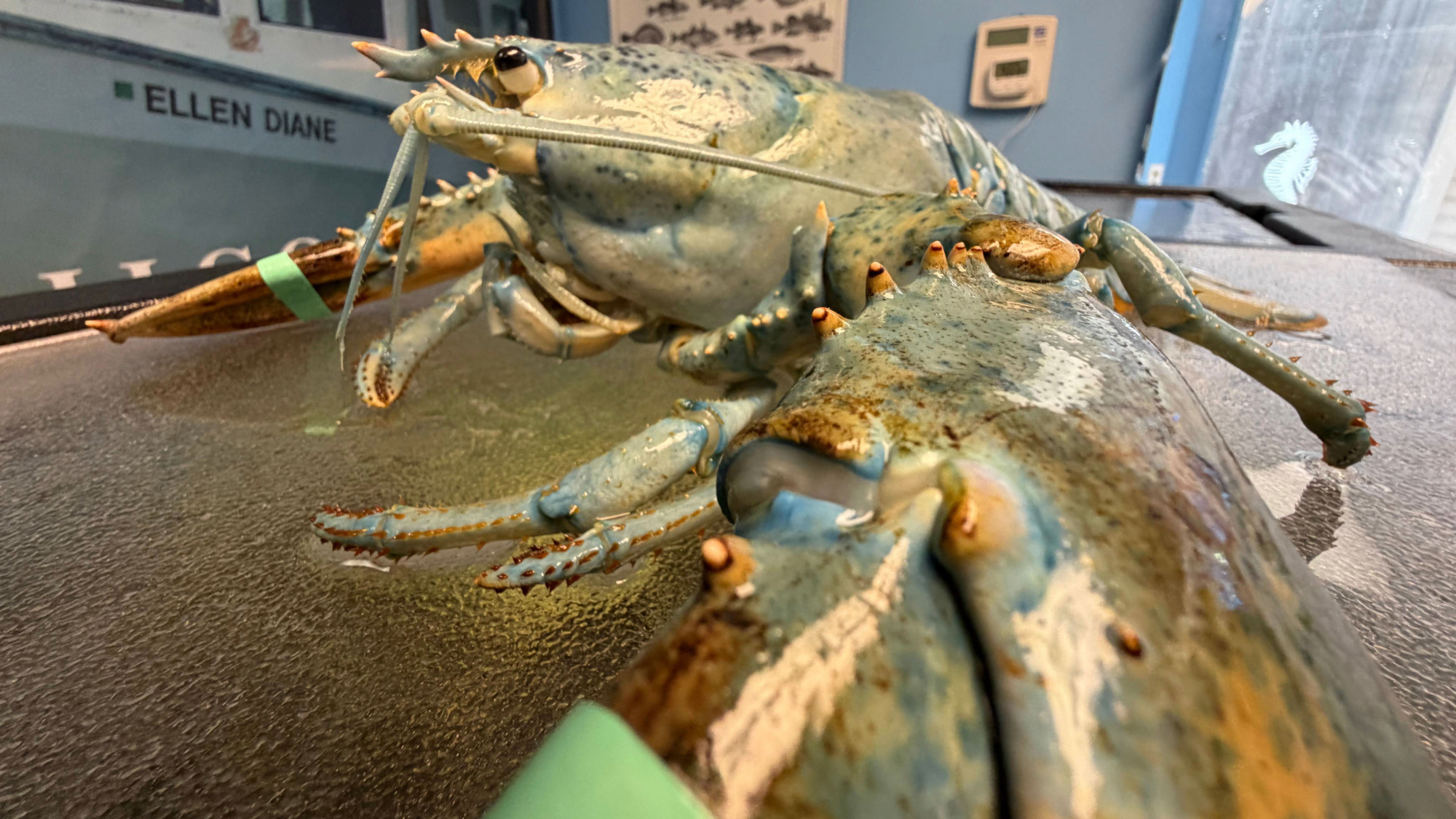
A small natural history museum in New Hampshire has a colorful new visitor: a blue lobster. This unique creature certainly had a long journey to its current home. He was captured by commercial fishermen in New Bedford, Massachusetts, sent up to Maine, and then down to New Hampshire. The crustacean was then donated to Explore the Ocean World, a hands-on museum in Hampton Beach.
Ellen Goethel, Explore the Ocean World’s owner and curator tells Popular Science he is currently acclimating in his new tank. “He’s a beautiful lobster,” she says.
Researchers estimate that blue lobsters like this one are about 1 in 2 million.
Why are some lobsters so colorful?
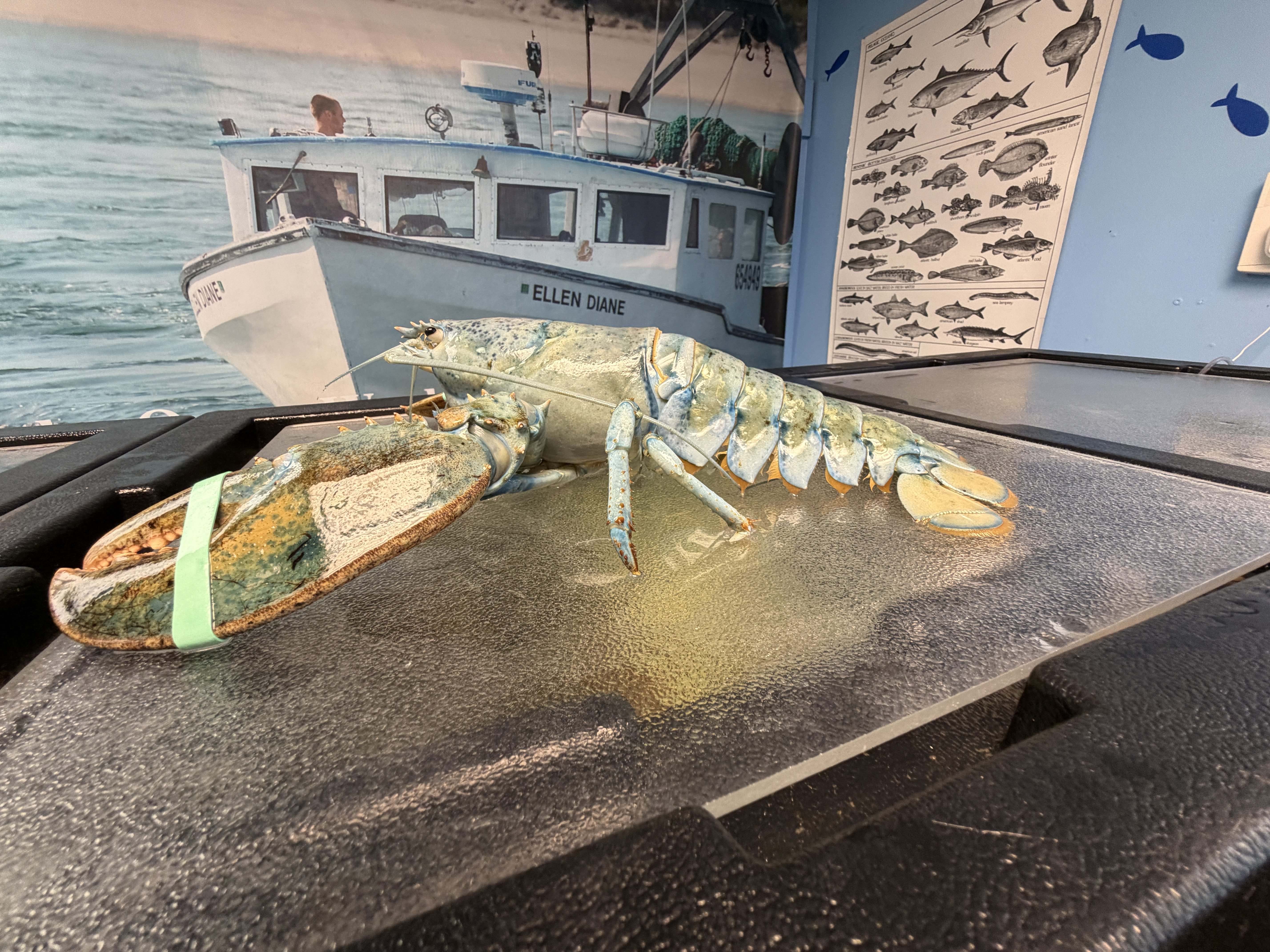
American lobsters (Homarus americanus) are usually a greenish-brown color, to help them blend in with the rocky seafloor. They get their color from a red-orange pigment called astaxanthin. When astaxanthin binds to proteins in the shell—including a blue-colored protein called crustacyanin—its color shifts, producing a lobster’s familiar hue.
But some lobsters end up more colorful. Rare genetic mutations can alter the amount of crustacyanin or how it interacts with astaxanthin, producing a striking blue shell. Other colors include half-orange half-black, cotton candy, or even calico patterns. A lobster’s diet can also impact its shell color. For example, individuals that only eat small fish rather than shrimp and crabs get less astaxanthin, which can affect their coloration.
The chance of finding a blue lobster like this one is about 1 in 2 million. As for the other colors, the chance of finding a red lobster is 1 in 10 million, split-colored is 1 in 50 million, and albino and cotton candy are 1 in 100 million.
Winning the lobster lottery
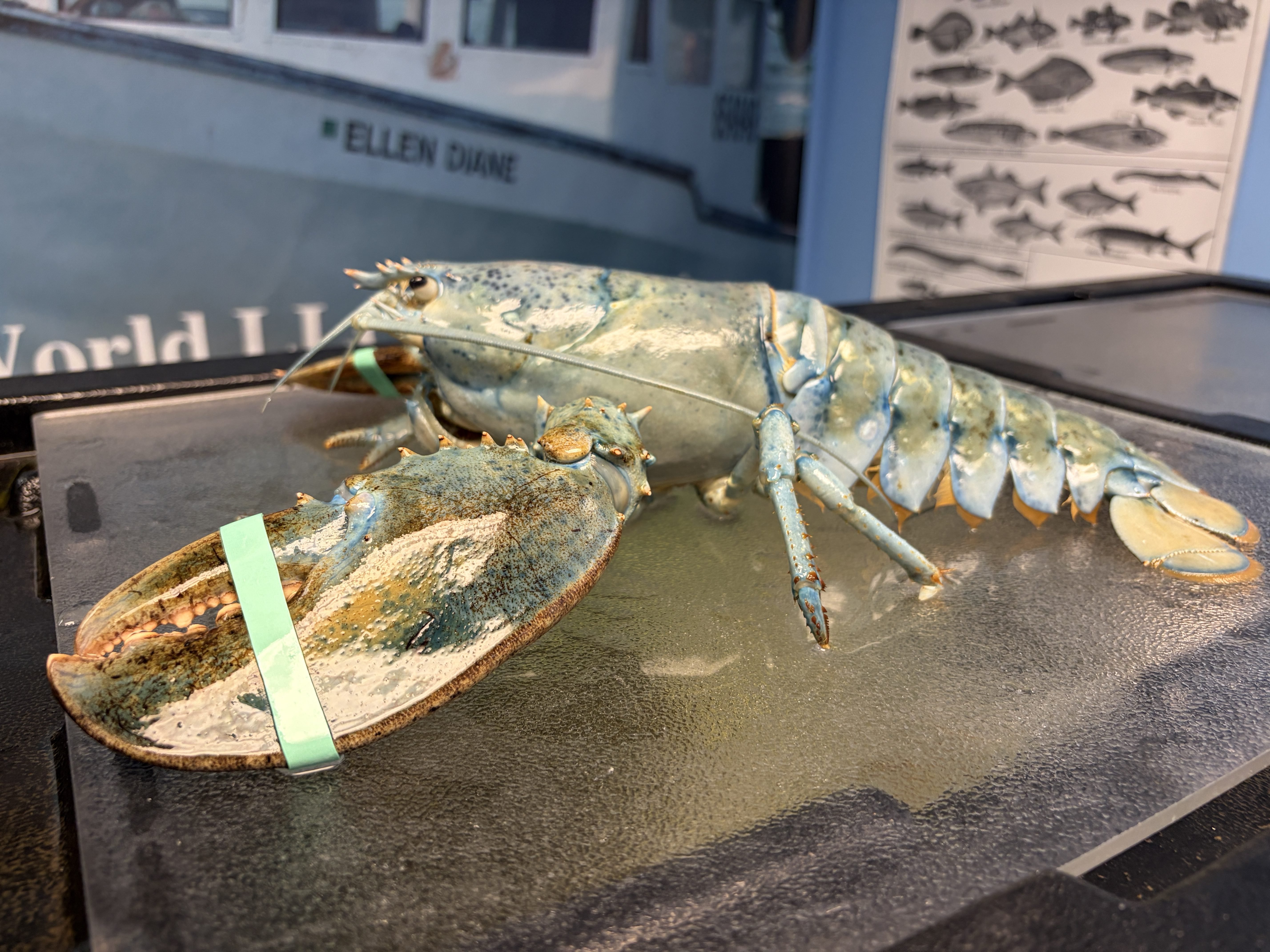
Come Labor Day, this particular blue lobster will once again be on the move. Goethel says the museum will shut down its tanks, and return all of its animals to the ocean.
Before they’re released, each of the museum’s multicolored lobsters will be fitted with a tag so that the New Hampshire Fish and Game Department can monitor it. This way, if one turns up in a fisher’s trap, the fisher can call the department and report where it was caught, so researchers can track its migration patterns. Then, the lobster can be set free once more.
“They kind of won the lottery,” says Goethel. “All of the lobsters that we have have a little extra safety measured into their lives.”
