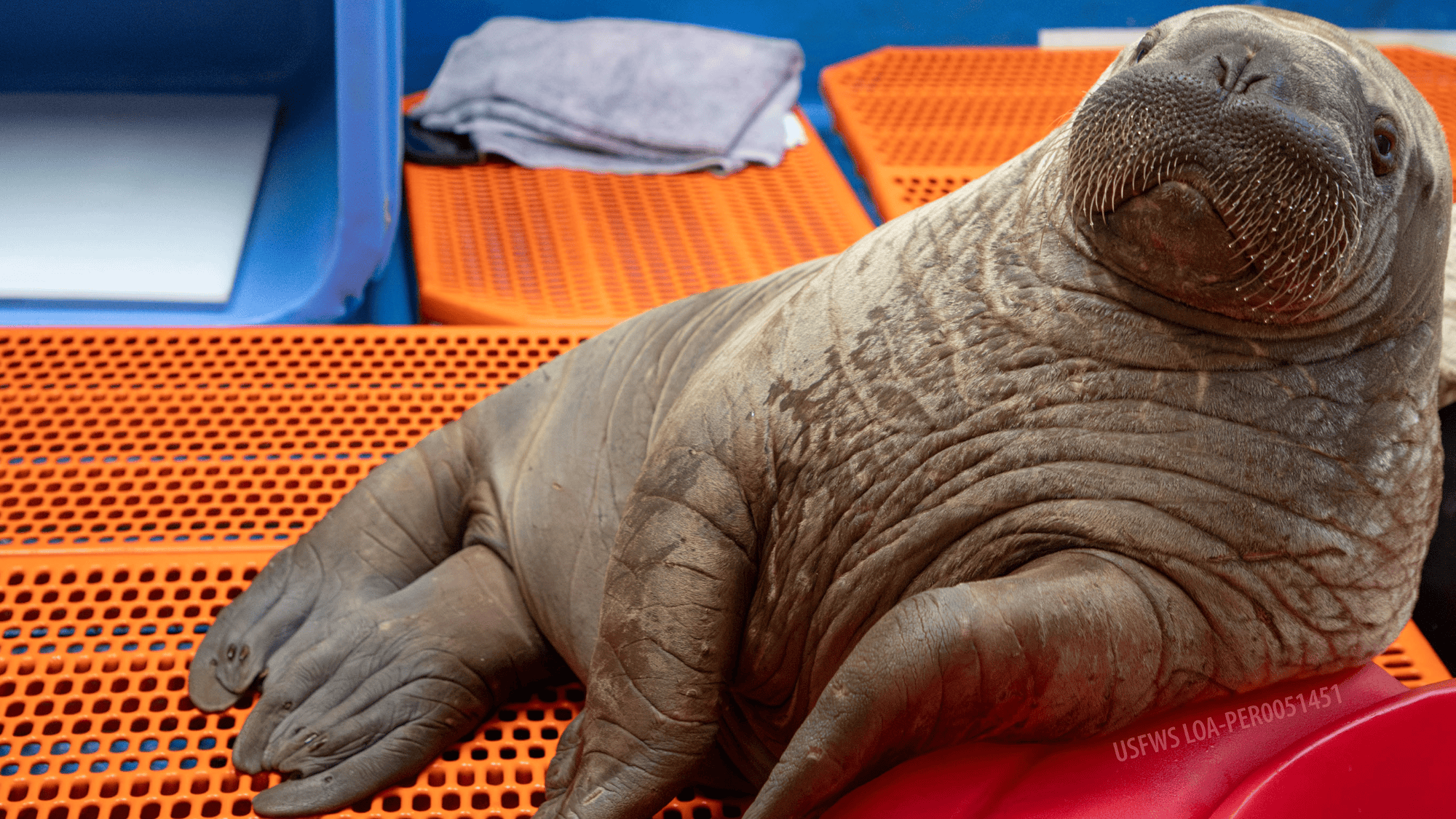
Some animal rescues are more complicated than others—especially when the creature in peril is about to become a snack for a seagull on a remote Alaskan beach with polar bears lurking nearby.
That was the sticky situation an orphaned Pacific walrus (a subspecies of Odobenus rosmarus) calf was in when two researchers found it on an island in the region of Point Lay, Alaska. U.S. Geological Survey (USGS) research walrus biologist Tony Fischbach and Ilisaġvik College student and Point Lay local Violet Anniskett stumbled upon the young male while investigating walrus carcasses on a remote beach. They found the orphan between the remains of two adult walruses, which was a first in Fischbach’s long experience working with walrus herds there.
The researchers requested permission to rehabilitate the walrus from the local Inupiaq community and the U.S. Fish and Wildlife Service. Once the approval arrived, the next hurdle was getting the mammal to the Alaska SeaLife Center. The center is the only marine mammal rehabilitation facility in Alaska, and was over 800 miles away. As if things could get any more difficult, stormy weather left Anniskett, Fischbach, and the walrus stuck on the island for days. In the meantime, the researchers guided the calf to an abandoned building to shelter from predators.
“When we found him, a determined flock of gulls was intent on scavenging him. He was in immediate peril of suffering this fate had we not gotten approval to intervene. Two polar bears were also active on the island,” Fischbach said in a statement.
“He bonded with us fast and wouldn’t sleep unless one of us were in the room. It was just us two for three days, stuck in a storm with the young walrus,” Anniskett added.

An orphaned walrus’ journey
The calf was finally transported to the local airport, and made it to Alaska SeaLife Center on September 14 after a flight and van ride. The 200 pound baby arrived dehydrated, but in good physical condition. They treated some superficial wounds, gave him fluids, and applied other stabilizing treatments.
But the calf’s journey wasn’t over. In fact, orphaned Pacific walrus calves are one of the most specialized patients in marine mammal rehabilitation.That’s because in the wild, calves are very attached to their mothers, with whom they usually stay for one to two years. Close physical contact both with their mothers and others of their king is a crucial element in a calf’s early life. In the case of an orphaned calf, humans (who are authorized specialists) can act as surrogates, but it’s a tough babysitting job. Someone has to be around all the time to provide physical contact, social interaction, feeding support, and any veterinary care.
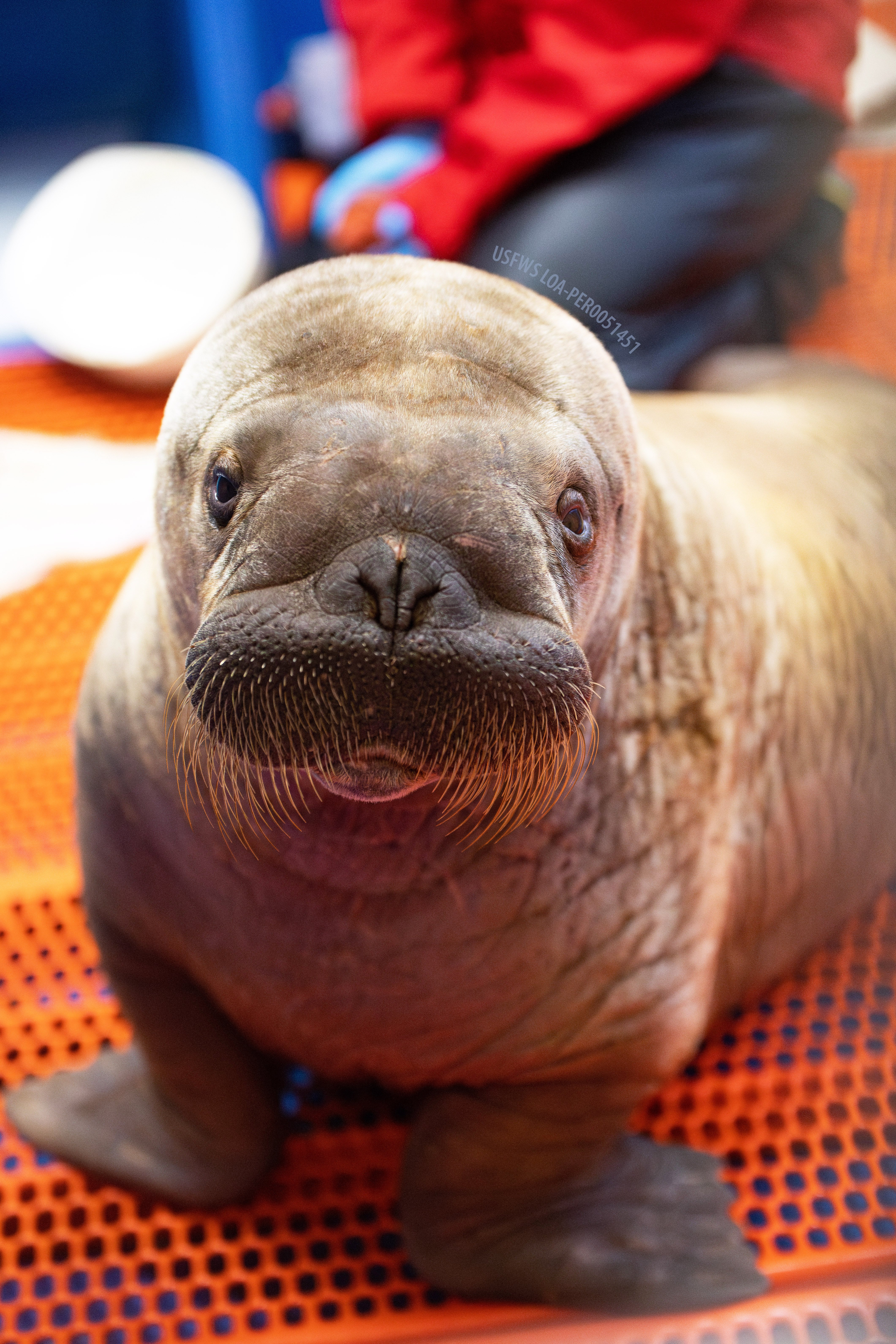
“Caring for an orphaned walrus calf is truly a team effort and requires around the clock commitment,” said Jane Belovarac, an Alaska SeaLife Center wildlife response curator. “At least two staff members have been working shifts around the clock to stay with him and provide the care he needs. This means long days and some unusual sleeping schedules for our team.”
It also means that the calf becomes comfortable with humans and thus cannot return to the wild. Now in a new long term home (whose location hasn’t been announced yet), he will be an ambassador for his species by teaching people about Pacific walruses.