
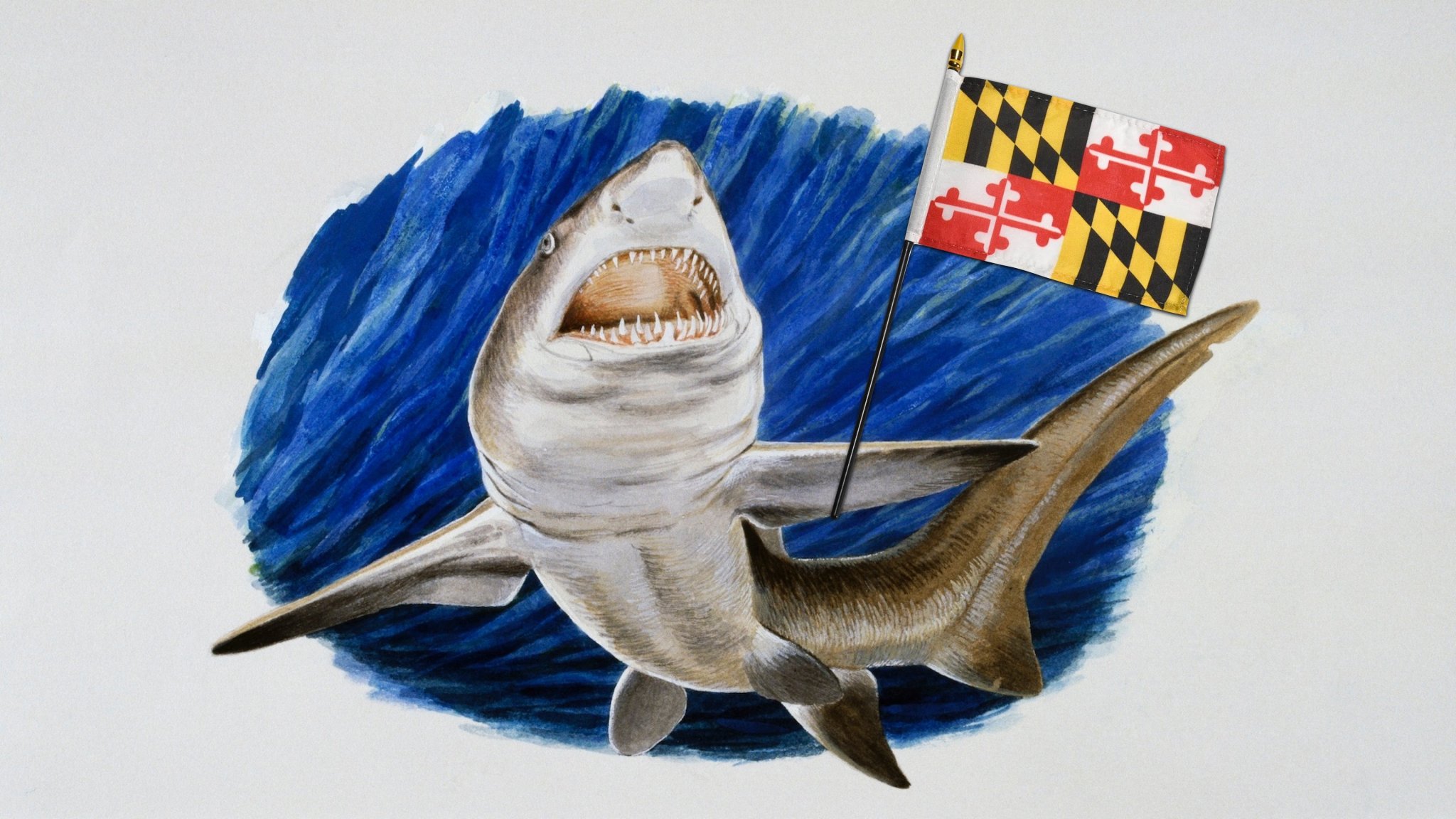
In a state better known for its delicious seafood and as the home of the United States Navy, there’s a new effort to create the country’s first state shark. Earlier this month, Maryland State Senator Jack Bailey and House Delegate Todd Morgan filed SB135 to designate the megalodon (Otodus megalodon) as the official state shark.
While the mighty megalodon is not swimming along the shores of the Bay State now, the enormous prehistoric shark relative once dominated the shallow seas that covered Maryland and the rest of the Atlantic coastal plain. They lived about 23 million years ago (during the Miocene Epoch), before going extinct about 3.6 million years ago. They were about three times bigger than a modern great white shark. Some estimates put them upwards of 82 feet long and 66,000 pounds. They primarily ate whales and the ancestors of dolphins and manatees, while their young hunted seals.
But why should “the meg” be the state shark of Maryland? The beaches along southern Maryland are full of megalodon fossils—particularly their giant teeth. Megalodon teeth have been found in several counties including Anne Arundel, Caroline, Calvert, Charles, Dorchester, Prince George’s, and St. Mary’s. Citizen scientists and paleontologists alike have also uncovered teeth from other non-megalodon prehistoric shark species including Galeocerdo contortus and Galeocerdo triqueter (similar to modern day tiger sharks) and Sphyrma prisca (a relative of the hammer head shark).
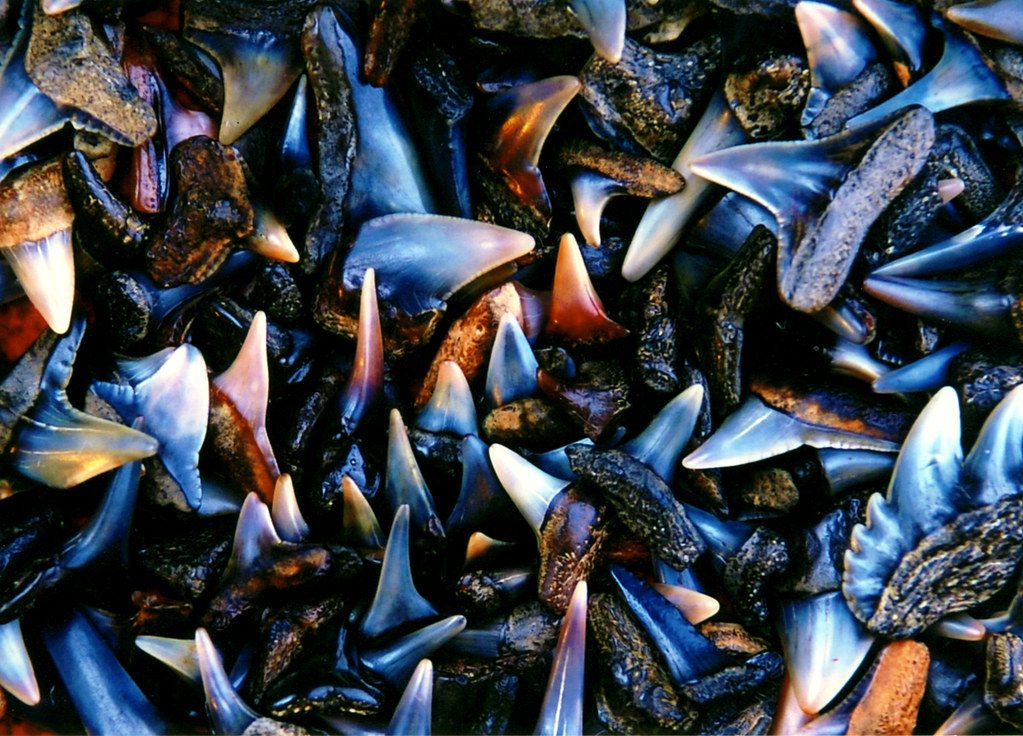
Calvert Cliffs State Park in southern Maryland is a common spot for digging up teeth and the Calvert Marine Museum has a number of fossils on display. Paleontologists believe that Maryland was once a whale and dolphin calving ground and nursery for hungry megalodons. A roughly 15-million-year-old fractured whale vertebrae and tooth uncovered in Calvert Cliffs even shows evidence of a possible megalodon attack.
“Turns out no state has a state shark, so we’re hoping Maryland is the first,” Dr. Stephen Godfrey, curator of paleontology at southern Maryland’s Calvert Marine Museum, told WMAR Baltimore. “To me, this is such an iconic animal. I think it’s time for megalodon to take center stage as the first shark designated as a state shark.”
If the bill is approved by Maryland’s General Assembly and signed by Governor Wes Moore, the designation would take effect October 1, 2026. The megalodon would join Maryland’s other state symbols, including the Baltimore oriole (state bird), jousting (state sport), and walking (state exercise).
