
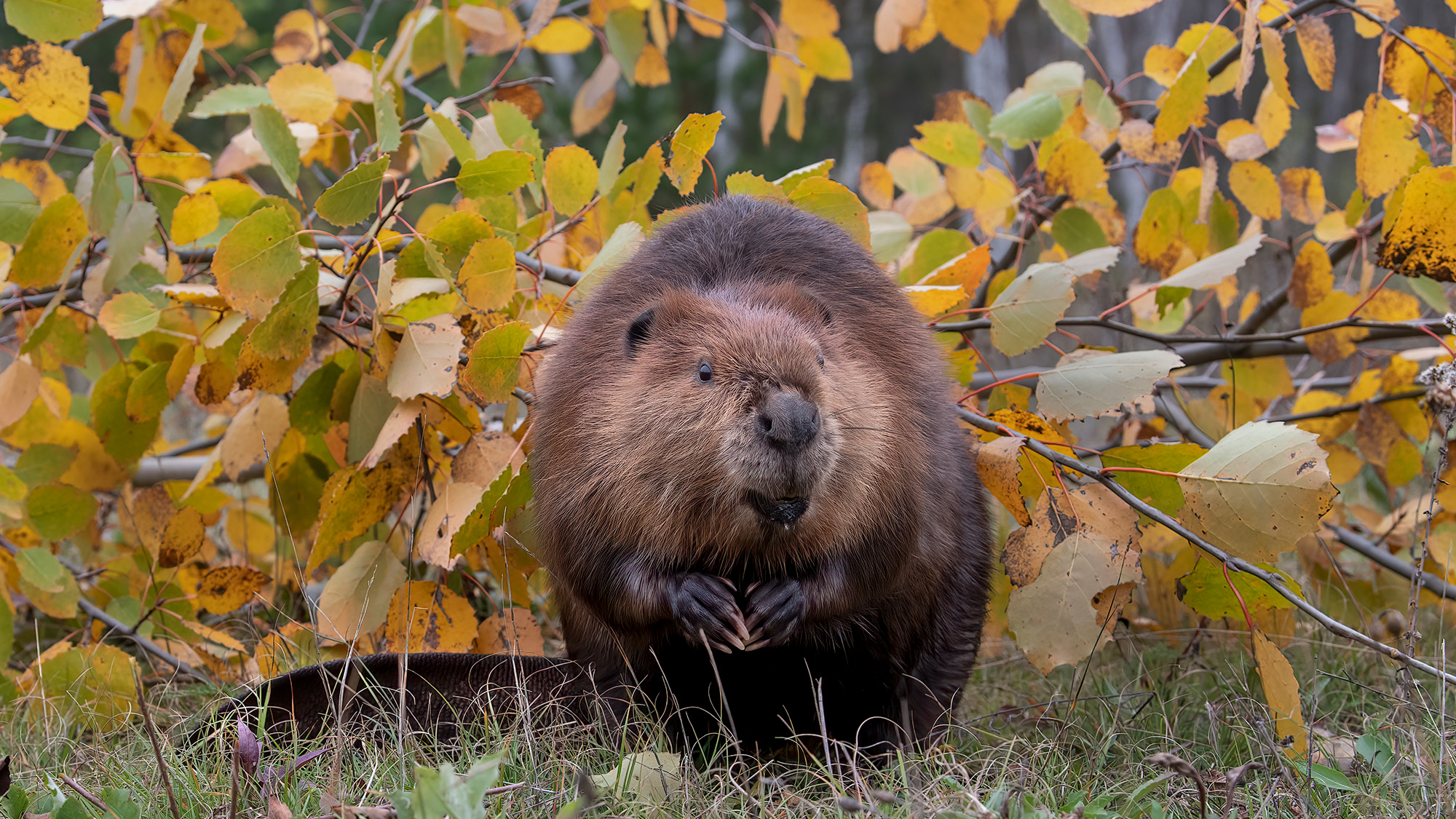
Beavers might rival even the most hardworking corporate employee in productivity and hustle, but they’re not quite cut out for business travel—especially the airborne kind.
Nevertheless, in 1948, 76 industrious beavers were subjected to a once-in-a-lifetime “work trip” to Idaho’s remote Chamberlain Basin—via parachute. The event, which was captured in a now-viral video, has become celebrated as a quirky example of human ingenuity and environmental stewardship. After all, who can resist a flying beaver?
“There’s just the glorious weirdness of it,” says Ben Goldfarb, author of Eager: The Surprising, Secret Life of Beavers and Why They Matter. “If you were to pick the least aerodynamic animal imaginable, beavers would be high on the list. They’ve got these thick, chunky, pear-shaped bodies,” says Goldfarb. “The incongruity of this very land-bound animal soaring through the sky is just inherently comedic to people.”
How beavers almost went extinct
Idaho’s 1948 beaver drop came at a pivotal moment in the ecological history of humans and beavers—a relationship long defined by exploitation and extermination.
“Starting in the early 1600s, beavers were these animals that we systematically annihilated in North America,” says Goldfarb. “Fur trappers and traders were traveling the country, just eliminating beavers from every single lake, river, stream, or pond they encountered.”
North America’s beaver population fell from an estimated several hundred million animals before European colonization to roughly 100,000 by the turn of the 20th century, with the vast majority living in Canada, according to Goldfarb.
“By the dawn of the 20th century, you would’ve had a hard time finding a beaver anywhere in the lower 48,” he says.
People find love—beaver love
By the early 1900s, attitudes had begun to shift toward beavers, Goldfarb says.
“We started to reverse course a bit to say, ‘Hey, wait a minute, these are some pretty cool, important, useful animals that we want back on the landscape.’ Various states restricted trapping and started to reintroduce beavers,” explains Goldfarb.
Idaho’s beaver problem
It was within this broader cultural context that Idaho officials found themselves confronting a local beaver problem. After World War II, a postwar economic boom spurred a growing resort industry in McCall, a former logging town on Payette Lake, about two hours north of Boise. As vacation homes went up along streams and shorelines, residents were less than thrilled with the local beaver community, which was busily chewing their trees and clogging their irrigation ditches.
The Idaho Department of Fish and Game knew the rodents needed to be moved but, unlike in earlier decades, killing them was no longer the solution. This wasn’t pure altruism. People were beginning to understand that, as pesky as beavers could be, they were also ecologically invaluable.
“Beavers build dams and create ponds, and they do that to enhance and expand their own habitats, but in the process, they’re providing all of these incredibly beneficial ecological services for us humans,” says Goldfarb. “They’re storing water, so they’re great at mitigating drought. They’re filtering out pollution. They’re preventing flooding in some places. They’re restoring degraded streams and fighting fire.”
For Goldfarb, Idaho’s 1948 beaver dilemma, and the thoughtful solution officials devised, marked an important shift in human/beaver relations. “There is a huge beaver movement now,” he says, “and for some of us ‘beaver believers,’ the Idaho story is part of where that movement began.”
Saving Idaho’s beavers, one parachute at a time
But understanding the environmental value of beavers didn’t solve the immediate problem: Officials still needed a way to relocate them to the Chamberlain Basin, a rugged, roadless region in the mountains of central Idaho where they could live undisturbed.
The traditional method, which entailed transporting beavers across many miles in crates on horseback, wasn’t going well. Beavers need to be kept cool and wet during transport, conditions that were difficult to maintain on long trips, and historical accounts from the period suggest the method frequently resulted in beaver deaths.
The horses, meanwhile, were less than thrilled to be tasked with carrying a bunch of cranky, overheated rodents across long distances.
“Beavers are not subtle animals up close, and they have a smell to them that horses don’t love,” says Shawn Szabo, a staff biologist with the Idaho Department of Fish and Game who oversees the state’s wildlife, including beavers.
“And horses can be very spooky. I think the horses might even pick up on the beavers’ nervousness.”
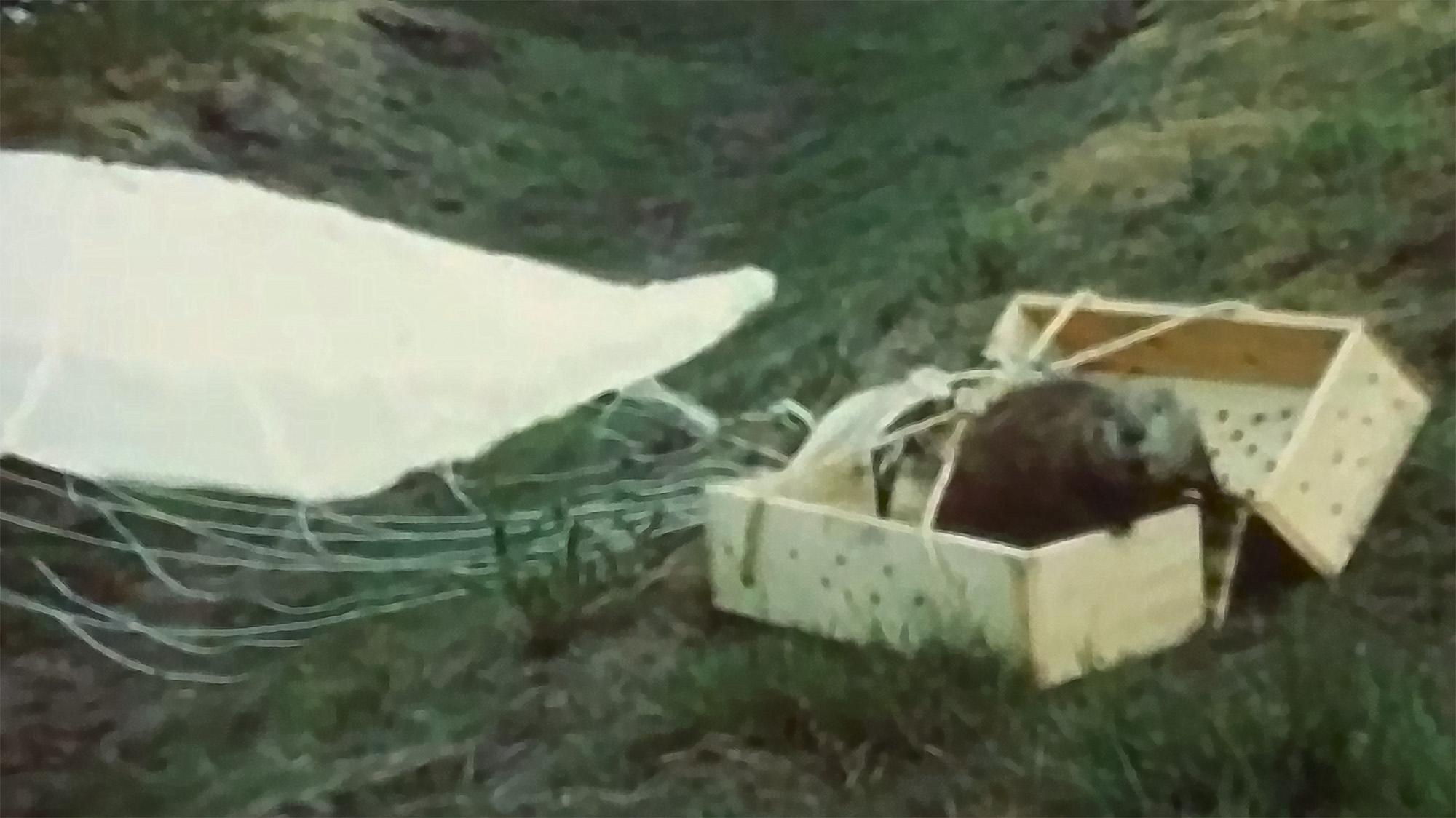
Enter Elmo Heter, a resourceful 1948 employee at the Idaho Department of Fish and Game, who set out to find a better way. He began experimenting with surplus materials from the Army, such as parachutes and lightweight wooden boxes. Eventually, Heter designed a crate using a “clamshell suitcase-type design,” held together with elastic straps. The crates stayed shut during descent and popped open on impact, Szabo says.
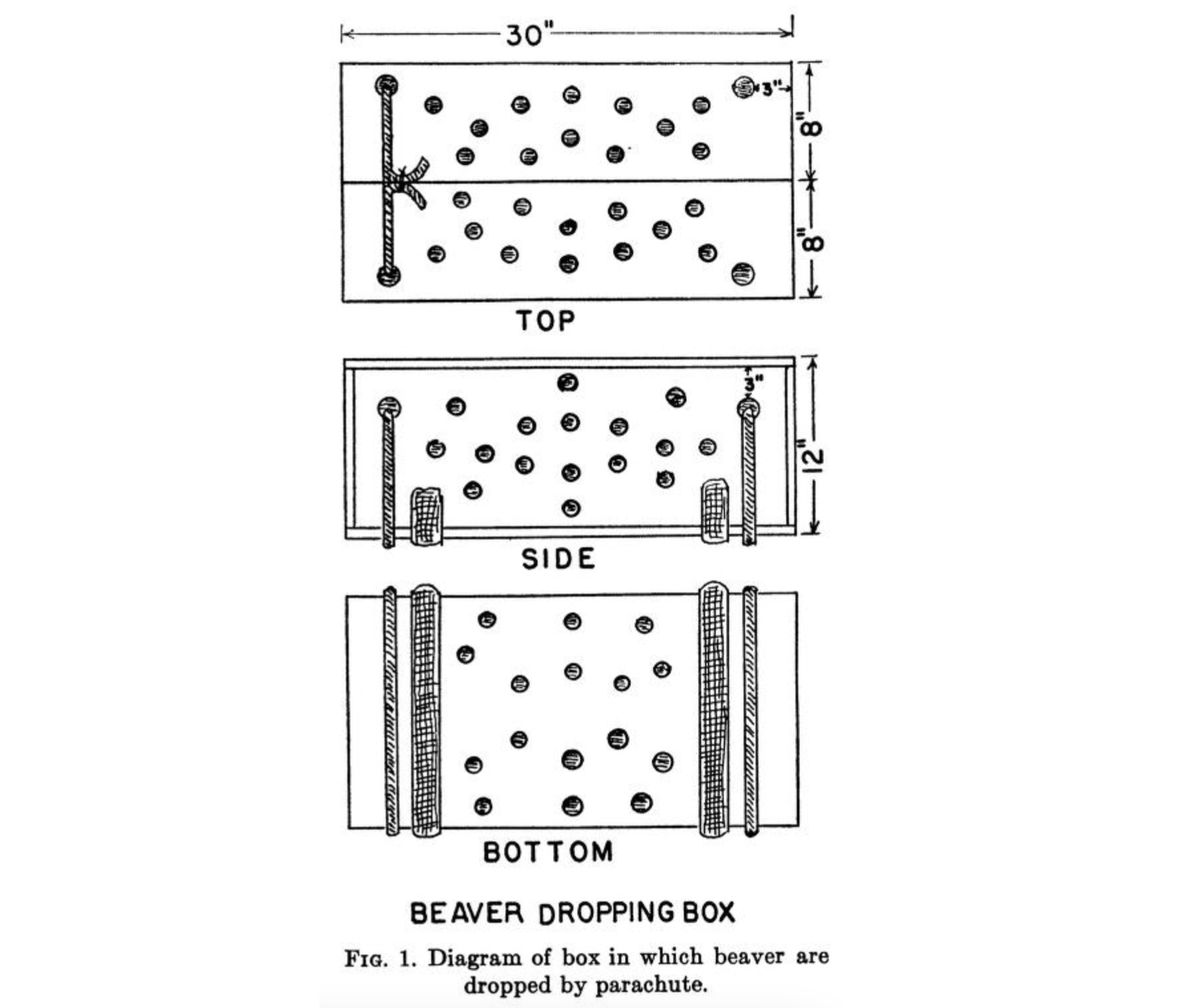
“They had a few different iterations of the container they used to hold these beaver while they were parachuted,” Szabo said. “It was two beavers per crate as long as the weight didn’t exceed a hundred pounds. However they worked it out, it was eventually aerodynamically sound.”
To test the system, Heter used a single male beaver named Geronimo, who endured several trial drops and reliably crawled out each time.
“Satisfactory experiments with dummy weights having been completed, one old male beaver, whom we fondly named ‘Geronimo,’ was dropped again and again on the flying field,” Heter wrote in his unforgettable 1950 scientific paper, Transporting Beavers by Airplane and Parachute.
“Each time he scrambled out of the box, someone was on hand to pick him up. Poor fellow! He finally became resigned, and as soon as we approached him, would crawl back into his box ready to go aloft again.”
Geronimo was ultimately rewarded for his service, beyond whatever frequent flyer miles he might have accrued. In the paper, Heter recounts that the beaver had a “priority reservation on his first ship into the hinterland,” and that “three young females went with him.”
“Even there, he stayed in the box for a long time after his harem was busy inspecting the new surroundings,” Heter wrote.
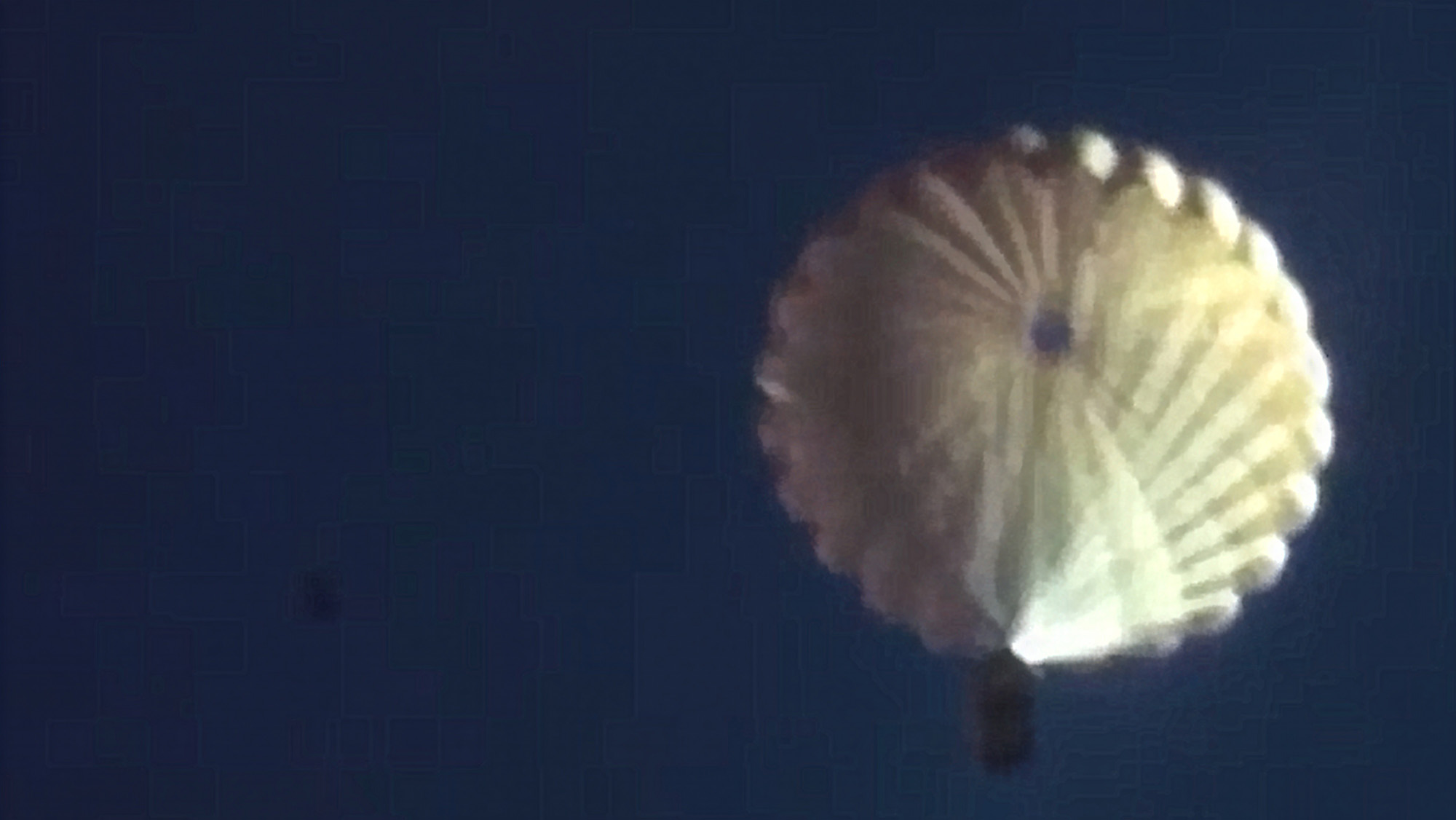
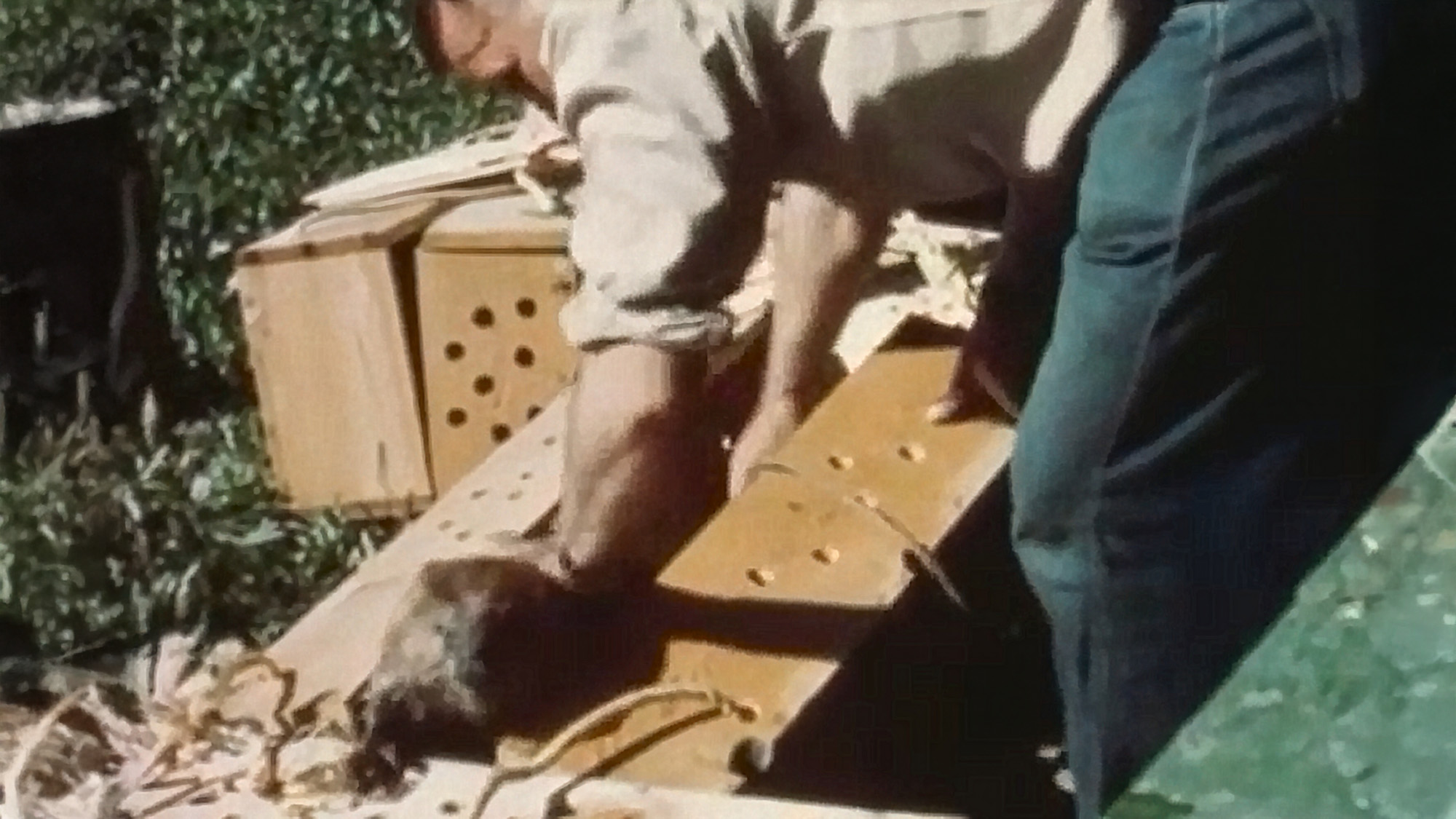
Once the design was proven safe, Heter and his team prepared 75 more beavers for relocation. Working in pairs, the animals were loaded into the clamshell crates and released over the Chamberlain Basin. Most landed without issue, the wooden boxes springing open on impact as the beavers scrambled out into their new home. According to Szabo, only one beaver didn’t survive the operation, after chewing its way out midair.
Idaho Fish and Game staff filmed the entire operation—a detail that went largely unnoticed for decades.

Finding the 1948 Idaho beaver drop’s lost footage
When Sharon Clark, a longtime Idaho Fish and Game employee who also serves as the agency’s historian, first heard rumors of the film from former Wildlife Bureau Chief Roger Williams, she thought it sounded completely absurd.
“I laughed at him,” she says. “I told him, ‘Roger, you can’t be serious.’” But the story stuck with her.
After searching in the state archives and coming up empty, Clark eventually received a call years later: The film had been found, mislabeled under its original title, Fur for the Future, a slogan about restoring the fur-bearing species. The film was in bad shape due to improper storage, so it was sent to a restoration company, which digitized it and recovered the missing audio.
“When we finally had the restored version, I was beyond excited,” Clark said. “I had no idea it would turn into the phenomenon it has.” When the department posted the film to YouTube, it went viral, drawing hundreds of thousands of views and inspiring children’s books, including When Beavers Flew by Kristen Tracy and The Skydiving Beavers: A True Tale by Susan Wood.
The footage also sparked novelty sweatshirts and even led a Boise baseball team to briefly rename itself the Battle Beavers.
Today, Idaho no longer relocates beavers by parachute, but the underlying challenge hasn’t changed much. Beavers still cause conflicts with landowners, chewing orchard trees, flooding fields, and blocking irrigation systems—and the Idaho Department of Fish and Game still moves animals to places where they’re needed. “We use big, high-quality dog crates now,” Szabo said. “We hike them in on foot. No planes involved.”
Modern relocations also serve a broader ecological purpose, according to Szabo. Beaver ponds create habitat for sage grouse, whose populations have declined across much of the West, as well as spotted frogs, redband trout, and other species. Szabo says modeling indicates ample habitat in stream systems where beavers are still absent. “We think there are opportunities to expand their distribution,” Szabo said. “It benefits a huge variety of wildlife.”
Even now, the beaver drop has a way of resurfacing in unexpected places. After the footage went online, a Pennsylvania man in his nineties telephoned Clark to thank her. The younger generations of his family had been skeptical of his tales about helping trap beavers for the project as a youngster. And to be fair, “I worked on the parachuting-beaver mission” does sound a little far-fetched.
“He had been telling his kids and grandkids this story over the years [about his involvement in the project],” says Clark. “He called just to thank me for getting the video out there, because now his kids and his grandkids believed him.”
In That Time When, Popular Science tells the weirdest, surprising, and little-known stories that shaped science, engineering, and innovation.
Other 'That Time When' Stories
During WWII, a dress-wearing squirrel sold war bonds alongside FDR
When the U.S. almost nuked Alaska—on purpose
Andrew Jackson’s White House once hosted a cheese feeding frenzy
The space billboard that nearly happened
The radioactive ‘miracle water’ that killed its believers
During WWII, the U.S. government censored the weather
