
Spring is on the way in the Northern Hemisphere, meaning the birds in our backyards will soon make a lot more noise than before. I, for one, am excited.
Birds are obviously great, but as with most subjects, there are all kinds of things we believe about them that have no basis in reality. Many of these ideas are related to our anxiety, as humans, about our interactions with nature—for example, should we feel bad about feeding the birds? Let’s look into what actual research suggests.
Feeding birds doesn’t make them dependent on you.
Bird feeders are fun and educational—you get to see a variety of species of birds without leaving your house. A common fear is that this enjoyable hobby comes at a cost: making wild animals dependent on human food, meaning they might not be able to take care of themselves if you stop feeding them.
There’s good reason to worry about this. Animals like bears really do become dependent on human food, which can change their natural habits in a way that’s harmful to the bear and dangerous to humans. But when it comes to songbirds, research suggests this isn’t a problem.
A 2021 study published in the Journal of Avian Biology by researchers at Oregon State University found that bird feeders tend to make up a small percentage of the food eaten by songbirds. “Our study suggests that putting out food for small birds in winter will not lead to an increased dependence on human-provided food,” Jim Rivers, an animal ecologist, told Science Daily.
The study focused specifically on chickadees, small songbirds found throughout North America known for their familiar call (“chick-a-dee-dee-dee”). Scientists tagged birds with tagged RFID chips and then clipped their feathers to varying degrees, making it harder for the birds to fly. The research suggests that birds with clipped feathers depended more on human food while their feathers grew back, but went back to foraging within a couple of weeks.
“Feather-clipped chickadees reducing their use of feeders relative to control birds suggests that foods in the environment—like seeds, berries, and small invertebrates—were sufficiently available to compensate for increased flight costs and allowed them to cut back on feeder use,” said Rivers.
So rest assured: research suggests that there’s plenty of food around for birds, and your feeder is just one of them. Odds are they’re not going to become overly dependent on you.
Rice doesn’t make birds explode.
Throwing rice at weddings is a longstanding tradition, and there’s also a longstanding myth: that leftover rice could hurt the birds if they eat it. It’s not clear where this myth originates, but the idea is that uncooked rice will expand in birds’ stomachs. An exaggerated version of the myth states that rice causes birds to explode.
It’s not true. The Cornell Lab of Ornithology definitively states that there’s no basis to this myth, adding that “a great many birds, from waterfowl to Bobolinks, feed on rice in nature.” It adds that there are no documented instances of birds dying from ingesting rice, at a wedding or otherwise.
In 2002, a University of Kentucky biology professor named Jim Krupa used this urban legend as a basis for a lesson, allowing his students to conduct various experiments that are outlined in the Snopes article for this myth. Among the findings of the students is that birdseed actually expands more in room temperature water than rice, which puts the myth on shaky footing. The experimenters also fed instant rice to 60 doves and pigeons, then monitored the birds for 12 hours—the birds were fine, and didn’t even regurgitate the rice. You can also search YouTube for “birds eating rice” and find all sorts of examples of pet birds eating rice in the kitchen or in their cages with no ill effect.
Having said that, it’s still probably not a good idea to throw rice at weddings, if only because scattered rice is slippery and tends to attract rats.
Hummingbird food doesn’t need to be red.
If you buy hummingbird food in a grocery or pet store, it tends to be red. The idea is that the bright color will attract hummingbirds, but there’s no actual science behind this. It’s true that hummingbirds are attracted to the color red—it’s one of the colors they see best, and in nature, red flowers tend to be a good source of nectar. But natural nectar itself isn’t red—only the flowers are. A red hummingbird feeder is enough to attract birds, regardless of what color the hummingbird food is. And the dye could potentially harm birds, according to the National Audubon Society.
It’s also worth noting that, if you’re buying hummingbird food at a store, you’re likely overpaying. The Audubon society suggests making your own hummingbird food—just combine a quarter cup of table sugar mixed with one cup of boiling water, then allow it to cool. That ratio of water to sugar closely matches that naturally occurs in flower nectar. Note that the Audubon Society also specifically discourages using honey, which can cause fungal growth, or artificial sweeteners, which don’t provide any nutritional value.
Birds won’t abandon a baby if you touch it.
If you’ve ever seen a baby bird outside its nest, you’ve likely heard this one: You can’t touch the baby or the mom will abandon it. The idea is that your filthy human hands will leave an odor, causing the mother not to recognize their offspring.
There is no basis to this myth, according to the Cornell Lab of Ornithology. “Most birds do have a well-developed sense of smell,” the organization states. “However, nesting birds invest significant time and energy into rearing their young and will not abandon them because of the way they smell. It’s perfectly safe to pick up a fallen nestling and put it back in the nest, or to carry a fledgling out of danger and place it in a tree or shrub.”
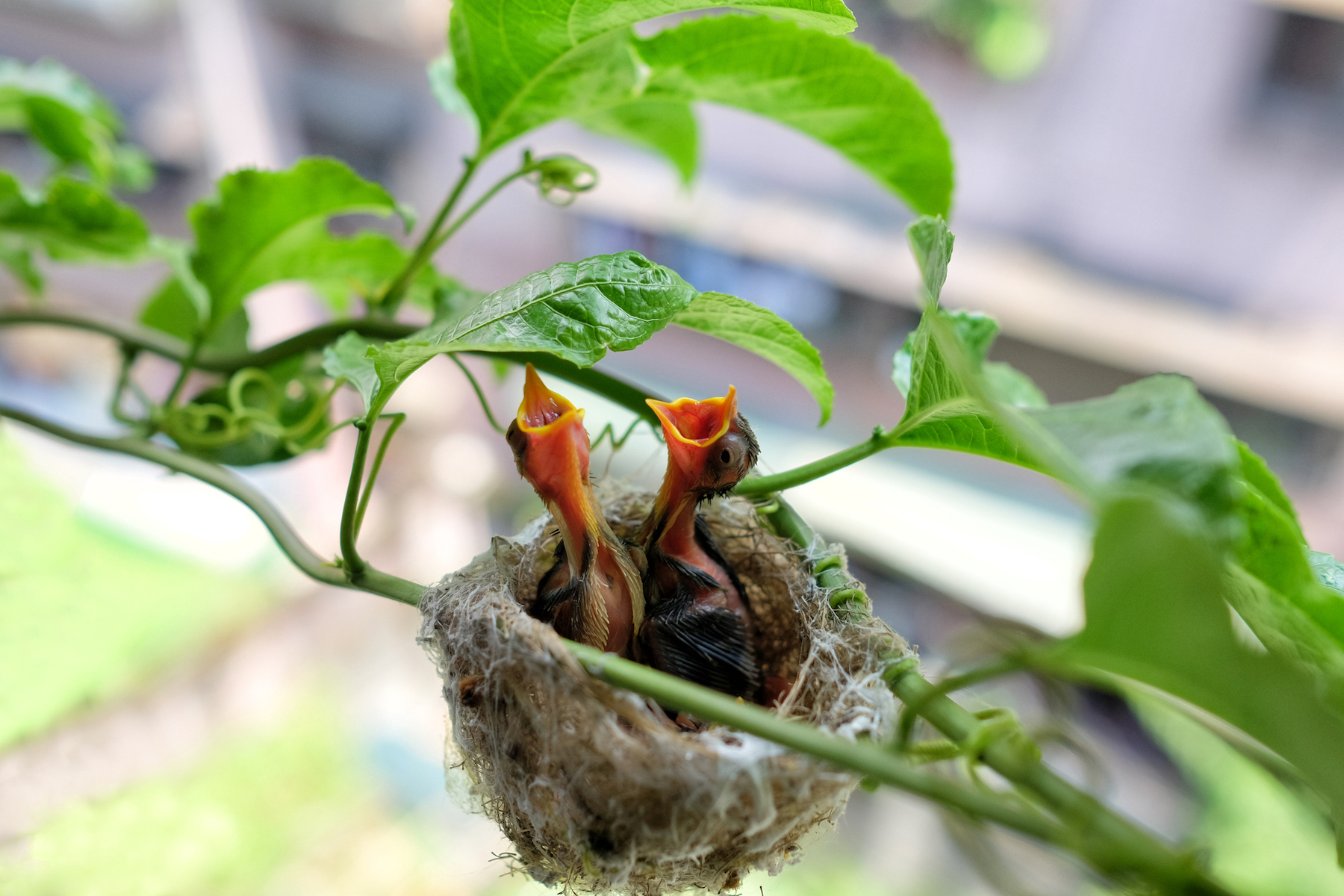
Science suggests that helping a baby bird doesn’t hurt it. You can do so without feeling bad. But it’s good to remember best practices if you do stumble on a baby bird and call an animal control expert, if you’re not sure what to do.
Feeding and watching birds is a great way to interact with nature right at home. They’re a great way to remember that we live in an ecosystem, even when we’re in our homes. It’s good that so many people don’t want to hurt birds, but myths distract us from the things that are actually threatening them (like outdoor cats).
