

We may earn revenue from the products available on this page and participate in affiliate programs. Learn more ›
3D-printing has come a long way from dinky plastic models. In recent years, engineers have started experimenting with applying the technology to houses. While many of these projects rely on polymers, wood composites, or stone materials, the Japanese company Lib Work takes a different approach by using the literal ground beneath them.
According to their website, their latest iteration—House Model B—is a 1,076-square-foot, single-story residence built mainly from earth, lime, and natural fibers.

Lib Work says improvements to the overall manufacturing process have lowered its carbon emissions. Meanwhile, the building itself is about five times stronger than their previous design that included cement. To fabricate the home located in Japan’s Yamaga, Kumamoto Prefecture, the company worked with Italian 3D-printing firm World’s Advanced Saving Project (WASP) to construct the initial shell. WASP configured their equipment on-site to create Model B’s shape with the soil-based composite material and a blueprint. Once completed, workers then coated the shell in a protective glazing before installing doors, windows, and plumbing.
The Model B is completely off-grid, using a battery storage system and solar panels, along with energy efficient A/C, lighting, and water heating devices. Promotional photos show a modern, natural light-filled abode that wouldn’t look out of place in most subdivisions–though ribbed walls and flat roofing hint at its 3D-printed origins.
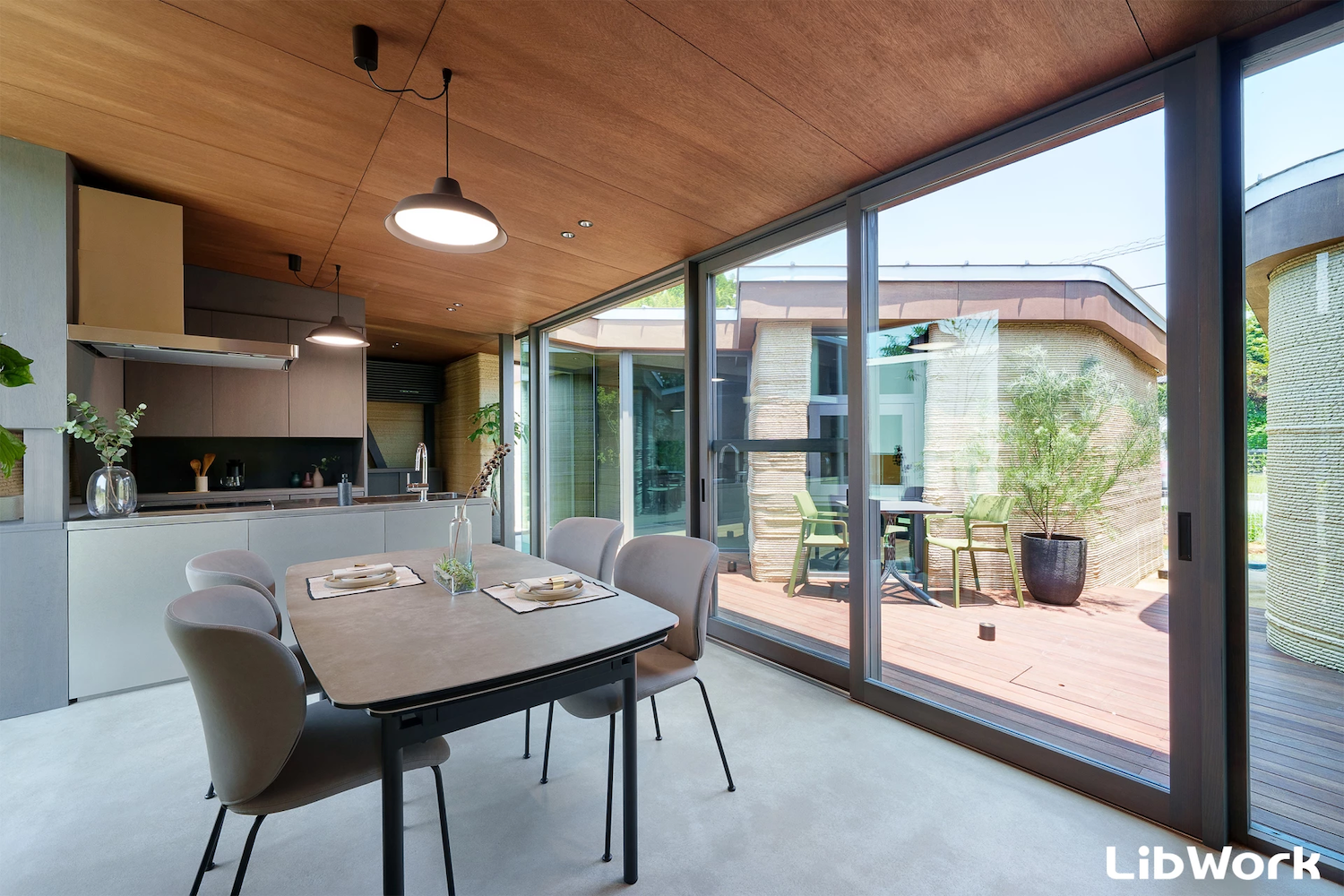
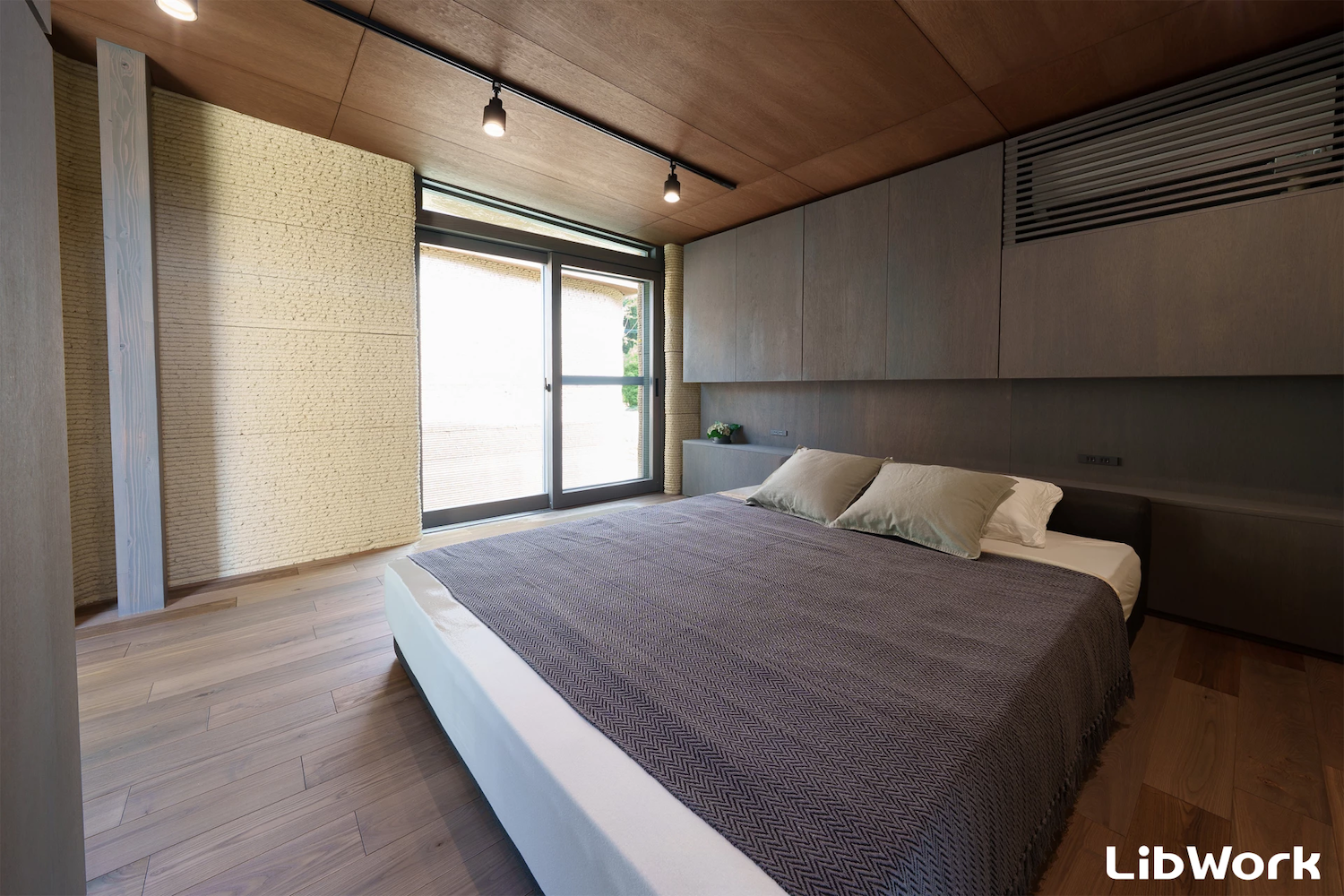
“The house proposes a living space that is in harmony with the environment and allows you to live comfortably while feeling the seasons,” the company’s website explains.
Sensors embedded in the walls monitor for condensation and insulation performance over the prototype’s testing phase, as well as measure for any structural degradation. Unlike standard houses, Model B is designed for eventual deconstruction, allowing much of its materials to return to the earth, reducing landfill waste and environmental impact.
While it will likely take time before entire neighborhoods built from 3D-printed dirt pop up, Lib Work will begin taking pre-orders in August.
