
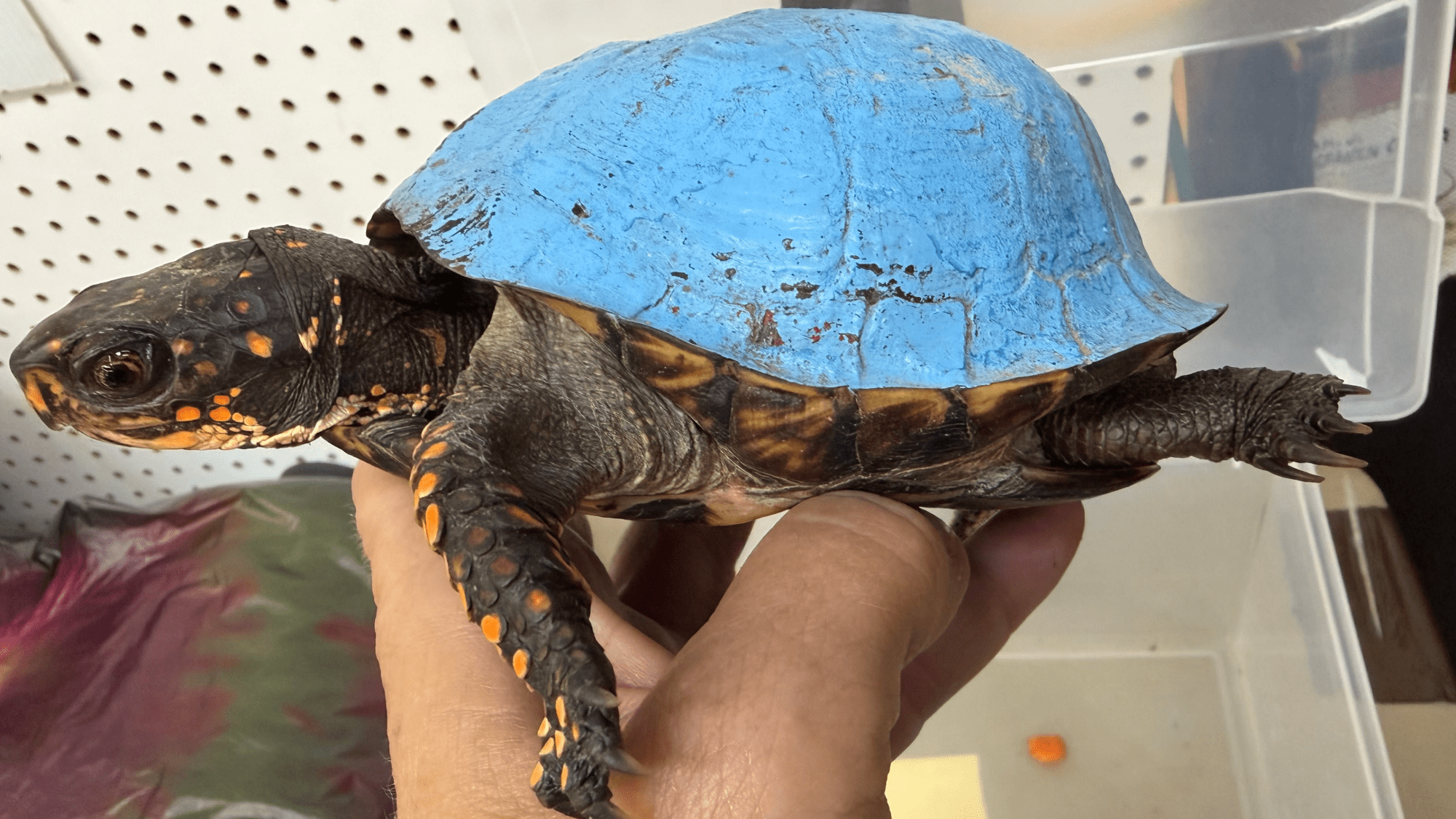
When a Kentucky woman purchased a home in the town of Campbellsville, she had no idea that she would also be taking in an unexpected animal: an Eastern box turtle (Terrapene carolina carolina) with a bright blue shell.
Of course, the color wasn’t natural. She soon learned from one of her new neighbors that one of the house’s previous residents painted turtles around the property, licensed wildlife rehabilitator Tonya Poindexter tells Popular Science.
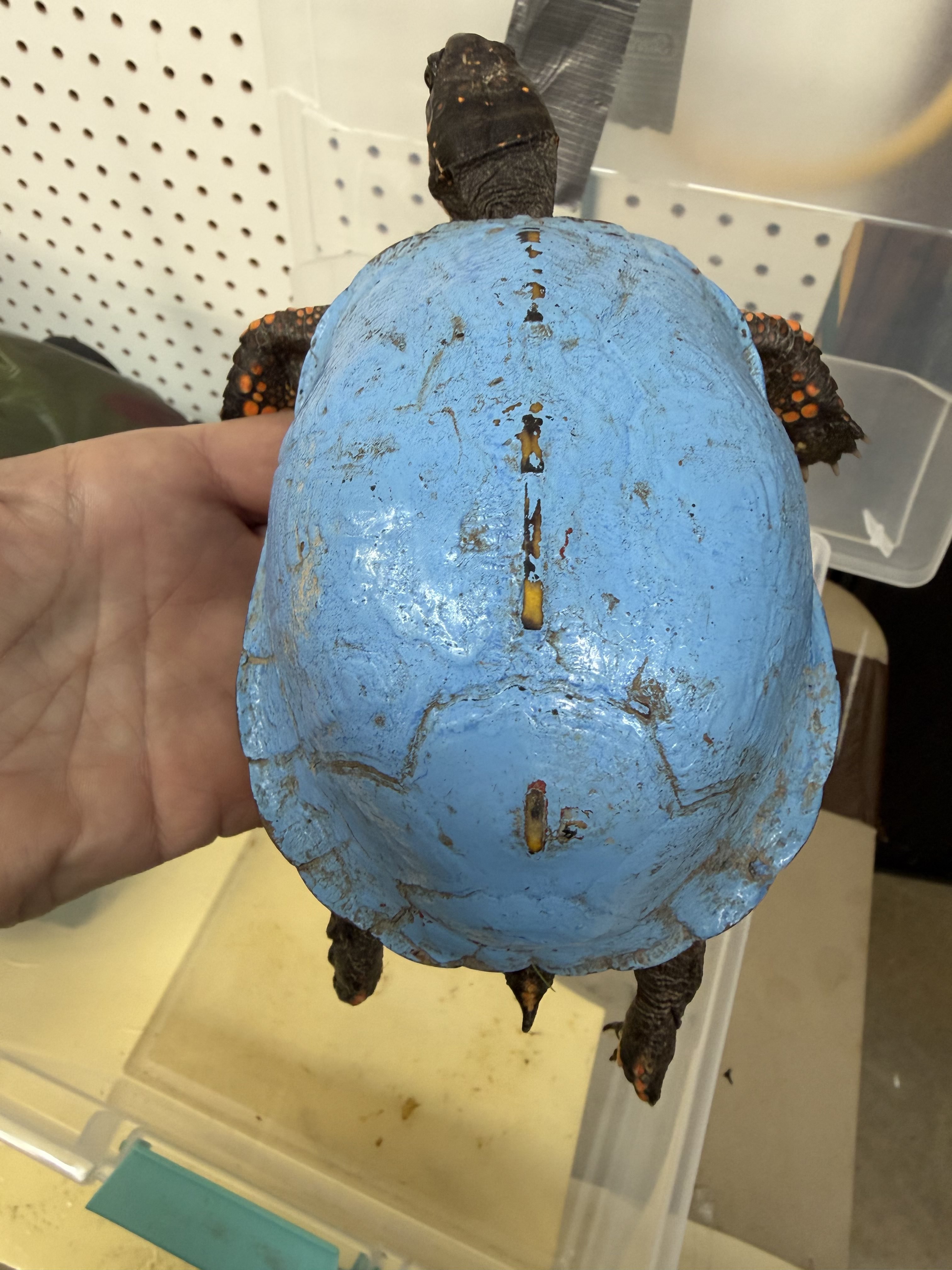
The homeowner contacted Poindexter’s Wilderness Trail Wildlife Center in London, Kentucky and their team collected the colorful turtle, and then drove it around two hours for a check-up There, the team realized that the adult female turtle also had a layer of red on her shell beneath the blue. In other words, it seems like she received a paint job more than once. To make matters worse, the seemingly oil-based paint is exceptionally touch, layered, and difficult to remove, says Poindexter.
“Putting paints and chemicals that were never intended for an animal onto that shell is simply not something we should be doing to wildlife,” she explains, emphasizing that a shell is part of the turtle’s body and skeletal system and it grows and mends itself along with its owner.
“There’s also a very important survival issue for a wild Eastern box turtle: camouflage.
Their natural brown, yellow and orange patterns blend beautifully with leaves, soil and the dappled forest floor,” she continues. “That’s part of their protection. Covering that natural camouflage with bright blue or red paint can make an animal that normally almost disappears into its surroundings stand out dramatically.”
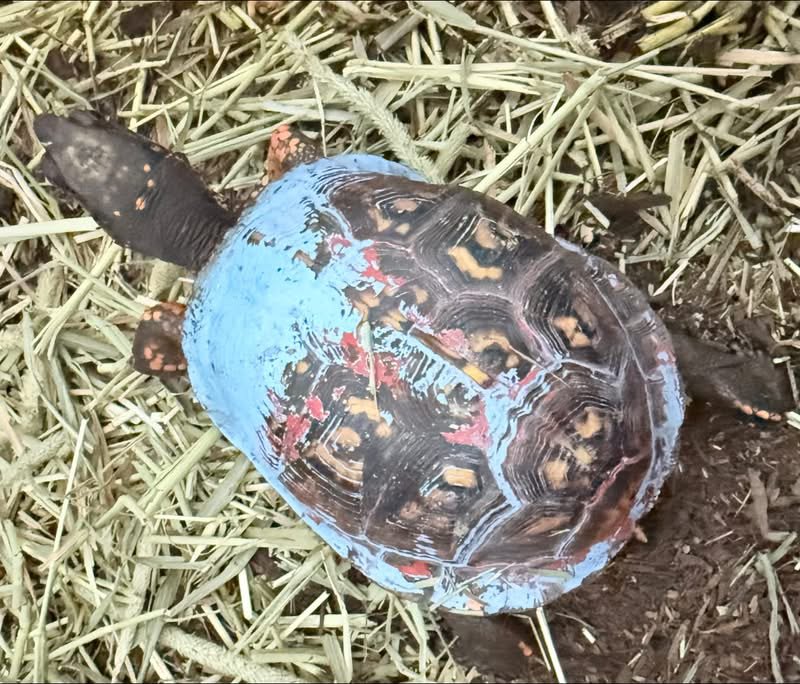
This lack of camouflage, among other reasons, Poindexter to decide not to release the painted turtle back into the wild, even though she is otherwise healthy. Instead, the team is slowly and carefully removing the unwanted decoration in small areas at a time. At the beginning of each session, they soak the turtle in warm water and then use a soft toothbrush and Dawn dish soap.
For the areas that are tougher to clean, they used small amounts of mineral spirits to help loosen the paint while keeping some airflow on her face to make sure she’s not breathing in concentrated fumes. Afterwards, they wash the area with dish soap and rinse it thoroughly.
“This isn’t something I recommend people try themselves,” Poindexter highlights. “Solvents can be irritating and potentially harmful. If someone finds a wild turtle covered in paint, glue, tar or another chemical, I would recommend contacting an experienced licensed wildlife rehabilitator or veterinarian rather than experimenting with chemicals or trying to scrape it off.”
To her credit, the turtle has been a good sport about her rehabilitation. Once the team has decided that the paint has been sufficiently removed, the homeowner, who volunteered to come get her again, will return the patient where she was found.
“I’d love for people to remember one simple thing from her story: Eastern box turtles are already beautifully painted—by nature,” Poindexter reminds us.
