The Loneliest Humanoid in America
Walking, self-contained, adult-size robots are commonplace in robotics labs in Japan and South Korea, but there’s only one made here. Why are we falling behind?
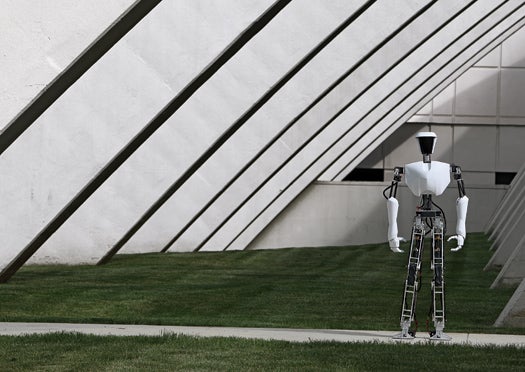
Let’s assume that someday you will have, in your home, a humanoid robot helper. The robot, because it’s shaped like you, can use your tools and move easily around your house. It folds the laundry, it helps your elderly mother up the stairs, and on Sundays it makes brunch for the family. It’s capable of handling almost any household chore you can throw at it.
Now let’s imagine that you’re out on the lawn, kicking a ball around with your son. Your robot helper is in another part of the yard, its back to you both, fixing a drainpipe.
Your son misses a kick, and the ball winds up a few feet from the robot. “Hey, robot!” you shout. “A little help?” The robot turns in place, spots the ball, walks over, and kicks it back to you. The game resumes.
Of all the tasks you would undoubtedly love to hand off to a robot assistant, fetching a soccer ball is probably low on the list. And yet in 2010, there is no humanoid robot on Earth that can consistently do something as simple as turn, spot, approach, and kick. Never mind helping Grandma to bed or starching your shirts. Broken into a daisy chain of input, calculation and action, just kicking a ball is incredibly hard. It’s so difficult, in fact, that engineers from all over the world have embraced it as the modern era’s standardized test of humanoid-robot sophistication, and they converge each June at an event called RoboCup to try it. This year, only one adult-size, self-contained, humanoid robot in this country can even attempt it.
Its name is CHARLI-L (the “L” stands for “Lightweight” and the rest for “Cognitive Humanoid Autonomous Robot with Learning Intelligence”). Created at Virginia Tech, it’s America’s first true humanoid, in that it requires no remote power source or computer, it stands roughly five feet tall and has arms and legs, and it walks—left, right, left, right—like a human.
As such, CHARLI-L belongs to an exclusive international club of humanoid robots (see an illustrated overview of said club here), each of them designed to hasten the day when robots play a central role in all of our lives. Japan and South Korea dominate this club, together outspending the U.S. in civilian robotics many times over. Japan’s Asimo, a humanoid first built in 1986 by the Honda Corporation and now in its 12th generation, and Korea’s Hubo, built to compete with Asimo in 2004 by Jun-Ho Oh of the Korea Advanced Institute of Science and Technology (KAIST), are the pride of their nations. Honda is said to have put $300 million and more than 100 worker-years into the first Asimo. Dennis Hong, an associate professor of mechanical engineering at VT, laughs at the idea. “That guy,” he says, pointing at CHARLI-L, “was 12 undergrad and grad students in a year and a half, with seed money of $20,000.”
For a look at CHARLI-L’s fellow humanoid ‘bots from around the world, launch the photo gallery
Dennis Hong is the founder of VT’s Robotics and Mechanisms Laboratory and the leader of the student team that built CHARLI-L. We’re seated at a workbench inside the University of Pennsylvania’s robotics lab, run by Hong’s friend and collaborator Daniel Lee. Hong’s students are here to show CHARLI-L to Lee’s students, to prepare for RoboCup 2010, held in June in Singapore, and to discuss upcoming partnerships. Hong (winner of a 2009 Popular Science Brilliant 10 award) and his students have produced chemically driven, amoeba-like robots; a spider-like ‘bot called STRiDEr, whose swinging walk is modeled on the human gait; and a system by which blind adults can make guided yet independent decisions as the drivers of their own cars. Lee’s students build complex software to govern robot behavior and human-robot interaction. These are some of the most accomplished robotics engineers in the field. But as I watch the students fiddle with CHARLI-L, it begins to dawn on me how much work stands between CHARLI-L and the RoboCup trophy, to say nothing of how much work it will take to reach a future full of robot helpers.
The sheer scale of the challenge is the point, Hong says. “I think a full-size humanoid is the Holy Grail of robotics,” he explains. “It’s a system of systems. It combines all the disciplines of robotics, from artificial intelligence to autonomous behavior to dynamics to controls to mechanical design—everything!”
At the moment, however, VT junior Taylor Pesek, Ph.D. student Jeakweon Han and master’s student Seungmoon Song are just trying to get CHARLI-L to stand upright. “Uh-oh,” Han says, catching the robot as it lolls forward, knees buckling. “Stop putting in commands,” Pesek says. “I’m not,” Song responds. Pesek turns the power off and on and, with a bit of wrestling, the robot stands at quiet attention.
If standing still is so difficult, how hard is kicking a ball? The rules of RoboCup, in which six teams will compete for the title of “Best Humanoid” in the Adult Size Humanoid division, require that the robot be facing away from the ball when the event begins, so the machine has to turn around and find it. “It’s a high-end academic exercise dressed up as an entertainment event,” Hong says. Break the goals—kicking balls at a target, basic dribbling, and trying to slowly block the very slow shots from other robots—into individual processes, and the to-do list grows very long. To eventually build the brunch-making ‘bot of the future, Hong must first win RoboCup. And that’s hard. “Just getting it to turn around in place is ridiculous,” says master’s student and CHARLI-L team member Robert Nguyen. Is it also pointless?
AMERICA’S HUMANOID DILEMMA
Nearly everyone would want a dutiful, reliable robot helper, so why is there only one such humanoid made in this country? And why is it the work of a small team of unpaid students? To get at the answer, consider the machines in your life. Your dishwasher, your car, your DVR all serve a practical, well-defined purpose. Today’s humanoids, meanwhile, serve almost no practical function. “They represent incredible research and technology that’s then backed into an application” says Colin Angle, the CEO of iRobot, which makes domestic cleaning robots and military models. Roboticists working on humanoids, he says, “are doing amazing, exciting work, but it’s just not going to drive the robot industry—unless it’s for entertainment purposes.”
Asimo, the most sophisticated Japanese humanoid, is famous for its balance and adaptability. It can even run, in an awkward, distinctively robotic way. But if it encounters a closed door, the show’s over, because the calculations necessary to reach out, grasp the knob, turn it, and walk forward, pushing the door ahead of itself, are still too complicated. (The fragility doesn’t end there. “Our products can survive a two-story fall,” Angle says. “See what happens with an Asimo.”) Japan has embraced Asimo, however, as a broad, long-term investment in a wide range of scientific challenges, from materials science to artificial intelligence. It’s not a robo-butler. It’s a stake in the ground, a totem of Japan’s belief that our future will be full of helpful, sentient, Japanese-made machines.
That kind of open-ended vision doesn’t work here, where our funding environment rewards near-term products, not totems. As a result, the U.S., though it is filled with robotics projects, lags behind Japan and South Korea in the development of humanoids. In 2006, sponsored by the National Science Foundation and others, the nonprofit World Technology Evaluation Center (WTEC) published a report entitled “International Assessment of Research and Development in Robotics,” comparing America’s activities with the rest of the world’s. The report concluded that while this country leads the world in military and medical robotics, it is quickly losing that advantage and falls short when it comes to robot mobility and humanoid robotics. Although “robotics is a very active field, worldwide,” the authors wrote, “Japan, Korea and the European Community invest significantly larger funds in robotics research and development for the private sector than the U.S.”
Test Case
“Money is flowing to universities and research centers,” says University of Southern California engineering professor George Bekey, who led the WTEC team on a research trip through Korea and Japan in 2004 and 2005. “Korean funding for robotics is about $80 million a year. In contrast, U.S. funding for civilian robotics from the National Science Foundation is about $10 million a year.”
Military spending on American robotics is robust, but our war-robot platforms are getting us no closer to a humanoid. Those platforms are purpose-built for bomb defusal and aerial surveillance, and so don’t provide broader opportunities. “Korea and Japan have national strategic initiatives in robotics,” the WTEC group wrote. “In the U.S., Darpa programs“—the chief source of military funding for high-level robots—”are highly applied and short-term oriented, while its support for basic research in robotics has been drastically reduced.”
Viewed through the eyes of a Darpa program officer, it’s easy to see why humanoids have been largely ignored. The logic of researchers like Hong is that to be truly useful, domestic robots must be human-shaped, because such technologies as stairs and refrigerator doors and bottle openers are designed for human use. But when funding agencies read that argument in a grant proposal, it only goes so far, because research hasn’t established a consistent model for automated forms of walking, or opening iceboxes, or cracking beers. Designing humanoids, in other words, puts the cart before the horse.
“It has to do with U.S. pragmatism,” says Carnegie Mellon University professor James Kuffner, who develops machine-learning software and heads the university’s Humanoid Interaction Team. Like many leading American roboticists who do research in Asia, Kuffner worked for several years in Japan as part of a robotics fellowship at the University of Tokyo and is in the midst of a year’s sabbatical at Google. “We think, ‘If we have a problem, let’s design the simplest, cheapest solution,’ ” he says.
Lee explains it in similar terms. “If you write a proposal here for a robot that plays music, you’ll have a very hard time finding funding. What’s the practical purpose?” he says. “Yet if a robot improvised a jazz performance, it might teach you all sorts of things about artificial intelligence and even human intelligence. There’s more openness to that kind of investigation in Asia and Europe. Here the focus is on a well-defined problem.”
As a result, what might otherwise someday form a full-fledged humanoid is in well-defined pieces all over the country. American researchers, focused on solving practical problems, are developing robotic prosthetics that are the functional equivalent of human limbs, robotic eyes that can detect cancer, and highly articulated robot arms capable of assembling tiny, intricate machines on a factory floor. Robotic components evolve separately and for highly specialized tasks.
Take grasping, for example. The interception and manipulation of objects by an automated appendage is perhaps the most commonly researched problem in robotics. (“It’s approachable,” Hong says.) Barrett Technology, in Cambridge, Massachusetts, has developed the WAM arm (short for Whole-Arm Manipulation) and the BarrettHand—lightweight, high-torque robotic limbs capable of complex motions and manipulations. Deka Research and Development Corp., led by inventor Dean Kamen, created the Luke Arm, which is also capable of extremely sophisticated movement, as an advanced human prosthesis. And Willow Garage, a company founded by open-source-software pioneer Scott Hassan, has created PR2, a two-armed robot atop a wheeled base. PR2 is particularly useful for investigating the manipulation of objects while it’s in motion, an even more advanced problem—a team at the University of California at Berkeley recently used PR2 to devise a sophisticated and much-celebrated towel-folding algorithm.
Several U.S. teams are focused on bipedal walking, generally considered among the most difficult of all humanoid-robotics challenges and the one most closely linked to human applications, in that building bipedal robots helps researchers to develop a better prosthetic leg and foot because it forces them to reverse-engineer human movement. Marc Raibert, considered the father of leg robotics, founded the Leg Laboratory at Carnegie Mellon in 1980 and then moved it to the Massachusetts Institute of Technology in 1987 before going on to launch Boston Dynamics in 1992. The company’s four-legged BigDog and two-legged Petman are capable of walking across unstable terrain—perfect for carrying supplies alongside a soldier on patrol—and can regain their balance dynamically even after being suddenly and violently shoved off course. Yobotics, founded by four alumni of MIT’s Leg Lab, created M2, a bipedal robot that can walk in place and balance on one leg. And the University of Michigan’s Human Biomechanics and Control Laboratory, headed by professor of mechanical engineering Art Kuo, is developing an “elastic locomotion” model that can help explain how we humans walk without seriously exerting ourselves.
Each of these systems feels like its own piece of an all-in-one American-made robot of the future. But without a governing authority piecing them together, or a centralized funding agency directing their convergence, each team, and their individual pieces of technology, will never form a cohesive whole.
ROBOT, PLEASE TELL ME WHY
What is the practical purpose of creating humanoids? Asking roboticists this question is like asking philosophers why they pursue the meaning of life. The logic is circular (we’re building robots in humanoid form so that humans will better accept the robots we’re building in human form), the message has to do with faith (when we’re on the far side of this problem, we won’t know how we got along before), and the broader purposes all involve distant rewards (artificially intelligent, problem-solving robot companions) that the researchers seem to consider unquestionably valuable but that are difficult to conceive of in the here and now.
David Hanson, the founder and chief technology officer of Hanson Robotics, collaborated with Jung-Ho Oh, the creator of Korea’s Hubo, to produce a version of the robot with the face of Albert Einstein, made of simulated flesh and expression-generating actuators. Hanson is now developing a humanoid, called Zeno, that he hopes to market both as a household companion and as a research platform. His summary of the need for humanoids is representative of many people I spoke with. “Making humanlike robots,” he says, “allows us to understand ourselves better.” He believes that it creates a clearly defined research path; not just advancements in the various parts of a humanoid—improved prostheses, grasping, finally pinning down the mechanics of human balance—but the pursuit of robotic consciousness. “Cognition is the greatest challenge in all of robotics,” he says. “If on the way we’re designing humanoids, we have a handy benchmark for seeing where we are in the process.”
In Japan and Korea, researchers—and, more significantly, funding sources—embrace this logic. Their commitment to developing humanoid robots means that Asimo and Hubo incorporate their respective countries’ best work in everything from mechanical functions to intangibles like artificial intelligence. These functions are integrated into every successive generation of humanoid, rather than remaining in the lab of a specific team. By 2004, Asimo had already incorporated facial recognition, speech recognition, the subtleties of interpreting gestures and posture, and digital mapping of its environment. With Asimo, Hanson says, “Toyota and Honda have solved manual-dexterity tasks that used to be unsolvable. It’s just that they show them off in silly ways. They get him to play trumpet or the violin. But with that dexterity, imagine what you can assemble in a factory! These are massive breakthroughs.”
Most American engineers who have encountered Japanese and Korean engineers offer up armchair psychology about a pro-technology bias in those societies that creates enthusiasm for humanoids. Kuffner points out that in Japan, Shinto beliefs posit that inanimate objects have a benevolent spirit. “And Japanese boys who grew up in the ’50s and ’60s read comic books about Astro Boy and other characters with robot assistants and sidekicks—all friendly, kind,” he says. “In the U.S., we think of The Terminator.”
Japan has a famously robust public-private infrastructure that incubates academic work, links it to industry, and then provides federal funds to guide and protect the research that results. The resources that Japan pours into Asimo alone make the country the envy of roboticists around the world. Korea has a comparatively smaller pool of resources, but although it has lagged behind Japan in the creation of technology, it is similarly determined to dominate the market. In 2003 the South Korean government named robotics one of 10 “engines” to promote the country’s economic growth, placing it alongside such stalwart industries as batteries, automobiles and display technologies.
The lab responsible for Hubo, Korea’s most famous humanoid, sits on the sprawling campus of KAIST in Daejeon, south of Seoul. Oh first built Hubo, he says, because he wanted an Asimo and couldn’t possibly afford one. Charmed and impressed by the first Hubo, the country’s Ministry of Commerce, Industry and Energy funded a lab in 2004 to support Oh’s work. It has produced several versions of Hubo, including Hubo FX-1, a version of the robot large enough to carry adult humans, and the Albert Hubo that was co-created with Hanson Robotics. It’s an indication of the country’s pride in the program that Albert Hubo was, for a time, South Korea’s most visible ambassador, shaking hands with heads of state including Vladimir Putin and George W. Bush. The lab is so well-funded that it makes its own parts on-site, instead of having to explain requirements to a manufacturer. An adjacent room stores countless nuts and bolts and a seemingly endless spool of wires. “We produce everything in the lab,” Oh says. “It’s much faster.”
Two hours away, in Ansan, the Korean Institute of Industrial Technology maintains its own lab, the Division of Applied Robot Technology. And these government-funded programs exist alongside robust robotics programs at companies like Samsung, LG and Hyundai and smaller, dedicated ventures like Yujin and Microrobot. Fifty Korean kindergartens use educational robots for daily lessons, and pilot programs have been distributing domestic robots to Korean households since 2005. “They see robotics the way we saw the Apollo program,” Lee says. “The government has decided ‘We’re going to put resources into this, we’re going to throw our best and brightest at this, and we’re going to transform our lives.'”
HOW TO FIGHT A ROBOT WAR
The fact that Dennis Hong and his students were able to build CHARLI-L in such a short amount of time, on a donated budget, using donated parts, is a sign that America’s best and brightest are eager to create humanoids. But CHARLI-L—light enough to lift with one hand and fitted with just enough actuators to make it through RoboCup—cannot challenge Japanese and Korean supremacy in humanoid robotics on its own. Byoungsoo Kim is the founder and CEO of the Seoul-based company Robotis, which produces off-the-shelf parts for use in robotics systems, including CHARLI-L. Virginia Tech is a prized partner, as Hong’s students regularly put Robotis components into their inventions. Kim believes that an open-source community working on a standardized platform could transform American robotics the way open-source development has transformed computing. Without that community, he says, “the robot itself is nothing. The software is what’s important.”
Several American companies are vying to be that platform. Willow Garage’s PR2 robot, in use at Stanford University and U.C. Berkeley, is built around the same distribution model: The company builds the hardware, then sells or rents it to academic institutions that can then write and test algorithms for motion. And for the past three years, Paul Oh of Drexel University along with Lee and Hong have been developing their own open-source platform around Hubo.
Shortly after the WTEC report was issued, Drexel, in collaboration with Virginia Tech, UPenn, Bryn Mawr College and Colby College, won a National Science Foundation grant known as PIRE (Partnerships for International Research and Education). Drexel’s Oh, UPenn’s Lee and VT’s Hong are all second-generation Korean-Americans, and Oh is first cousins with Jun-Ho Oh, the creator of Hubo. “International collaborations require trust,” says Paul Oh. “Hubo is [Jun-Ho Oh’s] brainchild, and he won’t entrust it to just anyone. Being family makes those concerns immaterial.” Oh positioned Hubo, a South Korean–made robot, to the NSF as a research platform that would train American students in multinational cooperation, and the team is now developing three versions of Hubo for academic purposes: a Virtual, Mini and Online Hubo.
Virtual Hubo will be an online robot simulator, something that students without the necessary funds to purchase or build their own robot can download. The software enables basic onscreen robotics experiments.
If, however, an academic program wanted to experiment with outside forces on the robot—how it’s affected by picking up a weight, for instance—it needs a tangible prototype. The full-size Hubo is too expensive, “so we created Mini-Hubo,” Hong says. “We wanted a sub-$8,000 robot that has the same kinematics and proportions as the real Hubo, just smaller.” The idea is that Mini-Hubo is an open-source hardware platform. Virginia Tech, which was responsible for this part of the project, prepared blueprints, CAD drawings, and fabrication and assembly manuals, and the documents are now available free online to anyone. As a test of the system, Drexel students were asked to build a Mini-Hubo from the instructions. The robot accepts algorithms that let it do things like avoid obstacles and manipulate objects. “And it worked,” Hong says proudly. Orders have already arrived from two universities for pre-built Mini-Hubos.
Finally, Drexel will, as the last phase of the five-year grant, host the full-size Hubo in Oh’s lab. The robot, Online Hubo, will be surrounded by webcams. Other universities will be able to send algorithms to it and monitor the results remotely. “It’s like a time-share,” Hong explains. “And the best part is that Online Hubo, Mini-Hubo and Virtual Hubo all share the same [software]. It will be a full set of tools to conduct humanoid research.”
PRESSING NEED
The path forward from CHARLI-L to an all-in-one humanoid is not clear. But then, the field of humanoid robotics moves rapidly. In 2000, Kuffner remembers, “people were saying, ‘I wonder how long until we’ll figure out stable walking in robots.’ The prediction was that it would take 10 years. It happened in two and a half.”
Keep in mind that the roboticists who work on humanoids are not dreamers by nature. They tend to be practical people. When I ask Hanson how one defends the concept of developing self-aware humanoids in a grant proposal, his language tightens, and his logic suddenly seems less circular and the rewards not as distant. The practical benefits are, he believes, endless. “Automation is the future of an efficient society,” he says. “It results in more-affordable goods, more-efficient transportation and improved quality of life. It can increase what a civilization like ours can achieve with limited resources. Intelligent automation is our best hope for solving our big problems.”
On the long list of big problems facing the United States, there is one for which humanoid robots could present a very real solution. The baby-boomer generation will soon form the single biggest spike in retired and elderly Americans in history. In rural and suburban homes reachable only by car, that’s going to be a far-flung and very fragile population. As a result, the ratio of available caregivers to needy patients is expected to change from 4:1 to barely 1:1 in the next 20 years. Perhaps that’s the practical task for which humanoid robots are best suited [for a look at the state-of-the-art in human-assisting robots, see our companion feature from this issue, “Rise of the Helpful Machines“]. iRobot, for instance, perhaps the most widely known robot manufacturer in the country, has spun off a new division to meet the trend. (Angle is adamant that bipedal robots are not part of the company’s plan, however. He believes his existing tank-tread platform is the best option for climbing stairs, navigating obstacles, and someday carrying a human.)
There’s a great deal of difficult and painstaking work to be done before we’ll have anything close to an automated home health aide. And in the end, of course, it’s hard to avoid rolling one’s eyes over the notion of pouring time and effort into a bipedal humanoid robot that is barely able to kick a ball. But consider that this year an American-made humanoid may, for the first time, accomplish the task of walking forward and interacting with other objects without falling over. Until recently that task was considered practically impossible.
It’s the open-ended spirit of this research that’s important. That open-ended work, that near-religious zealotry, is what could someday put a robot helper in homes where they’re desperately needed. Put aside the idea of a robot that cleans out your gutters so you can spend a Saturday in the yard with your son. Imagine now that your son has children of his own, has taken you in, and works a ten-hour shift. Who will have the time to administer your medication? To schedule your next doctor’s appointment? To help you to the bathroom? Who will you rely on? Perhaps—if Hong and his peers can convince our country that their work could someday remedy a national crisis—you’ll rely on CHARLI.
Additional reporting from Japan and Korea by Brian Ashcraft
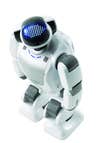
Made in Japan: Palro
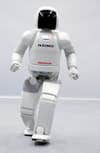
Made in Japan: Asimo

Geminoid
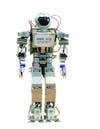
Made in Korea: HSR Series
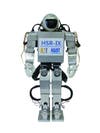
Made in Korea: HSR Series (2)
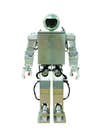
Made in Korea: HSR Series (3)
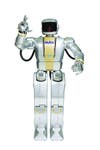
Made in Korea: Hubo
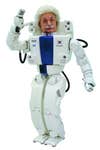
Made in Korea: Albert Hubo
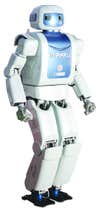
Made in Korea: Mahru
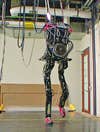
Made in the U.S.A.: Petman
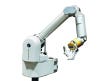
Made in the U.S.A.: Wam Arm
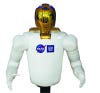
Made in the U.S.A.: Robonaut