Future of the Environment
For environmentalist Jesse Ausubel, going green means land conservation and energy efficiency—and forgetting “boutique” renewables like windmills and biofuels

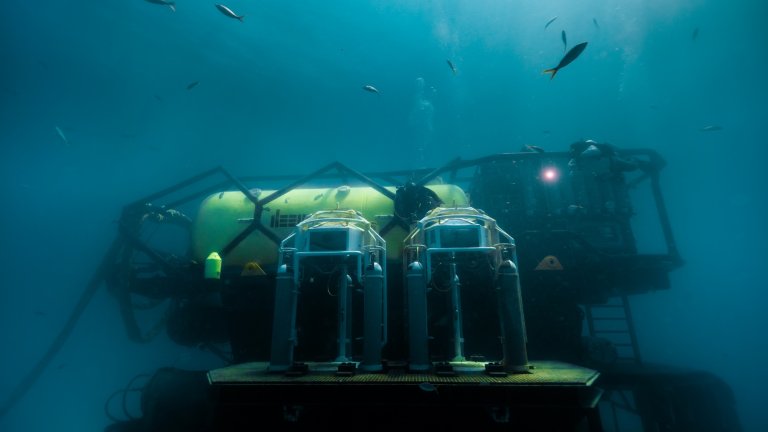
Burying Nuclear Waste What to do with nuclear waste? One proposal is to bury it 37 miles beneath the ocean floor, letting its radioactive heat melt through the rock. Kevin Hand

It’s 2070. You’re on a train from New York to Boston. If you could see outside, it would be mostly open landscape. Maybe a nuclear plant or two, but otherwise green space—none of the urban sprawl, wind farms, solar arrays or biomass operations we’ve been taught to expect from an ecologically responsible future. But you can’t see outside, because you’re underground, traveling 300 miles an hour on a maglev train alongside superconducting pipes transporting the energy from those nuclear plants.

This is 2070 as Jesse Ausubel sees it, anyway, and his vision—a brazenly pragmatic one that puts land conservation and energy efficiency above all else—isn’t making him a lot of friends in the environmental movement. “Some of my colleagues have put forth what are called green or renewable solutions or technologies, and they’re OK at a boutique scale—single households,” says Ausubel, who is director of the Program for the Human Environment at the Rockefeller University in New York City. “But when you look at two billion households, you find out that the solution isn’t green at all. Things that work on a boutique scale don’t necessarily work for billions of people and terawatts of power.”

Simultaneously a technology-loving futurist and an ardent naturalist, Ausubel points out that a wind farm delivering the same energy as a 1,000-megawatt nuclear plant would cover 308 square miles; a solar plant, 58. Even organic farming, he suggests, is justifiable in the context of landscape preservation only if the per-acre yields equal those of conventional farming.

Dismissing moves toward renewable and organic initiatives as misguided flies in the face of green dogma. Papers and presentations with titles like “Fallout from Renewables and Consequent Directions for Energy Research” and “Does Climate Still Matter?” haven’t helped Ausubel’s standing in the mainstream green movement.

But although environmentalists may disagree with him, they can’t simply write him off. In addition to his role at Rockefeller, Ausubel is vice president of programs for the Alfred P. Sloan Foundation, where he oversees the Census of Marine Life, a 10-year, 80-plus-nation effort to catalog the biodiversity of the world’s oceans. As a fellow at the National Academy of Sciences in the late 1970s, he was, he says, “one of the first half dozen or so people to be paid full time to work on global warming.” He was also one of the organizers of the first U.N. World Climate Conference in 1979. The man has earned the right to have opinions.

Ausubel has spent most of his career modeling a future that assumes a population of about 10 billion—what many experts believe the world will bear over the next century—and reasoning backward from there to explain how such a world could be powered and fed, and how much land could be spared for nature.

Part of what alarms his critics is how un-alarmist his conclusions have turned out to be. For example, instead of using policy to change how people will behave in the future, Ausubel prefers exploring technological responses to what he believes people are going to do regardless. His favorite defense of this laissez-faire approach is to explain that, absent any policy dictating that it should happen, energy consumption over the past 100 years has steadily “decarbonized.” That is, humankind has moved to fuel sources with progressively better ratios of carbon atoms to hydrogen atoms—wood at 10:1, coal at 2:1, oil at 1:2, natural gas at 1:4 and, eventually (in the future Ausubel envisions) 100 percent hydrogen. He thinks technology inevitably improves things. “That’s not to say I don’t worry about the downsides of technology,” he says. “A lot of my work is about that. But my general interest is new and high-tech ways of dealing with problems.”

The high-tech world in 2070, as Ausubel sees it, will look something like this:

ENERGY: Within a few decades, after methane plants have replaced coal plants, according to Ausubel’s decarbonization model, the move is on to full nuclear. His plants would produce electricity during peak daytime hours and be used to dissociate water to make hydrogen by night. “With the nuclear industry making two products instead of just one,” he says, “the economics become more attractive.”

Where to get all the uranium for the hundreds of new nuclear plants that Ausubel’s world would require? Extracting it from oceans, he believes, could supply enough energy for 10,000 years or more. The low concentrations in seawater—about 3.3 parts per billion—make the extraction process difficult, but Japanese researchers have successfully mined uranium from ocean currents, although not yet at costs that would be economically feasible.

NUCLEAR WASTE: Ausubel cites Russian and British research into “self-sinking balls” of nuclear waste with shells most likely made of tungsten and heated by their radioactive contents to the point where, once disposed of in deep holes in the Earth’s crust, they would melt the surrounding lithosphere and bury themselves several miles deep. “Nuclear waste is hot and heavy,” he says. “The idea of self-sinking capsules takes the heat and gravity as positive attributes. The idea is quite straightforward.”

While the capsules remain theoretical for now, Michael Ojovan, an engineer at the University of Sheffield in England who has published extensively on the concept, says that in addition to removing waste, acoustic monitoring of the capsules could reveal data about the structure of the Earth’s interior. “The [scientific] importance of launching such a capsule is on the order of an expedition to Mars,” he says.

TRANSPORTATION: It’s all fuel-cell cars and planes (using hydrogen from the nuclear plants) and maglev trains. “Take the problem of airport congestion,” Ausubel says. “Having planes take off every 20 or 30 seconds is hard. But you could subtract all those shuttle flights from high-flux routes like New York–Boston by connecting them with maglevs. Put those shuttle routes underground with the maglevs, and save the runway slots for the routes where you can’t justify building expensive tunnels.”

And why tunnels? “I want to leave the surface alone. Disturb it as little as possible.” In fact, he has even proposed dual-use tunnels that would put both the maglevs and the superconducting lines of a future energy grid underground.
Train tunnels, of course, are older than the New York subway. China’s commercial maglev train can zip passengers along at 300 miles an hour, and the U.S. Department of Energy is pouring millions of dollars of economic-stimulus funds into superconductor research. It all comes back to Ausubel’s core concepts: The best way to save nature is to stop extending into it. The best way to limit human encroachment on nature is through hyper-efficient land use. And the best route to maximum efficiency is through technology. “A lot of other people who come from strictly biological or ecological backgrounds just don’t like machines,” he says. “I do.”

More Environmental Visionaries:

43 Comments

Is it just me, or are we the dumbest intelligent species to walk the planet? It seems you don't really have to be a rocket scientist to figure out that solar power is the way to go. We need to rethink how all of our "today's technologies" draw their power. STOP TAKING FROM THE EARTH!!! THERE IS 1, AND ONLY 1, AND IT IS NOT RENEWABLE FOLKS!!!!!!!!!!!!!!!!!!!!!!!!!!!!!!!!!

kingguido, where do you think they get the materials for the solar panels? There is NO way to stop taking things from the Earth until we find a way to harness asteroids or mine other planets (even then, we need to go slow to avoid doing to other planets what we're doing to ourselves).

The smartest thing to do is diversify. Sure, nuclear makes sence on the coasts where it's easy to transport the waste to these burial sites. But living in the middle of North America, I sure wouldn't want a train packed with 1000 degree nuclear waste traveling thousands of kilometers just to dump it in the ocean. That brings up another point; what happens if this shaft breaks off like BP's oil rig? Then we'll have a thousand degree ball of nuclear waste sitting at the bottom of the ocean doing who knows what to know whows what animals.

These so called smart people are going to destroy us all.

It would be easier to not let the population grow to 10 billion, then come up with ways to feed, clothe, transport, and entertain them.

genefowler1

from Livermore, California

I believe that nuclear is the only viable option. It may not give every-one a warm fuzzy but it will get the job done.

Robert1234: The Alan Greenspan of science?

kingguido. As tertertert pointed out, the materials required for photovoltaic cells come from the ground. Additionally, do you know the kinds of conditions that are required to manufacture this material? The money required, and waste produced far exceeds the benefit of the small amount of energy produced by this method.

Consider also, where solar cells get their energy. Do you believe that there is some kind of endless magic energy being poured out by the sun? For us to have enough energy from solar cells, most of humanity will be living in shadows.

Nuclear energy far exceeds any other option. And the waste from it is something that can be handled. Just like everything else in the world, you can't have your cake and eat it too. Small sacrifices must be made in order to light our houses, run our computers, and drive our cars. If we are to progress we must be willing to deal with the responsibilities. If you are not willing to deal, then turn your computers off, light some candles, plant a garden, poop outside, and ride a bike.

Burying depleted uranium is a very elegant solution, and should an accident happen, the radiation emitted from depleted uranium isnt that bad. As long as you don't swallow it.

So what happens to the ball that melts into the core? 50 years from now, this tungston deposit, what would it do to the earths inner structure? I am sure nothing good. If man is populating so quickly and is consuming more than he produces simple math tells you no matter what we build to supply our ever expanding need for energy we will always expand our growth for consumption as well. A corporate world is destroying us and we just buy into it because we know we will be long gone before our actions destroy our earth. There is so much energy out there that is being wasted if we would just design our future to use 100% of its energy we would take care of our consumption problem. The answers are there and have been there for years now but if it doesnt make somebody rich then why would they produce it. When Tesla and edison were having thier race to see who would crowned capitol king of energy and edisons idea was one that made more sense to go forward with because it was easily metered and had a great business plan to make great future profit. Of course we went with it because rich people are smarter than poor people and they will always get them to believe in what ever it is they feel will give them a greater future profit. Our economic mind set is what is destroying us from with in, I think i'm starting to understand why the bush administration decided to give the green light on taking the twin towers down, how else would he get this world to buy into his groups plan to control the next trend in energy. We are slaves of energy until we free it not figure another way to control it's economics, all enrgy comes at a price but it doesnt have to be so great it controls those who use it.

P.S. kingguido its just you(IF THATS HOW YOU REALLY FEEL). We are all very smart we are just misled to believe instead of think for ourselves."FREE YOUR MIND AND THE REST WILL FOLLOW" The only way humans can survive this planet is to leave it(NASA)

@sonofatoms- As for the tungston deposits, I would imagine the core would simply melt it and use it all the more. Consider this- the core is basically a ginormous nuclear reactor. I imagine it wouldn't do any damage.

As for being slaves of energy- all life needs some sort of energy to survive. Humans have simply multiplied their 'need'.

As for having to leave the planet- Where will we go? and what's to guaruntee that we don't simply wreck that planet (if it is a planet) as well? Personally, I love the place I've lived my whole life. I for one don't intend to spend my entire life in space or anywhere that lacks the life of earth.

Humans are very smart, but we lack insight to what will happen in the future. Why? Well for one, we don't have a time machine, so we have no idea what's going to happen. We are parasitic to anywhere we are. If you want to be extremist, all life is its own parasite. To live, life must 'feed' on life. We use our brains to create great wonders. When these wonders start to hurt something that we were unaware of, we fix it; either by removing it or improving it. Humans can survive on the planet. I see no need to leave; just to improve on our creations.

Well there's that big word "imagine" ....
I am so glad that you responded with a decent level of inteligence? I am having a hard time getting my point accross I know its a very confusing subject and maybe if i change the players and explain to you the harmony of homeostasis you would understand that yes of course all life needs to fuel off of something but when the host begins to be overwhlemed by whats consuming it in such a way that it cant keep itself up, it dies.Take a look at bacteria your body has a balence of good and bad type of bacteria if either one of them becomes greater than the other the other will dominait and you the host will get sick regardless of which becomes greater. Now this world has enough proven documented history to undertstand that life on this planet is constantly evolving. Its like watching a movie that has the same theme and you can predict the next scene because its so familar then you see your prediction unfold in the next scene. this planet will not sustain human life forever thats enevidable and yea you can stay here and go down with it or you will more than likely be dead before it happens and thats probably why most peeps feel like you do. Ask yourself this, why do you think the worlds smartest people are into the space programs, and why before we even had a clue of what science was we studied the stars. I enjoy this world but I can not truly say that it can save itself from us without destroying us. Our western philosophy of life is need pours into want real easy and we think we need all this corporate environm,ent to keep us in order and we love the entertainment and the quick eats, but we could all do without. I feel our government is scared to take away all the energy consuming products we use because then they loose the control they have over us.Its just so crazy that these so called smart people are the ones that are destroying us..

@sonofatoms. Your posts are riddled with countless contradictions that I am sure I will miss a few. I am really having a hard time untwisting this pretzel...

First of all, google tungsten, its no big deal. Maybe you were referring to the depleted uranium that would be encased in the tungsten, which is also no big deal. It's toxic if you swallow it, but I would imagine you would have much bigger concerns if you were to take a trip that far down.

Simple math, coupled with the laws of nature, tells you that if you start with an amount (x) of energy then you will end up with that same amount (x) of energy. X = X. And if you have a problem with the rate at which man is populating, you can take that into your own hands.

You are reading an article on one of the loudest "answers" for our "consumption problem". And, unfortunately for you, this will make someone very very rich. But according to you, if it makes people money, its bad. Even though nuclear energy will probably add at least 3 years to the lives of the average person.

Are you implying that the world went with Edison's plan? You need to do a little reading. If the world went with Edison's plan we would all be drowned out by the sound of generators in our back yards, with barely flickering lightbulbs. Rest assured, we are using Tesla's plan right now.

And no, this is not a confusing subject, it is as easy as A = A, and B = B. And trust me, the only thing destroying you is your ignorance. So hop on the old google machine and start reading. Instead of opinions read facts, I would recomend Tesla's biography, by Marc Seifer. Then you can move on to some technical papers, research documents, university physics books. And after that if you still insist on leaving Earth, don't worry, I am sure you won't have to wait long.

I'm not sure how the conversation shifted to western philosophy and tesla but anyways...

It is a shame that Ausubel is out-casted from the 'green' community for being the only realistic person in a group of pompous boobs. Despite the fact that solar wind etc are all very à la mode right now, they are just not ready nor will they really ever be ready to support a population of 6 billion plus. Whether or not people like it nuclear is our future, and for the ever reoccurring questions of waste and cost and danger ad nauseum there are a number of solutions, case in point, said subterranean nuclear melty ball of doom.

In any case it doesn't really matter what people think, because the fact is that when everyone is paying out the ass to for electricity the cheapest realistic longterm solution will win (cough) nuclear power.

Ok, I've said my peace, now back to the conspiracy theories and wildly tangential arguments.

Mass produced nuclear power costs less than 1.5 cents a kwh. Solar power is over 35 cents and the new Cape Wind tariff starts at 24 cents.

All the world's nuclear waste would fit on a football field buried 40 feet deep in a concrete containment casks.

Every year, misinformed and sometimes malevolent green people and their cheering supporters over at Big Coal/Oil can defer the conversion from fossil fuels to nuclear 3 million people die world wide from coal air pollution and the US alone dumps a 40 feet deep 10000 sq mile Lake Erie sized toxic radioactive waste dripping pile of coal ash .

Nuclear waste is valuable nuclear fuel for the Gen IV reactors in service and planned around the world except the USA.who invented the technology. India is firing up a big one next year and Japan just got one of theirs up and running. Bill Gates has one on the go.

You can buy depleted uranium on Ebay. It is excellent fuel for gen iv reactors and is barely radioactive.

After powering the world on existing nuclear waste for hundreds of years the tiny amount of low level waste from these units would fit in a toolshed, stored for 30 40 years then burned up in a fusion reactor.

Scientists tell us we are maybe less than ten years away from a civilization ending peak oil and climate crisis. Only nuclear power can save us in that time frame.

Even in the worst case, if we had to destroy a football forever as a storage dump for nuclear waste, better that than losing the entire planet. Three million deaths every year from coal pollution, is their sacrifice worth silly dreams of an impossible renewable energy future?

What will ultimately happen is that when all is said and done, no one type of energy source will be perfect for all the world's energy needs. All of them-nuclear, solar, wind power, geothermal(technically a naturally-occuring type of nuclear power derived from natural radioactive decay from atoms located deep underground) along with clean(er)coal and biodiesel and other renewables, will all play a greater role in supplying the planets inhabitants with suitable power. I don't find Ausubel's ideas necessarily dismissive of other green energy unless one makes the erroneous assumption that he thinks nobody will use self-sufficient forms of energy. Rather, his targeted audience is obviously aimed at all those who will use large, baseloaded power sources (the electric grid, gas lines, etc).Everyone else will simply use their preferred source based on location, climate, space availability, amount needed, etc. The biggest mistake we can make is to loose sight of some power sources over another. Again, they will all be important.

dodeka

from Laurel, MD

@dakota_talon: There is already plenty of radioactive material in the Earth's mantle, the radioactive decay of which provides the heat necessary to keep things warm down there. Is this the way in which you meant the core was like a ginormous nuclear reactor? Nuclear fusion does not occur en mass (if at all) in the Earth's core/mantle.

@sonofatoms

Your math is right, but your logic is flawed. Name even one example of a perfect 100% effecient system. It simply doesn't exist, and the obstacles to designing one are quite large.

Take a standard car engine for example. You take fuel and air and ignite them, converting the potential energy of the fuel/air combination to pressure and heat. The pressure drives the piston, but what to do with the heat? Some of it might get used to warm the air for your heater, but most of that heat is going to be disappated through the radiator.

Now before you jump to the obvious 'find some way to capture the heat and reuse it,' consider that anything added to the car will also add to the weight of the car, requiring more fuel and a larger engine to make the car go. A larger engine produces more wasted heat, which would require more capacity for capturing that heat, which would increase the weight of the car.... I think you can see where this goes.

Any process that consumes energy falls into this trap. There is no such thing as a 100% efficient system. Event nuclear energy isn't 100% efficient.

So like I said, your math is right, you get equal parts of energy out of a system as to what you put in. But you're not accounting for what forms of energy come out of the system, or the feasibility of capturing that energy for some kind of use.

The problem with nuclear power is that it relies on a non-renewable fuel. In that regard, it's no better than oil or coal, except that it has a higher energy density. It looks worse when you consider that nuclear fuel is even scarcer and more limited than fossil fuel. Any large-scale expansion in nuclear energy will result in exponential increases in energy costs because the laws of supply and demand will cause the price of nuclear fuel to skyrocket.

The so-called "boutique" energy sources do scale up and are sustainable because they are renewable. Any non-renewable source of energy is unsustainable and any reliance upon it will put the human race in even deeper trouble than we are in now. There's nothing wrong with expensive energy. It ought to be so expensive that we think twice or three times before using it.

The resources on this planet are limited and no technology can change that. If we don't learn to live within our planet's carrying capacity, we're doomed. Living within the Earth's carrying capacity means using fewer resources, less energy, and most of all, fewer people.

The problem with nuclear power is that it relies on a non-renewable fuel. In that regard, it's no better than oil or coal, except that it has a higher energy density. It looks worse when you consider that nuclear fuel is even scarcer than fossil fuel. Any large-scale expansion in nuclear energy will result in exponential increases in energy costs because the laws of supply and demand will cause the price of nuclear fuel to skyrocket.

The so-called "boutique" energy sources do scale up and are sustainable because they are renewable. Any non-renewable source of energy is unsustainable and any reliance upon it will put the human race in even deeper trouble than we are in now. There's nothing wrong with expensive energy. It ought to be so expensive that we think twice or three times before using it.

The resources on this planet are limited and no technology can change that. If we don't learn to live within our planet's carrying capacity, we're doomed. Living within the Earth's carrying capacity means using fewer resources, less energy, and most of all, fewer people.

My apologies for the double post. It was unintentional (flaky connection).

To those of you dancing around the laws of thermodynamics, here's a summary:

You can't win.
You can't break even.
You can't get out of the game.

All closed systems move inexorably from a state of higher energy to a state of lower energy. So, you never get out as much as you put in. Think of it like casino gambling: The house always wins.

@dakota_talon "Humans can survive on the planet. I see no need to leave; just to improve on our creations."

We have to leave this planet. This solar system. The sun's life cycle means that it will eventually destroy the Earth. Do we have to leave right now, no. But, we should still be working/thinking towards how we will continue to exist off of this planet.

Nuclear energy is by far the best option. I read somewhere that Bill Gates stated that nuclear waste could be converted into more energy. But we must keep these plants away from large populations in case of worst case scenarios.

As for Solar Energy, the only way I see it working is if you have a large amount of powerful solar panel satellites orbiting the sun that can redirect all that energy to one unit near the sun that can send it to a satellite(s) orbiting the Earth and beam that energy back to a power plant and into the grid. This would mean an unlimited amount of energy.

As stated in the article, solar panels would take up too much land on our planet.

Perhaps we can make it so every home has solar panels or something that receives the energy being beamed back from space.

Anyways, point being, Solar or Nuclear are our best options, we just have to do it right.

Wow....Why are we getting rid of our Uranium-238? That would be a HUGE waste of valuable resources. Why? It's called Liquid Metal Fast Breeder Reactors. These reactors produce more fuel then is consumed. We can transmute U-238 in Pu-239!!! Yes Pu-239 can be used in weapons, BUT it can also be used for nuclear reactors! We don't have to use only Uranium for power, we can use Thorium and Plutonium. Thorium can also be transmuted into U-233. Hell, we can even use U-238 by itself.

Our future for power is nuclear, and the waste will not be a problem if we use the right technology and convert it back into fuel. I do not want to spend upwards of 30 cents or more per Kwh when we can solely live of off nuclear.

My, my, my. Let's try to keep this conversation objective and scientific, shall we?

Solar will become increasingly important as a source of reliable and renewable energy as photovoltaic technology improves. It's a good bet now and be a better bet as time passes (read: soon).

Nuclear (fission) energy is a dead end and a dangerous one at that. There's simply not enough fissile material to make it workable as a sole source of energy--even if nuclear waste is reused (a limited solution for the waste problem--at best). Nuclear power plants are just about the most expensive things humans build. Making more of them won't make them cheaper. They are also terribly expensive to operate and maintain, principally due to the need to mitigate the risk of radioactive contamination--which will always be huge and increase exponentially with the increase in the number power plants. Forget about energy sustainability! Nuclear (fission) energy won't even give us human sustainability!

I'll say it again: ENERGY SHOULD BE EXPENSIVE. Those who seek cheap energy are part of the problem, not the solution.

Well What kind of pollutants are created in the manufacturing of photovoltaic cells? Then lets look at nuclear waste which is confined and strictly monitored. When we can no longer use the fuel it is disposed of and kept out of the environment, unlike the chemicals given off in the manufacturing of solar cells.

Maybe Nuke plants need alot of attention to maintain, thats not a problem. seeing as almost everything we produce thats needed to coninuosly operate needs constant monitoring and maintaining. The average nuke plant employs more than 1,000 people, and in this day and age jobs are also a requirement.

Given that newer generation reactors are safer, more efficient and can produce more fuel than used AND take up much less land, the only downside I can see to nuclear is the small(comparetively speaking) amounts of waste produced.

As far as nuclear power goes, there are a few things to consider:

As said before, we could process the "spent" fuel, increasing the overall energy gained. It would be akin to running a hose from your car's exhaust back into the gas tank.

The majority of the "radioactive waste" from a nuclear plant comes from the disposal of all the tools the plant uses to minimize dose and exposure to plant personnel (anti-Cs, chem wipes, plastic sheeting, etc.)

Again on the topic of nuclear waste, no one seems to be concerned with the radiation from a coal plant. Coal naturally contains small amounts of Thorium, uranium, various other trans-uranic elements. When its burned, those elements, along with other toxic elements are concentrated and left in containment ponds. I may be incorrect here, but think the EPA still considers this to be non hazardous, and as such doesn't have the strict regulations nuclear plants do.

The cons to nuclear power, mainly cost, are due largely to our current idea of a power plant. For one, they are huge, which naturally ups the cost. Additionally, the lack of any kind of assembly mode construction requires more time, labor, and cost. The start-up cost includes the cost of decommissioning of said plant. If we opt for smaller models (which I believe the new Gen IV plants do) the cost of everything else will drop conisderably.

One last cool fact about nuclear power. There are 20+ weapons grade nuclear power plants floating off the coast of Norfolk, Va. alone. These plants are also designed to be sent into areas where they have the potential to attacked by everything U.S.A's enemies can come up with, and its been that way for nearly 50 years. No one seems to think of them, because the Navy has an excellent history with operating them. These same "Navy Nukes" leave the military life, and go on to be operators at the civilian plants. They have the experience and training needed to keep nuclear plants up and running, lets hope the government o.k.s the construction of more plants to do so.

I've never seen such a collection of long posts on one topic like this. Which is why I'll keep it short: Large scale solar (built from material mined from asteroids) and hopefully nuclear fusion eventually. Dream big!

Can anybody say Gulf Uranium Spill

Dig a whole and bury that maglev rail in a semi vacuum (evacuated tube) with no air resistance it allows the maglev train to travel up to 2000 mph with out the sonic boom. Stack the maglev rail on top of one another and place them down the center of some interstates to get them through the rural and urban areas into the big cities (they can go under the overpasses). It would be easy to send the superconductive tubes under the rial in the tube. and the meissner effect would help the megnetic ability of the maglev itself. Get ahold of me I have renderd many drawings and concepts in the past few months.

Here are some videos that inspired me.

youtube - evacuated tube trasnportation
- 3500 km/h maglev train
-sychrotrain
-hydrogen fuel cell car - sequel

@ Setarip
thank you for posting one of the few intelligible comments on this article about the problem of wasted nuclear fuel. From the rest of the comments I draw that the human race is doomed to extinction. So long, and thanks for all the fish.

"Can anybody say Gulf Uranium Spill" - Corwinb

Which would be *nothing* compared to what's going on now.

The idea of making critical-mass-sized pellets and letting them burn their way down is absurd to me. I can't imagine that anyone would ever consider implementing that. But nuclear waste that isn't stored together in a critical mass is harmless enough, and bloody Chernobyl is a beer stain in the carpet compared to the Gulf today.

A diverse system with redundancies is certainly ideal. Environments that can make some real use of solar or wind power for the grid do exist. But transportation is where we really need to make changes, and that means really laying down a clean energy source to produce electricity for fuel cell or electric cars (which come to the same thing; the former is more efficient and the latter has some tangential safety advantages.) At the moment, nuclear has the most advantages for that. It can actually produce the power we need, and there's no carbon footprint. Those are really the only criteria here, and it's really the only thing to meet them....

Real costs (actual builds or sales)

Real cost of American nuclear power built by American engineers in five years or less overseas for public power companies instead of the attorney’s, corrupt private power companies and pet politicians, and greedy wall street financiers taking ten years at four times the cost to build the same nuclear plants in the US.

AP1000 build $1.2B/Gw 2007, 1.3 cents a kwh

www.bloomberg.com/apps/news?pid=20601080&refer=asia&sid=aJPyNB5Q_Fr0

Real cost of Canadian nuclear power built by Canadian engineers in five years or less overseas.

Candu 6 build 2004 $2B/Gw, 2 cents a kwh

www.cnnc.com.cn/tabid/168/Default.aspx

Real cost of Korean nuclear power built by Korean engineers in five years or less in the UAE a notoriously corrupt country with no industrial capacity. Every piece of concrete and steel will have to be shipped in.

$3.6B/Gw 1.5 cents a kwh.

www.glgroup.com/News/S.-Korea---UAE-Nuclear-Reactor-Deal-45697.html

Real cost of solar.

Largest solar installation in the US, just built, at Arcadia Florida 42 Gwh/annual $150M, $32B/Gw or 50 cents a kilowatt hour at Florida Power's discount rate. 25-megawatt peak, 4.7 megawatts baseload equivalent Dual axis tracking Capacity factor 19%. Google it

Real cost of wind.

Cape wind $20B/Gw 24 cents a kwh going to 34 cents over 15 years latest tariff agreement. Real capacity factors 20%. Goggle it

Firstly, I have one word. Fusion. It may not be renewable, it may not even be cleaner than nuclear, but the minute we can create a sustainable break even or better reaction, we should be building Tokomacs in place of nuclear fission reactors. We have untold millions of gallons of water floating around us every day, and what is the primary material of water? Hydrogen. Hydrogen to fuel the fusion reactors. We should be doing research into using a more common isotope of hydrogen than tritium and deuterium, because the fusion solution will last us years, they can have near the same energy density of fission with the right technologies, and, when we get the cost of processing the hydrogen down to lower levels, it can be much less expensive than other sources.
Secondly, I've seen a lot of comment on the problem of energy prices, and I agree, they need to go higher, but only so someone will find a different approach, a cleaner approach. The only reason a technology becomes expensive is because of lack of research into the processes to extract raw materials efficiently and assemble the final product efficiently. I understand that some raw materials are rare and/or dangerous to extract, but, more research is needed, and they can be as safe and easy to find as other materials, which will then raise the ease of extraction for said other materials.
Thirdly, why do we need to dump these tungsten balls of radioactive material in the ocean? It seems to me that doing it just underneath the reactor complex on land would work just as well, but with marginaly more effort for the benifit(Read: drilling proportionately deeper). No problem of transportation there. And on top of that, to answer the comments on the Great Gulf Radiation Spill, something like this would seem to me to be self sealing. I mean, it's not as if the companies running the process are going to spend the capitol to siphon off the liquified rock. It will cool and harden again, effectively capping the hole.

Patron, Fusion is indeed a better solution then fission. Fusion reactions release the most amount of energy, with only Matter-Antimatter annihilation being better. The problem though is that we are still a ways away from being able to utilise fusion energy. That is where fission comes in.

As far as fuel is concerned, D-T fusion is the "easiest" combination to fuse together, they are also one of the most energetic. Fusion is alot cleaner than fission, but there still is radioactive waste to deal with, so fusion is not 100% clean energy. It's pretty damn close though.

Patron, Fusion is indeed a better solution then fission. Fusion reactions release the most amount of energy, with only Matter-Antimatter annihilation being better. The problem though is that we are still a ways away from being able to utilise fusion energy. That is where fission comes in.

As far as fuel is concerned, D-T fusion is the "easiest" combination to fuse together, they are also one of the most energetic. Fusion is alot cleaner than fission, but there still is radioactive waste to deal with, so fusion is not 100% clean energy. It's pretty damn close though.

Patron, Fusion is indeed a better solution then fission. Fusion reactions release the most amount of energy, with only Matter-Antimatter annihilation being better. The problem though is that we are still a ways away from being able to utilise fusion energy. That is where fission comes in.

As far as fuel is concerned, D-T fusion is the "easiest" combination to fuse together, they are also one of the most energetic. Fusion is alot cleaner than fission, but there still is radioactive waste to deal with, so fusion is not 100% clean energy. It's pretty damn close though.

Whoa, sorry for the triple post. My computer is going crazy at the moment.

Why not pump water down into the earth and make the planet heat up the water to spin a turbine?

There are plenty of hot spots around in the earth's crust to pull this off.

Or how about placing solar collectors in outer space. Beam a microwave down to a collection piont in the desert.

Walla, butt loads of energy.

The way I see it, we should be able to generate a stable, self sustaining fusion reaction, conservativly, in the next ten to fifteen years. The problem, however, is implementing it. The common public has been hearing fusion this and fusion that for many many moons now, and I highly doubt that with all the promises figureheads for science have made over the years for fusion that have gone unfulfilled, that any average joe voter that gets his information strictly from the news without verifying it will want to vote for such an 'unreliable' energy source. So it may well be thirty or more years after the first sustainable break even reaction before we actualy implement widescale nuclear fusion power. But, hopefuly my mistrust in humanity in general is misplaced, and they will see the true posibilities of this technology.

@ Patron

I agree, ITER and several other experimental reactors show promise that we will achieve break-even fusion. Only problem is they are taking WAY too long to finish these things. Seems to me that they really do not care about using the technology.

Now this is not about nuclear power it is about power in general. Yes this is true there is no 100% energy consumption on any fuel that I know of, but we are all talking about making more power instead of reducing our need. We have roughly 100 years behind our journey into the need for the common man to have the need for energy. Does anybody out there understand "Game Theory"??? If so then you would underastand that its time for a game changer not added challenge. Do you think that BP purposly started that oil leak??? I would think not but it happened because like anything accidents happen we are not perfect robots. Now hopefully the aftermath of that accident doesn't harm much natural life, but could you imagine if that was an accident dealing with a nuclear facility (remember Chernoble, Still a disaster site). We would have a much bigger disaster on our hands. Is the need for energy so important that we are willing to put ourselves and the worlds population at risk, just so we can all watch our TV's use our A/C while we send microwaves through our yummy frozen meal which took who knows how much energy to make. The common man really has no choice but to live and depend on his energy consumption due to the fact we have destroyed our environment so much now we have have supply lines come to them with all the basic needs such as water and food. We have no control over how much energy we consume. In our society we have made ourselves slaves of energy but government could put a stop to it if they weren't lobbied by energy and fuel consuming industry.As far as i see it, us here in america will destroy our planet trying to keep up with our demands. We put laws on all kinds of silly things that really dont make sense especially in a country where we pride ourselves on our freedoms. Yes we have many other freedoms that other countries don't but some freedoms could lead our planet to its doom. Why don't we let the guy who wants ride his motercycle without a helmet go ahead and ride it and let him him crash and die, one less consumer good or bad??? Now if there was less of us would we still have this problem??? It's like that is what the real debate is do we control our population our do we allow ourselves to out grow our planet? In an advanced technology country, wont we find ouselves in less of a need for our labor workers or better yet our corporate workers. As technology advances the less big money makers are going to need humans to produce what they need. Most of us know that american population uses way more energy per person than in any other country. So do we continue to raise pigs who are only worried about the planet surving thier lifetime and think of smart ways to try and work around the naturals labor of life? Yes it would suck donkey wang if we all lost loved ones to a tragedy of not having enough energy to keep them cool/warm and get them food and water, but at the same time we all wouldn't vote to make a law that would control all of us and keep us from using all the juice up.
only you can prevent global melt down!!
Sincerley,
Son Of Atoms
P.S.
Remember the device which pumped water and it had a donkey or an ox walking around it in a circle to produce the energy to run the pump, what was the major downfall to using livestock as energy producers. Why can't we use inmates to pedal DC motored bikes to give us energy??? What about atomic energy??? Is there anyway to use UV light as an energy source??

ok heres what wedo to save the world. stop burning oil and coal and gas. and then we convert all the roads in the world to be big power mats and there for cars and trucks dont need batterys and the roads are powered by nuclear plants and while were at it we make them smart roads and if there smart there will be no more crashs, no drunk drives, NO GRIDLOCK and plus we will create a stable earth. and the energy on the roads would be free because it would be goverment done. sorta sounds like tesla's dream free power

Hey, who is for research into small-scale fluid fuel thorium reactors based off of proton bombardment driven nuclear reactions for safer, more controlled nuclear power that doesn't create weapons-grade nuclear byproducts?

Come on, who's with me?

You know it'd cool and a lot more manageable while still producing a sizable amount of power per reactor with basically no chance for a meltdown whatsoever and that utilizes a nuclear fuel source that is much more naturally abundant than uranium and with lower processing costs.

Come on, you know you want it.

*silence/state of unsubstantiated fear and anger that I categorize as "self-defeating" and regard as if it were silence*

Hmm...alright, guess I'll be heading out then. Laters.


138 years of Popular Science at your fingertips.

Innovation Challenges


Popular Science+ For iPad

Each issue has been completely reimagined for your iPad. See our amazing new vision for magazines that goes far beyond the printed page


Download Our App

Stay up to date on the latest news of the future of science and technology from your iPhone or Android phone with full articles, images and offline viewing


Follow Us On Twitter

Featuring every article from the magazine and website, plus links from around the Web. Also see our PopSci DIY feed


February 2012: The Future of Fun

Science is reinventing play, from extreme sports to gamification to ridiculous roller coasters to the playgrounds of tomorrow, and this issue is chock full of fun. Also, on a less fun note: Did global warming destroy my hometown?


circ-top-header.gif
circ-cover.gif