A new study suggests that so called “junk DNA” might be what separates apes and man

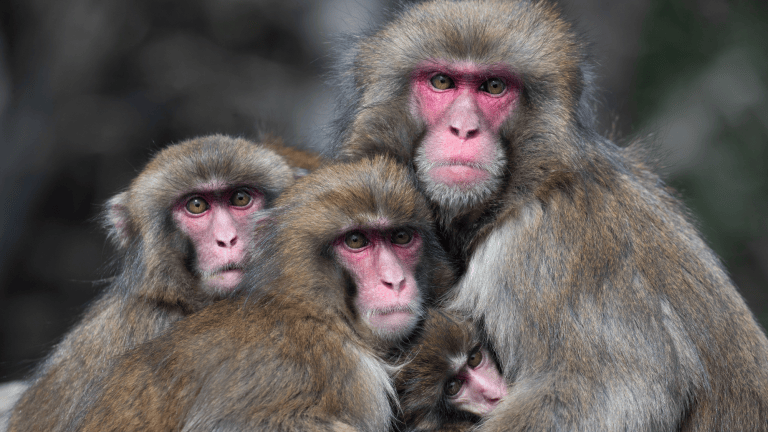
Lend a Hand Junk DNA can help explain divergences between humans and apes. treehouse1977 (CC Licensed)

For decades, people referred to the non-coding bits of DNA between genes as junk DNA. Then, in the eighties scientists discovered that some of that junk DNA served an important purpose. The DNA attracted or repelled transcription factors and RNA, greatly enhancing or inhibiting the potency of adjacent genes. Now scientists have just found that one of those gene enhancers may be what separates humans and chimps.

Researchers from U.S. Department of Energy's Lawrence Berkeley National Laboratory, publishing online in the most recent issue of the journal Science, placed human, chimpanzee and macaque versions of the enhancer into mouse DNA. The scientists also added a gene that would release a blue dye to show where in the mouse fetus the enhancer was most active. When the mice developed, the researcher saw that it was active in the hands, feet and throat. Additionally, the mice with the human version showed the most activity, with the chimp version producing some activity, and the macaque version producing very little.

The researchers then showed that the difference between the human and chimp versions of the enhancer result from a difference of only 13 nucleotides, a far larger number of changes than would be expected had the mutations been the result of drift rather than selection. The location of enhancer activity highlights the importance of the difference. Our hands, with their opposable thumbs, our feet, evolved for bipedal locomotion, and our throats, which allow us to speak, make up three key differences between humans and all other apes. Because of its role enhancing the genes that regulate the development of those regions, the evolution of this gene enhancer must have been a key step in the evolutionary separation of the human/chimpanzee common ancestor. Furthermore, by following the presence of this particular gene enhancer, researchers should be able to locate which genes are responsible for our differences from chimps and when they evolved. Mapping out humanity's divergence from apes? Not bad for a bunch of DNA once thought of as junk.

7 Comments

Although the Science article described above is fascinating, some aspects are misrepresented in the PopSci report. ALL primates have opposable thumbs (and big toes, if they aren't humans). This includes the apes (Chimpanzees, Gorillas, Orangutans, Gibbons), the monkeys (like Baboons and Macaques), and the lemurs and lorises. In fact, having an opposable thumb is one of the attributes that distinguishes primates from other mammals. There are some more subtle aspects of the human hand and its precision grip that separate us from other primates, and the genetic differences reported in this study may contribute to those. BUT, having an opposable thumb is not uniquely human.

Nothing is junk, all are have a meaning, we are must find out the meaning of all our DNA.

http://tinyarticle.com

thanks for the share. Really awesome. I felt really sad when your article came to the last page. great work you have done and made us to know about that.

www.AdvanceLoan.net

Great infos!

There are some more subtle aspects of the human hand and its precision grip that separate us from other primates, and the genetic differences reported in this study may contribute to those. BUT, having an opposable thumb is not uniquely human.

John,
www.watchaliceinwonderlandonline.org/

Intresting! I didn't know, that people and monkeys are same.

your comments system works with lags


June 2013: American Energy Independence

Five amazing, clean technologies that will set us free, in this month's energy-focused issue. Also: how to build a better bomb detector, the robotic toys that are raising your children, a human catapult, the world's smallest arcade, and much more.


Online Content Director: Suzanne LaBarre | Email
Senior Editor: Paul Adams | Email
Associate Editor: Dan Nosowitz | Email
Assistant Editor: Colin Lecher | Email
Assistant Editor: Rose Pastore | Email

Contributing Writers:
Rebecca Boyle | Email
Kelsey D. Atherton | Email
Francie Diep | Email
Shaunacy Ferro | Email

circ-top-header.gif
circ-cover.gif