Anatomy of a Serial Killer
America is haunted by 100,000 missing persons and 40,000 unidentified sets of remains. Only one lab can truly connect the lost and the dead—and it’s revealing the secrets of serial killers in the process
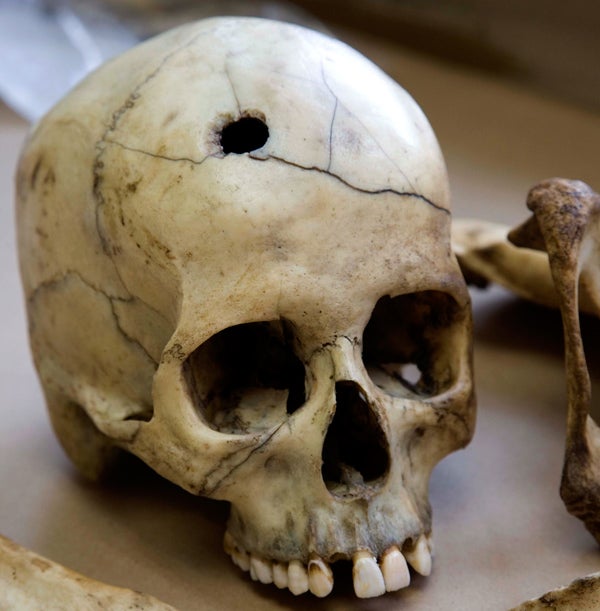
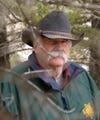
Like a cowboy loosely holding the reins, Larry Weatherman steers up Deer Creek Road with his left hand on the wheel, his right arm ready at his side. His upper body rocks with the motion of the pickup as he navigates the dirt road’s gauntlet of potholes and rocks. Since his retirement from the Missoula County Sheriff’s Department in 2000, Weatherman has adopted the bushy white mustache and Stetson of a gentleman rancher. But on a snowy Saturday in March, he has driven his two passengers the 50 miles down from his 20 acres above Montana’s Seeley Lake to revisit the forlorn woods that served, three decades ago, as the dumping grounds for Montana’s most notorious serial killer.
A gust of snow hits the windshield. Through the swirl, Weatherman spots a narrow break in the pine and fir trees lining the road. He pulls into a shallow ditch and opens his door. “He liked to take his girlfriends up here to party,” he says.
Weatherman was a young officer in 1974 when he investigated the first in a series of gruesome murders that ended a way of life in Missoula, a place where people had left their doors unlocked and women felt comfortable walking home alone from the local bar. The first victim was a preacher’s wife found gagged, bound, and shot in the basement of her home, her husband’s handgun jammed between her legs. In addition to questioning the husband, Weatherman briefly suspected a high-school boy who neighbors had spotted in the victim’s backyard that day. A grand jury found insufficient evidence to charge either suspect.
Over the next 12 years, the seemingly random murders continued. Three teenage girls and a married couple were killed, and the town suffered a spate of home intrusions thought to have been thwarted rapes. Then the improbable happened. In 1986 the husband of a would-be victim, already trussed and stabbed, managed to break free and kill 30-year-old Wayne Nance in a bloody struggle. Nance, a baby-faced furniture deliveryman and part-time bouncer, was the high-schooler Weatherman had suspected in 1974. Postmortem searches of Nance’s bedroom and his father’s house uncovered evidence of at least three additional murders and of other break-ins.
But hope for further information about the murders died with Nance. Weatherman was left with the unidentified remains of two young victims. One of them was “Debbie Deer Creek,” a teenager whose skeleton he had chiseled out of a frozen grave alongside Deer Creek Road some 21 months before Nance’s death. Several strands of dyed hair enabled Weatherman to connect her to a photo of a dark-haired drifter that bar patrons knew as “Robin” before she disappeared a few weeks after moving in with Nance. Weatherman sent out scores of bulletins to the FBI and regional law-enforcement agencies. But the girl’s picture and street name failed to locate family.
It would take more than hair strands and a faded picture to identify Debbie Deer Creek. It would take technology—still two decades away—that could extract minute amounts of fractured DNA to reveal an indelible link to a victim’s family. It would take one brother’s unceasing search to find out what happened to his runaway sister. And perhaps most of all, it would take the U.S. Department of Justice’s slow but horrifying realization that there may be far more serial killers on the loose in America than anyone had ever expected.
For two decades, a facial reconstruction made from Debbie Deer Creek’s skull sat on top of Weatherman’s bookcase facing that of another girl, “Christy Crystal Creek,” discovered by a hunter two miles farther up the same mountain road above Nance’s home. Weatherman is still troubled when he thinks of the nameless girls. “I know somebody once cared for them,” he says.

Marci Bachmann
The Silent Missing
Debbie and Christy are far from alone, and the same may be said for the likes of Wayne Nance. In a recent issue of the scientific journal Homicide Studies, criminologist Kenna Quinet wrote that conventional calculations seriously underestimate the number of serial murder victims. “The problem may be 10 times worse than we imagined,” she says. Instead of 180 victims a year in the U.S., there may be as many as 1,800.
Quinet, a nationally renowned homicide expert at Indiana-Purdue University Indianapolis, bases her conclusions on simple arithmetic. According to the Department of Justice, up to 40,000 sets of unidentified human remains sit in police-evidence lockers and medical examiners’ offices across the nation. If resolved cases are any guide, the majority are murder victims. Against this, Quinet factors the homicides suspected in a significant proportion—as much as 20 percent—of missing-person cases, more than 100,000 of which remain open at any time in this country.
Quinet bolsters her new estimates with evidence of the lengthy careers of the serial killers who are eventually caught and convicted. “Typically, these killers operate under the radar for years, even decades,” she explains. Studies show that male serial killers average six to 11 victims over a nine-year period. Female serial killers (primarily health-care workers) average seven to nine victims over the same window. And that’s just those who get caught. “I would guess that at any given moment,” she says, “there are at least two people in each state committing serial murder”—more than 100 serial killers on the loose. Washington State is currently tracking at least four: the so-called 22-Caliber Killer, the Index Killer, the Lewiston Valley Killer and the Snohomish County Dismemberment Killer.
Meanwhile, other serial killers are operating too randomly or infrequently to generate a pattern or are cunning enough to prey on those unlikely to be missed. Quinet calls these possible victims America’s “missing missing,” the tens of thousands whose disappearance is not taken seriously by law-enforcement agencies. They include those that law enforcement assumes to be “missing” by choice: runaways, transients, prostitutes, and anyone who has an outstanding bench warrant (the irony, Quinet notes, is that the warrant can be for the missing person’s failure to appear in court).
John Morgan, deputy director for science and technology at the National Institute of Justice, the research arm of the Department of Justice, believes that part of the problem is the increasingly transient nature of American life. “We live in a more fragmented society,” he says. “A lot of homicides that occur involve strangers.” And for a greater number of the victims, living far from their hometowns and disconnected from a social network, their absence won’t be noticed, or they will be dismissed as having simply moved on. As a result, Morgan says, it’s now less likely “that a particular homicide will be resolved and the killer brought to justice.”
The first step in solving these crimes—even before a detective can start to connect the clues—is connecting the bodies to the missing. “After all,” Quinet says, “it’s hard to conduct a murder investigation when you don’t know who the victim is.”
One in a Million
Derek Bachmann was 14 in 1984 when he helped his 15-year-old sister, Marci, pack her bags and run away from their Vancouver, Washington, home. “She told me my stepfather was touching her, making her touch him,” he recalls. “I told her, ‘You’re right, you need to get the hell out of here.’ ” That was the last time he saw her. “The fact that I helped her pack has always haunted me,” says Bachmann, now a Web marketer living outside St. Louis. “I mean, there were five different serial killers in the Northwest at the time.” (In fact, there were at least eight.)
Investigation
In 1991 Bachmann began to search for his sister, if only to confirm his fears. “I think I knew that if Marci was alive,” he says, “she would have contacted me.” He called and wrote to scores of homicide task forces and vice squads across the country, the latter in case Marci had fallen into streetwalking. “I tried everything,” he says. “I tried psychics. I hired a private investigator, spent $10,000 on him. Got nothing.”
By 2000, Web sites such as the Doe Network offered Bachmann a new resource. Maintained by amateur detectives and families of the missing, these cyber-bulletin boards feature case histories and, when possible, photos or artist re-creations of the unnamed dead, typically gleaned from news and police reports. Bach-mann began spending all-nighters at his computer. His obsession put a strain on a short-lived marriage, he admits with a slow shake of his head. “The atrocities I’ve seen looking for my sister.”
Among them was a flower-adorned memorial page dedicated to a girl named Robin, with a photo of a dark-haired girl in glasses under the banner “Do you recognize this face?” Bachmann looked again. There was something familiar about the mouth and nose. “I showed it to my relatives,” he recalls. “They said, ‘No way. Marci never wore glasses.’ ” Besides, the hair color was wrong. Still, a few months later, he dialed the number provided for the Missoula County Sheriff’s Department and left a message for Captain Greg Hintz. No return call.

The Brother
When Marci left home in 1984, Seattle’s Green River Killer was at the height of a spree that would eventually claim the lives of as many as 49 women, mainly prostitutes and teenage runaways. Bachmann wrote to King County detective Tom Jensen, head of the Green River Task Force, who promised to compare Marci’s dental records with the impressions taken from the four unidentified victims in his custody. But no dental records were available, and Jensen added Marci’s file to those jamming his filing cabinets.
In 2001, King County sheriff’s deputies arrested 53-year-old truck painter Gary Ridgway for the Green River killings; two years later, he was sentenced to 48 consecutive life terms. The work of the Green River Task Force was finished. But Jensen still had more than 100 missing persons and suspected homicides in his files.
Jensen’s captain assigned three detectives from the disbanded task force to review the cases and make a final effort to close them. And so, in the summer of 2005, detective Raphael Crenshaw called Derek Bachmann in Missouri: Was Marci still missing? Crenshaw told him about a new program that attempted to match family DNA against unidentified remains. Bachmann was eager to supply his, but Crenshaw also needed samples from his parents.
“I knew my dad would take a lot of convincing,” Bachmann says. But he did convince his mother, who still lived in Washington. The next week, she rubbed a cotton swab against the inside of her cheek, sealed it in a plastic baggie, and sent it to the sheriff, who shipped it on to Texas.
Connecting DNA’s Dots
When Nance and Ridgway were going about their grisly business, no method was available to connect the missing, like Marci Bachmann, to the dead. But there’s now a lab, in Fort Worth, Texas, that can close the gap.
It’s another March morning, and a steady rain has Fort Worth’s Trinity River running high through the city’s cultural district. On the other side of Camp Bowie Boulevard, employees and students are leaping over the ponds growing in the driveway of the University of North Texas Health Science Center. The third floor of this beige stucco high-rise is home to the university’s Center for Human Identification, the only academic DNA lab in the country dedicated to identifying human remains.
In 1989, molecular biologist Arthur Eisenberg began using DNA to settle questions of identity in cases ranging from paternity to homicide. For the next decade, Eisenberg developed many of the procedures and standards used in DNA testing today. Around 2000, he began to focus on missing persons, and in 2001, he and his staff built a state DNA database. Since then, the center’s capacity has grown to handle cases from across the country.
Mapping
The victim specimens that arrive at the center range from well-preserved femurs (thigh bones) to broken slivers of bone that have been sitting inside police warehouses for decades. It’s far easier to extract DNA from recent samples, and the center prioritizes easy identifications. Well-preserved or relatively fresh remains for which a family connection is already suspected take precedence over colder cases with no leads. The center has been able to solve one in every four of its cases.
Still, it’s the difficult cases—the shots in the dark—that tantalize, says the center’s project manager, Rhonda Roby. She speaks from experience, having spent her career developing methods for extracting DNA from severely degraded remains. In 1991 Roby began working in the Office of the Armed Forces Medical Examiner, where she helped develop methods for identifying the skeletal remains of American soldiers from Vietnam, Korea and World War II. In 2001 she flew to New York City to help set up protocols for the unimaginable task of identifying more than 20,000 pieces of human tissue retrieved from the ruins of the World Trade Center. She has also helped identify victims of Chile’s Pinochet regime and, in a curious aside, the remains of Nicholas II and the Romanov family of tsarist Russia.
In 2004, shortly before Roby’s arrival, the center achieved its first successful DNA extraction in an extremely cold case. The remains—a slender, yellowing femur—had arrived by FedEx. Forensic analyst Lisa Sansom cataloged the bone in the center’s database as F2775.1EC and carried it into the lab’s bone room, behind a door flagged “Forensic Low-Copy Area. AUTHORIZED PERSONNEL ONLY.” The amount of genetic material retrieved from old bone tends to be so small as to be easily overwhelmed by the ambient DNA of a floating skin flake or a saliva droplet. Inside the Low-Copy Room, analysts don full gowns, face masks and surgical gloves. A positive-pressure system keeps “dirty” outside air from flowing in, and analysts have their genetic profile entered into the center’s DNA database so that those will be excluded from target sequences.
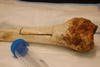
The work differs from the kind of DNA fingerprinting used to identify biological evidence left at a crime. It is extremely difficult—sometimes impossible—to extract conventional nuclear DNA markers from an old bone. The center has become skilled in extracting and analyzing a hardier but less-known source of DNA: that of the mitochondria that reside in our cells.Except for identical twins, each person’s nuclear DNA is unique. But each of us has another set of DNA located outside the cell’s nucleus and inside the mitochondria, the tiny organs that supply a cell with energy. We inherit mitochondrial DNA, known as mtDNA, directly from our mothers, and we share it with our siblings. It’s not unique, but mtDNA is enough to narrow the search for a victim’s family.Sansom spent almost an hour scrubbing and sanding the femur’s surface before attempting extraction. Few of the bones here contain marrow, which dissolves in the first two or three years after death. F2775.1EC had spent some 20 years in a box inside a police warehouse, so DNA would have to come from the scant cellular material inside the bone’s white scaffolding. She used a woodworker’s dremel to cut a rectangular window in the thickened area of bone just below the femur’s rounded head, where the thigh muscles once attached. Next she chilled, pulverized, and blended the sample inside a freezer mill loaded with sterilized ball bearings. Using an automated chemical process, she broke open the bone cells, released their genetic contents, and washed, concentrated, and purified the extract.

Dark History
For genetic analysis, Sansom first had to increase the DNA to detectable amounts using a process called DNA amplification. Forensic software translated the results into a four-color graph of peaks and troughs. Drawing on her training and experience, she translated each graphic peak into one of the four nucleotide letters in the DNA alphabet. It took her about a week to process sample F2775.1EC.When the amplification signals aren’t clear, the chances for a reliable match plummet. In the worst case, the sequence data prove ambiguous, and workers must repeat the extraction and analysis. Sansom got her sequence on the first try. She uploaded it to the center’s DNA database. No hits. Then she uploaded the data to the FBI’s national missing-persons database. Again, no hits. Not yet.
Scaling the Backlog
In 2004 the center received a major investment to help realize Arthur Eisenberg’s goal of establishing a National Center for the Identification of Human Remains. It was the first of several National Institute of Justice grants given over a five-year period totaling more than $7 million. The center’s mission was to perform DNA testing on unidentified skeletal remains and “family reference” samples free of charge for any local or state law-enforcement agency that requested it. It’s now a clearinghouse at the heart of an effort to address the thousands of missing persons and unidentified remains discovered each year—what the justice department calls “America’s silent mass disaster.”
“The World Trade Center attack devastated this country with its massive loss of life,” Eisenberg says. “But if people only knew how many more unidentified murder victims there are . . . If you go back even 20 years, there are literally hundreds of thousands of families who have missing loved ones.” Even with generous funding, progress will ultimately hinge on making identifications cheaper, faster and more definitive, he adds. Laboratories such as the Center for Human Identification will be swamped now that more states mandate the collection of family-reference samples with missing-person reports. The center, Eisenberg says, must advance the technology used to identify human remains as it goes. By way of example, he cites a new program that can use broken bits of traditional nuclear DNA to identify weathered bones.
The tests scan some 40 lengths of highly fragmented DNA for single-nucleotide polymorphisms (or SNPs, pronounced “snips”), one-letter variations in the genetic code. The SNPs are then combined to create unique DNA fingerprints. If the center’s tests are successful—and Eisenberg says they’re making rapid progress—SNPs will allow forensic analysts to identify old bones more reliably than they can using mtDNA. “If SNPs pans out, it will be another revolution in how we deal with homicide,” the National Institute of Justice’s Morgan says. “There will no longer be a reason to have unidentified remains.”
In addition to testing such systems, the Center for Human Identification is collaborating with other institutions in the effort to improve identification. It is working with the University of Tennessee, for example, to automate DNA analysis and speed up identifications for all the investigators and families tortured by a cold case. Right now, the center’s tests produce a chart of several hundred peaks and valleys that a trained forensic analyst must read one nucleotide “letter” at a time. A second analyst then reads it again to verify its accuracy. Although complete automation of the process remains a distant dream, Tennessee scientists have designed a software program that can read “perfect” sequences, or unambiguous graphics. Soon it may be able to replace the second read and thus slash personnel costs and turnaround time.
Analyze
But extracting and reading DNA from unidentified remains is only half the challenge. That DNA must get linked to the right missing person. What the country has sorely lacked, Morgan says, is a central repository for information such as photos, fingerprints, dental records, DNA sequences and other identifying information on both missing persons and unidentified victims. Make that database searchable, and it becomes a profitable tool for homicide detectives. Open it to the public, and it becomes a merciful resource for the thousands who currently spend their nights combing disturbing Web sites.
In 2005 the U.S. Attorney General’s office formed a Missing Persons Task Force to develop the National Missing and Unidentified Persons System, or NamUs (identifyus.org). In 2007 the first part of the system—a searchable database of unidentified human remains—went live. Last year, the program opened up a national database of missing-person reports. And later this year, NamUs plans to connect the two, with a cross-searchable database that automatically matches the missing and the dead.
The Match
Before the NamUs database is complete, though, researchers at Fort Worth’s Center for Human Identification have to rely on meticulous information-gathering and luck. The center has put together a DNA-collection kit for family members of the missing, which it sends out free of charge to the nation’s police and sheriff’s departments. Law-enforcement officers mail cheek swabs collected from the family back to the center, where workers analyze them in batches of up to 80 to yield both nuclear- and mitochondrial-DNA profiles of parents and siblings.
As each family member’s DNA fingerprint comes off the line, it too goes through the databases to search for approximate matches among the dead. The process is spellbinding, claims forensic analyst Melody Josserand. Any of thousands of mysteries could be solved at that moment. “Even though I do searches 30 or 40 times a week, I’ve never walked away,” she says. “I sit here with bated breath.”
Josserand remembers the day in March 2006 when Unidentified Person F2775.1EC flashed across her screen. She had just uploaded family-reference sample F3352.1US, submitted by the King County Sheriff’s office. Like the reels of a slot machine, twin columns of numbers rolled down her monitor. The rows for six out of six mitochondrial-DNA base pairs flashed green. A perfect match. But mtDNA alone, she knew, wasn’t definitive. Fortunately, back in 2004, Sansom was able to pull seven markers for nuclear DNA from the victim’s bone sample. Josserand compared the family-reference sample with that. All of them matched.
Josserand retrieved the folder for Unidentified Person F2775.1EC and checked it against the file for the family-reference sample. “The metadata all matched,” she says of Debbie Deer Creek’s physical descriptors: female; approximate age, 17; weight, 125; height, 5’7″. Estimated date and place of death: 8/19/1984, Missoula, Montana.
Haunted
From the missing-person report, Josserand read the name: Marcella Bachmann. Last contact: 5/1984, Vancouver, Washington. “All I could think was, ‘I wonder how this poor girl got from here to there?’ ” she says. Still, certainty depended on more family samples, ideally from the biological father. So the call went out to Derek Bachmann through Detective Crenshaw in King County. Crenshaw didn’t say anything about the bone from Missoula. “I gave him the spiel I give everyone, so as not to get hopes up,” he says. ” ‘The lab wants more DNA samples to make sure that if there’s a hit, they can narrow it down.’ “
“I called up my dad,” Bachmann says, “and flat-out told him, ‘You have to do this. I have to know.’ “
On March 22, 2006, the Center for Human Identification received two FedEx envelopes, one containing a cheek swab from Bachmann, the other from his father. The father’s nuclear DNA matched all of Debbie Deer Creek’s nuclear-DNA markers. To underscore the identification, Derek’s mtDNA, like that of his mother, proved identical.
Following protocol, the Center for Human Identification relayed the news to the National Center for Missing and Exploited Children, which in turn called Missoula and Captain Hintz, who had submitted Debbie Deer Creek’s femur after Larry Weatherman’s retirement.
“I’ll never forget his call,” Bachmann says. “I was in a poker tournament and had to step outside.” As Hintz spoke, Bachmann suddenly realized that he didn’t want “closure” after all. “I instantly grasped the idea that he was finally calling back about the Web-site photo. I told him I’d been thinking about it, that the picture couldn’t have been my sister,” he recalls. “Well, he disabused me of that.”
The Final Identification
Almost exactly two years later, on this snowy March day in Missoula, Weatherman waits for Derek Bachmann to step out of the county truck they have borrowed for their second visit to the place where Weatherman unearthed Marci’s frozen remains on Christmas Eve 1984.
Bachmann shivers inside his leather jacket. The snow quickly saturates his sneakers as he follows the retired lawman a quarter of a mile through the woods to a bluff above the Clark Fork River. A grove of spindly conifers still surrounds the mossy depression that once held Marci’s body. “It was a lot harder the first time,” Bachmann says of the visit. “Yeah,” Weatherman acknowledges. “That was a hard one for you.”
From beyond the bluff comes the rumbling sound of construction—or rather, deconstruction—echoing up from the Milltown Dam below. A strip of orange and yellow surveyor flags marks a path past Marci’s gravesite to what will be a viewing platform directly above a river-restoration project. In addition to tearing out the old dam, the county plans to build a small park. Construction is due to begin in the spring. Bachmann has come back, in part, to ensure that nothing desecrates Marci’s spot. Perhaps he can even persuade the county to raise a small memorial, he proposes. Weatherman nods in agreement.
“I suppose you’re ready to put all this behind you,” Bachmann offers as the men head back to the truck. “I don’t suppose it ever will be,” Weatherman says, “until we get Christy identified.” At press time, DNA from Christy’s femur had been entered into the Center for Human Identification’s database of cold-case remains, as well as the national DNA database. She’s ready to be found.
Jessica Snyder Sachs is the author of Good Germs, Bad Germs_, now out in paperback._