The New Caledonian crow is a member of the corvid family, which also includes ravens, jays, and magpies. Corvids are considered the most intelligent bird species, and their tool-making abilities rival or surpass those of great apes--in fact, their puzzle-solving skills are about on par with a 5-year-old human child. Crows are the only non-primates to consistently complete the "stick and tube" puzzle, in which a piece of food is placed halfway down the length of a clear tube. A long stick is placed nearby. To get the food, the animal has to use the stick to poke the food out of the tube. Crows complete this task easily and spontaneously, without having to watch another crow do it first--and even without having seen a clear tube before.
The New Caledonian crow is also the only non-human species to invent new tools by modifying existing tools. It then passes those new creations onto other crows in its social group. The crow is able to use tools to retrieve other tools, and it can create tools out of materials it has never seen in the wild--again, the only non-human to do so. In an experiment at the University of Oxford, two crows were presented with two types of wire, one hooked and one straight. The hooked wire was needed to retrieve a tiny pail containing food from a tube. But when one of the crows grabbed the hooked wire and "made off," the second crow bent the straight wire into a hook and snagged the food. These crows had never seen wire before.
I've always enjoyed Popular Science's articles, but it's very rare indeed that something doesn't get in the way of my thoroughly enjoying them and this article is no exception.
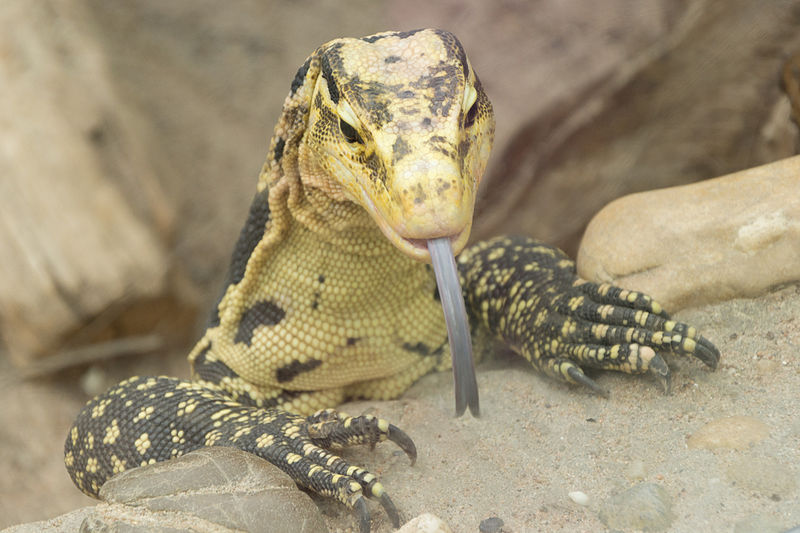
Whoever wrote the clunky sentence "We tend to not think of lizards as particularly intelligent, and many aren't--but the scary dinosaur-like monitor lizard is highly intelligent" needs to attend a decent remedial English class. "We tend to not think . . ."? Why not "We don't tend to think . . . "?
Such sloppy fourth-grade writing is particularly annoying when it comes from a supposedly professional writer. Why would anyone pay for "We tend to not think . . ."? Who would have the chutzpah to accept money for having written that?
Education shouldn't focus on science to the detriment of all other areas of learning. Communicating effectively about science as important as science itself.
Cavan, are you saying that you've never taken a school course in which grades were given -- at least in part -- by verbosity (e.g., "I want a 4 page [or 2,525 word] exposition on "The Fog Index" by tomorrow.")?
Or, or that matter, have you ever written for pay? Generally, pay is by word count (as in so many cents per word).
I've done both -- particularly when working for the Government...!
Sorry, "Or, or that matter, have you ever written for pay?" should read "Or, for that matter, have you ever written for pay?"
42