This Week in the Future, August 8-12, 2011
Look at all this amazing stuff on earth! Olympic-level sprinters with no legs, mothers with superhuman strength, and gangsta-rapping sparrows,...
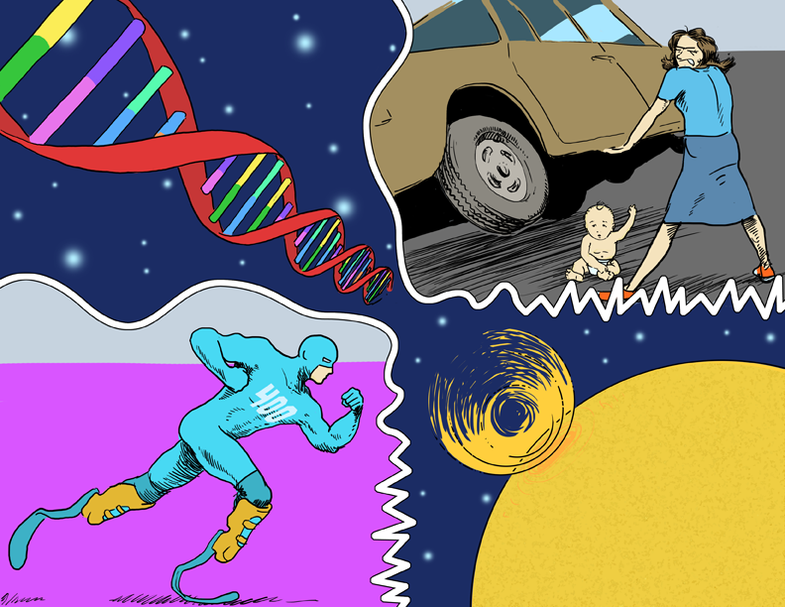
Look at all this amazing stuff on earth! Olympic-level sprinters with no legs, mothers with superhuman strength, and gangsta-rapping sparrows, among so much else–and it all might have come from space.
Want to win this gorgeous a Baarbarian illustration, on a t-shirt? It’s easy! The rules: Follow us on Twitter (we’re @PopSci) and retweet our This Week in the Future tweet. One of those lucky retweeters will be chosen to receive a custom T-shirt with this week’s Baarbarian illustration on it, thus making the winner the envy of their friends, coworkers and everyone else with eyes. (Those who would rather not leave things to chance and just pony up some cash for the t-shirt can do that here.) The stories pictured herein:
- Double-Amputee Sprinter Oscar Pistorius Will Be First Amputee to Compete in the World Championships
- FYI: Can a Woman Really Lift a Car Off Her Pinned Child?
- Video: This Morning’s Solar Flare Was the Biggest Seen In Years
- Found: A Batch of DNA Molecules That Seem To Have Originated in Space
And don’t forget to check out our other favorite stories of the week:
- Archive Gallery: A Vintage Guide to Enjoying Your Summer Vacation
- Why Baccarat, the Game of Princes and Spies, Has Become a Target for High-Tech Cheaters
- Spy vs. Spy: Casinos Can’t See The Cameras Hidden Up Gamblers’ Sleeves
- A Personal Beer Brewery That Spouts Pro-Quality Suds In A Week
- NASA Puts Its Money on Quantum Communications, Plasma Propulsion, and Other Future Tech
- Scientists Create Sperm-Free Mosquitoes to Prevent Malaria
- Computer Models Show that Towing an Iceberg to a Drought Area Could Actually Work
- Exploring the Serious, Complicated Relationship Between People and Objects Through Art
- NYPD Creates Facebook-Police Task Force to Mine Social Media for Clues
- Video: Testing Project Enclosures Under Extreme Conditions (Read: Fire, Water, and Smashing)
- DARPA’s HTV-2 Launches, Contact Lost, Status of Mission Remains Unclear [Updated]
- U.K. Prime Minister David Cameron Wants a Master Kill-Switch for Social Networks
- ‘Epidermal Electronics’ Paste Peelable Circuitry On Your Skin, Just Like A Temporary Tattoo
- Testing the Goods: The Midnight/Shot, a Pocket-Sized Infrared Camera
- Archive Gallery: A Century of Ambitious Amphibious Vehicles