Smartphone makers, wireless carriers, and credit card companies have all proclaimed their love for near field communication over the last week. And we share their enthusiasm: NFC has a lot of exciting potential. Soon enough, we'll be able to make payments, unlock our houses, stop worrying about our cumbersome Wi-Fi passwords, and hop on the subway without a transit pass, all from our phones. Here's how.
NFC is a short-range, low-power communications protocol between two devices. One device, the initiator, uses magnetic induction to create a radio-wave field that the target can detect and access, allowing small amounts of data to be transferred wirelessly over a relatively short distance (in NFC's case, the distance must be less than 4 inches). If that sounds a lot like RFID, the tech used by, for example, wireless toll-collection devices like EZ-Pass and FasTrak, it's probably because NFC is pretty much an evolved form of RFID. The difference is that RFID is a one-way street: Your EZ-Pass transmitter beams your $4.25 toll to the tollbooth's receiver, and that's the extent of the transaction. But, crucially, NFC is two-way, allowing your NFC-enabled gadget to both send and receive information.
Compared to other wireless protocols like Wi-Fi or Bluetooth, NFC is exceedingly slow, with a maximum data transfer speed of 0.424 Mbps, less than a quarter that of Bluetooth. But NFC has several key advantages over Bluetooth: It consumes a mere 15 mA of power (practically nothing for today's jumbo smartphone batteries), it has the possibility for greater security (more on that in a bit), and it forgoes the involved "pairing" process of Bluetooth entirely. Bluetooth needs to be configured; NFC is completely effort-free, requiring nothing more than a tap.
The three main concepts that the NFC Forum, the main association of companies promoting NFC, is pushing are "sharing, pairing, and transaction."
Transaction is the most obvious of the three, and the one we'll probably start seeing first. A smartphone with an NFC chip could very easily be configured to work as a credit or debit card. Just tap your phone against an NFC-enabled payment terminal, and bam, money spent, consumerism upheld, everyone's happy. But that's really only the start of what NFC can do in terms of transaction.
The other contents in your wallet aren't safe from NFC takeover, either, which is sure to enrage the formerly bulletproof wallet industry. NFC could work well for public transit passes, library cards, hotel room keycards, and office building passcards. Even government-issued IDs like driver's licenses and passports can be replaced or augmented with NFC, though the security concerns there could push such applications further into the future. But the point is, it's all possible, and relatively easy. Even keys could someday become a relic of the past, replaced by the tap of a phone to a lock.
"Sharing" is a little bit trickier, due to the limitations of the tech. Mostly, it'll be used much like QR codes--(the square barcode-like tags scannable by your cellphone camera--are used now, just without the need to open an app and take a picture. An active NFC-enabled device like a smartphone can interact either with another active NFC device or with a passive tag. That tag is basically just a little chip that's embedded with some kind of data to transfer--maybe it's in a printed ad, and provides a URL for more information. Those passive tags don't require power, either, instead relying on the RF field created by your phone, so you can just tap your phone to the tag and have a little bit of data--often a URL--beamed to your phone.
Debbie Arnold of the NFC Forum says "the concept of tag-reading is really exciting to me," as those passive, unpowered tags are very cheap and could be embedded in all kinds of places. Tap your phone against a tag on an appliance to get its warranty info, or on a pack of cigarettes to get some horrifying government-sponsored images of smokers' lungs. You know, for fun.
With its sub-0.5-Mbps speeds, you won't be beaming high-def video with your smartphone, so sharing of files will be limited to smaller items like photos, documents, and URLs (which, in our cloud-connected environment, is often all you need). But say you do want to send a fairly large file like a video. NFC can come in handy there too--as a bridge to a more intensive wireless protocol.
Which is where the "pairing" concept comes into play. Tap your phone to another phone to instantly configure a Bluetooth or Wi-Fi connection, without the need for passwords. Or tap your phone against your new router, and never again have to worry about that tiny scrap of paper with your deliberately complex Wi-Fi password that you could've sworn your roommate taped to the freezer. Or tap one phone to another to instantly exchange contact information, even when there's no available 3G connection.

NFC has some pretty amazing possibilities, but the reason every company from Google to Visa to McDonald's to T-Mobile is singing its praises has nothing to do with your ability to remember your router's password. In their eyes, NFC is always bracketed by dollar signs, with thoughts of direct advertising and real-time customer data causing their brains' mouths to mind-water (it's a serious condition). Pay for a purchase with your NFC-enabled phone, get a coupon. Tap your phone to an NFC-enabled movie poster, get a special offer for a 1PM Tuesday showing of Gnomeo and Juliet: The Squeakquel (this will be in the near future, obviously). Use NFC's mobile payment capabilities, and you're likely to get coupons, promos, samples, or other various digital perks beamed back to you in response.
But that doesn't explain why the business types are quivering in their business suits about NFC. The answer: It's all about advertising.
When Google's soon-to-be-ex-CEO Eric Schmidt recently took the stage at Mobile World Congress, he was barely able to contain his excitement. Google, let us recall, is in the business of ads and customer data. When you make an NFC purchase, your phone isn't just transmitting your bank numbers for payment. It can also transmit your buying habits and demographic information. That sounds terrifying, but for the most part that kind of information is already out there and being used every time you buy an app, or anything from Amazon, or search for a product on Google. NFC just has the potential to make that data available instantly and in real time, which is exceedingly valuable to marketers and retailers and other people who care that you prefer Five Guys to Shake Shack. And instead of coupons, you might get beamed advertising instead--intensely targeted ads tailored to your latest purchase.
Of course, it's unlikely that your personal data would be given to merchants without your knowledge -- at least by Google, which has a history of providing opt-out options for advertising like that. But if would certainly be possible.
At MWC, Schmidt said that "NFC has been around for a long time, but everything has just started to come together," which is mostly true. Magnetic induction for data transfer has been around for quite a few years, and mobile payments via magnetic induction have even become the de facto standard in Japan. The Mobile FeliCa (Felicity Card) has been in wide use in Japan, packaged into handsets from DoCoMo and Sony, but according to Debbie Arnold, spokesperson from the NFC Forum, systems like Mobile FeliCa "were more of a precursor to NFC." Mobile FeliCa is a one-way transfer card, a simpler form of RFID, that requires no power. "Nobody wanted to put up a product until NFC was ready," says Arnold, and it appears that it's ready now.
In late 2010, the NFC Forum finalized its first wave of technical specifications, as well as announcing its certification process for devices. Debbie Arnold notes that the program "gives manufacturers a means of confirming that their devices comply with NFC Forum specifications, and helps to ensure interoperability." It was only last year that tests and pilots were undertaken, which in turn led the banks, mobile carriers, and hardware manufacturers to jump on board and start really putting the web of NFC together.
It's generally assumed that the introduction of NFC into smartphones will require a massive infrastructure overhaul, but that may not be the case. NFC, as an evolved form of RFID, is actually compatible with existing RFID terminals, which are distributed by companies like Visa and MasterCard and are present in businesses from the international (McDonald's) to the local (my childhood sandwich purveyor, Wawa). For your bog-standard wireless payment, no fancy new hardware will be necessary.
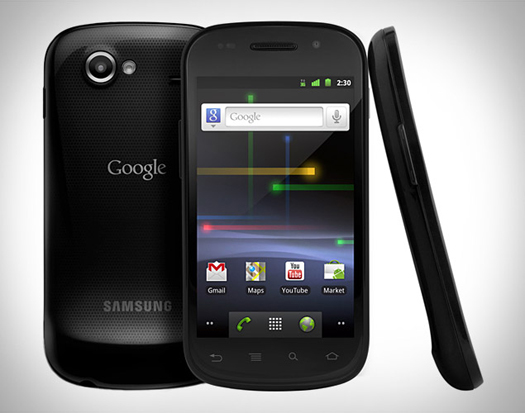
In terms of phone hardware, you can expect to see NFC in the next generation of smartphones--basically, the ones after the ones that are about to hit the market. Google built some pretty elaborate NFC capabilities into the latest release of Android (version 2.3 Gingerbread), and the NFC Forum counts such high-profile companies as Sony, Nokia, LG, Motorola, Qualcomm, and RIM (BlackBerry) among their principal members. In the last week alone, we've gotten major commitments from Google, RIM, and Visa, with more surely to come. At the moment, only Google's Nexus S has an NFC chip (and that's fairly useless at the moment), but future Android, BlackBerry, and probably iOS devices will boast NFC abilities: rumors of an NFC-capable iPhone 5 have recently begun to surface.
According to a very recent leak, BlackBerry is partnering with Bank of America to offer NFC retrofitting as soon as this spring, and their solution is pretty clever: Instead of waiting for a new phone, BoA will simply provide an NFC-enabled replacement battery door for a few BlackBerry models, accompanied by a software update that will allow mobile purchases. That won't work for the iPhone and a few Android devices which lack replaceable battery doors (or, um, replaceable batteries), but an NFC-enabled phone case could accomplish the same feat.
Ah, security. NFC is inherently worrisome in that it promotes the transmission of very sensitive data through the air, like magic, and that data could theoretically be snatched. The NFC protocol itself has surprisingly few actual safeguards against data snatching--and the protections the NFC Forum does highlight are simply logical extensions of the physical nature of the protocol. For example, that 4-inch transmission zone would theoretically make it a challenge to steal data wholesale without a crafty plan. There's also the ability to simply turn NFC off when you're not using it, which could stem some piracy, if you remember to do it each time. But that's not really enough; it's like declaring a wallet generally safe just because it's difficult for a pickpocket to get close enough to snatch it undetected.
The NFC standard leaves any kind of advanced protection, like encryption or password protection, up to whoever uses it. You'll have to trust your bank to encrypt your bank info, you'll have to trust Google, Apple, or RIM to encrypt your account info, you'll have to trust your digital locksmith to encrypt your new space-age virtual house key, and so forth. It's relatively easy for any of these companies to embed encryption or a password, but they still have to do it. According to Debbie Arnold of the NFC Forum, "Applications may also provide their own security appropriate to the application," like encryption and password protection, and that "these security requirements can be tailored to the particular application."
That being said, point-of-sale security, using the ISO 14443 protocol, is already a standard, being used by the major credit card companies with RFID tech, and NFC won't change that. More advanced security like encryption, newly available for NFC, is to avoid eavesdropping, which the NFC Forum says is up to the developers. The NFC Forum's third-party solution isn't entirely satisfying--we'd much rather see an encryption standard embedded in the tech from the start.
Destruction of the signal is actually much more likely than eavesdropping, provided there's adequate software encryption being used. An RFID jammer can also ruin an NFC chip's ability to communicate, and there's no real way to counter such an attack. Of course, there's no real reason to jam a signal other than immensely irritating prankery.
I spoke to the Federal Reserve to find out about NFC's inclusion in the Truth in Lending Act, a piece of legislation that protects customers from having to pay bills of more than $50 that result from a stolen or otherwise unauthorized card. Though NFC is not specifically mentioned in the legislation (understandably so, given its newness), the Fed representative I spoke to noted that there are a few clauses to which NFC could be applied without much of a stretch. "I don't see why it wouldn't be covered under the Electronic Funds Transfer regulation," the rep told me. "It's still going to be an electronic transfer, and other wireless tech like magnetic transfers are already covered." Those "magnetic transfers" are referring to the RFID chips inside certain credit cards, already in use--and since NFC is essentially an evolved (and still magnetic) version of RFID, it seems a no-brainer that NFC would also be covered.
NFC has tons of potential, and with backing from banks, hardware makers, and retail shops, it'll likely be widespread before long. Whether it's embraced smoothly will depend in large part on the implementation--Android's NFC functionality, from the brief glances we've seen, look kind of obtuse and complex, and NFC needs to be super simple for the public to understand and use it. But if it's done right, the days of crammed wallets and forgotten passwords may be coming to a close.

140 years of Popular Science at your fingertips.
Each issue has been completely reimagined for your iPad. See our amazing new vision for magazines that goes far beyond the printed page
Stay up to date on the latest news of the future of science and technology from your iPhone or Android phone with full articles, images and offline viewing
Featuring every article from the magazine and website, plus links from around the Web. Also see our PopSci DIY feed
For our annual How It Works issue, we break down everything from the massive Falcon Heavy rocket to a tiny DNA sequencer that connects to a USB port. We also take a look at an ambitious plan for faster-than-light travel and dive into the billion-dollar science of dog food.
Plus the latest Legos, Cadillac's plug-in hybrid, a tractor built for the apocalypse, and more.


Online Content Director: Suzanne LaBarre | Email
Senior Editor: Paul Adams | Email
Associate Editor: Dan Nosowitz | Email
Assistant Editor: Colin Lecher | Email
Assistant Editor:Rose Pastore | Email
Contributing Writers:
Rebecca Boyle | Email
Kelsey D. Atherton | Email
Francie Diep | Email
Shaunacy Ferro | Email
Poor America, the superpower. I lived in Japan for the past 3 years and everyone there has been using these phones the whole time I was there (since 2007). They walk up to the train station entrances and swipe their phones to go in, and the amount gets debited from their accounts. The Japanese phone I bought in 2007 had a videophone so my wife and I could do video calls anytime (and it wasn't the best phone out). Everyone has phones there that have a camera that can scan a barcode type of thing and send data to the phone so you can access more info about the product later on a website. Also when people want to give someone their phone number, they just point their phone at the other person's phone and use infrared to transfer the number. My phone had that but I was so used to the regular way of just typing it in so I only used the infrared once.
America, catch up! This technology is not new... American companies just roll it out slower so they can keep the price points higher... bring out tidbits each year and keep upping the price.
Think about what it takes to upgrade a data system in an area the size of Japan versus the United States. That is why we are so far behind. Carriers don't like rolling out features to one metropolitan area if it can't get it to all of the US in a timely manner. Look at how long it took to get 3G coast to coast. If a feature leverages data channels that can't be made readily available coast to coast, there is no money in it long term for the phone companies. Combine that with the FCC and its rigorous approval process and it's no surprise we are so far behind the curve.
This is simply another step in advertising invading our daily life by bleeding more into our personal communication devices.
And it's not even as if this is groundbreaking, 'cool' technology.
Four inches proximity, really slow speed.
Really?
Now unless this is the precursor to something more interesting, faster and informative - by which I mean more than extra junk being slowly pumped into our devices for no other reason than to squeeze a few more pennies from our pockets then forget it!
Access to my device will be firmly switched off, disabled and ideally, uninstalled - aside from no irritating ads for crap I could probably do without, the extra battery life alone is worth it!
www.softmachine.net
@Graymedium
Well it obviously says in the article (the one you probably didn't read) that Japan has it but it's only one way like the RFID's. This will be two way which really only helps the businesses for ads. Also South Korea is actually the most advanced when it comes to cell phones. A lot of our current phone tech has been in S. Korea for years.
"It consumes a mere 15 mA of power "
(Amps) X (Volts) = Power
@the turk
you realize that it's people like you that America can't adapt it's technology as fast as japan can right? if you have such problems with this then don't use it, i can tell you right now it's because you don't understand it. it is literally just as safe as carting around a wallet in a metropolitan area.
I've done it before (carrying a wallet with about a $100 around in Boston.), it's not a smart idea but neither is calling blaspheme simply because it's a new technology that your not used to. if anyone wants to use it the first thing they'll be doing is advertising that they have built in securities. which is a joke. seriously, any hacker worth his salt would either crack the encryption within the first 24 hours or know the person who did.
it is literally just as safe as the online banking your bank no doubt offers. you want a good encryption how about a password, THE easiest way to secure something, just put nine little buttons and in order for the transaction to go through you have to "unlock it" just like you would unlock a iphone or an android. simple, secure, and inherently effective.
mA or mAH...
15mA at 1000 Volts is still 1,5Watt...
2 questions:
who manufactures the new hardware? (chip not phone)
Why phones instead of vehicles? (infrastructure would be easier to set up)
@CCGRUNT
1) As far as I'm aware in the US industry, the only maker and developer for this technology is Qaualcomm industries. They've been pushing for this technology since 2007 heavily towards investors and phone manufacturing companies.
http://www.qualcomm.com/
Reference: I have friends who work for Qualcomm in San Diego.
2) From what I know of this technology phone companies want people to be able to buy anything wherever they are. A good example that my reference tells me is your local mall might put up movie posters for a movie showing that night with NFC capability and so you simply put up your phone to the movie poster and buy yourself a ticket for whenever the movie is showing. Its an impulsive buyer's worst (or best) nightmare.
My concern is about information control. Without a standard set of protocols for how information will be stored and accessed and how the information will be encrypted, there is no way for me to control who "sees" my information and how much can be taken from me. I see the following potential problems:
->Information about me is stored on my phone, but I can't control who has access to it or what it is.
->Multiple entities store the same information on my phone in slightly different form, and they don't know about the other information, so it takes up more room.
->There is no way to edit or adapt the information to my needs/likes.
The whole plan involves giving us some capability in exchange for taking our personal data/information for free. "Oh, and we might actually charge you for the privilege" (seems like a credit-card company thing to do.
[flame on]Did you ever notice that we have to pay for information when we want it (like news, articles, books, music, etc.) but our personal information can be taken for free? [flame off] I'm surprised that this isn't more of a concern. The only thing I keep hearing is that "the information is already available." Why do we as a people continue to accept that situation?
@graymedium I also live in Japan. I moved here 4 years ago and this tech was ANCIENT 4 years ago. one of the main reason the all mighty iphone (i do love mine though) didnt sell as well at first was becuase it didnt have this feature.
@RobWiki this has nothing to do with a data system. its just piggy backs on the current system. at least in japan it does. sorry I only skimmed the article but I pretty sure they say bascily the same thing. it uses age old RFID tech.
@russell1047 please back up your statement with some facts. what are some examples of Korean cell phones. its pretty well established the japs make the best most advances phones in the world. You know the Nintendo 3DS??? of course you do. Docomo in Japan had a 3Dphone 2 years ago!!! maybe longer. I bought a total POS jap cell phone 3 and half years ago. and it had an HD screen. two cameras. video calling. it could pick up broadcast HD tv. etc. etc.
also the two way things sound like a bad idea. like a lot of people are commenting on. who wants all these companies to know about us and send us personalized advertisements. that is a HUGE turn off.
I perfectly understand that the USA can not set up tele com systems as fast as japan. we have had fiber optic running into our homes for 10 years. We will have a TRUE 4G network by the time the USA finally gets is fake 4G (3.1G) network up and running. But this NFC tech is REALLY REALLY old. and the USA is talking about it like they just invented and its the next best thing to sliced bed. personally I dont use it hear. maybe if I knew more Japanese and could set it up, but getting a cell phone the first place is pain in the ass for a white boy like me in japan.
What is comes down to is marketing all over agian. just like the huge 4G campaing going on right now in the USA. its 100% B.S.!!! the nerv of those compaines to tell you they are setting up a 4g network when other coutnries are setting up network with speed TEN TO TWENTY times faster!!! we are talking cell speeds faster than the USAs FASTEST land based internet.
I dont mean to sound like I am bashing one country or glorying another. I am not. I just don't like the misrepresentation of information. they are taking VERY old technology that should have already been adapted to the USA market calling it new and giving it the ability to invade your privacy and telling you that is a good thing.
sorry. 1 more FYI: in japan you can manage your (EDDY) NFC account with your PlayStation. pretty slick. I hope they make the system as accessible and versatile in the USA too. I am moving back eventually.
@Robwiki - true it takes more to roll out new things in America than in Japan due to the geographical size. But it's still a fact that American tech companies roll out the new technology slowly in order to keep the selling prices up. Think about it... if they put all the new things they have created in the next model of your phone, then one year later, there would not be much to add in order to get you to get the new model. Each year, things get a little faster, one new bell, one new whistle!
@Russell1047 - You're right... I didn't read most of the article. Maybe I will now...
and yeah, South Korea is advanced also... more so than Japan? I doubt it (but I honestly haven't done real factual comparisons). I was just speaking on my personal experience with phones in Japan. They have a few other things that America would be smart to adopt but I won't go into detail since those things don't relate to this article.
@Inaka Rob - I just moved back to California and I miss Japan! I hope you are enjoying it! It's almost sakura season!
@everyone who happens to live in Japan
Can I move there?
christian dibattista
It's interesting to see NFC being featured in popular science, looks like it's finally getting mainstream.
Having worked on the side of the NFC ecosystem that enables secured data such as credit card data to be delivered securely Over-The-Air on the phones audited by visa/mastercard processes since 2007, it's great to see NFC finally get traction.
I hope that this will be THE year for NFC, something we've been saying every year for the past few years. The article is spot on for many of the issues, maybe a suggestion on followup is how this happens, how the applications are utilizing the secure element(SE) in the NFC phone (if the SE is an embedded chip on the phone, NFC SWP sim card, NFC enabled microSD card).
Of course, Japan is where the ecosystem already exists but even in Japan they are looking to move commercially to NFC. The existing system works very well, only in japan but with NFC, you have a global system whereby someone in japan travelling can use the phone and utilize services anywhere in the world, sort of like the apple app store for usecases whereby the secure element is useful and vice versa.
There is and has always been an opt-in for personalization of services to share the information with 3rd parties and use that information to make recommendations to the end user. What's cool about the SE is that is enables a retailer to access information about you from your phone instantly instead of retrieving it online which takes time, e.g. a kiosk where you tap and recommendations on new arrivals tailored for you based on your previous buying behavior selections. Not everyone will find it useful but for the majority of people, this will be very important. By the same token, NFC can also be used for access control, computer login, online commerce, hospital data, driving licenses, etc..
What do you take out with you today in your pocket always and imagine the potential when there are more users with phones today than bank accounts...
I think that there are some substantial security concerns here. Near field range is 4 inches ( or so ) to the INTENDED receiver. There will also be an associated far field -- which is probably attenuated as much as possible -- but, it can be picked up at a longer range. (Near field and far field are not precise terms, but they're good enough for this discussion).
At any rate, it's reasonable to think that the transactions may be 'overheard'.
I also do not want to carry my entire financial world around on a single device. BTW some of those $50 limitations depend on 'prompt notification'.
matsci1, I agree with you about the power definition. 15 ma x 1 v is one tenth the power of 15ma x 10v. Sometimes you wonder about the SCIENCE part of popsci.
@ford2go any data can be encrypted. I see no reason why this data would be any differnt. what about wireless internet. people send their credit card info over wi-fi every milisec. I am sure that info is getting snatched up by people all the time, but they cant do anything with it if the site you are using has any decent encryption.
@inaka_rob
@graymedium
you guys are so lucky I really want to move to Japan but we can't afford it unfortunately.
Robert1234 The saddest part is that U.S. citizens don't know they are 3rd world people yet. The corporate media has managed to keep that simple fact from them quite successfully. We suck. We are no longer even a test market for products because the media can sell us anything regardless of its quality or utility, thus we're useless as a market evaluation tool. Likewise, they can dump crap on the U.S. and we don't even know it. But with corporate media in control, it's not going to change. After all, we elected Bush and then Obama, two totally unprepared and incompetent people, to our highest office and our citizens actually think THEY chose these idiots! It's really depressing.
"....and NFC needs to be super simple for the public to understand and use it." Because the average IQ in the world is a whopping 100 points. No wonder humanity is in such bad shape. While I think this type of tool is way overdue for the US, I have no doubt about the lawsuits we'll see because people will err because they don't understand how it works. "What do you mean I'm broke? My phone's still charged!"
Near field Communication (NFC) looks like a great deal for now. I am not sure in how many phones it is coming right now, but Apple has for sure held it for sometime. We might see it in iPhone 5 which would be coming with the A5 processor and something new should be added to it to keep the vigor going...Lets c how this technology pans out
Karan Mehta
www.iwebsnacks.com
@Russell1047 - actually South Korea only seems to be advanced perhaps because of fast network speed and the amount of phones it produces. It's very superficial.
The infra structure of the system whether it's banking or ecommerce is actually extremely outdated and far behind the USA and not even comparable with Japan.
Even the most simplest websites do not follow the web standards and still use codes from many years ago, banks, government official sites and ecommerce sites still heavily use activeX for security. Developers lack knowledge because of the language barrier and security firms are constantly lobbying banks/governments to continue use the activeX model.
Korea did have mobile payments/video phones, etc many years ago but did not have the skills/technology to further develop it (this lack of development was due to the government protecting Korean companies thus preventing competition with the rest of the world) and eventually nobody uses it anymore.
15mA, I agree its a weird way to state it, but theres a lot of talk about it in cell phones which generally run on lithium batteries at 3.7v and I assume that would mean the wattage is 55mW. Take it a step further and put it into any mobile device which is running usually no more that 12v inside which is 180mW. Now go pick up a battery a look at it, most don't state how many mW they store, they provide how many mA hours, so a battery that holds a charge of 1500mAH will run this thing for 100 hours minus all the other stuff. I'm still assuming its based on the 3.7v lithium battery standard which is in many mobile devices these days.
30bcf4e2
akjjr - This article has convenced me that I DO NOT want anything to do with Google or Android or any thing else that wants to put a spy in my pocket! NFC sounds like giving Big Brother and/or any crook that is tech savy the keys to your life! There is no way that this can be secured that can not be hacked!