
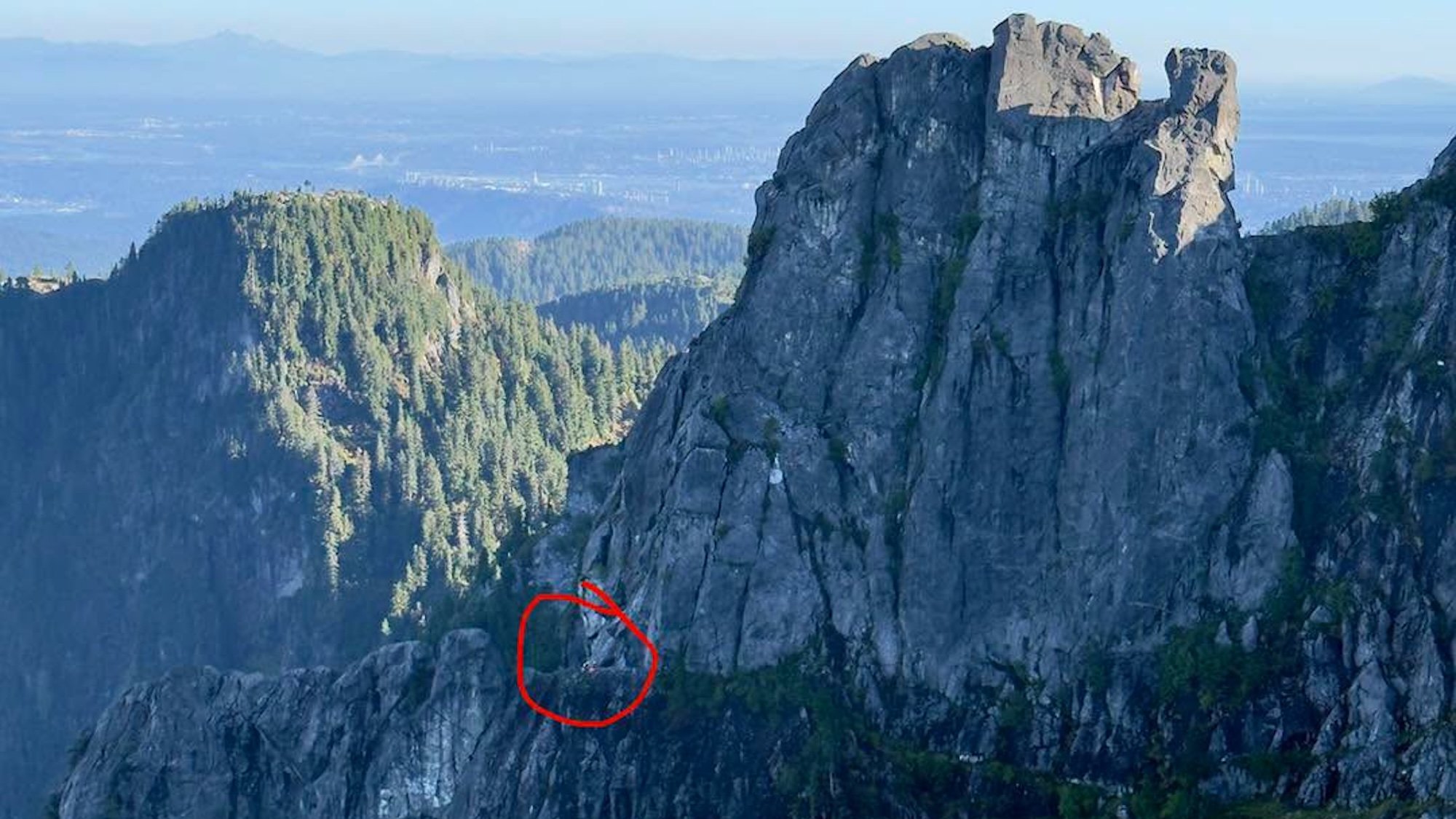
A teenage hiker in Canada recently became another cautionary tale about the perils of overtrusting artificial intelligence. After relying on an AI-generated route to ascend Crown Mountain in British Columbia, the 16-year-old found himself stranded on a steep cliffside near a climbing route known as the “Widowmaker.” The wayward traveler’s position was so precarious, that it took roughly three hours to coordinate a proper rescue plan.
“The boy was very scared. He definitely feared for his life,” search manager Paul Markey told North Shore News earlier this month.
The teen’s position near Widowmaker’s final headwall prevented helicopter pilots from safely steering close enough to retrieve him. Instead, an onsite crew reached the hiker using a rope belay system, equipped him with additional protective gear, and then moved him to a better extraction location. As luck would have it, responders had also just completed a rescue certification training session earlier that day not far from the lost teen’s predicament.
“It put him into a situation which was beyond his abilities, so things could have gone sideways pretty quickly,” Markey added.
Despite major advancements in the industry, many popular AI products are still liable to produce results with unreliable, misleading, or outright false information. Generative AI has suggested hungry users add glue to thicken pizza sauce, claimed that snakes are mammals, and advised fixing a broken turn signal with something called “blinker fluid.”
This isn’t the only AI-related hiking mishap, either. Barely a month before the Crown Mountain incident, a trio became stranded near Mount Shasta in California after using Google Gemini to help plan their trip. Among other issues, Gemini suggested they pack less food and water than they actually needed, turning a normally eight-hour excursion into a multiday emergency.
Instead of relying on AI options, rescue officials like Markey suggest using well-tested hiking route apps like AllTrails, CalTopo, and Gaia GPS.
