

2025 was full of efficiency innovations and bold initiatives in the world of aerospace. From the most detailed movie of the night sky ever made to the first commercial soft landing on the moon, this year has been an inflection point for exploring and understanding the vast expanse above our heads. We also saw breakthroughs in small changes to commercial airliners that improve efficiency, as well as a new type of rocket engine that might be the future of extremely high speed air travel, plus the closest view of Mercury we’ve ever seen!
(Editor’s Note: This is a section from Popular Science’s 38th annual Best of What’s New awards. Be sure to read the full list of the 50 greatest innovations of 2025.)
Innovation of the Year
Vera C. Rubin Observatory by U.S. National Science Foundation & Department of Energy: World’s largest digital camera to conduct 10-year survey of the night sky
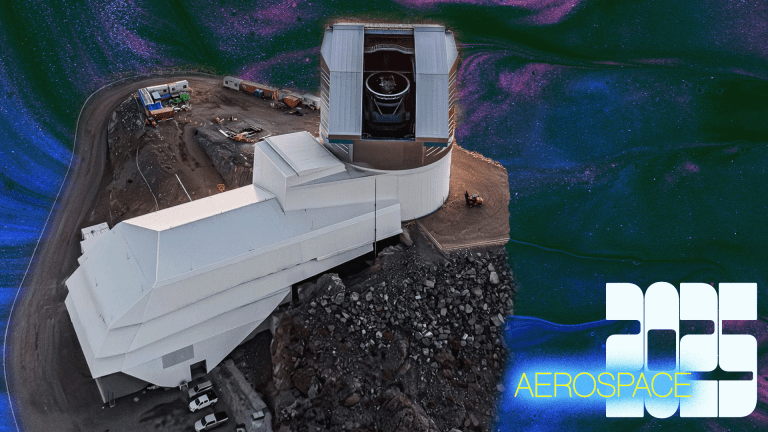
Prepare to see space like never before. The Vera C. Rubin Observatory is a groundbreaking US-funded project that will capture the most detailed, dynamic map of the night sky ever made. Using the world’s largest digital camera, it will capture a time-lapse of the entire sky every few nights to reveal billions of objects and catch fast-changing events like supernovae and near-Earth asteroids. Its massive dataset will help scientists better understand dark matter, dark energy, and the structure of the universe while also improving planetary defense.
The 3,200-megapixel Legacy Survey of Space and Time (LSST) camera is the size of a small car and twice as heavy, tipping the scales at 6,000 pounds. The sensor’s huge number of megapixels is equivalent to 260 modern cell phone sensors. The camera is so powerful, it could snap a clear image of a golf ball from 15 miles away.
By making its data widely available, the observatory will also open new doors for discovery for researchers, students, and citizen scientists around the world.
Riblet-shaped coating on 787 by Japan Airlines: Stabilizing airflow, reducing turbulence, and increasing fuel efficiency
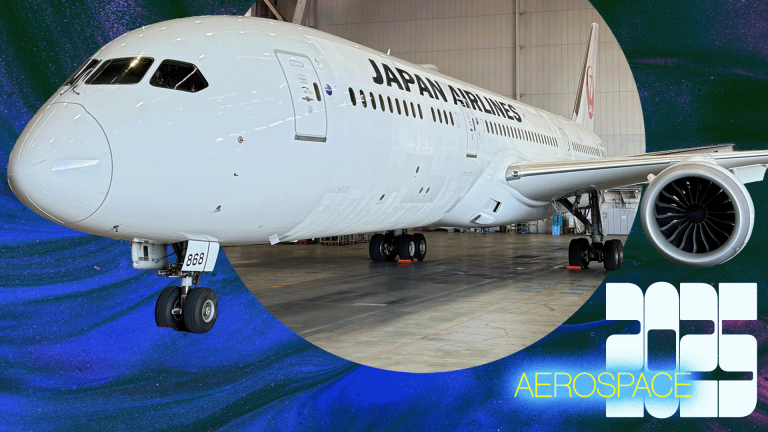
Deployed on Boeing 787-9 aircraft starting in January, the coating uses tiny, sharkskin-like grooves called riblets to guide airflow smoothly along the aircraft’s surface. By keeping the air more organized and reducing small pockets of turbulence, the riblets cut aerodynamic drag, which normally wastes energy. That reduction in drag translates directly into better fuel efficiency, lowering operating costs and reducing the plane’s carbon emissions. Overall, this smart surface technology gives the 787 a quieter, cleaner, and more efficient ride without changing the aircraft’s shape or engines.
Blue Ghost lunar lander by Firefly Aerospace: First commercial company to soft land on the moon

The Blue Ghost lander was the first commercial vehicle to soft-land on the Moon, marking a major milestone in the shift from government-only lunar missions to public–private exploration with its March 2 touchdown. Over the summer, Firefly Aerospace was awarded a NASA contract to deliver science and technology instruments to the Moon’s south polar region, an area crucial for studying water ice and future human exploration. Successful delivery will help NASA gather data needed for future Artemis missions while proving that commercial companies can reliably operate on the lunar surface, demonstrating the Blue Ghost lander to be a major step toward a more sustainable, commercially driven lunar economy.
Rotating Detonation Rocket Engine by Venus Aerospace: Powering future flight from Los Angeles to Tokyo in under two hours
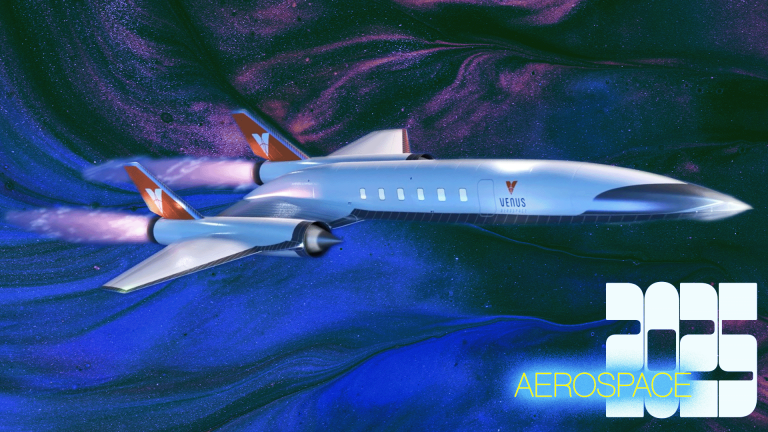
Venus Aerospace’s Rotating Detonation Rocket Engine (RDRE) is a new type of rocket propulsion that creates continuous spinning shockwaves to burn fuel far more efficiently than traditional rocket engines. This technology is targeted to enable aircraft to travel at speeds of Mach 4 to Mach 6 (3,069 to 4,603 mph), making routes like Los Angeles to Tokyo possible in under two hours. Because the engine produces more thrust with less fuel, it opens the door to faster, lighter, and potentially more affordable high-speed travel. In short, the RDRE is a key step toward turning ultra-fast, global point-to-point flight from science fiction into realistic transportation.
BepiColombo by Japan Aerospace Exploration Agency (JAXA) & European Space Agency (ESA): Exploring Mercury closer than ever

BepiColombo is the most ambitious mission ever sent to study Mercury, a planet that’s hard to reach because of the sun’s intense gravity. The spacecraft carries two orbiters—one built by the European Space Agency (ESA) and one by the Japan Aerospace Exploration Agency (JAXA)—that will map Mercury’s surface, study its thin atmosphere, investigate its magnetic field, and analyze its interior structure. These measurements will help scientists understand how rocky planets form and evolve, including Earth-like worlds in other star systems. By working together, JAXA and ESA are tackling one of the toughest destinations in the solar system and filling in major gaps in our understanding of the innermost planet.
