If you were going to live in Europe at any point in time, word of advice: Avoid the fifth century. The mighty Roman Empire was floundering. Attila the Hun repeatedly invaded the eastern Roman Empire, and even Italy in the year 452 CE. Fierce Germanic forces known as the Visigoths and Vandals sacked and raided Rome, first in 410 and again in 455. The Franks (in present-day France, Belgium, and western Germany) were busy wresting control in the west. And in 476, the entire Roman Empire collapsed. Put simply, it was a rough century.
With all of that upheaval, many people picked up and left their homes, undoubtedly in search of better, more stable places to live. Historians call the period between the fourth and seventh centuries in Europe as the Migration Period since so many people were on the move.
Now, thanks to some 1,500-year-old DNA from an elaborate ship burial in northwestern Germany, we are tantalizingly close to understanding one man’s journey from one end of the Roman Empire to the other. Oh, and he also had leprosy.
This grueling, potentially 800-mile-long journey is detailed in a study published in this month’s edition of the journal iScience.
1,500-year-old boat burial in northwestern Germany
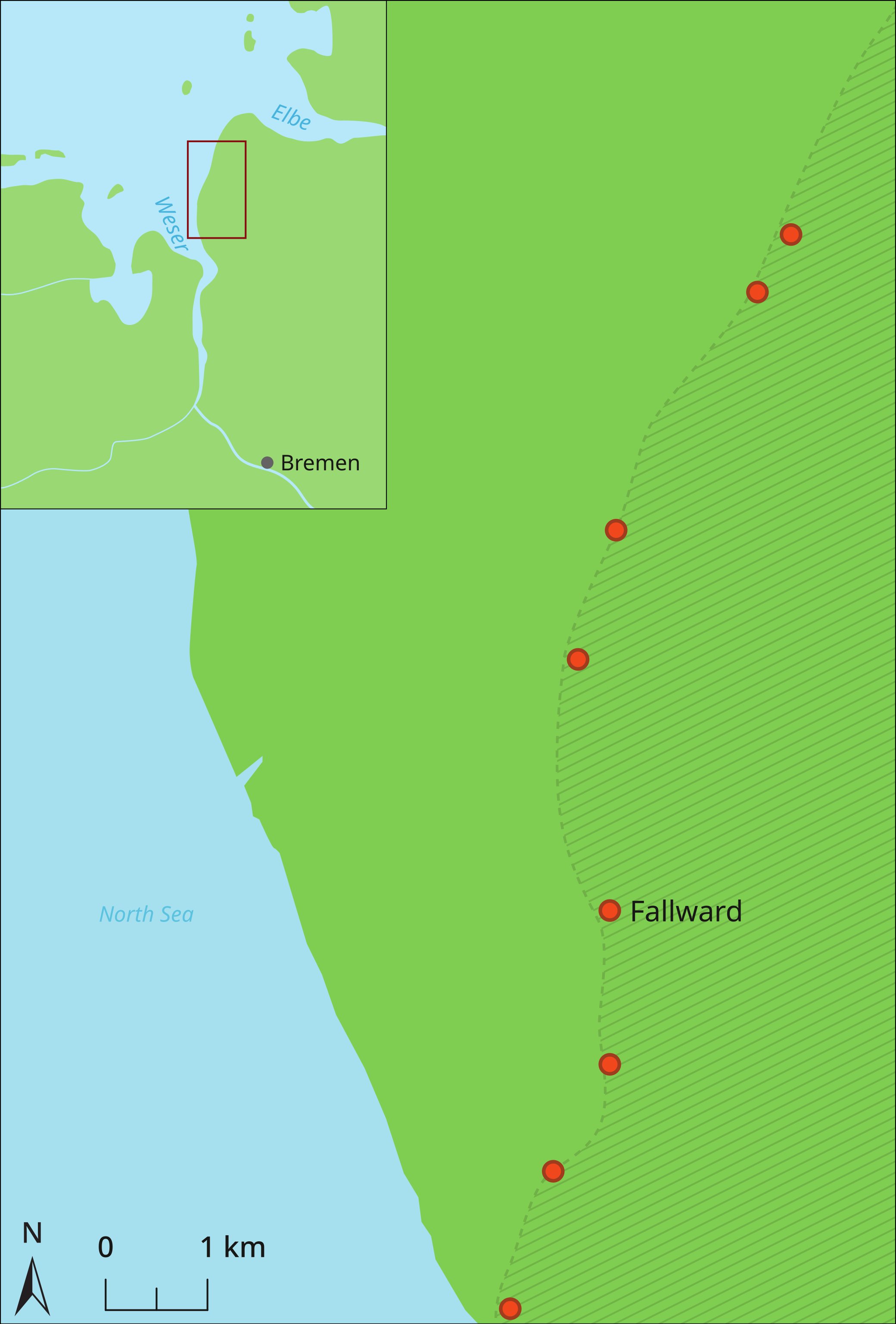
Discovered in the 1990s, the Fallward burial ground is a treasure trove of information from the Migration Period. Located on coastal marshland, about 20 miles west of Hamburg, Germany, the cemetery contains about 200 cremation burials and 60 graves from the end of the third to the late fifth century. Many of the graves were dug deep into damp clay, which has helped preserve many striking finds.
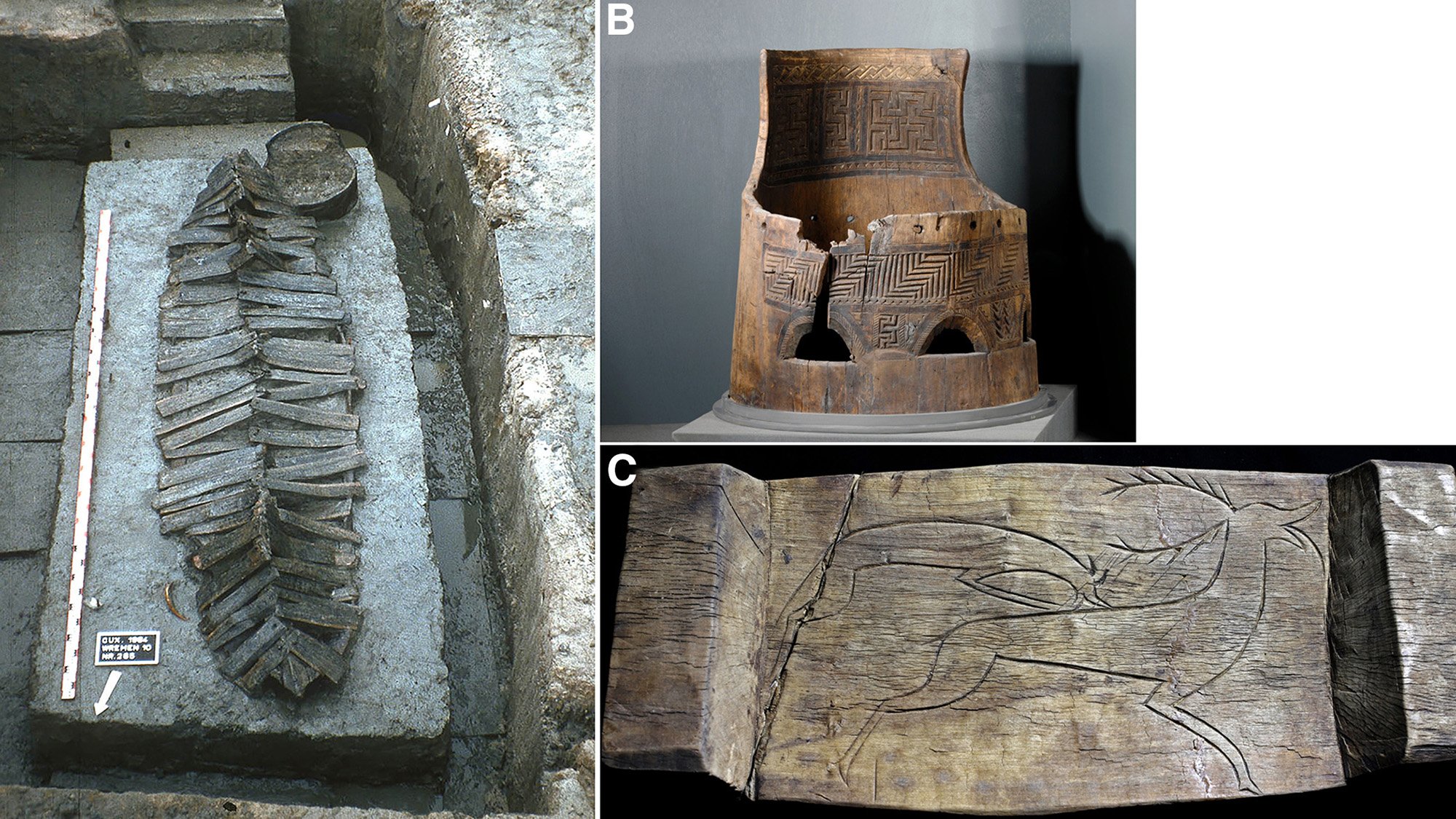
One of the most remarkable graves is simply labeled as site 265. The grave belongs to an approximately 50-year-old man, who died sometime between 425 and 450. The man probably rowed or fished along the German coast since his skeletal remains indicate his upper arm muscles were well developed. He was also buried inside a 13-foot-long oak boat covered with wooden panels that formed a roof-like structure.
An ornate throne, Roman military belt, and game board found inside grave 265
But the boat burial isn’t the only thing that makes grave 265 unique.
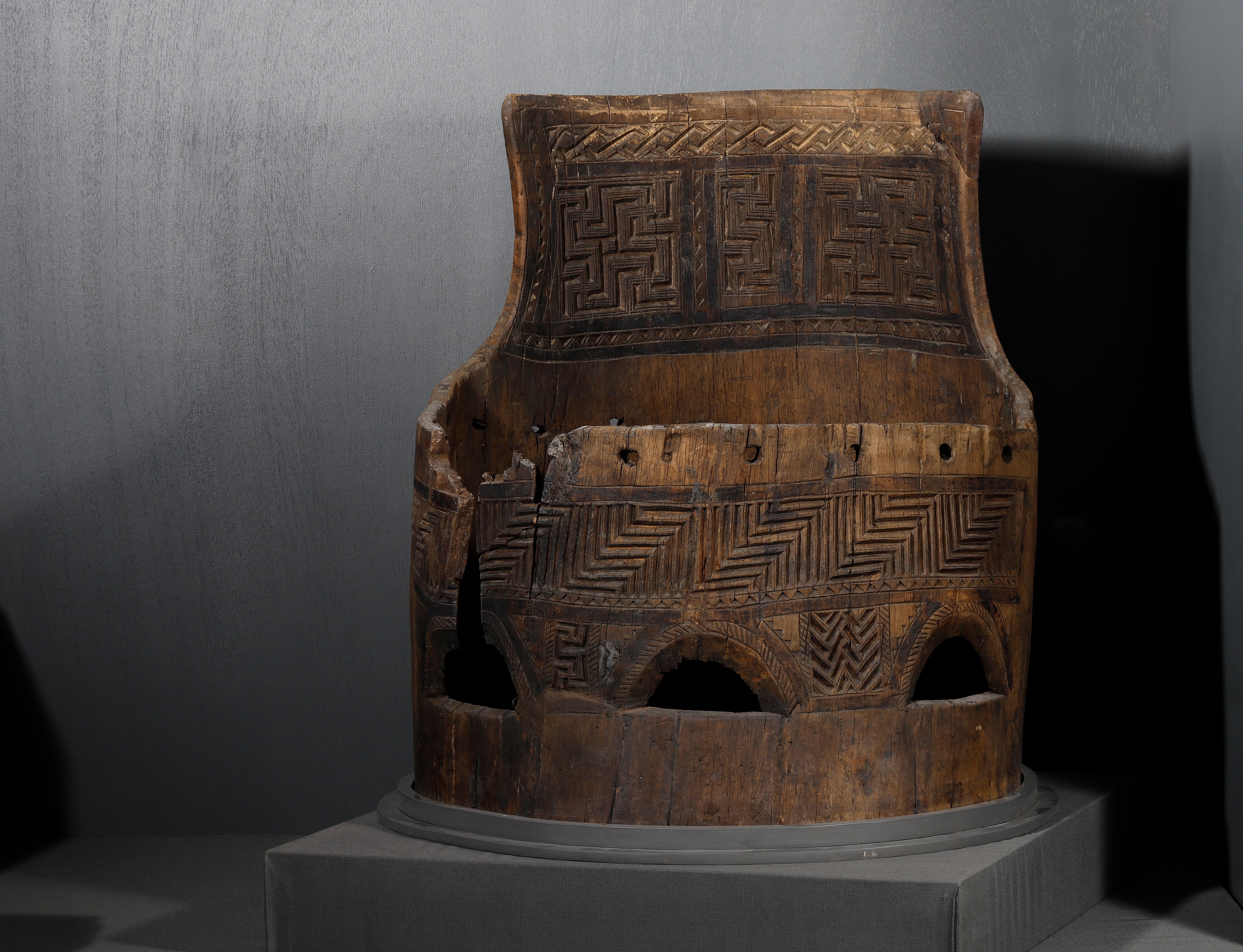
“The grave goods placed in the tomb aroused particular scientific interest; these included a chair, artfully decorated and carved from an alder trunk. Furthermore, the man possessed a late Roman military belt, which suggested that the deceased had had connections across great distances,” explained Dr. Hauke Jöns from the Lower Saxony Institute for Historical Coastal Research in Wilhelmshaven, Germany, explained in a statement on the new findings.
The elaborate chair was presumably painted and is often referred to as a throne. Far from an ordinary piece of furniture meant for daily use, it was instead a symbol of the authority the deceased wielded in life.
The late Roman military belt perhaps raises the most questions about who the man buried in 265 was. The belt shows signs of both use and repair. While its presence doesn’t necessarily mean the man was a soldier in the Roman military—he could’ve acquired it through trade, inheritance, or as war booty—it also doesn’t mean he wasn’t a soldier for Rome. If he was, he would have likely been part of the foederati. These warriors served Rome through a treaty, or foedus, rather than as Roman citizens.
The grave also included: a stool carved with a hunting scene and inscription, a game board, a ceramic vessel, and a bronze basin.
Analyzing the DNA of the man inside the boat burial
For nearly 30 years, archaeologists could only speculate about what these grave goods meant about who was buried in grave 265. But with the new DNA analysis, we now have some concrete answers about who this man was. Though the team was able to extract DNA from three individuals from the Fallward burial ground, “the results were particularly striking” for the man in 265. The new genetic analysis confirms two things about the man.
First, he was from or had close family from the Danube region in the eastern part of the Roman Empire, which comprised parts of modern day Croatia, Hungary, Slovenia, and Serbia. That’s a long way from his grave in northwestern Germany, so at some point he or a close relative traveled more than 800 miles, leaving behind the Roman Empire in process. Second, he had a rare form of leprosy.
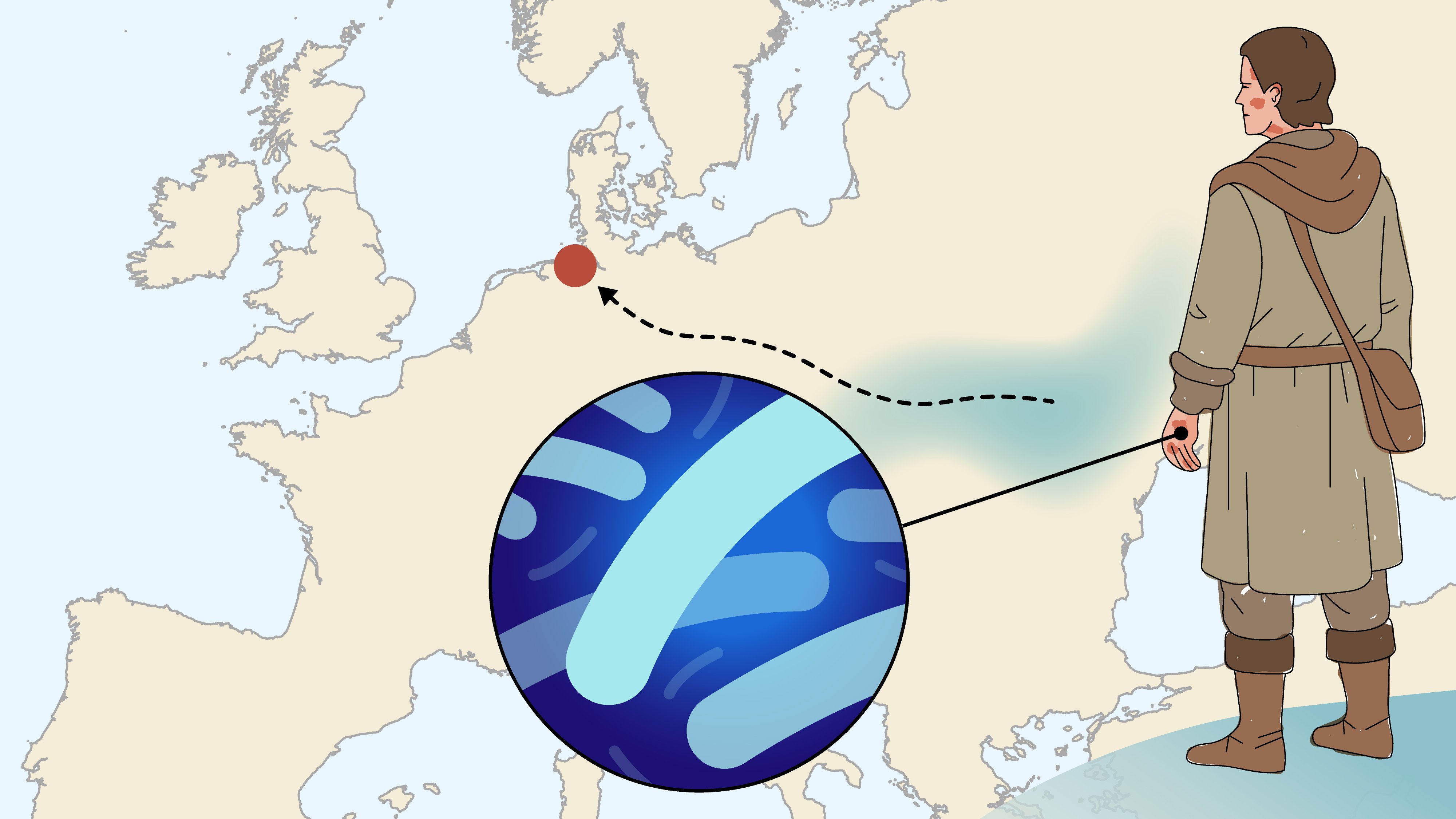
“Leprosy is a chronic disease. It can take years for clear symptoms to appear. The man had not yet suffered any bone damage. Either he was affected by an asymptomatic form of the disease, or the disease had so far only affected soft tissues. He may have travelled long distances whilst carrying the disease,” explained study co-author Dr. Almut Nebel from the Institute of Clinical Molecular Biology (IKMB) at Christian-Albrechts-University in Kiel, Germany.
So what does all of this mean?
Study co-author Dr. Ben Krause-Kyora (also at IKMB) speculates, “He could, for example, have been a mercenary in the Roman army who later settled between the Elbe and the Weser [rivers, which run on either side of Fallward]. Or he might have undertaken long journeys as a trader.”
Either way, the man in grave 265 likely lived through a heck of a lot before taking up fishing on the rural German coastline.
Related Stories
‘Extremely rare’ Roman tomb discovered in Germany
For ancient Romans, pooping was a group activity
Ancient Roman mass grave shows its army’s ethnic diversity
‘Doors to Death’ reveal how Romans upgraded a stadium for bloodsport
Roman sarcophagus inside Westminster Abbey originally held a different body
Ancient Roman infant burials uncovered under Switzerland housing project