
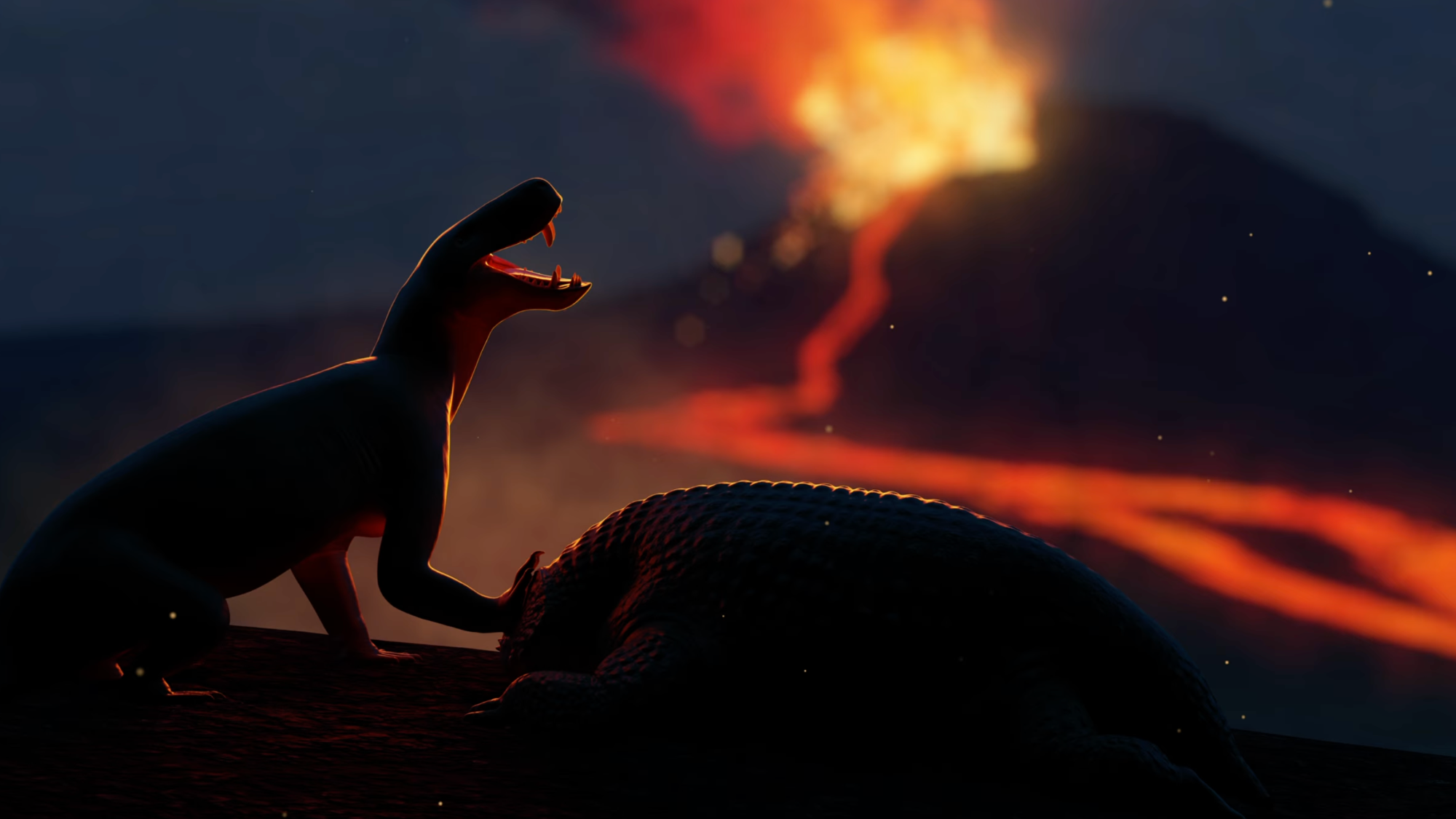
The mass extinction event that wiped out the dinosaurs gets most of the buzz, but there was an even worse bout of mass death ages before the dinosaurs said goodbye. The Great Dying (or Permian-Trassic extinction) wiped out 80 percent of all life on Earth roughly 252 million years ago. That catastrophic chapter of Earth’s history is coming to life in a new six-episode series from PBS Digital Studios and Complexly.

Eons: Life And Death on Pangea | Series Open
In EONS: LIFE AND DEATH ON PANGEA, viewers will witness extreme climate shifts and ecosystems drastically different than those that exist today. The mega monsoons, vast deserts, volcanic eruptions, and enormous terrestrial animals and marine life of the turbulent Permian Period feature prominently, as the Earth reaches the brink of ecological collapse.
During The Great Dying, massive volcanic eruptions triggered catastrophic climate changes that altered the planet’s entire biosphere. Over about 60,000 years, 96 percent of Earth’s marine species and about three of every four land species were wiped out. The Great Dying is also the extinction event that most closely parallels Earth’s current environmental crisis. Both events involved global warming related to the release of greenhouse gases and show what happens when Earth sees very extreme temperature swings.
Importantly, the series will explore how life ultimately bounced back. It is hosted by science communicators and paleontology experts Michelle Barboza-Ramirez, Blake de Pastino, Kallie Moore, and Gabriel-Philip Santos.
“The EONS team was thrilled to get out of the studio and go to places where the Permian Period can still be witnessed up close,” said Executive Producer Seth Radley. “It’s an honor to work with PBS to tell the story of this pivotal moment in Earth’s history.”
EONS: LIFE AND DEATH ON PANGEA premieres July 29 on the PBS App, PBS.org, the EONS YouTube Channel, and PBS Stations.
