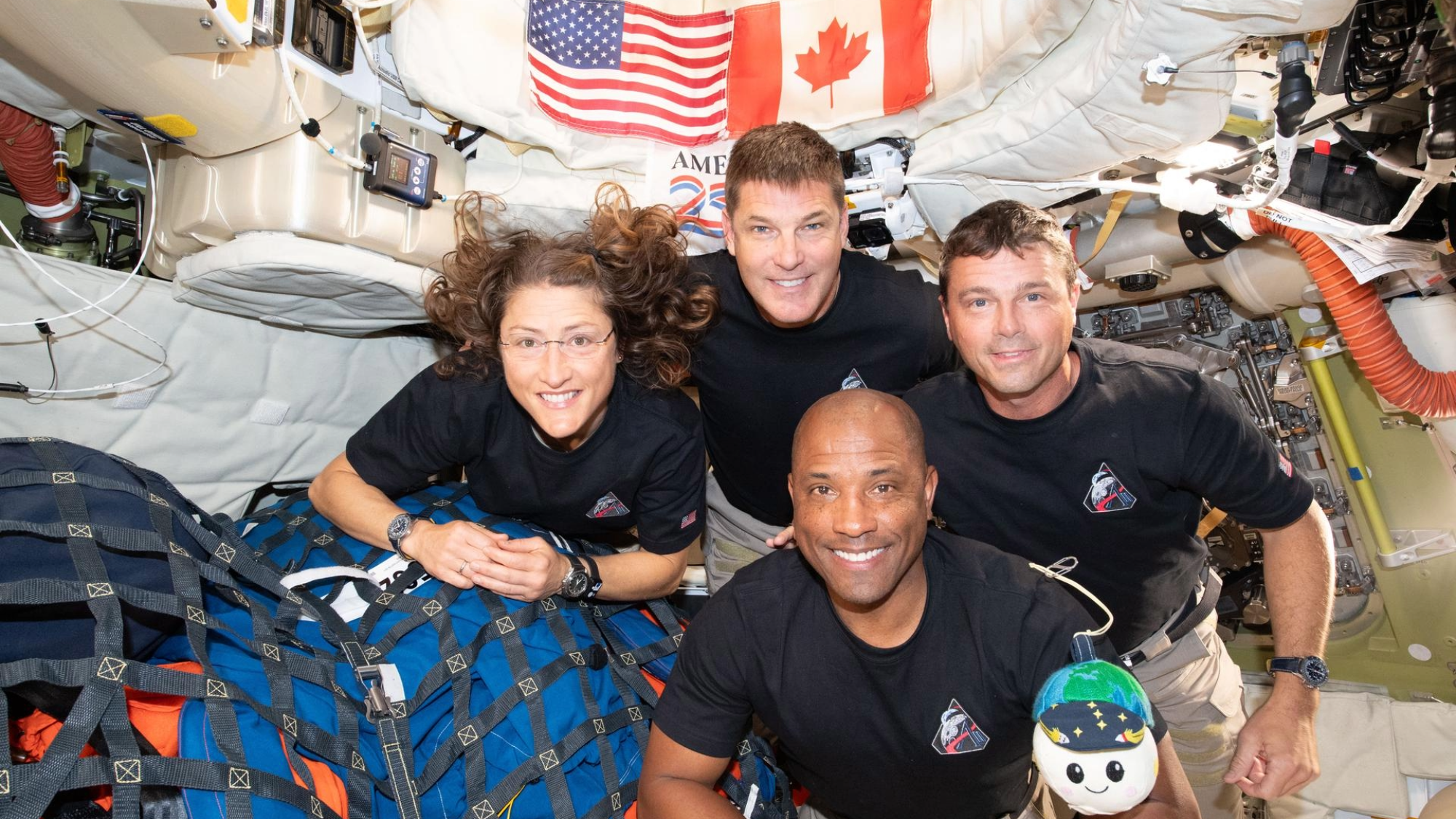
When the four-person Artemis II crew safely splashed down in the Pacific Ocean, they landed with a deeper understanding of what it will take to finally bring humans back to the moon. Those of us inspired by their mission back home on Earth also have greater appreciation for some everyday skills that prove especially useful in space.
Decades of experimenting with humans in space have revealed a number of odd, sometimes unexpected skills that may come in handy while hurtling away from our home planet. Here are a few.
Napping in weird positions
Even under the best conditions, sleeping in space is easier said than done. Long days can blend into nights, and the constant checklists of to-dos and sensitive experiments can make long stretches of sleep unrealistic. Then there’s also the impending dread of realizing any number of things could go wrong and result in your crew hurtling through the cold, empty void.
If that weren’t enough, sleeping (or more realistically, napping) has to be done strapped into a bed, Houdini-style, to prevent their bodies from floating around in microgravity. That leads to astronauts having to sleep like bats, often upside down or facing sideways. None of that’s exactly conducive to restful sleep.
“Every time I was dozing off last night, I had that image that I was tripping off a curb and I was waking myself up,” NASA Commander Reid Wiseman told CNN.

Crying the right way
It might seem off to think there is a “right” or “wrong” way to shed a tear, but that’s apparently the case in space. The same lack of gravity that sends astronauts and their toothpaste floating also prevents teardrop from falling down their checks. Instead, tears pool across their eyes, forming blotching bubbles.
So, unless they want giant blobs of liquid sadness (or moon joy) clouding their vision, astronauts have to be armed and ready to immediately recognize a tear and wipe it. Or, if they can, hold off from crying entirely.

Tinkering with amateur dentistry
Dental problems are never fun and that’s especially the case for astronauts who are separated from the nearest professional dentists by tens of thousands of miles. Astronauts are actually required to maintain excellent dental hygiene, both prior to and during missions. That’s especially important for people on longer extended stays on the International Space Station. A sudden dental emergency caused by negative oral care could force them to end their missions early.
But for the times when tooth issues are unavoidable, there’s usually someone in the crew who’s trained to extract a tooth. Astronauts will learn this by practicing extracting a tooth on a model.
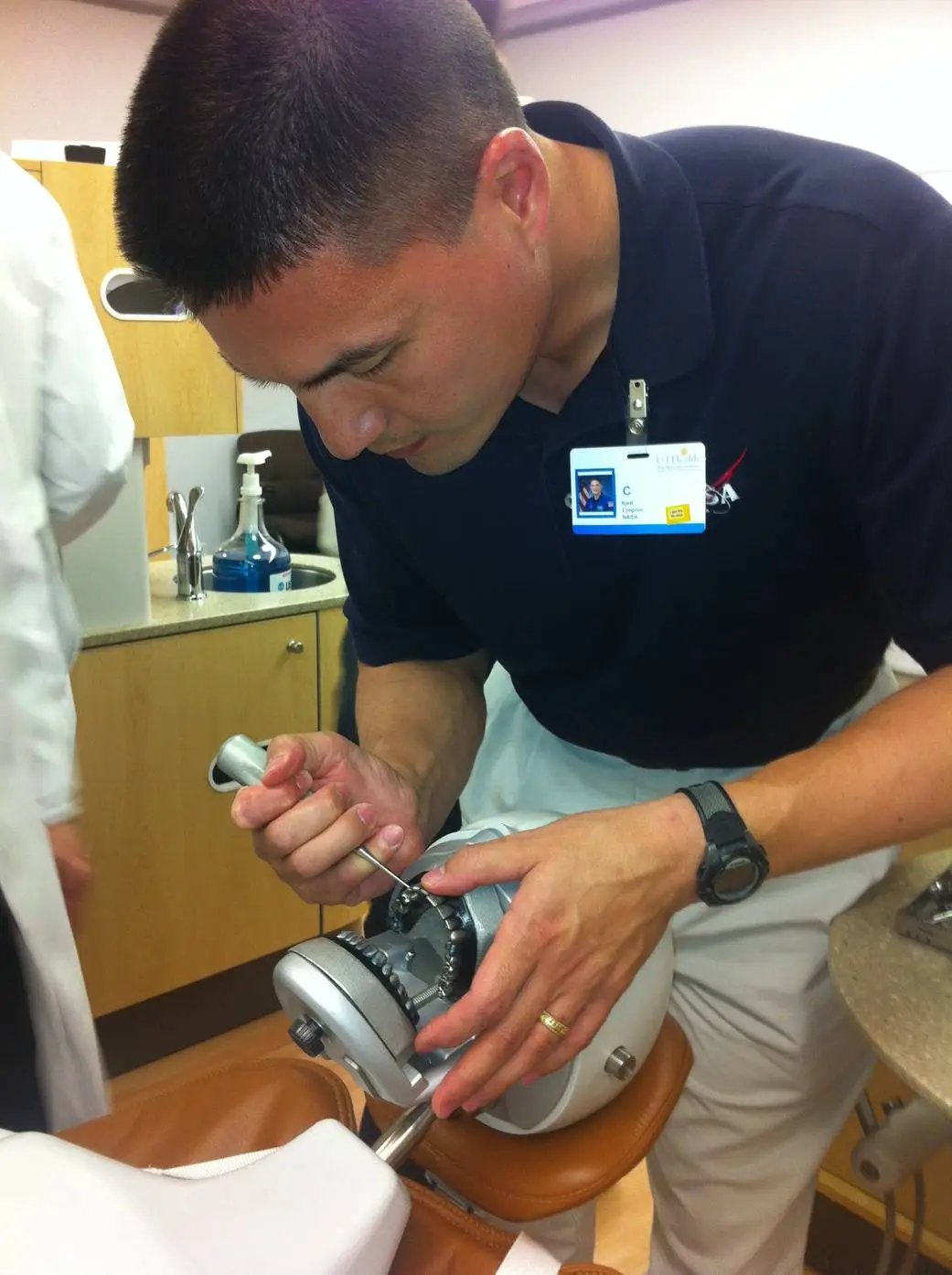
It’s not exactly the most ideal solution, but when emergency strikes, it’s good to have someone with dental training on board, even if their tools amount to little more than a sharp instrument and elbow grease.
Learning the kinks of space plumbing
One of those crafts was immediately relevant during their 10-day journey: plumbing.Though astronauts are no strangers to relieving themselves in microgravity, this mission marked the first time a crew had a real toilet installed for a flight. That’s great in theory, but the fancy space toilet lavatory showed its limitations almost immediately. While the Artemis II crew was still in Earth’s orbit on day one of the mission, the toilet (called the Universal Waste Management System) had a controller issue that temporarily prevented it from being used for solid waste.
That issue was resolved relatively quickly, but another plumbing problem arose days later when frozen urine clogged one of the toilet’s vent lines. NASA mission specialist Christina Koch reportedly had the idea to warm the frozen line by rotating the capsule so that the frozen urine faced the sun. It worked, though the astronauts were initially only able to restore toilet function “for fecal use only.” Koch, meanwhile, earned the moniker “space plumber.”
Being patient with tech support (also applies to Earth)
Around that same time as the crew’s toilet troubles, they grappled with a headache all too common back on Earth: glitchy tech. During the mission, several of the astronauts reported recurring issues with their Microsoft Surface Pros. It turned out the problem stemmed from Outlook. Commander Wiseman had to call the ground team and have them remotely connect to the device to solve the issue. It turns out that even in the dark remoteness of space, patience with IT support still goes a long way.
Brushing off those wilderness skills
While we may not always associate space with the great outdoors, the most prepared astronauts know their way around starting a fire. In addition to training to withstand G-forces during takeoff and stay sane in space, astronauts are also given a crash course in survival techniques in the event their landing back on Earth doesn’t go quite as planned. In the past, astronauts have practiced these survival skills in the deserts of Nevada, working together to gather food and water and even build shelters and clothing out of parachutes.
“I definitely see people learning skills they didn’t already have,” Veteran NASA astronaut Shannon Walker said of one astronaut class in an Army blog post. “This is a chance for the astronaut candidates to really get to know themselves, know how they operate under stressful environments, because space can be a very stressful environment.”