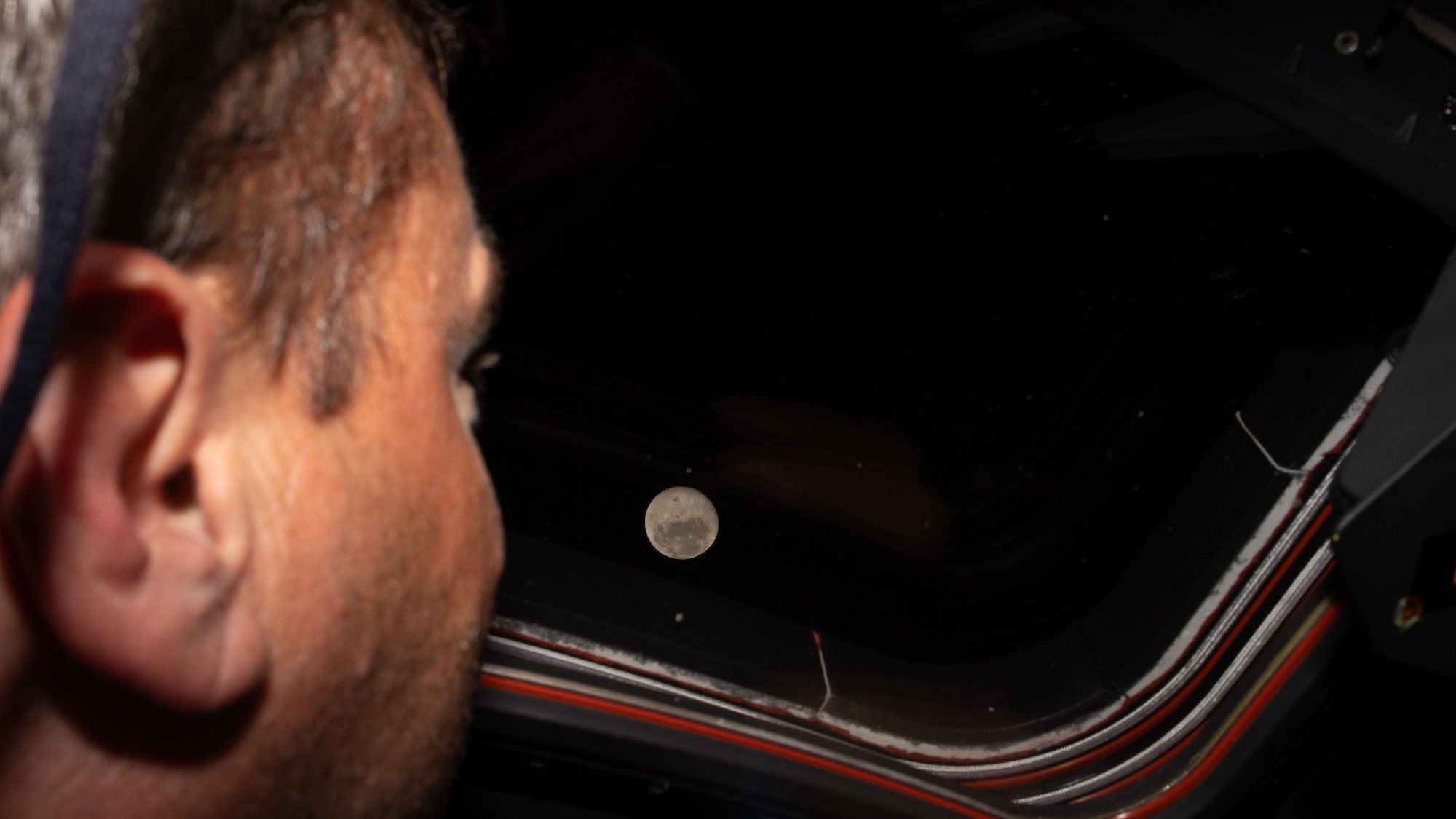
Successfully sending Artemis II astronauts on their historic lunar flyby earlier this year required some of the latest and most precise technologies, but not everything in this mission needed the same intense equipment. As crewmates gazed through Orion’s capsule window at the moon’s eclipse of the sun on April 6, 2026, three of the travelers needed a way to easily sketch some of their preliminary observations. They took turns writing their notes on a shared tablet PC—and NASA has recently highlighted their work with a screenshot of their efforts.
Astronauts Reid Wiseman, Victor Glover, Christina Koch, and Jeremy Hansen had a lengthy list of tasks during their 10-day, 700,000-mile roundtrip. One of the most visually dramatic jobs involved carefully assessing lunar activity while passing across the moon’s dark side from a distance of about 46,000 miles away. The roughly hour-long observation period provided astronauts with an unprecedented opportunity to record meteorite activity.
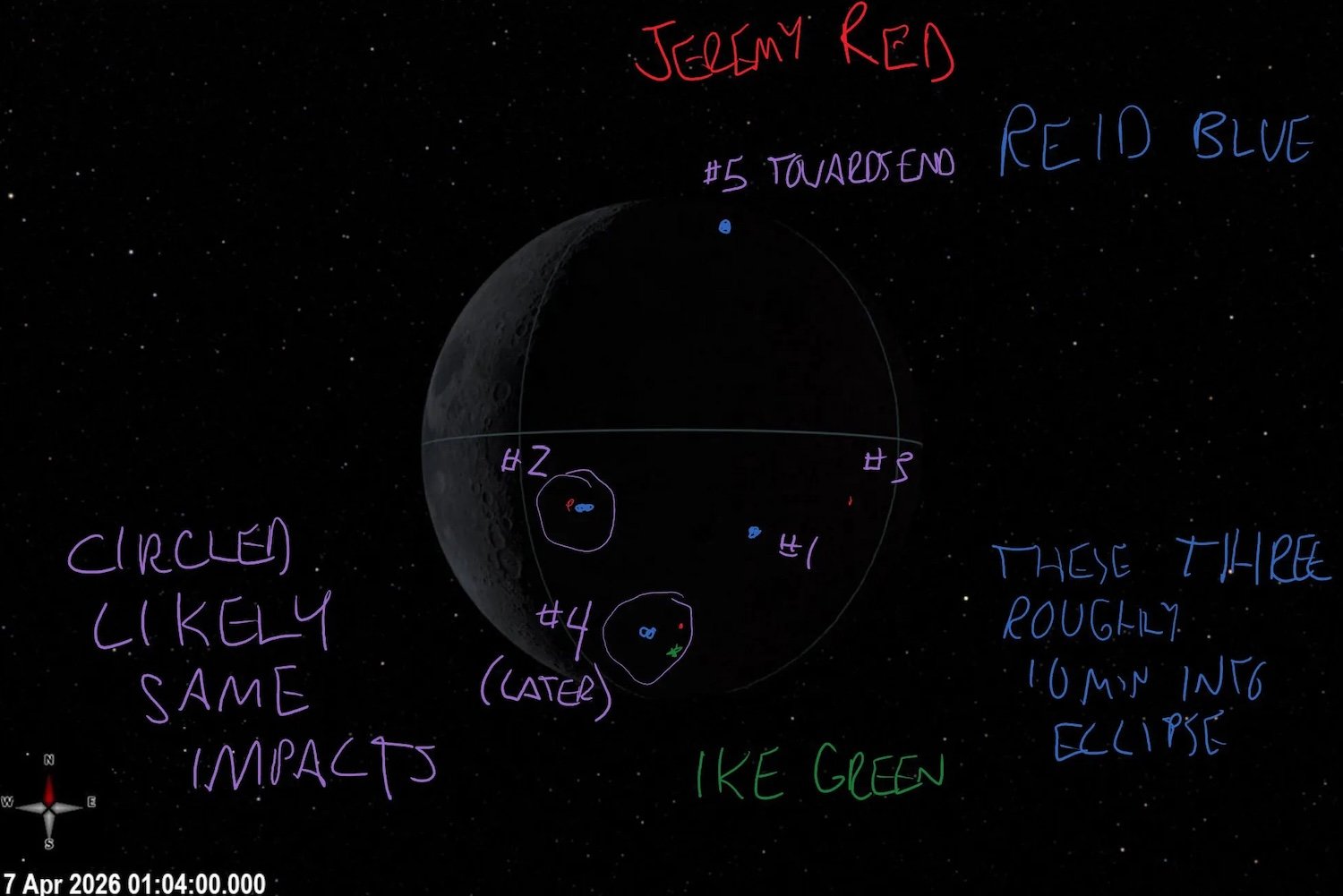
The tablet screenshot includes notes taken by Wisemen (in blue), Hansen (in red), and Glover (in green) during the moon’s eclipse of the sun. The crew collectively spotted at least five faint flashes of light caused by impacts. According to Wiseman, the first three impacts occurred within about 10 minutes into their observations, while another two happened later during the flyby. Impacts two and four were likely also corroborated by Hansen and Glover.
Since the moon does not have an atmosphere like Earth’s, the lunar surface is regularly bombarded by space rocks. Most of them are comparatively small, but they will still pose a problem for future crewed trips to the surface,especially those stationed in a planned permanent lunar base. The data gathered by Artemis II on April 6 will help NASA better understand these dynamics, and plan for the safest environments possible for their astronauts.
Artemis II’s astronauts safely returned to Earth during a splashdown off the coast of San Diego at 8:07 p.m. EDT on April 11. If all goes as planned, Artemis III’s crew will launch on their mission no earlier than June 2027.