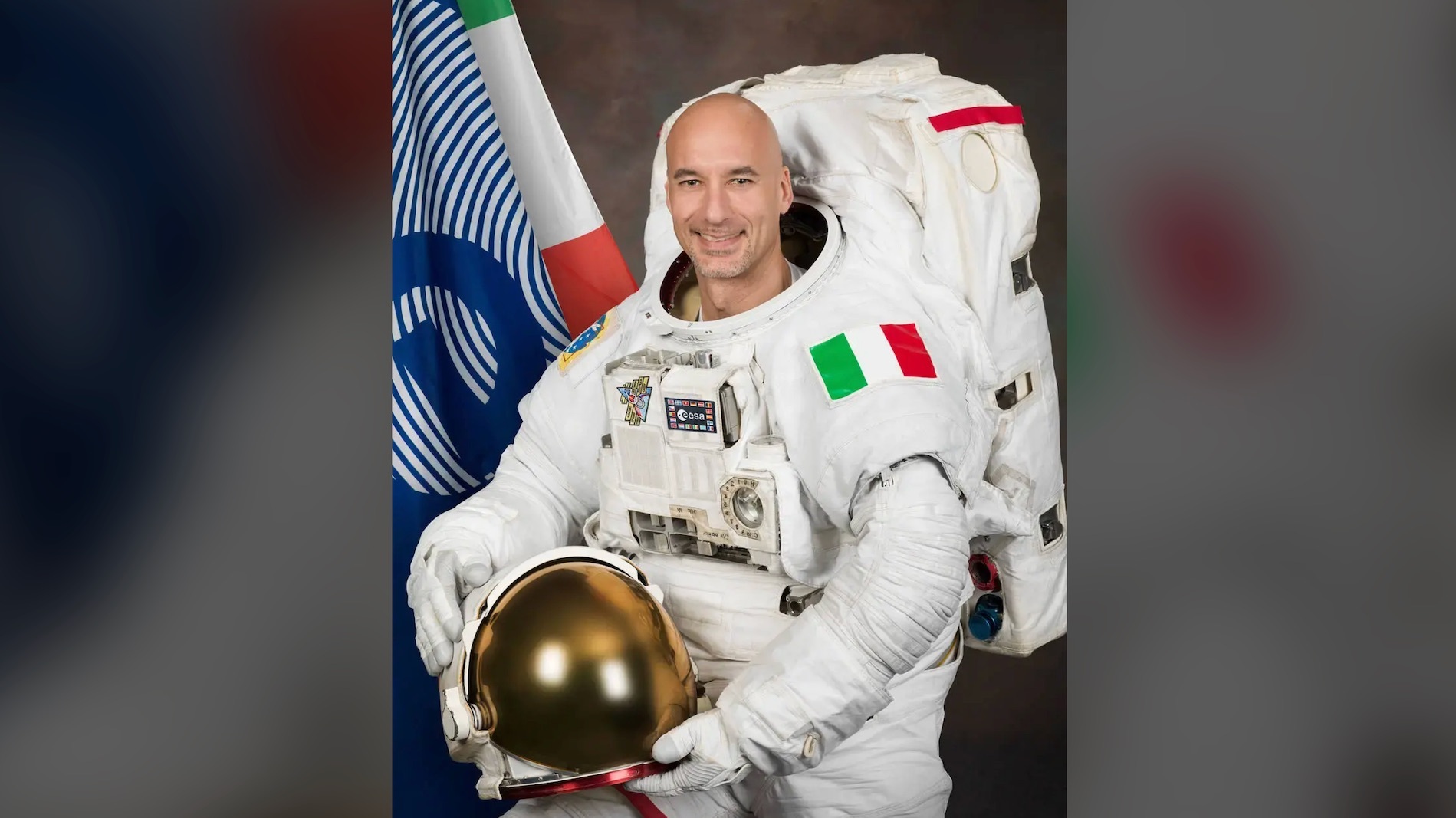
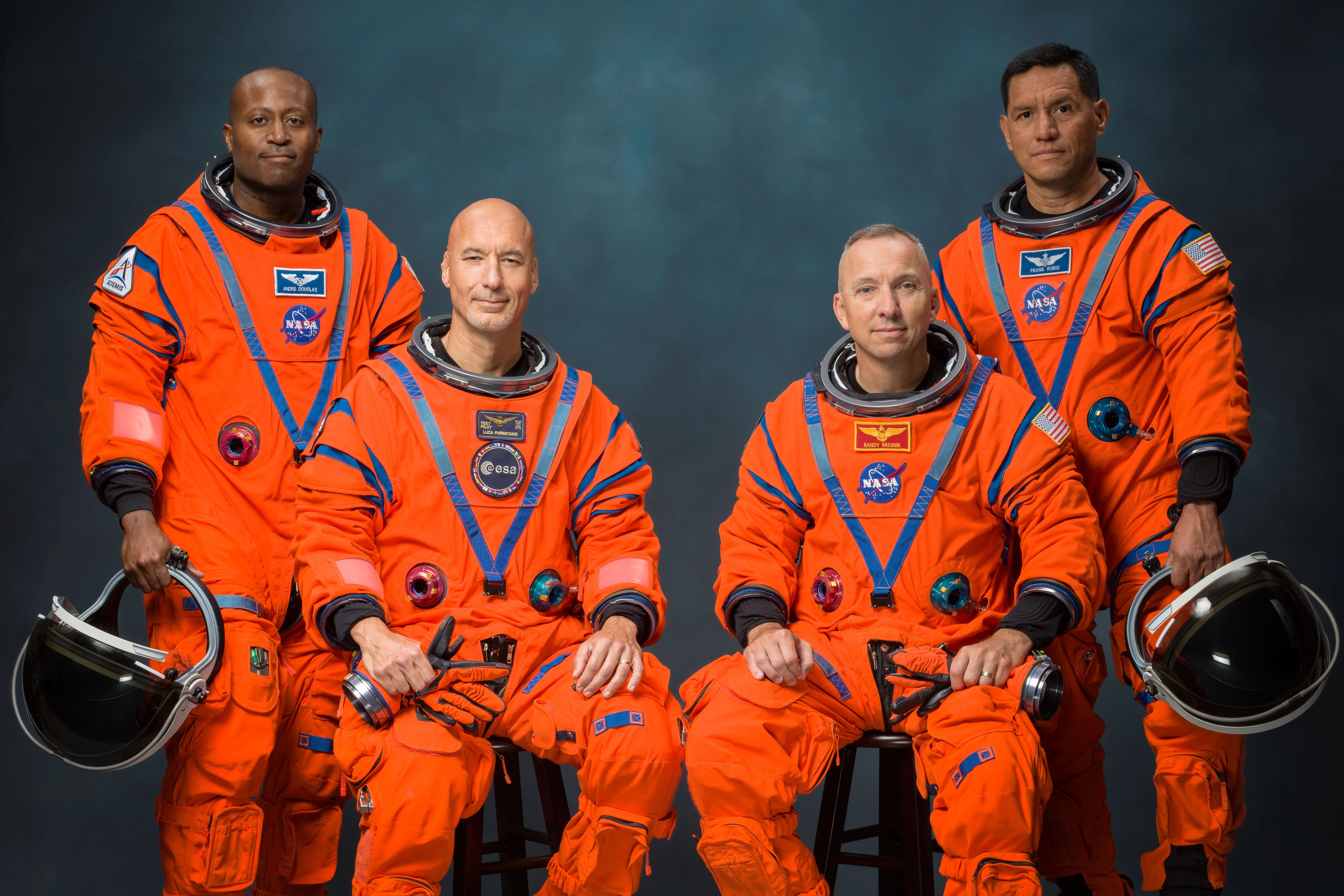
Today, NASA announced the four Artemis III astronauts and one backup crew member for the 2027 test flight. NASA astronaut Randy Bresnik will serve as the commander, alongside mission specialists Andre Douglas and Frank Rubio (also with NASA). European Space Agency (ESA) astronaut Luca Parmitano will serve as the mission’s pilot.
Parmitano was selected to the ESA astronaut corps in May 2009 and is also a colonel and test pilot for the Italian Air Force. He is the first ESA astronaut assigned to an Artemis mission and immediately pointed to his family as motivation.
“I am honored by the role that I have been given,” Parmitano said during the press conference. “The rocket figuratively and literally is NASA. I am grateful that NASA is allowing me to be part of this incredible group of people and this crew and for letting me fly. But we wouldn’t be going anywhere without fuel and the fuel that lets everything move is right here–Maia, Sarah, Marta, and my extended family here in the crowd. You are the energy that feeds my soul and your love is the spark that ignites every passion.”
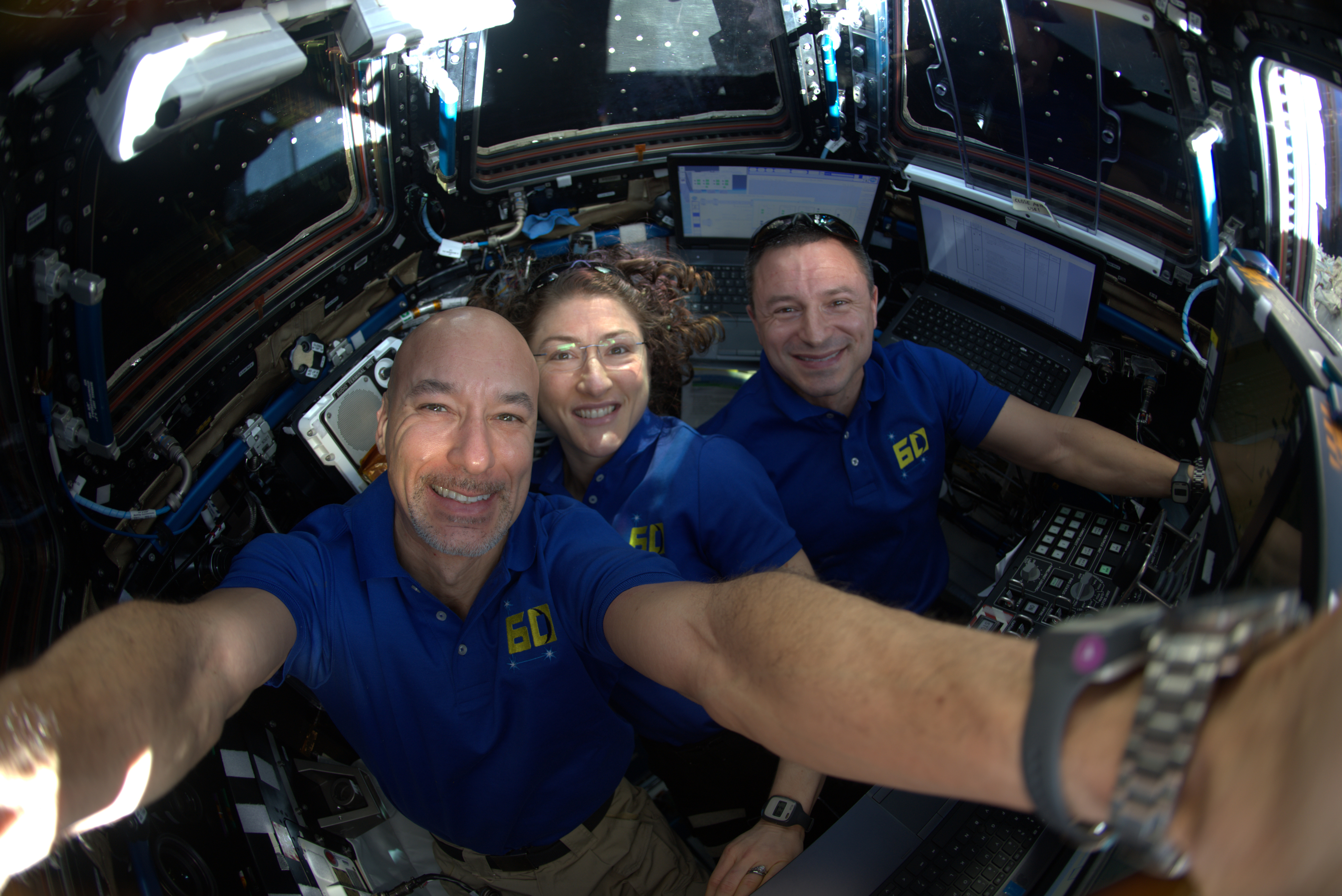
Parmitano has already proven that he possesses coolness under pressure. On July 16, 2013, he nearly drowned during a space walk, after data about a previous spacesuit did not make its way up the International Space Station’s chain of command. Water chemistry issues caused a leak in the spacesuit’s cooling system.
The issue started near the end of a spacewalk on July 9. At the time, the crew concluded that the water came from Parmitano’s drink bag. That initial assessment was incorrect. The leak occurred due to contamination build up that blocked a filter. The blockage allowed water to go into a line that feeds air to the astronaut’s helmet.
“When the water reached my face, it spread over my nose and up into my nostrils in an instant. I was almost blinded, I couldn’t hear anything and I couldn’t breathe through my nose,” Parmitano wrote in a March 2026 commentary on the event published in New Scientist. “I already knew I needed to reach the airlock and get back inside the International Space Station. The key question: how long did I have before the water reached my mouth and I couldn’t breathe at all?”
In a report released several months later, investigators said that ISS management should not have given the go ahead for the July 16 spacewalk following the incident on July 9. The report also criticized management for not immediately stopping the dangerous task as soon as Parmitano reported water in his helmet. The report ultimately included 49 recommendations to help prevent a similar incident.
Artemis III will undertake a series of challenging tests in Earth orbit in 2027. These tests are essential for Artemis IV in 2028, the first planned crewed mission to the lunar South Pole.
The agency’s Space Launch System (SLS) rocket will propel the Orion spacecraft and its crew from NASA’s Kennedy Space Center into low Earth orbit. After Orion systems checkout, the spacecraft will demonstrate rendezvous and test docking capabilities for the first time. It will use test versions from one, or both, American commercial human landing systems in development by Blue Origin and SpaceX.
“This highly choreographed mission includes a dramatic multi-launch campaign of the world’s most powerful rockets, testing integrated hardware between Orion and the landers, including system interfaces, software, propulsion, and communications,” NASA writes.
“Artemis III will push the boundaries of spacecraft operations in orbit. Luca’s assignment as pilot reflects the depth of European expertise in human spaceflight and draws on his extensive operational experience in high-pressure situations,” ESA’s director general Josef Aschbacher said in a statement.
“At the same time, ESA’s European Service Module will once again provide the critical capabilities that power Orion, demonstrating Europe’s enduring role at the very heart of the Artemis program. The news out of Houston today is a powerful recognition of ESA’s role in enabling humanity’s return to the Moon – and a key advancement in our partnership with NASA. Europeans can take pride in being part of this exciting journey.”