
We may earn revenue from the products available on this page and participate in affiliate programs. Learn more ›
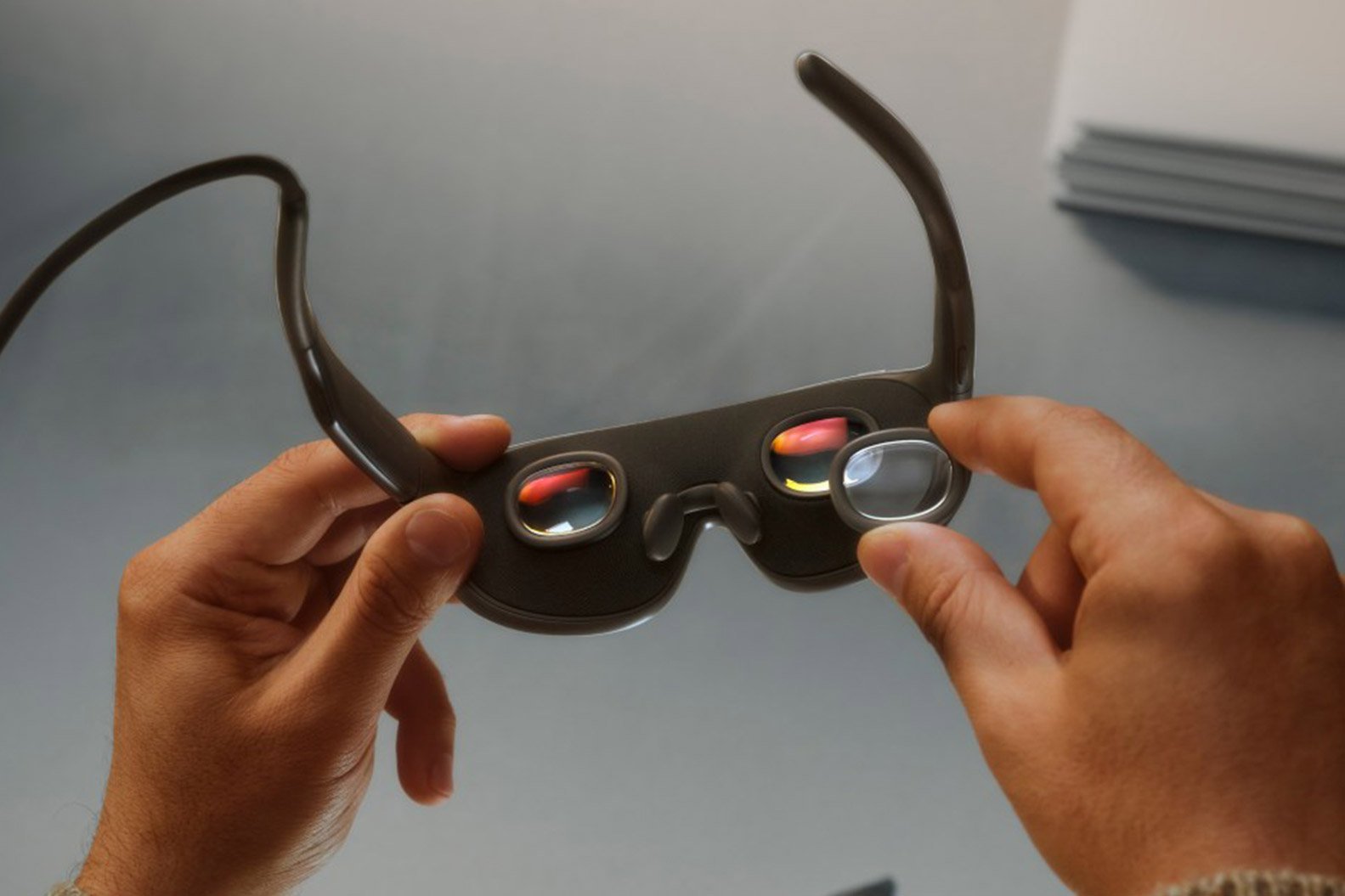
Meta’s next VR headset isn’t a headset. Meta VR Glasses weigh about 100 grams (about the same as a deck of cards) because the processor, the battery, and the storage all moved out of the frames and into a puck that clips to your pocket. They’ll cost $1,299.99 when they ship in spring 2027, and they run without controllers. For a comparison, the Quest 3 that people are wearing right now weighs 515 grams.
That was the centerpiece of the Meta Connect event on Tuesday night, but the company also introduced a $349 pair of Ray-Ban Meta glasses with no camera at all, a third generation of the camera-equipped Ray-Ban Meta line at $449, a batch of software for the Meta Ray-Ban Display, and a transatlantic cable rated for a petabit per second. Last year’s Connect was about putting a screen inside a pair of Ray-Bans. This one is about taking the weight off your face.
| Product | Starting price | Preorder | On sale |
|---|---|---|---|
| Meta VR Glasses | $1,299.99 | Not yet | Spring 2027 |
| Ray-Ban Meta Audio | $349 | Now | Oct. 13 |
| Ray-Ban Meta (Gen 3) | $449 | n/a | Now |
| Meta Adventurer | $249 | Now | Oct. 23 |
| Meta Ray-Ban Display | $799 | n/a | Now (U.S.) |
1. Meta VR Glasses weigh 100 grams because the computer lives in your pocket
Every standalone VR headset since the original Oculus Quest has required an entire computer to sit on your face. The strap had to hold up a chipset, a battery, and a heat sink along with the screens. Meta VR Glasses split that hardware in two. The frames carry the micro-OLED displays, the pancake lenses, the cameras, and the speakers. A separate puck holds the Qualcomm Snapdragon Reality Elite processor, the battery, and the storage, and it connects to the frames over what Meta calls an optical tether. The puck clips to a pocket or a bag strap.
Meta says the result is five times lighter than the Quest 3. The Quest 3 weighs 515 grams. Apple’s Vision Pro, which uses a similar external battery pack, still lists at 750 to 800 grams for the headset alone. A 100-gram pair of frames is closer to a chunky pair of sunglasses than to either of those, which changes what you can do in them. Two hours of a movie in a Quest 3 leaves a mark on your forehead. Meta’s whole pitch here is that you’d watch a full baseball game in these and forget about them.
The puck’s battery is rated for up to three hours of continuous high-resolution media playback, and it supports 45W fast charging. Three hours covers a long movie or most of a live game, but it’s short of a full NFL broadcast with commercials, and Meta hasn’t said what happens to that figure when you’re running a game instead of a video stream. The sides of the frames are open, and full-color passthrough cameras show the room when you want it, so this is not a sealed headset. Anyone hoping for total blackout will want to know how much light leaks in from the edges.
2. The 5K display is the real upgrade, and the field of view is the real question
Meta calls the screen a 5K Infinite Display. It’s built on micro-OLED panels behind ultra-compact pancake lenses, and it runs at 37 pixels per degree. That last number is the one that matters for reading text or watching a film, because it describes how many pixels land in each degree of your vision rather than how many pixels the panel has in total. The Quest 3 uses LCD panels and lands around 25 pixels per degree, so text on a virtual monitor should look noticeably crisper here. Micro-OLED also means true blacks, which is why Meta could get the display certified for Dolby Vision and call this the first IMAX Enhanced VR device.
Meta’s announcement doesn’t publish a field-of-view number, and that’s the figure I’d want before believing the couch pitch. Spec details circulating from the Connect hands-on demos put it at roughly 70 degrees horizontal by 66 vertical, against about 110 by 96 on the Quest 3. If that holds, the view through these frames is closer to sitting in a movie theater than to being surrounded by one, which is fine for a screen pinned in front of you and less fine for a game where enemies come from the side. Smaller optics are how you get to 100 grams, and a narrower view is the bill for that.
Audio is built into the frames as Dolby Atmos spatial sound, the same open-ear arrangement Meta uses on its Ray-Ban glasses. Input is your eyes, your hands, and your voice. The glasses track where you’re looking, register natural hand gestures, and take spoken commands through a built-in Meta AI agent, and Meta says no controllers are needed. Existing Quest Touch Plus controllers are expected to pair with the puck for games that want them, though Meta’s announcement doesn’t spell that out.
3. IMAX movies, 3D Marvel on Disney+, and 100 live games a year are the reasons to buy one
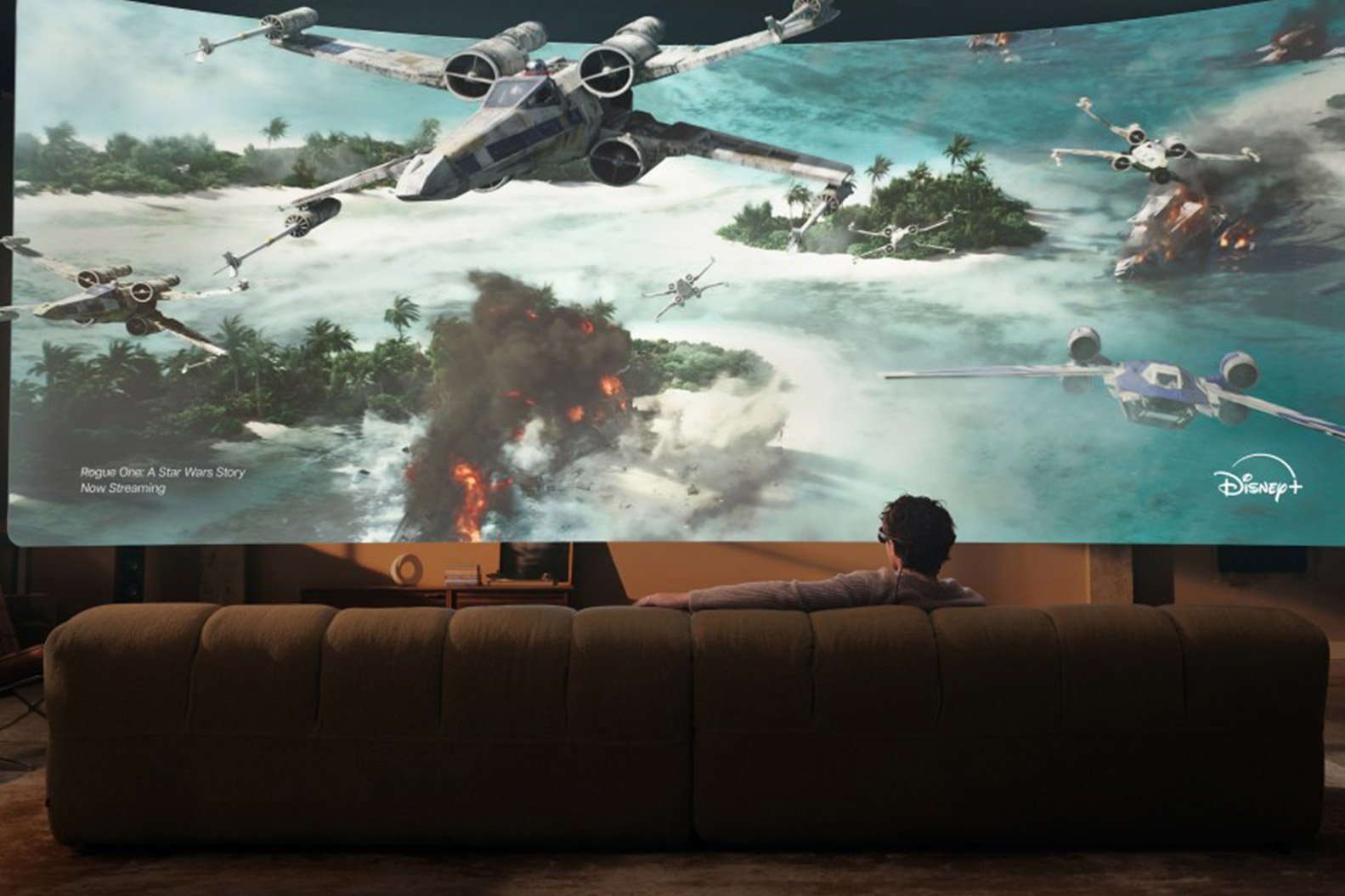
Meta spent more of the announcement on what you’ll watch than on what’s inside the frames, which tells you who it thinks the buyer is. Disney+ arrives on the platform in November in select countries with 3D versions of Marvel and Star Wars films, and a separate Disney Immersive Cinema by ILM app is built for the glasses.
Prime Video, YouTube, HBO Max, Paramount+, Peacock, DIRECTV, AMC+, Crunchyroll, Plex, and Tubi are on the app list. Lionsgate is bringing its 3D catalog, and Meta says a partnership with James Cameron’s Lightstorm Vision will convert blockbusters to 3D for the first time starting in 2027. Meta is selling this as the first IMAX Enhanced certified VR device, which is a licensing stamp for picture and sound specs rather than a promise that IMAX films will look the way they do on a 70-foot screen.
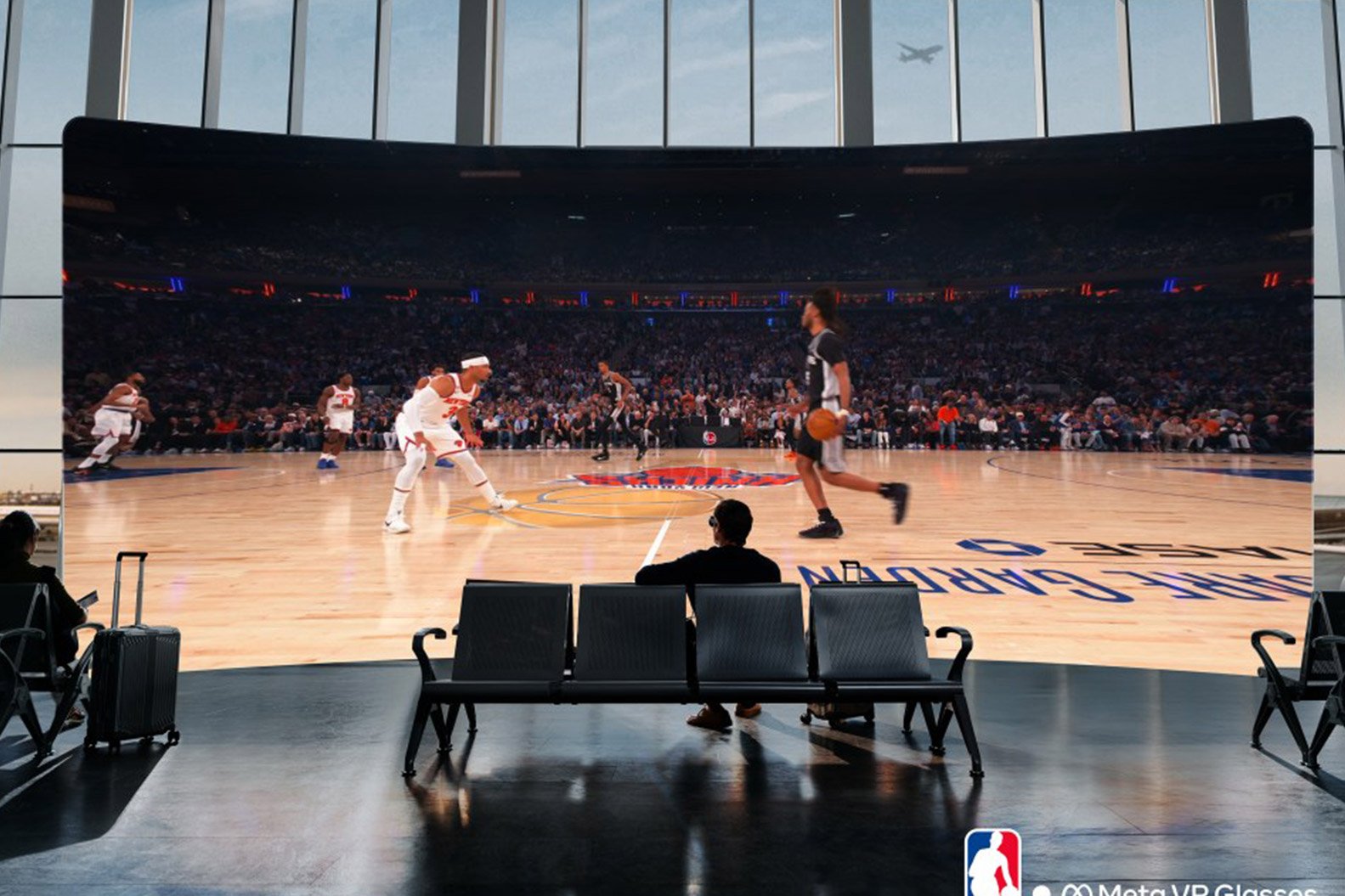
Sports is the other leg. Meta says it will carry more than 100 immersive live sports events a year through ESPN, TNT Sports, NBC Sports, MLB, and UFC, streamed at 8K in 180-degree views, and that college football starts on Quest this season. A 180-degree view means a camera parked courtside or behind home plate and you turning your head to follow the play, which is a different thing from watching the broadcast feed on a big virtual screen. Both will be available; the immersive feeds are the ones that need the sports leagues’ cooperation.
Games are there, but they’re a smaller slice of the pitch than they’ve ever been at a Meta hardware launch. More than 75 titles at launch will be playable with hand gestures alone, and Xbox Cloud Gaming streams hundreds more onto a virtual screen. The puck runs the same platform as the Quest, so the existing library is expected to carry over. Beyond that, the frames do hologram calling, where a photorealistic scan of your face stands in for a webcam on WhatsApp and Zoom calls, and a workspace mode that puts multiple virtual monitors in front of you and lets any flat surface act as a keyboard and touchpad. We’ve seen attempts at this before with mixed results, so we’ll temper our excitement for now.
4. Ray-Ban Meta Audio drops the camera and the price to $349
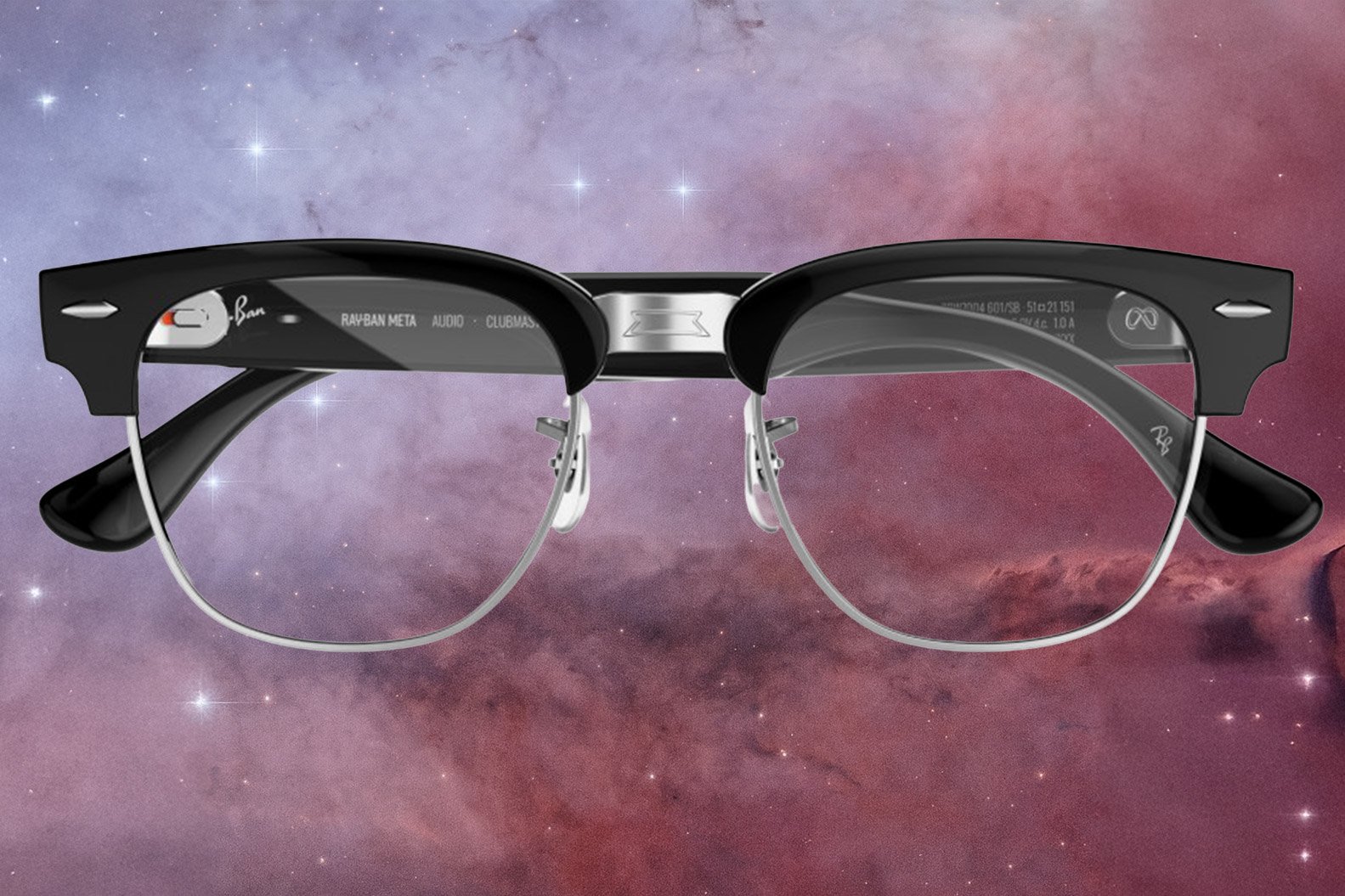
The camera on Ray-Ban Meta glasses has always been the most attractive and contentious feature. Ray-Ban Meta Audio removes it. What’s left is open-ear speakers, a microphone array for calls and voice commands, and Meta AI, in frames that weigh 43 grams. Battery runs up to 12 hours on a charge, with 48 more hours in the case, which is three hours longer per charge than the Gen 3 camera model.
They come in Clubmaster and Burbank shapes across 23 color and lens combinations, take prescription lenses, and have adjustable nose pads and temple tips an optician can bend to fit. Preorders open today at $349, and they ship October 13. That’s $100 less than the new Gen 3 camera glasses and $100 more than Meta’s own Adventurer frames, which do have a camera. The audio-only pair is aimed at the person who wants to take calls and ask questions on a walk without ever pointing a lens at anyone.
5. Ray-Ban Meta Gen 3 adds an hour of battery, a cat-eye frame, and Atmos video
The third-generation Ray-Ban Meta glasses are on sale now at $449. Battery goes to nine hours from eight, the frames are slimmer than the second generation, and a new customizable action button calls up Meta AI without a wake phrase. The six-microphone array is the upgrade that matters for calls; Meta says it cuts more than 90 percent of background noise, which is the difference between taking a call on a windy sidewalk and putting it off.
The 12MP camera records 3K video and adds a Dynamic Photos mode that picks the best frame from a burst. Later this year, Meta says these will be the first consumer glasses that capture and play back video in Dolby Atmos with 360-degree spatial sound, which pairs with the same feature arriving on the Meta Ray-Ban Display. Styles are Wayfarer, a new cat-eye shape called Zena, and an Aviator in a limited vintage colorway for Ray-Ban’s 90th anniversary, across 27 combinations in total.
Meta’s own house-brand glasses expanded too. Meta Adventurer, a black frame with grey lenses and a camera, starts at $249, takes preorders now, and launches October 23, making it the cheapest camera-equipped pair Meta sells. Two new shapes, Capri and Nova, join the lineup, and there are $399 editions from Kylie Jenner and Blackpink’s LISA. Meta says it will have more than 100 different glasses options across the Ray-Ban, Oakley, and Meta brands by the end of the year. Muse, the personal AI agent Meta introduced earlier this month, is coming to all of them, and Meta also showed a keychain-sized device called Muse Charm that runs the agent on its own, with pricing and a date to come later this year.
6. Meta Ray-Ban Display gets bike directions, hologram calls, and a U.K. and EU launch
The Meta Ray-Ban Display, the $799 pair with a screen in the right lens and an EMG wristband, didn’t get new hardware. It got the software it was missing. Later this month in the U.S. and Canada, the glasses will show turn-by-turn cycling directions and live transit departures in the lens when you ask for them. Walking directions are getting a contextual mode that navigates by what you can see instead of by street name, so the instruction reads “turn left at the yellow house” rather than “turn left on Elm.” Clever.
Hologram calling is the same feature coming to the VR Glasses. You scan your face once in the Meta AI app, and during a WhatsApp video call the glasses send a photorealistic digital version of you that infers your expression from what you’re saying and how you’re saying it, since there’s no camera pointed at your face. It arrives as an Early Access feature in the U.S. this fall. Smaller additions include mirrored phone notifications, calendar invites you can accept from the lens, Threads browsing, and Dolby Atmos capture.
The bigger news for anyone outside North America is that the Display finally leaves the U.S. Online ordering opened yesterday in the U.S., Canada, and the U.K., and preorders started in France, Italy, and Germany ahead of an October 13 launch. Until now, buying a pair meant an in-store fitting for the Neural Band at a U.S. retailer.
7. Petal is a petabit-per-second cable to France, due in 2029
Two days before Connect, Meta announced Petal, a 7,000-kilometer subsea cable between the U.S. and the Atlantic coast of France that it says will be the first petabit-capacity cable ever laid across an ocean. One petabit per second is double what the best transoceanic cables carry today. Meta’s own comparison is that it’s roughly the capacity needed for 75 percent of the world’s population to stream music at once.
The trick is multi-core fiber, which packs multiple light-carrying cores into a single strand so the cable moves twice the data without a matching increase in power or physical bulk. NEC is building the system, Sumitomo Electric is making the fiber, and Orange handles the French landing. Service is expected in 2029. Meta says Petal is one of more than 20 subsea cable projects it’s involved in, alongside the Project Waterworth cable it announced last year.
8. Where to preorder everything Meta announced
Ray-Ban Meta Gen 3 is on sale now at $449. Ray-Ban Meta Audio takes preorders now at $349 and ships October 13, and Meta Adventurer takes preorders at $249 for an October 23 launch. The Meta Ray-Ban Display is available to order online in the U.S., Canada, and the U.K. at $799 in the States. Meta VR Glasses don’t have a preorder date yet; they’re due in spring 2027 at $1,299.99, and the software features for the Display and the new Atmos capture on Gen 3 roll out between now and the end of the year.
Meta VR Glasses $1,299.99
Meta VR Glasses $1,299.99
See It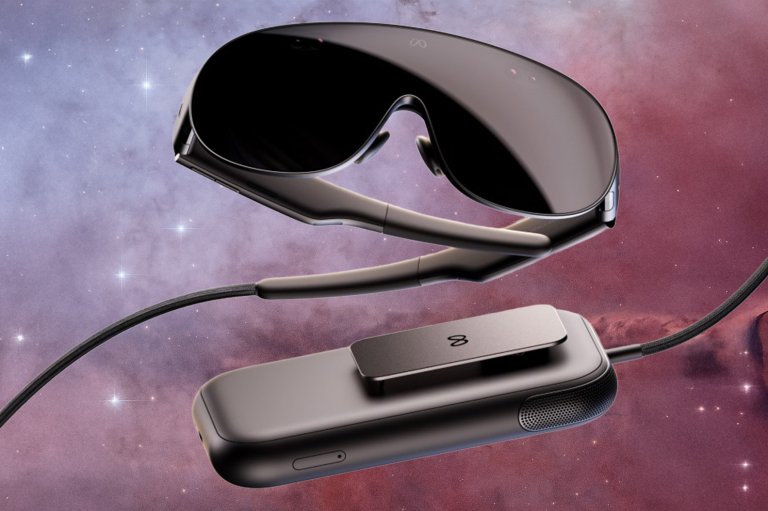
The 100-gram frames carry the 5K micro-OLED display and Dolby Atmos speakers, and the pocket puck carries the Snapdragon Reality Elite chip and a battery rated for three hours of video. Eye tracking, hand gestures, and voice handle the controls, and there are no controllers in the box. Disney+ 3D, IMAX Enhanced movies, and more than 100 live sports events a year are the content pitch. It ships in spring 2027, and Meta hasn’t opened preorders.
Ray-Ban Meta Audio $349
Ray-Ban Meta Audio $349
See It
Skip the camera and you get 12 hours of battery instead of nine, 43-gram frames, and a pair nobody will ask you to take off in a locker room. Clubmaster and Burbank shapes come in 23 combinations, all prescription-ready, with nose pads and temple tips an optician can adjust. Preorders are open now and they ship October 13.
Ray-Ban Meta (Gen 3) $449
Ray-Ban Meta (Gen 3) $449
See It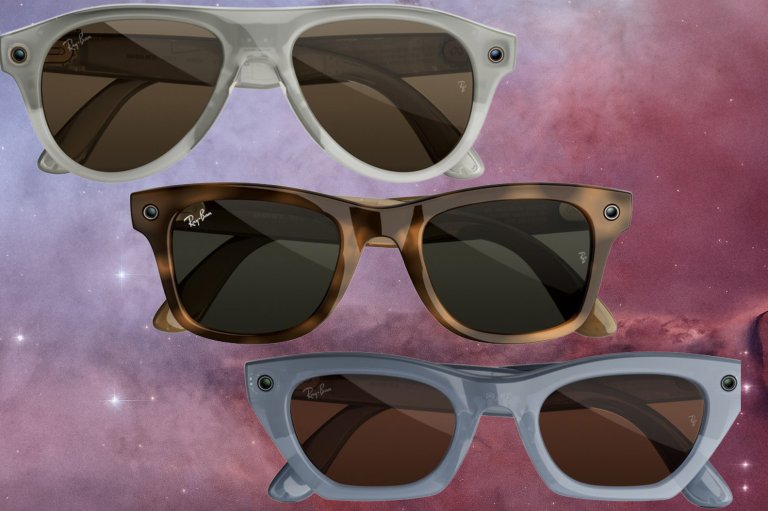
This is the camera pair, on sale now with a 12MP sensor that shoots 3K video, a six-mic array that Meta says strips more than 90 percent of background noise from calls, and nine hours of battery. Dolby Atmos 360-degree video capture arrives in a software update later this year. Wayfarer, the new Zena cat-eye, and a 90th-anniversary Aviator make up 27 frame and lens combinations.
Meta Ray-Ban Display $799
Meta Ray-Ban Display $799
See It
The only pair here with a screen, and the one getting the most new software this fall: cycling and transit directions later this month, landmark-based walking directions, hologram calling on WhatsApp, and mirrored notifications. It ships with the Neural Band, the wristband that reads muscle signals so you can control the display without touching the frames. It’s now available to order online in the U.S., Canada, and the U.K., with France, Italy, and Germany following October 13.
