We may earn revenue from the products available on this page and participate in affiliate programs. Learn more ›
Editors’ Note: Welcome to a new series called An Apple a Day, where we’ll share pieces of Apple content from our archives daily from now through late September. In addition to PCMag, this series will include pieces from our sibling sites CNET, Lifehacker, Mashable, and PCMag.
About two years before Apple released the Apple Watch, I got a chance to try the Pebble smartwatch. It had enormous hype behind it, especially among gadget nerds. Its 2012 Kickstarter campaign raised $10.3 million, making it the most-funded project in the site’s history at that point and pulling smartwatches into the mainstream conversation.
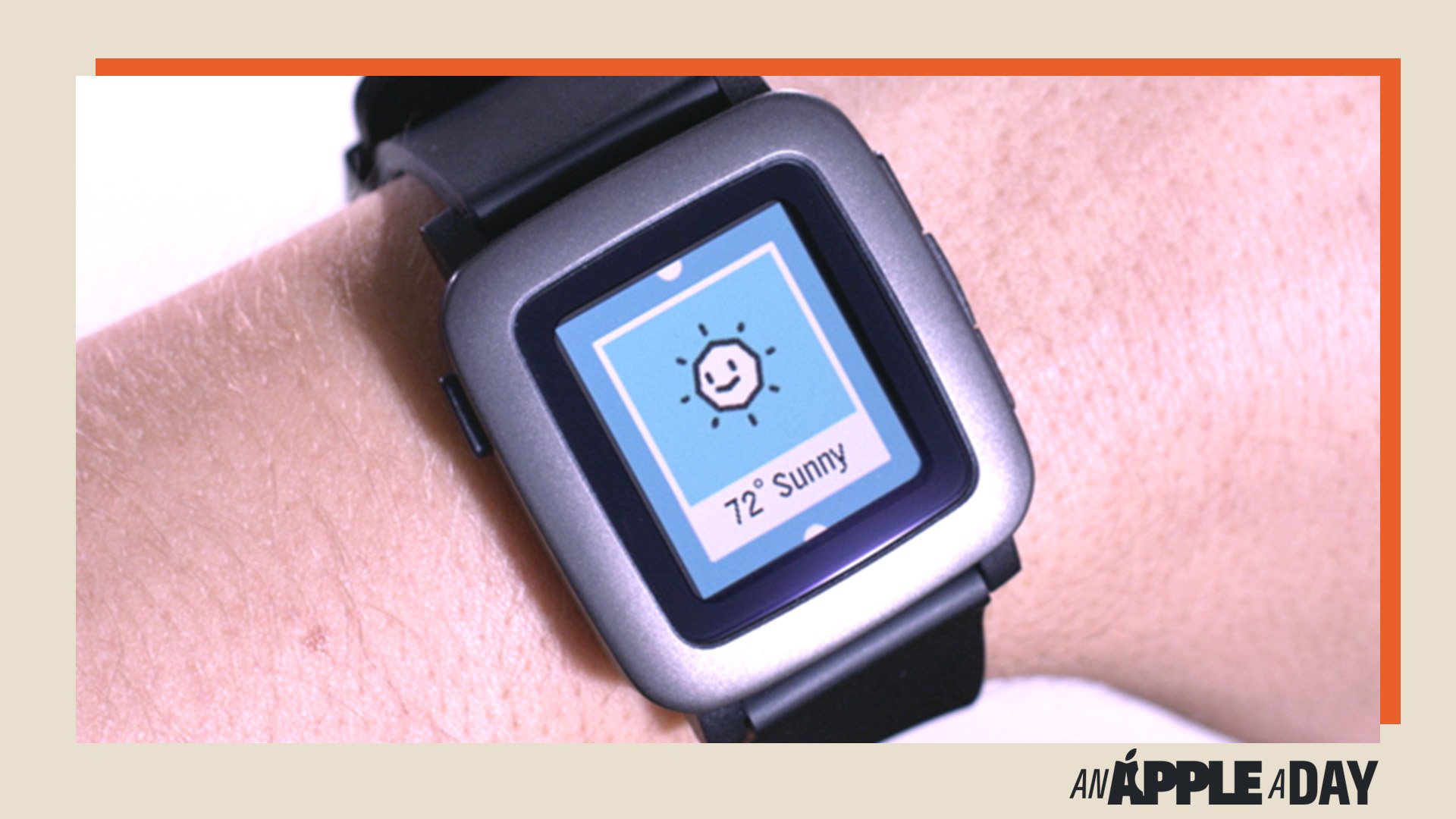
It also felt like something you’d order from SkyMall, and it looked dated the moment it arrived. Here’s a look at the Pebble Time, which came out in 2015. It was clever, but it did not look cool.
Back then, the wearables market split roughly in two. On one side were smartwatches, a fledgling category built to relay notifications from a phone to your wrist. On the other were dedicated fitness trackers, where Fitbit dominated even after recalling the Fitbit Force, its first wrist-worn tracker with an OLED screen, over roughly 9,900 reports of skin irritation and 250 reports of blistering. Apple looked poised to repeat a familiar strategy: arrive fashionably late, then reshape the category.
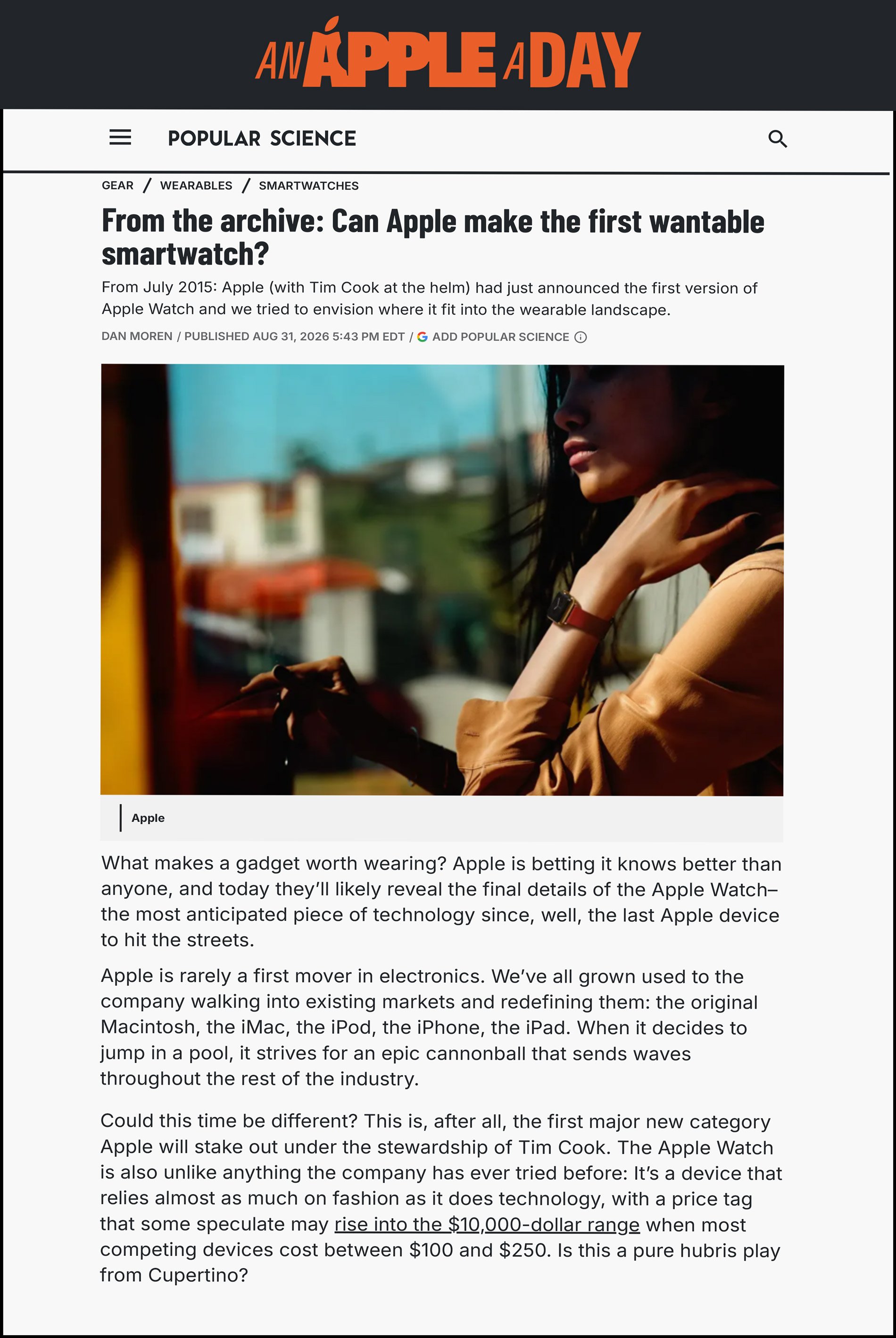
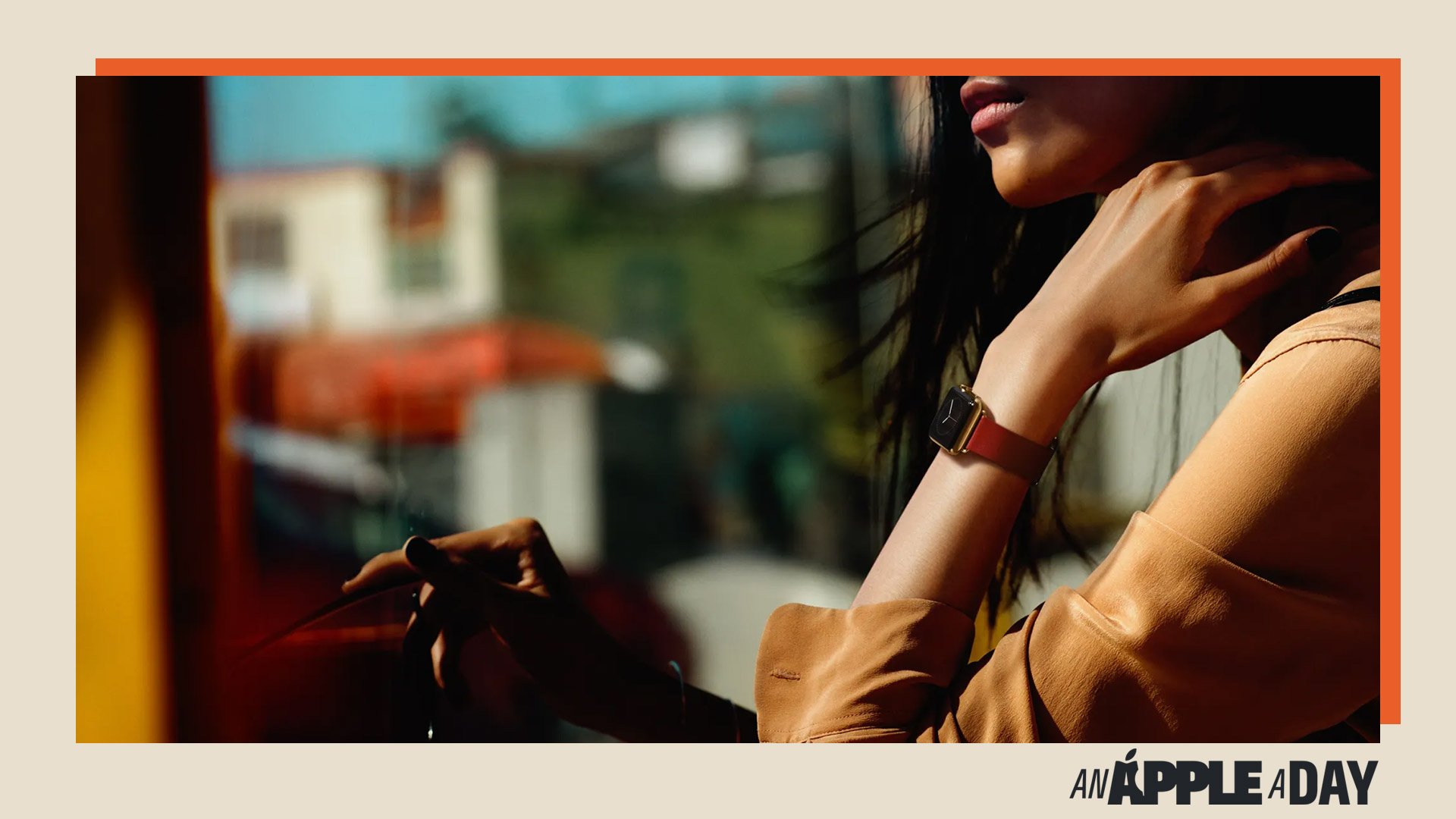
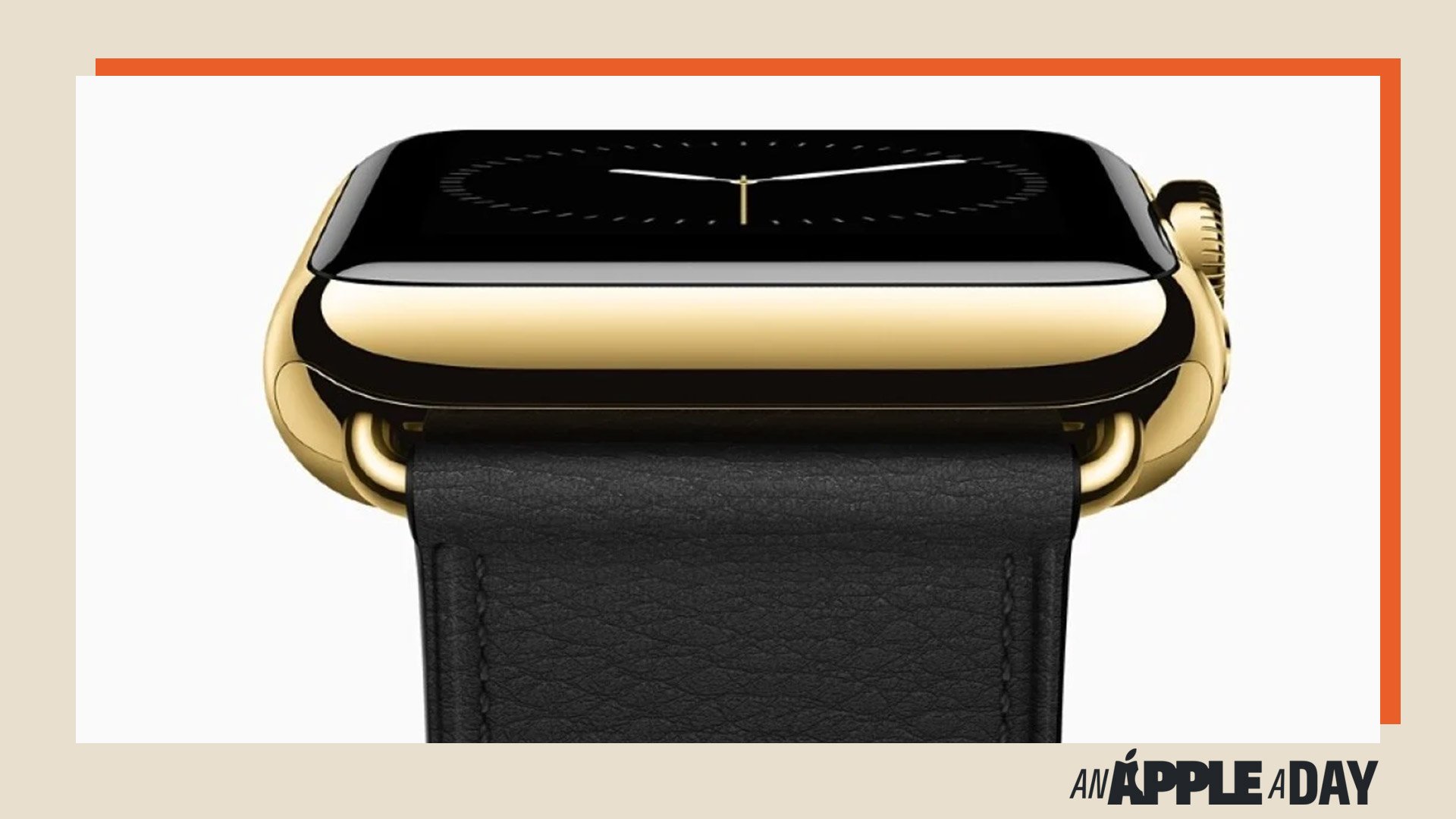
Today’s Apple Watch sells itself on health and fitness, but the original also made an aggressive pitch as a luxury fashion accessory. Design chief Jony Ive championed Apple Watch Edition, which housed the same core technology in cases of 18-karat yellow or rose gold and topped out at $17,000. Apple added its Hermès collaboration later in 2015.
The original PopSci piece asks three questions worth revisiting. Would the Apple Watch increase or decrease the amount of time we spend staring at screens? Could Apple impose its will on a market that already had established competitors? And, most pressing of all: “Why do I need such a thing?”
I wear an Apple Watch every day now, with most of its health-tracking features turned off. It catches specific notifications when I’m away from my other devices, and it triggers my camera when I’m making content. Once in a while I even use it to check the time. But I wear it everywhere.
You can still spend nearly $2,000 on an Apple Watch Hermès, though you don’t need to spend anything close to that for an Apple Watch to work as a fashion accessory. The slick, rounded-square silhouette landed well enough in 2015 that wearing one is now acceptable just about everywhere. I recently watched a guy read notes off his Apple Watch during a best man’s speech at a wedding. I had no idea which model it was, but I recognized the shape. And I knew it wasn’t a Pebble.