
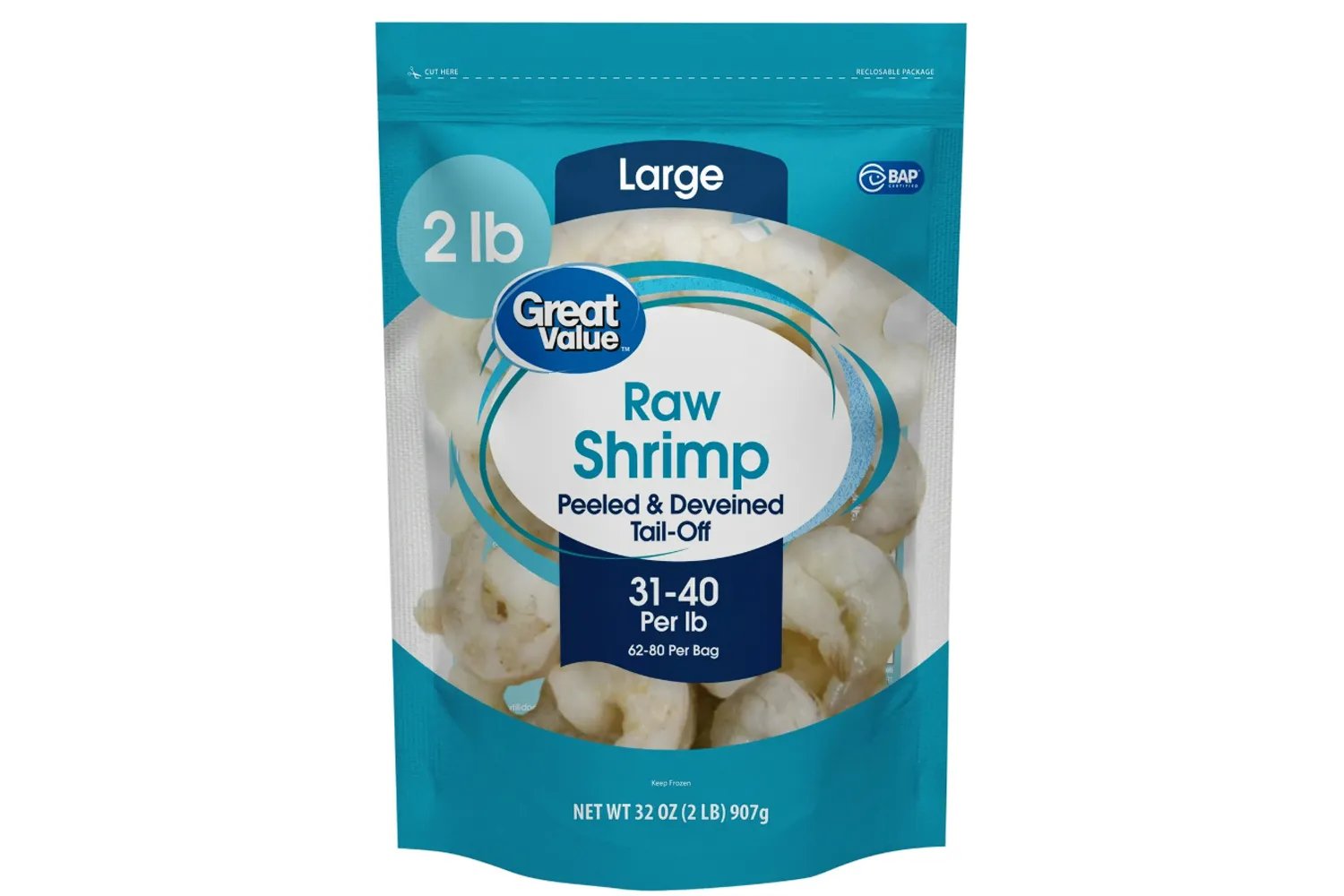
Even if you’re not tracking the latest in food safety, you’re likely aware of the FDA’s advisory concerning Walmart’s radioactive frozen shrimp. If not, here’s a quick recap. The Great Value brand seafood originated from the Indonesia-based company PT. Bahari Makmur Sejati (also known as BMS Food), and recently arrived aboard container ships at multiple US ports.
Authorities subsequently detected elevated levels of the radioisotope Cesium-137 (Cs-137) in containers in Los Angeles, Miami, Houston, and Savannah. The FDA explained that although no package registered above derived intervention levels for Cs-137, “the level detected in [their] breaded shrimp sample could represent a potential health concern” in certain situations.
The crustaceans in question made it to stores in 13 states before a full recall was implemented. While there isn’t any evidence that customers purchased the unsafe food, the FDA advised Walmart and recent customers to discard any BMS Food products.
The strange seafood scare is certainly concerning, but here’s the thing: food is irradiated all the time. And it’s usually in our best interest.

Why is food irradiated?
Irradiating food is a safety measure aimed to decontaminate it. It actually dates back over a century. In 1918, David Gillett received the first US patent for an “apparatus for preserving organic materials by the use of x-rays.” After decades of technological and scientific advancements, irradiating food is now a common practice around the world.
The FDA approved its irradiation policies in 1963, the same year that NASA started irradiating astronaut meals to stave off food-borne illnesses during space missions. Millions of people also reheat their leftovers every day by bombarding them with microwave radiation in miniature ovens called—well, you can probably guess.
“The key point is, yes, food is irradiated to make it safer, but the type of radiation that caused this contamination was not… used for food safety,” public health policy expert Peter Pitts tells Popular Science. Before co-founding the Center for Medicine in the Public Interest, Pitts was a former member of the FDA’s Senior Executive Service and Associate Commissioner. While there, he served as a senior communications and policy advisor to the commissioner, and contributed to multiple working groups and task forces.
“It’s true that the FDA allows seafood and other types of food to be irradiated, and that kills things like E. coli and other bad things we don’t want to eat,” Pitts explains. “ [But] the radiation that was found in the shipping containers had nothing to do with irradiating seafood at all.”
Currently, the FDA allows three sources of radiation for use on commercial consumables: electron beams, X-rays, and certain gamma rays. The frozen shrimp situation stems from gamma rays which originated from the radioisotopic metal Cs-137.
What is Cs-137?
The Environmental Protection Agency describes Cs-137 as a flexible, soft, and silvery-white metal that liquifies near room temperature. Typically used in medical devices and gauges, the FDA notes that the radioisotope is a byproduct of nuclear reactions. While trace amounts of Cs-137 are detectable around the world in our food, soil, and air, the Walmart-bound shipment was flagged because at least one shrimp sample contained a higher-than-expected level.
“Even though Cs-137 is approved for irradiation of crustaceans, it seems unlikely the shrimp at issue here were treated with irradiation, because foods that are treated with irradiation don’t typically have the residues remaining on them,” Laurie Beyranevand tells Popular Science. Beyranevand is currently a professor of food and agricultural law and policy at Vermont Law and Graduate School and the director of its Center for Agriculture and Food Systems.
Beyranevand says it’s possible that a particular food product could become contaminated if it was raised or farmed somewhere with elevated levels of Cs-137. Either way, she believes the breaded frozen shrimp recall is “definitely a cause for concern” for the food industry-at-large.
“If we consider this in conjunction with the recent widespread lead contamination in cinnamon, it signals that food is being produced in environments that increase the chances of contamination,” she says.
But because the FDA has only confirmed the presence of Cs-137 in one sample of breaded shrimp, Pitts offers an alternative hypothesis.
“It seems to me that the radiation that was found was because of contaminated containers, not because of contaminated food products,” he says. Even so, he cautions that the amount of radiation in the container was, “not the kind used in food safety.”
“So the question then becomes, ‘How did this food get shipped in contaminated containers?’” he says.
Unfortunately, it’s a question that currently lacks an answer. The FDA says it will continue its investigation while also monitoring for any additional, implicated products from BMS Food before “tak[ing] action as appropriate.”
Whey food safety regulations matter
To Pitts, the situation is both a testament to the FDA’s importance and efficacy, as well as its vital role in society.
“Food safety isn’t necessarily a sexy thing…. [but] it speaks to the need to do more,” he says. “The FDA caught this and did its job—well done. But it also speaks to the need for more and better processes, and more consistent funding.”
In a statement provided to Popular Science, a Walmart spokesperson reiterated that none of the products removed from its store shelves tested positive for radiation, and none of the contaminated food ever “entered commerce.”
“The health and safety of our customers is always a top priority,” they said, adding that customers are encouraged to discard any recalled frozen shrimp and visit a local store for a full refund.
But even after a decades’ long career in public health, the event stands out for Pitts.
“I’ve never heard of shipping containers being contaminated from radiation. That’s a new one for me,” he admits.
Update, August 22, 7:04 am EDT: On August 21, the FDA expanded its recall to include raw and cooked frozen shrimp products sold by Southwind Foods, LLC. The FDA and Southwinds Food said that the company is “voluntarily recalling a limited quantity of frozen shrimp” due to possible contamination with Cesium-137.
The bagged, frozen raw and cooked shrimp were sold under the brand names Sand Bar, Arctic Shores, Best Yet, Great American, and First Street. They were sold between July 17 and August 8 in nine states.
